Archive

Archive for July, 2011

Israel, US to hold massive missile defense drill next year

July 26, 2011 Comments off

jpost

Iranian ballisitic missile launched at war game. Photo by: Ho New / Reuters

Exercise aimed at improving operational coordination between countries’ defense systems in face of Iran’s continued pursuit of nuclear weapons.

In the face of Iran’s continued pursuit of a nuclear weapon, Israel and the United States will hold a large-scale missile defense exercise in the beginning of next year aimed at improving operational coordination between both countries’ defense systems.

Called Juniper Cobra, the exercise will be held in early 2012 and will include the Arrow 2 and Iron Dome as well as America’s THAAD (Terminal High Altitude Area Defense) and the ship-based Aegis Ballistic Missile Defense System. The exercise will likely include the actual launching of interceptors from these systems.

The Israeli Air Force’s Air Defense Division, the United States Missile Defense Agency and the US Military’s European Command (EUCOM) have held the Juniper Cobra exercise for the past five years. The upcoming exercise though is planned to be one of the most complex and extensive yet.

Last week, Air Force commander in the EUCOM Gen.Mark Welsh visited Read more…

Big gaps in Australia’s cyber defences

July 26, 2011 Comments off

smh

Australia has not plugged all the gaps in its online defences despite the threats posed by the rapid rise of cyber espionage and “hacktivism”, a government-commissioned report has found.

The report discusses the results of cyber war games called Cyber Storm, involving Australia and 12 other countries last year, which simulated a large-scale international cyber security incident.

Citing “gaps” in the cyber security procedures of both government and Australian industry, the report’s author, former army intelligence officer Miles Jakeman, noted that there were areas where “communications and planning could be further developed”.

The gaps were acknowledged by the federal Attorney-General, Robert McClelland, during a speech at a cyber security conference in Canberra yesterday.

“[The report] did highlight gaps within existing government and business cyber incident processes … this feedback allows both government and businesses to take steps to improve our cyber security,” he said.

The report is further evidence that the Read more…

Chinese jets chase U.S. surveillance jet over Taiwan Strait

July 26, 2011 1 comment

washingtontimes

A colonel in the Canadian Forces takes photos through the window of a civilian aircraft playing the role of a hijacked airliner as it is escorted by two Su-27 Russian fighter jets. (Associated Press)A colonel in the Canadian Forces takes photos through the window of a civilian aircraft playing the role of a hijacked airliner as it is escorted by two Su-27 Russian fighter jets. (Associated Press)

Two Chinese warplanes intercepted an American spy plane over the tense Taiwan Strait last month in China’s most aggressive challenge to U.S. surveillance flights since a 2001 collision that touched off an international crisis.

According to defense officials, the intercept took place June 29. The two Chinese jets flew from a base in China to head off an Air Force U-2 spy plane over the dividing line in the 100-mile wide Taiwan Strait.

“In general, these reconnaissance flights are conducted in international airspace, as are the PRC [Chinese] intercepts, which Read more…

Detailed Picture Of Ice Loss Following The Collapse Of Antarctic Ice Shelves

July 26, 2011 Comments off

nanopatentsandinnovations.blogspot

An international team of researchers has combined data from multiple sources to provide the clearest account yet of how much glacial ice surges into the sea following the collapse of Antarctic ice shelves.

The work by researchers at the University of Maryland, Baltimore County (UMBC), the Laboratoire d’Etudes en Géophysique et Océanographie Spatiales, Centre National de la Recherche Scientifique at the University of Toulouse, France, and the University of Colorado’s National Snow and Ice Data Center, Boulder, Colo., details recent ice losses while promising to sharpen future predictions of further ice loss and sea level rise likely to result from ongoing changes along the Antarctic Peninsula.

The Larsen B ice shelf began disintegrating around Jan. 31, 2002. Its eventual collapse into the Weddell Sea remains the largest in a series of Larsen ice shelf losses in recent decades, and a team of international scientists has now documented the continued glacier ice loss in the years following the dramatic event. NASA’s MODerate Imaging Spectroradiometer (MODIS) captured this image on Feb. 17, 2002.
  Read more…

North Korea tested missile rocket: report

July 25, 2011 Comments off

spacewar

North Korea last year tested a rocket to carry long-range missiles in an apparent attempt to showcase its weapons capability to the United States, a report said Sunday.

The communist state conducted the rocket engine test at the new Tongchang-ri missile base on the west coast in October, Yonhap news agency said, citing a senior Seoul official.

“We believed that the test, carried out at an hour when the US military satellite could detect it, was aimed at showcasing its missile threats,” Yonhap quoted the official as saying.

Satellite images taken in January showed that North Korea had completed a launch tower at the Tongchang-ri missile base, which was bigger and more advanced than the older Musudan-ri base on the east coast.

The North launched long-range missiles at Musudan-ri in 1998, 2006 and 2009, sending its Taepodong-2 missile to land some 3,200 kilometres (2,000 miles) in the Pacific in April 2009.

Analysts said the new base in Tongchang-ri, whose construction was believed to be almost complete, was seen as a key in the North’s quest for an intercontinental ballistic missile (ICMB) that could possibly strike the United States.

The North has started to build new railways to transport materials needed to complete the new base, said the official quoted by Yonhap, adding Seoul saw no immediate signs that the North was about to launch long-range missiles at the site.

Seoul intelligence believe that the North’s Taepodong-2 missile, whose maximum range is estimated at 6,700 kilometres, could reach the US west coast within about 20 minutes if successfully launched at the new base, Yonhap said.

Electro-pulse cannon stops cars in their tracks

July 25, 2011 Comments off

dvice.com

Today’s cars are so full of computerized electronics, one serious electromagnetic pulse could stop any car built after the mid-’70s in an instant. Canadian company Eureka Aerospace might be able to do that with its High-Powered Electromagnetic System (HPEMS). It’s a suitcase-sized electromagnetic pulse (EMP) cannon that immediately disables a car or truck from 656 feet away without hurting the driver or innocent bystanders.

This EMP cannon is said to be ready for a demo next month. So far, the prototype is too unwieldy to place in a police car, but the idea is to shrink the device to the size of a handgun. That will make it easy to mount in police helicopters, cars, and military vehicles, potentially putting an end to deadly high-speed chases, and Read more…

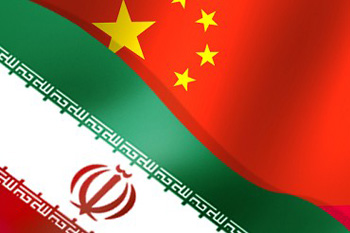
China And Iran To Bypass Dollar, Plan Oil Barter System, And A Deeper Dive Into The Iranian Oil Bourse

July 25, 2011 1 comment

zerohedge

One of the more notable events in the past week was the previously discussed reopening of the Iranian Oil Bourse, an attempt by Iran to launch a venue that bypasses US sanctions against Iran which has prevented payment in the world’s reserve currency for Iranian goods. “Big deal”, some will say, this is not the first time Iran has attempt to upstage the Great Satan. Well, true, although as OilPrice said last week, “what it would take for Iran’s new exchange to survive and flourish are some heavy-duty customers that Washington would be wary of picking a fight with, and Tehran already has one – China… China, the world’s largest buyer of Iranian crude oil, has renewed its annual import pacts for 2011. In 2010 Iran supplied about 12 percent of China’s total crude imports. According to the latest report of the China Customs Organization, Iran’s total oil exports to China stood at Read more…

Supersoldier 2020 will have exoskeleton, robot helpers, pathogen immunity, some doctor assisted regeneration

July 25, 2011 Comments off

nextbigfuture

The new Captain America movie is out this weekend, so we take a look at the actual developments and research for enhancing soldiers in real-life.

Supersoldiers of the 2020s will be a little bit Iron man with HULC and XOS exoskeletons. They will have some wall crawling (Spiderman like) capability from the Z-Man program (attachable pads with magnets and microsplines).

They will be using a lot more ground and flying robot support. They will have flying hummers.

They will have better guns with better range, smart bullets/grenades when needed and computers and sensors to improve the accuracy of soldiers and snipers.

They will have medical enhancement to be resistant to infections and to allow them to be restored from more severe injuries.

There will also be safer SARM steroids and Read more…

Laws of physics must be rewritten: Mysterious sun particles alter radioactive decay on Earth

July 25, 2011 1 comment

naturalnews

The scientific process, as any experienced researcher can attest, provides a kind of road map through the forest of the natural world. By developing hypotheses and designing methods by which to test them, we use the scientific process to make the abstract world more concrete.

Once we clarify our questions about matter, time, and reality, we can move forward from one conclusion to another in a logical attempt to answer them. But the path in front of us often extends into kind of fog, a compounding cloud of questions, with each conclusion often leading only to additional questions that multiply indefinitely.

And the path behind us can be equally shrouded. Sometimes generations of observations about the Read more…

Revealed: how Israel offered to sell South Africa nuclear weapons

July 25, 2011 1 comment

guardian

The secret military agreement signed by Shimon Peres and P W Botha

The secret military agreement signed by Shimon Peres, now president of Israel, and P W Botha of South Africa. Photograph: Guardian

Secret South African documents reveal that Israel offered to sell nuclear warheads to the apartheid regime, providing the first official documentary evidence of the state’s possession of nuclear weapons.

The “top secret” minutes of meetings between senior officials from the two countries in 1975 show that South Africa‘s defence minister, PW Botha, asked for the warheads and Shimon Peres, then Israel’s defence minister and now its president, responded by offering them “in three sizes”. The two men also signed a broad-ranging agreement governing military ties between the two countries that included a clause declaring that “the very existence of this agreement” was to remain secret.

The documents, uncovered by an American academic, Sasha Polakow-Suransky, in research for Read more…