Archive
Soros: Communist Chinese Model Of Order May Become “The Envy Of The World”
Billionaire investor George Soros has once again cited China’s dictatorship as the model for the rest of the world in a speech at an elite gathering in Europe.
Soros told the exclusive Travellers Club, that “China’s model of state capitalism, in which the interests of the individual are subordinated to those of the government, poses a danger if its example becomes“the envy of the world.”
“Perfect order and global governance are not realistic expectations.” Read more…
The Coming Rout QE3
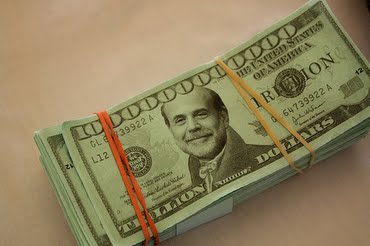 There’s a scenario that could play out between May and September in which commodities (including my beloved silver) and the stock and bond markets could all sell off between 20% and 40%. The trigger will be the cessation of QE II and a multi-month pause before QE III.
This is a reversal in my thinking from the outright inflationary ‘buy with both hands’ bent that I have held for the past two years. Even though it’s quite a speculative analysis at this early stage, it is a possibility that we must consider.
Important note: This is a short-term scenario that stems from my trading days, so if you are a long-term holder of a core position in gold and silver, as am I, nothing has changed in my extended outlook for these metals. The fiscal and monetary path we are on has a very high likelihood of failure over the coming decade, and I see nothing that shakes that view.
But over the next 3-6 months, I have a few specific concerns.
It’s time to build on the idea I planted in the Insider article entitled Blame the Victim (February 28, 2011) where I speculated on the idea that the Fed might be forced to end its Read more…
People Of Earth: Prepare For Economic Disaster
 It is not just the United States that is headed for an economic collapse. The truth is that the entire world is heading for a massive economic meltdown and the people of earth need to be warned about the coming economic disaster that is going to sweep the globe. The current world financial system is based on debt, and there are alarming signs that the gigantic global debt bubble is getting ready to burst. In addition, global prices for the key resources that the major economies of the planet depend on are rising very rapidly. Despite all of our advanced technology, the truth is that human civilization simply cannot function without oil and food. But now the price of oil and the price of food are both increasing dramatically. So how is the current global economy supposed to keep functioning properly if it soon costs much more to ship products between continents? How are the billions of people that are just barely surviving today supposed to feed themselves if the price of food goes up another 30 or 40 percent? For decades, most of the major economies around the globe have been able to Read more…
U.S. Job Cuts Rose 20% From Year Ago, Challenger Says
Employers in the U.S. announced more job cuts in February than in the same month last year, led by a surge at government agencies.
Planned firings increased 20 percent to 50,702 last month from February 2010, the first year-over-year gain since May 2009, according to a report today from Chicago-based Challenger, Gray & Christmas Inc. Announcements at federal, state and local government offices almost tripled from last year.
“More job cuts at the federal level are expected in the months ahead as pressure mounts to cut costs and rein in the soaring national debt,” John A. Challenger, the outplacement company’s chief executive officer, said in a statement.
Dismissals of government workers may contribute to a slowdown in consumer spending, which accounts for 70 percent of the economy. Combined with the highest gasoline prices in two years, the threat of a pause in purchases may already be causing retailers, which had the second-biggest number of announcements last month, to pare payrolls, said Challenger.
“If gasoline tops $4 per gallon in the coming weeks, consumers may be forced to make significant changes to their spending habits,” said Challenger. “At this stage of the recovery, that could be an extremely damaging setback.”
Compared with last month, which saw the fewest firings for any January since record-keeping began in 1993, job-cut announcements climbed 32 percent. Because the figures Read more…
Why the World Must Watch Europe
Beyond the EU Debt Crisis
The continent’s financial crisis gave rise to bailouts, infighting and demands for sweeping financial reform. Could there still be a bright future over the horizon for the European Union?

Amid the shift in global superpowers, two names come up as heavyweight world championship opponents: China and the United States.
The constant media exposure and speculation could be likened to a pay-per-view boxing matchup.
In one corner: the world’s largest energy consumer—with a 1.3-billion-strong population—endlessly stockpiling natural resources—and holding nearly $900 billion in United States’ debt.
In the other: longtime democratic world champion—largest economy—and leader in manufacturing.
China is the clear favorite, but the U.S. is still in the running. On its way down from unmatched superpower, it is still a formidable opponent, with its manufacturing sector out-producing China by 40 percent.
Yet America is weighed down by a $14 trillion federal debt and rampant Read more…
Will $200 oil kill the economy?
Unrest in key oil-producing nations opens the door to price spikes that could push gas to $7 a gallon and spin the world back into recession. Here’s how we’d get there, and how to protect your portfolio.

Are your pocketbook and portfolio ready for $200-a-barrel oil?
This kind of dramatic price spike may seem less likely now than a few days ago, with oil markets calming down a bit and the price slipping below $100. But given the instability and unrest rolling through the Middle East and North Africa, it’s a definitely a viable scenario.
For the moment, most oil sector analysts have gone off high alert because of a Saudi Arabian pledge to increase production to make up for any shortfalls sparked by unrest. But that ignores a key angle in all this: There’s simply not enough spare capacity to make up for the production losses we’d see if the rolling crises in the region hit just two or three major producers at once.
This could easily happen, given the heightened Read more…
Separate but unequal: Charts show growing rich-poor gap
The Great Recession and the slump that followed have triggered a jobs crisis that’s been making headlines since before President Obama was in office, and that will likely be with us for years. But the American economy is also plagued by a less-noted, but just as serious, problem: Simply put, over the last 30 years, the gap between rich and poor has widened into a chasm.
Gradual developments like this don’t typically lend themselves to news coverage. But Mother Jones magazine has crunched the data on inequality, and put together a group of stunning new charts. Taken together, they offer a dramatic visual illustration of who’s doing well and who’s doing badly in modern America.
Here are three samples:
This chart shows that the poorest 90 percent of Americans make an average of $31,244 a year, while the top 1 percent make over $1.1 million:

Detroit Schools’ Cuts Plan Approved
By MATTHEW DOLAN
 The state of Michigan approved a plan for Detroit to close about half of its public schools and increase the average size of high-school classrooms to 60 students over the next four years to eliminate a $327 million deficit.
The plan was submitted in January by Robert Bobb, Detroit Public Schools’ emergency financial manager, as a last-ditch scenario if the district couldn’t find new revenue sources, which it hasn’t so far. Final approval came after Mike Flanagan, the state superintendent of public instruction, cleared Mr. Bobb’s initial plan with some new requirements, including that the district not file for bankruptcy protection during Mr. Bobb’s remaining months in office.
The state approved the plan in a Feb. 8 letter, which the Detroit public-schools district released Monday.
Mr. Bobb said the deep cuts were Read more…
Debt now equals total U.S. economy
 President Obama speaks at Parkville Middle School and Center of Technology, in Parkville, Md., Monday, Feb., 14, 2011. At right is Office of Management and Budget Director Jacob Lew. (AP Photo/Carolyn Kaster)
President Obama projects that the gross federal debt will top $15 trillion this year, officially equaling the size of the entire U.S. economy, and will jump to nearly $21 trillion in five years’ time.
Amid the other staggering numbers in the budget Mr. Obama sent to Congress on Monday, the debt stands out — both because Congress will need to vote to raise the debt limit later this year, and because the numbers are so large.
Mr. Obama‘s budget said 2011 will see the biggest one-year jump in debt in history, or nearly $2 trillion in a single year. And the administration says it will reach $15.476 trillion by Sept. 30, the end of the fiscal year, to reach Read more…
Japan confirms China surpassed its economy in 2010
By TOMOKO A. HOSAKA
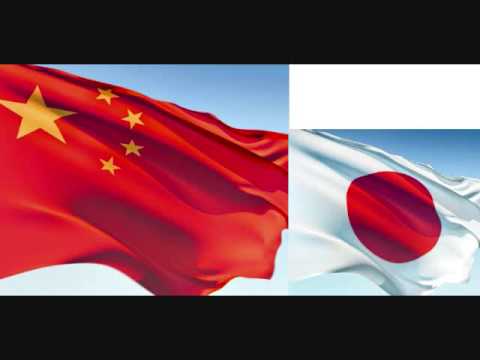 TOKYO — Japan confirmed Monday that China’s economy surpassed its own as the world’s second largest in 2010 and said a late-year downturn was Japan’s first quarterly contraction in more than a year.
Japan’s real GDP expanded 3.9 percent in the calendar year in the first annual growth in three years, but it wasn’t enough to hold off a surging China. Japan’s nominal GDP last year came to $5.4742 trillion, less than China’s total of $5.8786 trillion, the Cabinet Office said.
Gross domestic product shrunk at an annualized rate of 1.1 percent in the October-December quarter, a sharp reversal from a revised 3.3 percent expansion in the third quarter, the government said.
A slowdown in exports and weaker consumer demand at home led to the unsurprising downturn, which is expected to be temporary. The result was better than Kyodo news agency’s average market forecast of an annualized 2.2 percent decline.
China was acknowledged last year as having grown to the world’s second-largest economy, but the Japanese data confirming it were not available until Monday. The switch underscores the nations’ stark contrasts: China is growing rapidly and driving the global economy, while Japan is struggling with persistent deflation, an aging population and ballooning public debt.
Prime Minister Naoto Kan has pledged to revive the economy and make major reforms in the country’s tax and social welfare systems. His approval ratings are eroding quickly, however, as voters question his government’s ability to lead the country through its pressing problems.
The fourth-quarter figure translates to a 0.3 percent fall from the previous three-month period, according to the Cabinet Office’s preliminary data. Consumer spending, which accounts for some 60 percent of GDP, fell 0.7 percent. Auto sales slumped during the quarter after government subsidies for “green” vehicles expired in September.
Exports fell 0.7 percent from the previous quarter amid a strong yen and waning global demand. A rise in the Japanese currency reduces the value of exporters’ profits overseas and makes Japanese goods pricier in foreign markets.
The road ahead looks brighter, with economists saying GDP will expand this quarter in tandem with global growth. The head of Japan’s central bank, Masaaki Shirakawa, said last week that that recent signs indicate Japan is emerging from the “pause” and performing at par with other advanced economies.
Ryutaro Kono, chief economist at BNP Paribas ( BNPQY.PK – news – people ) in Tokyo, says exports and production have escaped their “soft patches.”
“The economy seems to be recovering again from December, so the negative growth in (the fourth quarter) need not become the basis for pessimism about Japan’s cyclical outlook,” he said in a report this month.


![[Most Recent Quotes from www.kitco.com]](https://i0.wp.com/www.kitconet.com/charts/metals/gold/t24_au_en_usoz_2.gif)
![[Most Recent Quotes from www.kitco.com]](https://i0.wp.com/www.kitconet.com/charts/metals/silver/t24_ag_en_usoz_2.gif)

 crisisboom
 CRISISBOOM
You must be logged in to post a comment.