Archive
Empty Store Shelves Coming to America
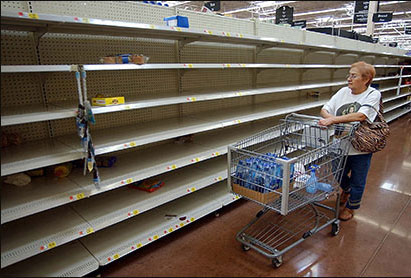 The National Inflation Association today issued a warning to all Americans that empty store shelves will likely be coming to America as a result of government price controls during the upcoming hyperinflationary crisis. This morning, NIA released a video preview of what hyperinflation will look like in the U.S. This extremely important must see video is now available on NIA’s video page.
NIA’s six-minute video released today goes into detail about an event that took place just outside of Boston, Massachusetts in May of this year. This story was widely ignored by the nationwide mainstream media, but NIA believes it was one of the most important news events of the first half of 2010. Although this particular crisis in Boston was due to decaying infrastructure, NIA believes a currency crisis will lead to the same type of panic on a nationwide basis.
NIA hopes that this video serves as a wake-up call for Americans to take the necessary steps to prepare for hyperinflation and become educated about the U.S. economy. In Zimbabwe during hyperinflation, Zimbabweans were forced to transact in gold and silver. It’s only a matter of time before the U.S. dollar becomes worthless and the only Americans with wealth will be those who own Read more…
The Future of Food Riots

This is a map of the countries in which there have been food riots
If all the food in the world were shared out evenly, there would be enough to go around.
That has been true for centuries now: if food was scarce, the problem was that it wasn’t in the right place, but there was no global shortage. However, that will not be true much longer.
The food riots began in Algeria more than a week ago, and they are going to spread. During the last global food shortage in 2008, there was serious rioting in Mexico, Indonesia, and Egypt. We may expect to see that again this time, only bigger and more widespread.
Most people in these countries live in a cash economy, and a large proportion live in cities. They buy their food, they don’t grow it.
That makes them very vulnerable, because they have to eat almost as much as people in rich countries do, but their incomes are much lower.
The poor, urban multitudes in these countries (including China and India) spend up to half of their income on food, compared to only about 10 percent in the rich countries. When food prices soar, these people quickly find that they simply lack the money to go on feeding themselves and their children properly—and food prices now are at an all-time high.
“We are entering a danger territory,” said Abdolreza Abbassian, chief economist at the Food and Agriculture Organization, on January 5.
The price of a basket of cereals, oils, dairy, meat, and sugar that reflects global consumption patterns has risen steadily for six months. It has just broken through the previous record, set during the last food panic in June 2008.
“There is still room for prices to go up much higher,” Abbassian added, “if, for example, the dry conditions in Read more…
USDA begins surveying damage to citrus crop
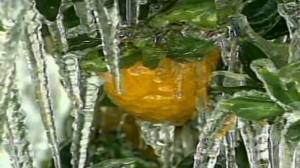 Florida’s freezes wiped out thousands of acres worth of agriculture and millions of cases of food.
Bruce Rottman is picking fruit to get a picture of how bad Florida’s freezes were on citrus.
Rottman works with the USDA, surveying crops to assess damage.
“There’s one right here that’s on the border line,” Rottman said. “It’s got some damage right here where you can see the wavy segment wall there. The fruit is dry right here.”
Nick Faryna, a third generation citrus grower, owns these groves.
He faired surprisingly well, but said the citrus industry will definitely feel the one-two punch from the freezes over the last month.
“Normally we catch the brunt of every system that comes through,” Faryna said. “In this particular event, the air came in so strongly for two days, the air worked its way all the way to South Florida. It was kind of a democratic event. Everyone caught a little bit of it this time.”
Some got hit a lot worse than others.
“There are some areas in Lake County where I have seen some pretty good damage,” Rottman said.
At a grove in Howey-in-the-Hills, most of the leaves are gone and the trees look weathered by winter.
Rottman said this is how it looked after the notorious freezes in the 1980s that wiped out much of the citrus industry here.
“Growers that were in the lower grounds, the sheltered and protected areas really caught the brunt of it this time. And it’s pretty much industry-wide this time,” Faryna said.
Overall, Faryna said about 25 percent of the fruit in his groves suffered some sort of damage from the freezes.
Now, there’s a rush among citrus growers across the state to get that fruit into the orange juice factories before more of it hits the ground.
“It could have been worse,” Faryna said.
Every time there’s a freeze and damage to Florida agriculture, big money is lost here in the state.
Global Seed Vault in Depth

About the Seed Vault:
The Svalbard Global Seed Vault is designed to safeguard more than 2 billion seeds in case of natural or man-made disaster.
Located on a Norwegian island in the Arctic Ocean near the village of Longyearbyen, the vault is built into permafrost deep inside a mountain. It opened Tuesday, with 75 boxes of seeds.
Norway owns the facility — nicknamed the “Doomsday Vault” — and the Global Crop Diversity Trust is funding the seed collection.
Cary Fowler, the group’s executive director, says the world is losing a significant amount of diversity “on a daily basis.”
“When a crop variety becomes extinct, we lose the ability to use any unique trait that it might have in the future. So if it turns out that one of those crop varieties held the key to resistance to a particular insect pest or disease, or was really heat tolerant and could be used in the future to help us adapt to climate change, then it’s sort of tough luck,” Fowler tells Melissa Block.
The three storage rooms inside the vault are sealed behind air-tight doors and kept at a temperature below zero. Each one can hold about 1.5 million small packages of seeds.
The seeds that are viable for the shortest amount of time — lettuce, for example — can stay healthy for about 50 years, Fowler says.
But at the other extreme, experimental results suggest that other seeds — such as sorghum — could be safely stored in these conditions for nearly 20,000 years.
Monitoring of the seed vault will take place electronically — and no one will work at the site physically on a day-to-day basis.
Fowler says the seed vault’s annual operating cost will be about $150,000.
“We think that’s about the cheapest insurance policy anybody can imagine for the world’s most valuable natural resource,” he says.
The true meaning behind the Seed Vault : Read more…
Food Shortages Will Become A Global Crisis: 7 Reasons

Food inflation is here and it’s here to stay. We can see it getting worse every time we buy groceries. Basic food commodities like wheat, corn, soybeans, and rice have been skyrocketing since July, 2010 to record highs. These sustained price increases are only expected to continue as food production shortfalls really begin to take their toll this year and beyond.
This summer Russia banned exports of wheat to ensure their nation’s supply, which sparked complaints of protectionism. The U.S. agriculture community is already talking about rationing corn over ethanol mandates versus supply concerns. We’ve seen nothing yet in terms of food protectionism.
Global food shortages have forced emergency meetings at the U.N. Food and Agriculture Organization where they claim “urgent action” is needed. They point to extreme weather as the main contributing factor to the growing food shortages. However, commodity speculation has also been targeted as one of the culprits.
It seems that the crisis would also present the perfect opportunity and the justification for the large GMO food companies to force their products into skeptical markets like in Europe and Japan, as recently leaked cables suggest. One thing is for sure; food shortages will likely continue to get worse and eventually become a full-scale global food crisis.
Here are seven reasons why food shortages are here to stay on a worldwide scale:
1. Extreme Weather: Extreme weather has been a major problem for global food; from summer droughts and heat waves that devastated Russia’s wheat crop to the ongoing catastrophes from ‘biblical flooding’ in Australia and Pakistan. And it doesn’t end there. An extreme winter cold snap and snow has struck the whole of Europe and the United States. Staple crops are failing in all of these regions making an already fragile harvest in 2010 even more critical into 2011. Based on the recent past, extreme weather conditions are only likely to continue and perhaps worsen in the coming years.
2. Bee Colony Collapse: The Guardian reported this week on the USDA’s study on bee colony decline in the United States: “The abundance of four common species of bumblebee in the US has dropped by 96% in just the past few decades.” It is generally understood that bees pollinate around 90% of the world’s commercial crops. Obviously, if these numbers are remotely close to accurate, then our natural food supply is in serious trouble. Luckily for us, the GMO giants have seeds that don’t require open pollination to bear fruit.

3. Collapsing Dollar: Commodity speculation has resulted in massive food inflation that is already creating crisis levels in poor regions in the world. Food commodity prices have soared to record highs mainly because they trade in the ever-weakening dollar. Traders will point to the circumstances described in this article to justify their gambles, but also that food represents a tangible investment in an era of worthless paper. Because the debt problems in the United States are only getting worse, and nations such as China and Russia are dropping the dollar as their trade vehicle, the dollar will continue to weaken, further driving all commodity prices higher.
4. Regulatory Crackdown: Even before the FDA was given broad new powers to regulate food in the recent Food Safety Modernization Act, small farms were being raided and regulated out of business. Now, the new food bill essentially puts food safety under the direction of the Department of Homeland Security where the food cartel uses the government to further consolidate their control over the industry. Militant police action is taken against farmers suspected of falling short on quality regulations. It is the power to intimidate innocent small farmers out of the business.
 5. Rising oil prices: In 2008, record oil prices that topped $147 per barrel drove food prices to new highs. Rice tripled in 6 months during the surge of oil prices, along with other food commodities. The price of oil affects food on multiple levels; from plowing fields, fertilizers and pesticides, to harvesting and hauling. Flash forward to 2011: many experts are predicting that oil may reach upwards of $150-$200 per barrel in the months ahead. As oil closed out 2010 at its 2-year highs of $95/bbl, it is likely on pace to continue climbing. Again, a weakening dollar will also play its part in driving oil prices, and consequently, food prices to crisis levels.
6. Increased Soil Pollution: Geo-engineering has been taking place on a grand scale in the United States for decades now. Previously known in conspiracy circles as ‘chemtrailing,’ the government has now admitted to these experiments claiming they are plan “B” to combat global warming. The patents involved in this spraying are heavy in aluminum. This mass aluminum contamination is killing plants and trees and making the soil sterile to most crops. In an astonishing coincidence, GMO companies have patented aluminum-resistant seeds to save the day.
The equation is actually quite simple: food is a relatively inelastic commodity in terms of demand. In other words, people need to eat no matter how bad the economy gets. Thus, demand can be basically measured by the size of the population. Therefore, as demand remains steady while the 7 supply pressures outlined above continue to worsen, food prices will have only one place to go — up, up, and up.
As international agencies scramble to find “solutions,” their energy may be just as well spent on questioning if this famine scenario is being purposely manipulated for profits. Regardless, the average person would be very wise to stock up on food staples as an investment, and frankly to survive the worsening food crisis
Future Of Food For 9 Billion? Edible Insects
Insects produce much smaller quantities of greenhouse gases per kilogram of meat than cattle and pigs. This is the conclusion of scientists at Wageningen University who have joined forces with government and industry to investigate whether the rearing of insects could contribute to more sustainable protein production. Insect meat could therefore form an alternative to more conventional types of meat.
Credit: Wageningen University and Research Centre
Cattle farming worldwide is a major producer of greenhouse gases. For the assessment of the sustainability of insect meat, the researchers at Wageningen University quantified the production of greenhouse gases of several edible insect species. The results of the study were published in the renowned online journal PLoS ONE on 29 December.
The research team has for the first time quantified the greenhouse gases produced per kilogram of insect product. The gases concerned were methane (CH4) and nitrous oxide (N2O). The results demonstrate that insects produce much smaller quantities of greenhouse gases than conventional livestock such as cattle and pigs. For example, a pig produces between ten and a hundred times as much greenhouse gases per kilogram compared with mealworms.
Emissions of ammonia (which causes the acidification and eutrophication of groundwater) also appear to be significantly lower. A pig produces between eight and twelve times as much ammonia per kilogram of growth compared to crickets, and up to fifty times more than locusts. An additional advantage of insects over mammals is that they convert their food into meat quicker.
Alternative
The study indicates that proteins originating from insects in principle form an environmentally-friendly alternative to proteins from meat originating from conventional livestock. Further research is required to ascertain whether the production of a kilogram of insect protein is also more environmentally friendly than conventional animal protein when the entire production chain is taken into account.
Contacts and sources:
Wageningen University and Research Centre
Full bibliographic information
Dennis Oonincx, Joost van Itterbeeck, Marcel Heetkamp, Henry van den Brand, Joop van Loon, Arnold van Huis. An Exploration on Greenhouse Gas and Ammonia Production by Insect Species Suitable for Animal or Human Consumption. PLoS ONE 29 December 2010. See http://www.plosone.org/article/info%3Adoi%2F10.1371%2Fjournal.pone.0014445
Food Crisis of 2011
The Food Crisis of 2011

- Corn: Up 63%
- Wheat: Up 84%
- Soybeans: Up 24%
- Sugar: Up 55%
- Aug. 5: A failed wheat harvest prompted Russia to ban grain exports through the end of the year. Later in August, the ban was extended through the end of 2011. Drought has wrecked the harvest in Russia, Ukraine and Kazakhstan – home to a quarter of world production.
- Oct. 8: For a second month running, the Agriculture Department cut its forecast for US corn production. The USDA predicts a 3.4% decline from last year. Damage done by Midwestern floods in June was made worse by hot, dry weather in August.
Zimbabwe Hyperinflation comming soon to AMERICA?
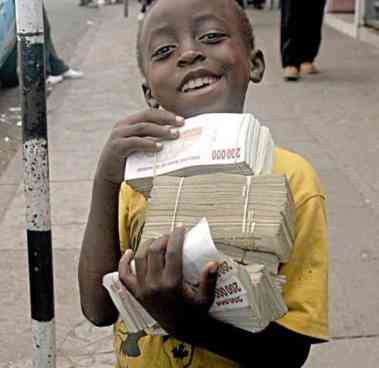
In November 2008 inflation in Zimbabwe hit 89.7 sextillion percent – that is 89 700 000 000 000 000 000 000%.
To get a rough idea how much that is – a sextillion is a billion trillions.In addition to the staggering hyperinflation, unemployment in Zimbabwe also went up to 85% and over the third of the people left the country. Check out the pictures below to get an idea how was life in Zimbabwe during the hyperinflation.
Zimbabwe’s inflation is hardly history’s worst — in Weimar, Germany in 1923, prices quadrupled each month, compared with doubling about once every three or four months in Zimbabwe. That said, experts agree that Zimbabwe’s inflation is currently the world’s highest, and has been for some time. Could this happen to America in the near future?
Fact: Hyperinflation has occurred in 30 nations within the last 100 years.
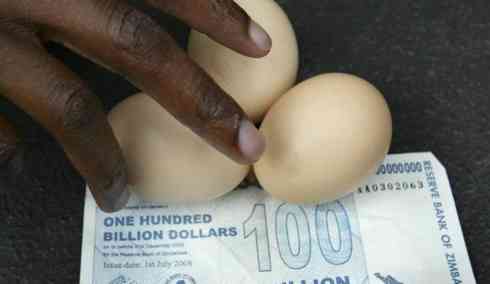
What can you buy with 100 billion dollars? Well… it’s not enough for 4 eggs but you can get 3…


![[Most Recent Quotes from www.kitco.com]](https://i0.wp.com/www.kitconet.com/charts/metals/gold/t24_au_en_usoz_2.gif)
![[Most Recent Quotes from www.kitco.com]](https://i0.wp.com/www.kitconet.com/charts/metals/silver/t24_ag_en_usoz_2.gif)

 crisisboom
 CRISISBOOM
You must be logged in to post a comment.