Archive
War Imminent In Straits Of Hormuz? $200 A Barrel Oil?
Submitted by John C.K. Daly of OilPrice.com
 The pieces and policies for potential conflict in the Persian Gulf are seemingly drawing inexorably together.
Since 24 December the Iranian Navy has been holding its ten-day Velayat 90 naval exercises, covering an area in the Arabian Sea stretching from east of the Strait of Hormuz entrance to the Persian Gulf to the Gulf of Aden. The day the maneuvers opened Iranian Navy Commander Rear Admiral Habibollah Sayyari told a press conference that the exercises were intended to show “Iran’s military prowess and defense capabilities in international waters, convey a message of peace and friendship to regional countries, and test the newest military equipment.” The exercise is Iran’s first naval training drill since May 2010, when the country held Read more…
Nebraskans say a Canadian oil pipeline poses unacceptable risks
 Part of the Keystone pipeline (solid line) is already working. Construction on Keystone XL (red dotted line) is supposed to start soon so oil can flow to the Gulf
The 20,000 miles of pipes that carry oil and gas across Nebraska’s open prairies don’t bother Randy Thompson at all. Neither do greenhouse gas emissions or oil geopolitics.
Yet the 63-year-old, Republican-voting rancher and other Nebraska landowners have begun to kick up a lot of dust over the Keystone XL, a 1,711-mile pipeline that, if built, will cut across Nebraska’s heartland as it funnels oil from the Athabasca sands of Alberta, Canada, to Read more…
BREAKING NEWS! OIL LEAK IN GULF CONFIRMED FROM THE BP GULF OIL SPILL MACONDO WELL!
In this video shot near the site of the Deepwater Horizon accident, globs of oil are seen blooming on the Gulf surface in iridescent yellow circles. Chemical analysis of the Press-Register’s samples by LSU scientists found that the oil could be from the BP well, but results were not conclusive. BP meanwhile said no oil was present when the company flew over the area Saturday.
Read more…
China And Iran To Bypass Dollar, Plan Oil Barter System, And A Deeper Dive Into The Iranian Oil Bourse
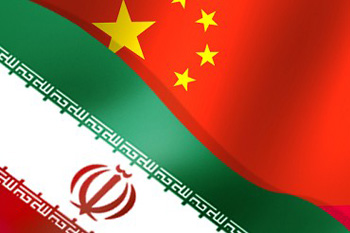 One of the more notable events in the past week was the previously discussed reopening of the Iranian Oil Bourse, an attempt by Iran to launch a venue that bypasses US sanctions against Iran which has prevented payment in the world’s reserve currency for Iranian goods. “Big deal”, some will say, this is not the first time Iran has attempt to upstage the Great Satan. Well, true, although as OilPrice said last week, “what it would take for Iran’s new exchange to survive and flourish are some heavy-duty customers that Washington would be wary of picking a fight with, and Tehran already has one – China… China, the world’s largest buyer of Iranian crude oil, has renewed its annual import pacts for 2011. In 2010 Iran supplied about 12 percent of China’s total crude imports. According to the latest report of the China Customs Organization, Iran’s total oil exports to China stood at Read more…
Iran Opens Oil Bourse – Harbinger of Trouble for New York and London?
 The last three years of global recession have dealt a major blow to American capitalist ideas trumpeted throughout the world on the value of “free markets.” Wall St has been revealed as a form of casino economy, with the bankster insiders gambling with other people’s, and eventually, the government’s money in the form of bailouts. As the Republicans in Congress, scenting victory in the 2012 presidential elections, hold a gun to the Obama administration’s head and rating agencies consider downgrading U.S. government bonds in light of Washington’s possible defaulting, many ideas around the world that previously seemed implausible because of the dominance of the U.S. economy are garnering renewed interest.
Not surprisingly, many of these concepts originate in countries not enamored with Washington’s influence, perhaps none so more than “Axis of Evil” charter member Iran, which has seen its economy Read more…
China eyes Canada oil, US’s energy nest egg
CALGARY, Alberta: In the northern reaches of Alberta lies a vast reserve of oil that the U.S. views as a pillar of its future energy needs.
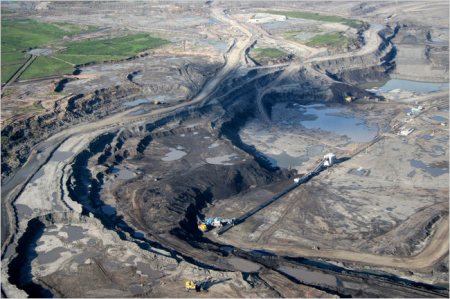 China, with a growing appetite for oil that may one day surpass that of the U.S., is ready to spend the dollars for a big piece of it.
The oil sands of this Canadian province are so big that they will be able to serve both of the world’s largest economies as production expands in the coming years. But that will mean building at least two pipelines, one south to the Texas Gulf Coast and another west toward the Pacific, and that in turn means fresh environmental battles on top of those already raging over the costly and energy-intensive method of extracting oil from sand.
Most believe that both will eventually be built. But if the U.S. doesn’t approve its pipeline promptly, Canada might increasingly look to China, thinking America doesn’t want a big share in what environmentalists call “dirty oil,” because they say it increases greenhouse gas emissions.
Alberta has the world’s third largest oil reserves, more than 170 billion barrels. Daily production of 1.5 million barrels from the oil sands is expected to nearly triple to 3.7 million in 2025. Overall, Alberta has more oil than Read more…
Global Oil Reserves Tapped in Effort to Cut Cost at Pump
 The United States will lead an international effort to release 60 million barrels of petroleum reserves to world markets, replacing some of the oil production lost because of the conflict in Libya, the International Energy Agency announced in Paris on Thursday.
The action is aimed at reducing energy prices for businesses and consumers, and in early trading futures contracts for West Texas intermediate crude oil were down $4.50 a barrel to around $91.
The United States will release half of the total amount from the Strategic Petroleum Reserve, with the rest of the oil to be provided by other nations among the international agency’s 28 member states. Negotiations for the coordinated response have been going on in secret for weeks, according to a person involved in the talks. Similar unified action was Read more…
WikiLeaks: Saudis Often Warned U.S. About Oil Speculators
Further evidence of the vacuity of the ‘war for oil’ argument. Much of the price for oil is today determined in the derivatives market by Wall Street speculators rather than by producers or suppliers. The underlying commodity usually has a minimum impact on the actual price. But the Commodity Futures Trading Commission will not investigate this for the same reason why it was prevented from investigating the banks. Because Wall Street owns the executive branch. (Don’t miss the excellent Inside Job and this post by Pat Lang).
Why oil prices will spike again soon
How long till the next oil shock?
Energy prices have been coming down this spring as fears of a Middle East blowup fade. But persistent global demand, tepid supply growth and easy money mean it may not be long till the next damaging spike, Goldman Sachs economists say.
 Higher and higher
Oil prices could surge again by the end of 2012, economists Jan Hatzius and Andrew Tilton wrote in a note to clients this past weekend. They say the snail-like pace of global oil supply expansion – which Goldman projects at 1% or so annually – can’t keep a petroleum-addicted world economy rolling without prices rising, perhaps sharply.
So don’t get too used to paying a mere $3 and change for gasoline. Higher prices are on the way soon enough, thanks to stretched supplies and a Federal Reserve spigot that is likely to remain wide open for years to come.
“The fundamental story of increased oil scarcity is unchanged, and our commodity strategists now see distinct upside risks to their current forecast of $120/barrel for Brent crude by late 2012,” Hatzius and Tilton write. “So the impact of scarcer oil and higher oil prices on economic activity remains at the top of our list of worries.”
What makes higher oil prices almost inevitable is the depth of the jobs deficit in the United States. Unemployment is officially 9% but is more like 13% if you consider the low rate of labor force participation, says Bernstein Research strategist Vadim Zlotnikov. That number has fallen this year to levels not seen since 1985.
High joblessness and weak inflation will keep the fed funds rate near zero at least through next year and perhaps longer, Hatzius and Tilton write. That should help keep pushing unemployment slowly toward its long-run average of around 6% — but at the expense of further dollar depreciation, stronger global demand and, ultimately, higher oil prices.
So the selloff that has taken the crude price down to $100 or so in New York and $112 in Europe, where Brent is traded, may persist through much of 2011. But it won’t last Read more…
Oil Crisis Just Got Real: Sinopec (Read China) Cuts Off Oil Exports
 As if a dollar in freefall was not enough, surging oil is about to hit the turbo boost, decimating what is left of the US (and global) consumer. Xinhua, via Energy Daily, brings this stunner: ” Chinese oil giant Sinopec has stopped exporting oil products to maintain domestic supplies amid disruption concerns caused by Middle East unrest and Japan’s earthquake, a report said Wednesday. The state-run Xinhua news agency did not say how long the suspension would last but it reported that the firm had said it also would take steps to step up output “to maintain domestic market supplies of refined oil products”. Oh but don’t worry, those good Saudi folks are seeing a massive drop in demand… for their Kool aid perhaps. “Sinopec would ensure supplies met the “basic needs” of the southern Chinese special regions of Hong Kong and Macao, but they also should expect an unspecified drop in supply, Xinhua quoted an unnamed company official as saying.” Now… does anyone remember the 1970s? Read more…


![[Most Recent Quotes from www.kitco.com]](https://i0.wp.com/www.kitconet.com/charts/metals/gold/t24_au_en_usoz_2.gif)
![[Most Recent Quotes from www.kitco.com]](https://i0.wp.com/www.kitconet.com/charts/metals/silver/t24_ag_en_usoz_2.gif)

 crisisboom
 CRISISBOOM
You must be logged in to post a comment.