Archive
Cables show China used debt holdings to press US
 |
| © AFP/File |
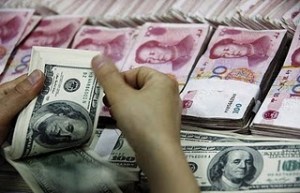
WASHINGTON (AFP) – Leaked diplomatic cables vividly show China’s willingness to translate its massive holdings of US debt into political influence on issues ranging from Taiwan’s sovereignty to Washington’s financial policy.
China’s clout — gleaned from its nearly $900 billion stack of US debt — has been widely commented on in the United States, but sensitive cables show just how much influence Beijing has and how keen Washington is to address its rival’s concerns.
An October 2008 cable, released by WikiLeaks, showed a senior Chinese official linking questions about much-needed Chinese investment to sensitive Read more…
WikiLeaks Cables: Repression Has Effectively Limited Libyans’ Vision for Reform
 Libyans are mobilizing for a “Day of Rage” today on February 17. Protesters in the early afternoon, according to a member of the Libyan Youth Movement, were reported to be moving to the Security Headquarters in Benghazi. The protests are said to be gaining numbers and are headed for Maydan al Shajara once more, a location that had been the site of gunfire and petrol bombs.
The same individual also reports shortages of medical supplies at Al Bayda hospital and urges international health organizations to help out. And the movement member shared reports of people in Benghazi managed to chase away “pro-government Gaddafi thugs” by throwing rocks at them.
Many in Libya believed ahead of the “Day of Rage” that the Gaddafi regime was planning to threaten Libyans with live fire and the targeting of family members if they participated in anti-government protests. Also, it was reported that Gaddafi was having government employees go protest at pro-Gaddafi rallies, and, if they refused, they would be fired.
Cables released on Libya provide context for the protests that are Read more…
NATO Saw Potential For Russian Tactical Nuke Use, Cable Says
NATO in 2009 judged that the Russian armed forces remained ready to use tactical nuclear arms to respond to low-level or other military conflicts, the Associated Press reported yesterday (see GSN, Feb. 14).
 In general, the alliance assessed that Russia’s military was prepared to deal with no more than a medium-level conflict in the nation’s western sector, according to a diplomatic dispatch from the U.S. mission to NATO made public by the transparency organization WikiLeaks. Two large-scale Russian military drills conducted in 2009 were handicapped by personnel shortfalls and outdated technology, the document said (Slobodan Lekic, Associated Press/Google News, Feb. 14).
“(Russia is) still relying on the use of tactical nuclear weapons, even in local or regional conflicts,” the Xinhua News Agency quoted the dispatch as saying.
NATO’s conventional military edge is thought to be a key reason for the nuclear power’s continued holding of an estimated 2,000 battlefield nuclear weapons within Russian borders. Comparatively, the United States is believed to have only 200 nonstrategic nuclear arms fielded in five NATO states.
Washington has announced it wants to begin talks within one year with Moscow on negotiating a pact that would limit the two sides’ tactical nuclear weapons. The former Cold War antagonists recently enacted the New START arms control pact, which caps each sides’ deployed strategic nuclear arsenal at 1,550 (Xinhua News Agency/People’s Daily Online, Feb. 15).
Chinese weapons fall into hands of insurgents

Insurgents in Afghanistan and Iraq have obtained Chinese-made weapons
Chinese-made weapons have fallen into the hands of insurgents fighting Coalition forces in Iraq and Afghanistan because of China’s failure to enforce export controls on arms to Iran, the leaked cables show.
By Gordon Rayner
US diplomats also feared that Chinese companies were selling materials to Iran that could be used to build nuclear missiles and other weapons of mass destruction.
Chinese-made guns, as well as rocket-propelled grenades and surface-to-air missiles containing Chinese-made components, have all been used against Coalition forces or civilian targets in Iraq, the US claims, while other weapons have been obtained by militants in Afghanistan.
The US was so concerned about Chinese arms and components being sold to Iran that in September 2008 the State Department launched a major diplomatic offensive to put pressure on Beijing.
It decided to share intelligence with eight “key allies” including Spain and Italy to “persuade China to enforce its export control laws more effectively” and to “aggressively implement” UN Security Council resolutions on the sale of arms and weapons materials.
Ambassadors were told to encourage the foreign governments to point out to the Chinese that arms sales to Iran “could ultimately damage China’s reputation and its bilateral relationship with” each of the countries.
WikiLeaks cables: Saudi Arabia is quickly running out of oil
US diplomat convinced by Saudi expert that reserves of world’s biggest oil exporter have been overstated by nearly 40%

The US fears that Saudi Arabia, the world’s largest crude oil exporter, may not have enough reserves to prevent oil prices escalating, confidential cables from its embassy in Riyadh show.
The cables, released by WikiLeaks, urge Washington to take seriously a warning from a senior Saudi government oil executive that the kingdom’s crude oil reserves may have been overstated by as much as 300bn barrels – nearly 40%.
The revelation comes as the oil price has soared in recent weeks to more than $100 a barrel on global demand and tensions in the Middle East. Many analysts expect that the Saudis and their Opec cartel partners would pump more oil if rising prices threatened to Read more…
Cables say Israel favours Suleiman
Preference for Egypt’s new vice-president to succeed Mubarak disclosed by leaked documents obtained by WikiLeaks. |
| Mounting protests against Mubarak’s rule prompted the Egyptian leader to appoint Suleiman as vice-president [AFP] |

Omar Suleiman, Egypt’s recently appointed vice-president, has long long seen by Israel as the favoured successor to Hosni Mubarak, the current president, according to a leaked diplomatic cable obtained by WikiLeaks, the whistleblower website, and published by the UK daily, The Telegraph.
The August 2008 cable said David Hacham, a senior adviser at the Israeli ministry of defence (MoD), told US officials the Israelis expected Suleiman, spelt Soliman in some cables, to take over.
“Hacham noted that the Israelis believe Soliman is likely to serve as at least an interim president if Mubarak dies or is incapacitated,” the cable sent from the US embassy in Tel Aviv said.
“We defer to Embassy Cairo for analysis of Egyptian succession scenarios, but there is no question that Israel is most comfortable with the prospect of Omar Soliman,” the memo cited US diplomats as saying.
The cable said Hacham was full of praise for Suleiman, even noting that Read more…
Leaked cables reveal anger at regime may make Libya the next Arab domino to fall
THE violence and corruption of members of Colonel Muammar Gaddafi’s family have made Libya a gangster state with a worse record of governance than Egypt or Tunisia, according to leaked US diplomatic cables.
 The documents reveal previously undisclosed details of how family greed, rivalry and extremism have complicated British and US efforts to normalize relations with Libya since it decided to abandon nuclear weapons and renounce terrorism. Gaddafi’s children plunder the country’s oil revenues, run a kleptocracy and operate a reign of terror that has created simmering hatred and resentment among the people, according to the cables released by WikiLeaks.
In the light of the upheavals in the Arab world, the diplomatic traffic also shows that far from being stable, Libya could be another corrupt authoritarian domino poised to fall.
One intriguing sequence of cables tells how Switzerland faced down threats after Swiss police arrested Hannibal Gaddafi, a younger son, and his wife for allegedly abusing two of their domestic staff.
Swiss police officers drew their guns and fought to disarm two Read more…
WikiLeaks: US agrees to tell Russia Britain’s nuclear secrets
The US secretly agreed to give the Russians sensitive information on Britain’s nuclear deterrent to persuade them to sign a key treaty, The Daily Telegraph can disclose.

Information about every Trident missile the US supplies to Britain will be given to Russia as part of an arms control deal signed by President Barack Obama next week.
Defence analysts claim the agreement risks undermining Britain’s policy of refusing to confirm the exact size of its nuclear arsenal.
The fact that the Americans used British nuclear secrets as a bargaining chip also sheds new light on the so-called “special relationship”, which is shown often to be a one-sided affair by US diplomatic communications obtained by the WikiLeaks website.
Details of the behind-the-scenes talks are contained in more than 1,400 US embassy cables published to date by the Telegraph, including almost 800 sent from the London Embassy, which are published online today. The documents also show that: Read more…
WikiLeaks: tension in the Middle East and Asia has ‘direct potential’ to lead to nuclear war
Tension in the Middle East and Asia has given rise to an escalating atomic arms and missiles race which has “the direct potential to lead to nuclear war,” leaked diplomatic documents disclose.
By Heidi Blake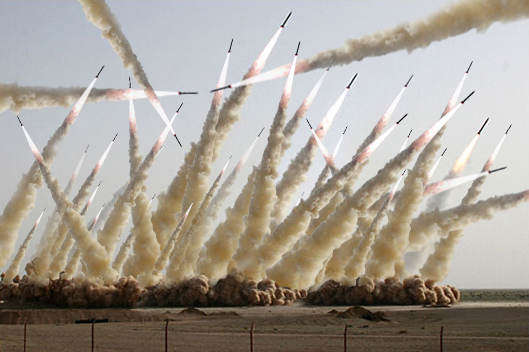 Rogue states are also increasing their efforts to secure chemical and biological weapons, and the means to deploy them, leaving billions in the world’s most densely populated area at risk of a devastating strike, the documents show.
States such as North Korea, Syria and Iran are developing long-range missiles capable of hitting targets outside the region, records of top-level security briefings obtained by WikiLeaks show.
Long-running hostilities between India and Pakistan – which both have nuclear weapons capabilities – are at the root of fears of a nuclear conflict in the region. A classified Pentagon study estimated in 2002 that a nuclear war between the two countries could result in 12 million deaths.
Secret records of a US security briefing at an international non-proliferation summit in 2008 stated that “a nuclear and missile arms race [in South Asia] has the Read more…
China’s covert spy pad technology
 Watch your step — you might just be standing on a spy pad.
Chinese researchers have given new meaning to the term “watch your step” with a so-called “spy pad,” a device that can identify people by their gait, the South China Morning Post reported.
According to a Wikileaks document released in December, the device is able to capture the biometric information of anyone who steps on it, such as the dimension, weight and force applied by a person’s foot when they walk.
Developers believe these statistics are unique to each individual and can be used for identification. The spy pad’s sensors are so sensitive that they are supposedly able to track human targets even if they’ve changed shoes.
You’ve got to wonder why Ian Fleming didn’t think of it when he was writing the James Bond books. Or, for that matter, George Orwell when he was writing “1984.”
Acording to the SCMP report, spy pads were created by scientists at China’s IIM, or Institute of Intelligent Machines, reportedly in collaboration with developers at Nintendo, which may explain the device’s similarities with the Wii Fit Balance Board.
The Ministry for State Security, China’s spy agency, has already jumped on the project and is currently its biggest financier, according to the South China Morning Post.
Zhou Xu, a leading researcher on the project, is quoted by the Post as saying that “the government wants to use this device to track some citizens of concern.”
The gadget piqued the curiosity of U.S. diplomats in Beijing, who wrote in a diplomatic cable in February last year:
“The device can be covertly installed in a floor and is able to collect biometrics data on individuals covertly without their knowledge.
“When questioned about the device’s potential applications, IIM officials stated the device was being used by ‘secret’ customers and was not available on the commercial market.”
The Post reported that the gadget has been tested on the lab’s 100-odd employees and has an accuracy rate of 98 percent.


![[Most Recent Quotes from www.kitco.com]](https://i0.wp.com/www.kitconet.com/charts/metals/gold/t24_au_en_usoz_2.gif)
![[Most Recent Quotes from www.kitco.com]](https://i0.wp.com/www.kitconet.com/charts/metals/silver/t24_ag_en_usoz_2.gif)

 crisisboom
 CRISISBOOM
You must be logged in to post a comment.