Archive
Fed chief expects high unemployment, economic growth in 2011
Vicki Needham
 Unemployment will remain high, the nation’s economy could expand by 4 percent and interest rates may need go up, Federal Reserve Bank of Philadelphia President Charles Plosser said Monday.
“If economic growth in the United States continues to gain traction and the prospects begin to look ever better, it might be time for us to begin thinking about how do we begin to gradually take our foot off the accelerator,” Plosser told reporters after a speech at the Central Bank of Chile in Santiago, according to news reports.
Plosser said he may favor a rate increase if economic growth necessitates a change.
“It might. I’m not going to rule that out,” he said.
The central bank has said that it plans to keep short-term interest rates low for an “extended period.”
During Monday’s speech, Plosser also predicted that the U.S. could grow between 3 percent and 4 percent this year.
The Fed’s plan to purchase $600 billion in government debt will probably continue through June while the nation’s 15 million unemployed look for work, although Plosser didn’t rule out pulling the stimulus funds back earlier.
“It could end earlier if economic conditions call for it, but right now I’m not sure that that’s the most likely outcome,” he told reporters. “It obviously creates challenges for some countries because of appreciating currencies. But I think that will pass. Those are short-run issues.”
Plosser has expressed concern about whether the Fed’s quantitative easing, also known as QE2, will spur economic growth while lowering the jobless rate that has remained above 9 percent for 20 months.
“Monetary policy is not going to be able to speed up the adjustments in labor markets or prevent asset bubbles, and attempts to do so may create more instability, not less,” he said.
“Expecting too much of monetary policy will undermine its ability to achieve the one thing that it is well-designed to do — ensuring long-term price stability.”
QE2 has brought harsh criticism from some lawmakers on Capitol Hill who argue that the plan could devalue the dollar and cause inflation.
Food Crisis of 2011
The Food Crisis of 2011

- Corn: Up 63%
- Wheat: Up 84%
- Soybeans: Up 24%
- Sugar: Up 55%
- Aug. 5: A failed wheat harvest prompted Russia to ban grain exports through the end of the year. Later in August, the ban was extended through the end of 2011. Drought has wrecked the harvest in Russia, Ukraine and Kazakhstan – home to a quarter of world production.
- Oct. 8: For a second month running, the Agriculture Department cut its forecast for US corn production. The USDA predicts a 3.4% decline from last year. Damage done by Midwestern floods in June was made worse by hot, dry weather in August.
HAPPY NEW YEAR 2011!

Happy New Year!!!! Many more posts to come for the upcoming year so stay tuned!!
Federal Reserve Banking System Explained
Federal Reserve Banking System Explained
Oil will exceed $145 per barrel in 2011
As predicted by Lindsey Williams on December 16, 2010 Ken Fromm (an former Alaskan oil exec/globalist elite) has been telling Mr. Williams of particular economic woes to come from his deathbed within the next 2 years. I have researched Lindsey’s prior statements regarding oil, precious metals, and other world events and my conclusion is that he is amazingly accurate! Gulf Oil CEO Joe Petrowski said “I think we’ll be at $100 in the first quarter,” he added, “and there’s 1 in 4 chance we’ll take out the $147 highs before Memorial Day.” It is very possible in the near future by the end of 2011 we will paying in the range of $5-$8 at the pump. As of today the current price of crude oil is at $91.51.
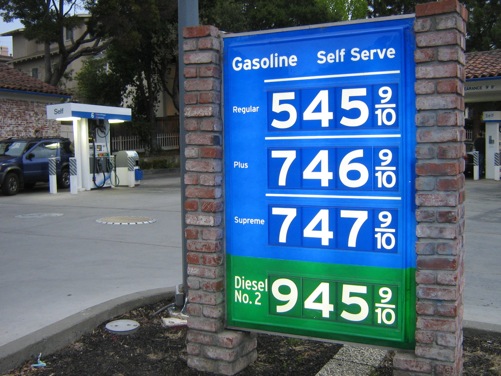
2011 Gas Prices
http://www.cnbc.com/id/40794066
http://www.infowars.com/lindsey-williams-crude-oil-price-targeted-for-150-200-per-barrel/
http://www.allbusiness.com/banking-finance/financial-markets-investing-securities/15335343-1.html
RSS


Gold
![[Most Recent Quotes from www.kitco.com]](https://i0.wp.com/www.kitconet.com/charts/metals/gold/t24_au_en_usoz_2.gif)
Silver
![[Most Recent Quotes from www.kitco.com]](https://i0.wp.com/www.kitconet.com/charts/metals/silver/t24_ag_en_usoz_2.gif)

 CRISISBOOM
You must be logged in to post a comment.