Archive
The Central Banks and Gold
 By Doug Hornig
If the mantra of the wise investor is “Buy low, sell high,” then those who run most of the Western world’s central banks must suffer from dyslexia.
These banks sold off their gold reserves for years, right into the teeth of a generation-long bear market. The last year before the sales began – i.e., during which central banks were net buyers of gold – was 1988, when the price of the metal fell from $485/oz. in early January to $410 at year’s end.
From then and right through the end of the century, they continued to sell as gold dropped steadily to its modern low of $250. The banks were in such haste to divest themselves of this disrespected relic – their single tangible asset – that it was deemed necessary to Read more…
New digital wiretap Bill – why you should be worried

Australia is one step closer to passing the controversial Cybercrime Legislation Amendment Bill 2011. Picture: Thinkstock Source: Supplied
A NEW “digital wiretap” law that would let police force companies like Telstra to store copies of emails and text messages has come under fire from civil rights advocates.
The Cybercrime Legislation Amendment Bill was passed in the House of Representatives this week after being introduced in June. It will now be debated in the Senate.
The Bill would let authorities issue a “preservation notice” to telco companies forcing them to keep copies of a suspect’s digital communications for up to 90 days while police applied for a warrant to access the data.
It would also extend the scope of existing cyber offences and allow for increased information-sharing between Read more…
North Korea poised for nuclear weapon test next year
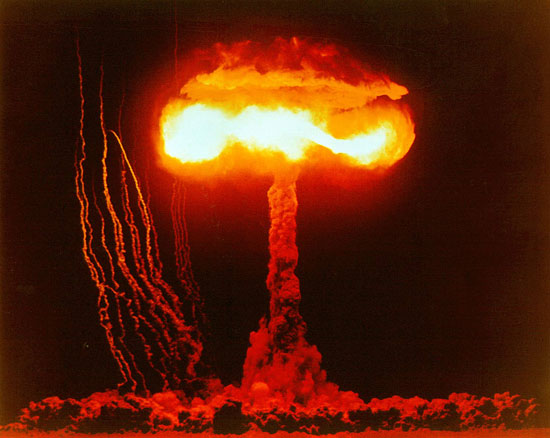 NORTH Korea will conduct another nuclear weapons test within 12 months, according to senior US sources with access to Washington’s intelligence assessments.
This will bring much closer the day when North Korean nuclear weapons could threaten Australia. And it could trigger explosive reactions in northeast Asia.
The senior US sources believe the test could come sooner rather than later, although next year is regarded as the most likely.
“2012 is an auspicious year from the North Korean point of view,” said one senior American.
“It’s an election year in the US and an election year in in South Korea. And the North Koreans have publicly declared their desire to be a fully functional nuclear weapons state by 2012.”
For most of the past decade, sources say, North Korea has been systematically involved in nuclear proliferation.
At a meeting in 2003, senior North Koreans told representatives of the Read more…
Why Oceania Matters

Since World War II, the United States has devoted few resources to the promotion of peace and stability in Oceania. Instead, it has relied on Australia and New Zealand to maintain Western strategic influence in the region. However, faced with a rising China and other emerging security issues, many analysts believe that the United States can no longer take Oceania for granted. Indeed, without the support of the United States and other regional powers, some question whether Australia and New Zealand will be able to sustain their roles as the sole guarantors of peace and stability in the region indefinitely.
Few regional analysts have been as vocal as Ernest Bower, head of the Center for Strategic and International Studies’ recently launched Pacific Partners Initiative (PPI),on the issue.
‘Very few US policymakers understand the importance (of Australian and New Zealander contributions to peace and security in Asia since World War II)…these are important US partners, but their views aren’t sufficiently reflected in our policies. This has resulted in US policy not being robust enough to manage security issues in Asia-Pacific in the next century,’ he says. ‘If we don’t shift the policy focus, then we will Read more…
Dead fish mystery at Murray lake
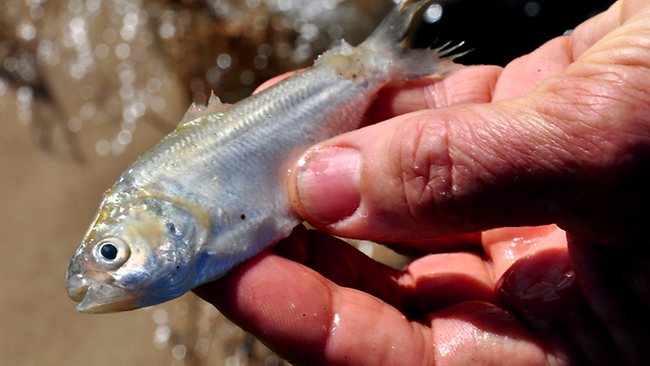
One of the fish washed up dead on the shores of Lake Alexandrina. Picture: Michael Milnes. Source: The Advertiser
THOUSANDS of dead fish have washed up along 8km of Lake Alexandrina’s shore in South Australia.
With the health of the Murray River and Lower Lake system at its best in years, the mass “fish kill” is a mystery, The Adelaide Advertiser reports.
Point Sturt resident Dot Ratcliffe said she was alarmed to find the problem when she went kayaking on the lake yesterday morning. “I saw them (extending) about 400m out in to the lake,” she said.
“It’s terribly upsetting, very distressing. There are thousands of fish washed up, something you do not want to see. I have been living here for 10 years and never seen anything like this.”
Bio-security aquatic pest manager Vic Neverauskas said Primary Industries would investigate the circumstances of the fish deaths as soon as possible. Most of the fish appear to be bony bream.
“There was a “fish kill” in Milang two weeks ago associated with cold nights,” he said.
“It is a natural phenomenon for bony bream. It’s normal for this to happen in July and August. Until we can get someone on the ground to verify the species, which will be as soon as practical, we are unable to make further comment.”
Ms Ratcliffe said friends told her they had walked from their yacht to the shoreline and were “literally walking on dead fish on the sand”.
“The smell is terrible. It’s a tragedy,” she said.
Lower Lakes fisherman Henry Jones said it might be a natural occurrence that kills mainly bony bream after a long flood. “There is a fungus that grows in their gills and around the body,” he said.
Big gaps in Australia’s cyber defences
 Australia has not plugged all the gaps in its online defences despite the threats posed by the rapid rise of cyber espionage and “hacktivism”, a government-commissioned report has found.
The report discusses the results of cyber war games called Cyber Storm, involving Australia and 12 other countries last year, which simulated a large-scale international cyber security incident.
Citing “gaps” in the cyber security procedures of both government and Australian industry, the report’s author, former army intelligence officer Miles Jakeman, noted that there were areas where “communications and planning could be further developed”.
The gaps were acknowledged by the federal Attorney-General, Robert McClelland, during a speech at a cyber security conference in Canberra yesterday.
“[The report] did highlight gaps within existing government and business cyber incident processes … this feedback allows both government and businesses to take steps to improve our cyber security,” he said.
The report is further evidence that the Read more…
Why China Wants South China Sea
By Tetsuo Kotani
Beijing is interested in more than just energy and fishery resources. The area is also integral to its nuclear submarine strategy.

In an effort to underscore its importance to Asia, geostrategist Nicholas Spykman once described it as the ‘Asiatic Mediterranean.’ More recently, it has been dubbed the ‘Chinese Caribbean.’ And, just as Rome and the United States have sought control over the Mediterranean and Caribbean, China now seeks dominance over the South China Sea.
It’s clear that China’s claims and recent assertiveness have increased tensions in this key body of water. Yet while most attention has focused on Beijing’s appetite for fishery and energy resources, from a submariner’s perspective, the semi-closed sea is integral to China’s nuclear strategy. And without understanding the nuclear dimension of the South China Sea disputes, China’s maritime expansion makes little sense.
Possessing a credible sea-based nuclear deterrent is a priority for China’s military strategy. China’s single Type 092, or Xia-class, nuclear-powered ballistic missile submarine, equipped with short-range JL-1 submarine-launched ballistic Read more…
Scientists warn volcanoes in Australia are due to erupt
Scientists are now warning that volcanoes in Western Victoria and South Australia are due to erupt. The prediction comes just hours after two earthquakes hit the state this morning.
Using new dating techniques, University of Melbourne scientists have found that the volcanoes usually erupt every 2000 years, with the last eruption at Mt Gambier, South Australia, 5000 years ago. It comes as Victorians are warned to brace themselves for more tremors after a shallow magnitude quake hit at 11.32am, sending shockwaves through towns and suburbs more than 100 kilometres away. A series of tremors lasting up to 15 seconds have been felt across Melbourne’s CBD and southeastern suburbs. A second, smaller quake shook Korumburra, with reports it was again felt in Melbourne, at 12.37pm
Some Victorians say their houses shook violently for about 10 seconds, and many reported hearing the earth rumble. Experts say the quake struck 8 kilometres underground, and said the epicentre was about 7km west of Korumburra. So far, there are no reports of any major damage, except hairline cracks in some peoples’ homes. The area in Gippsland is prone to Read more…
Brown advocates for one world parliament
 Bob Brown admits a global parliament won’t come to pass in his lifetime. Photo: Alex Ellinghausen
GREENS leader Bob Brown – whose party assumes sole balance of power in the Senate tomorrow – wants Australia to join an international push for a global parliament.
This ”people’s assembly” would be based on one person, one vote, one value and was being vigorously promoted in Europe and the United Nations, he said yesterday.
He admits that it won’t come to pass in his lifetime but said if and when it does, ”it could be right here in Australia”.
But while the sky’s the limit for Senator Brown’s vision, for the world and for his party, he had a very down to earth message for the Coalition.
”The Greens will be a secure rock of stability in the Senate, to help make sure Australia gets the good government it deserves. To that end, we will not be supporting any Coalition move in the Senate, whether by legislation or amendments, that Read more…
Facial recognition now at all of Australia’s intn’l airports
Darwin International Airport has today launched its own SmartGate counters, ensuring that all eight of Australia’s international airports have the face-recognition technology.
 (Ah ain’t long for this whorl image by
The technology uses electronic information embedded in e-passports and face-recognition technology to perform customs and immigration checks. During immigration, users scan their e-passports, which are equipped with an embedded chip, and have their photograph taken.
The technology maps the underlying bone structure of the face by measuring the distances between defining features such as the eyes, nose, mouth and ears. The measurements are digitally coded for comparison and verification purposes, and a mathematical algorithm is applied to determine whether the photo of the traveller’s face matches their e-passport photo.
It was first implemented at Brisbane International Airport in 2007, and since then it has been used by 3.5 million travellers, with close to one million using it in this year alone.
In this year’s Biometrics Institute Industry Survey, which canvasses opinions from 137 user organisations in Read more…


![[Most Recent Quotes from www.kitco.com]](https://i0.wp.com/www.kitconet.com/charts/metals/gold/t24_au_en_usoz_2.gif)
![[Most Recent Quotes from www.kitco.com]](https://i0.wp.com/www.kitconet.com/charts/metals/silver/t24_ag_en_usoz_2.gif)

 crisisboom
 CRISISBOOM
You must be logged in to post a comment.