Archive
Oil Prices: Egypt’s Crisis Could Hurt Europe First
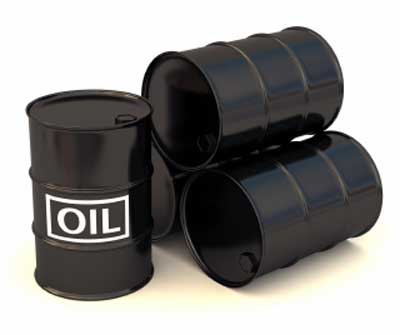 Some crude oil prices brushed $100 a barrel Monday as fears escalated that the violence in Egypt would spread to other parts of the oil-producing Middle East. But so far, no reports have surfaced that the disturbances in Egypt have disrupted oil deliveries.
Brent crude oil surged to $99.97 a barrel on London’s ICE futures exchange, up about 5% since the beginning of last week, when violence spread from Tunisia to Egypt. In U.S. trading, West Texas Intermediate shot up 1.7% on Monday, but was still about $10 a barrel cheaper than Brent crude, its European counterpart.
Julius Walker, a senior analyst at the International Energy Agency in Paris, says the organization has received no reports that oil shipments were being delayed, but the website of the agency that runs the Suez Canal has been shut down by the ban on Internet use in Egypt, so a precise reading isn’t available.
“Nothing has been affected. It’s just the worry of it,” Walker says.
A Chokepoint for Europe-Bound Oil
Egypt is a small oil producer, and its output is almost exactly equal to Read more…
Get Internet Access When Your Government Shuts It Down
Does your government have and Internet kill-switch? Read our guide to Guerrilla Networking and be prepared on when the lines get cut.
 These days, no popular movement goes without an Internet presence of some kind, whether it’s organizing on Facebook or spreading the word through Twitter. And as we’ve seen in Egypt, that means that your Internet connection can be the first to go. Whether you’re trying to check in with your family, contact your friends, or simply spread the word, here are a few ways to build some basic network connectivity when you can’t rely on your cellular or landline Internet connections.
Do-It-Yourself Internet With Ad-Hoc Wi-Fi
Even if you’ve managed to find an Internet connection for yourself, it won’t be that helpful in reaching out to your fellow locals if they can’t get online to find you. If you’re trying to coordinate a group of people in your area and can’t rely on an Internet connection, cell phones, or Read more…
Egyptian riots day 6: THOUSANDS of Prisoners escape, Musems Looted,many stranded.
More than 102 dead and thousands of prisoners on the loose in Egypt as 30,000 stranded Britons struggle to leave the country
Around 30,000 British tourists were stranded in Egypt today as army planes buzzed low over Cairo on the sixth day of uprisings.
At least 102 people have been killed, more than 2,000 are injured and there were calls for a multi-party democracy to emerge as President Hosni Mubarack’s grip on power loosens.
Gangs of armed men attacked at least four jails across Egypt before dawn today, helping to free hundreds of Muslim militants and thousands of other inmates as police vanished from the streets of Cairo and other cities.
Now scroll down to see the video:
 Show of strength: Egyptians surround an army tank during protests in central Cairo on the sixth day of action
Last night a handful Brits that managed to board flights returning back from Cairo described their relief at escaping the riot-torn country. Read more…
The Internet Kill Switch
 This past week was a perfect example of how the “Internet kill switch” is rapidly becoming one of the favorite new tools of tyrannical governments all over the globe. Once upon a time, the Internet was a bastion of liberty and freedom, but now nation after nation is cracking down on it. In fact, legislation has been introduced once again in Congress that would give the president of the United States an “Internet kill switch” that he would be able to use in the event of war or emergency. Of course there would be a whole lot of wiggle room in determining what actually constitutes a true “emergency”. The members of Congress that are pushing this “Internet kill switch” bill want the U.S. to become more like China in this regard. In China, the Internet is highly controlled, highly regulated and highly censored. In fact, China has shut down the Internet in entire regions when they have felt it necessary. So what Egypt did in shutting down the Internet this past week is not unprecedented – but it was quite shocking.
Without Egypt, Israel will be left with no friends in Mideast
The fading power of Egyptian President Hosni Mubarak’s government leaves Israel in a state of strategic distress. Without Mubarak, Israel is left with almost no friends in the Middle East; last year, Israel saw its alliance with Turkey collapse.
 |
An anti-government protester ripping a poster of Egyptian President Hosni Mubarak in Cairo, January 26, 2011. |
From now on, it will be hard for Israel to trust an Egyptian government torn apart by internal strife. Israel’s increasing isolation in the region, coupled with a weakening United States, will force the government to court new potential allies.
Israel’s foreign policy has depended on regional alliances which have provided the country with strategic depth since the 1950s. The country’s first partner was France, which at the time ruled over northern Africa and provided Israel with advanced weaponry and nuclear capabilities.
After Israel’s war against Egypt in 1956, David Ben-Gurion attempted to establish alliances with non-Arab countries in the region, including Iran, Turkey and Ethiopia. The Shah of Iran became a significant ally of Israel, supplying the country with oil and money from weapons purchases. The countries’ militaries and intelligence agencies worked on joint operations against Egyptian President Gamal Abdel Nasser’s rule, which was seen as the main threat against Israel and pro-Western Arab governments. Read more…
As Egypt Explodes, Oil Set to Increase
By David A. Patten
 Violent anti-government riots in Egypt and a grassfire of unrest torching across the sands of the Middle East fueled fears of $200-a-barrel oil and an instability some say could spread to oil-rich Saudi Arabia, and beyond.
Police Friday clashed with tens of thousands of protesters in Cairo and Alexandria. Shortly after 11 a.m. ET, as a government-ordered curfew took effect, CNN carried pictures of dozens of military trucks and armored vehicles loading police and leaving downtown Cairo as Egyptian army regulars moved in.
“We have yet to see if they will take the place of the hated Egyptian police who have cracked down so violently,” CNN correspondent Ben Wedeman reported from Iraq before his communication was disrupted. The government had responded to the “day of rage” by pulling the plug on telephone and Internet links, so protesters could not communicate.
 The wave of unrest in the Middle East that began with the Jasmine Revolution is now having repercussions around the globe.
After the recent fall of governments in Tunisia and Lebanon, angry marches in Yemen, and the brutal crackdown in Egypt that has left seven dead and hundreds wounded, analysts worry that the governments of Algeria and Jordan could be next to see disturbances. Read more…
 Violent anti-government riots in Egypt and a grassfire of unrest torching across the sands of the Middle East fueled fears of $200-a-barrel oil and an instability some say could spread to oil-rich Saudi Arabia, and beyond.
Police Friday clashed with tens of thousands of protesters in Cairo and Alexandria. Shortly after 11 a.m. ET, as a government-ordered curfew took effect, CNN carried pictures of dozens of military trucks and armored vehicles loading police and leaving downtown Cairo as Egyptian army regulars moved in.
“We have yet to see if they will take the place of the hated Egyptian police who have cracked down so violently,” CNN correspondent Ben Wedeman reported from Iraq before his communication was disrupted. The government had responded to the “day of rage” by pulling the plug on telephone and Internet links, so protesters could not communicate.
The wave of unrest in the Middle East that began with the Jasmine Revolution is now having repercussions around the globe.
After the recent fall of governments in Tunisia and Lebanon, angry marches in Yemen, and the brutal crackdown in Egypt that has left seven dead and hundreds wounded, analysts worry that the governments of Algeria and Jordan could be next to see disturbances. Read more…
The African Chinese Connection
Shu Yunguo & James Shikwati
 China and Africa had established relations as early as 2,000 years ago, during which, there were no wars, aggression or looting but only exchanges of trade between China and Africa. The history and tradition of China-Africa relations not only exerted positive and enormous influence, but also laid a solid foundation on the relationship development between countries in modern times.
Secondly, developing countries have common qualities. Both China and African countries are developing countries meaning they have not only common history, but also share similar targets for development. Developing countries’ common qualities determine that there is no conflict of interest between them, and also that the countries have the same or similar opinions on many major international issues (such as the establishment of a new international political and economic system).
Thirdly, they are all eager to develop themselves. Currently, developing countries are still weak compared with the strong developed countries. When dialogue between developing and developed countries is progressing slowly, the cooperation between developing countries becomes especially important. Both China and African countries are developing countries, and strengthening cooperation is the request of the era and the common need to develop.
Fourthly, the countries stood the test of practice. The establishment of the People’s Republic of China and African countries gaining independence proved that the equal, reciprocal and win-win relationship between China and Africa has strong vitality and the prospect of sustainable development. Fifthly, the relationship can be guaranteed by a system and mechanism. China and Africa launched the Read more…
How Egypt shut down the internet
Virtually all internet access in Egypt is cut off today as the government battles to contain the street protests that threaten to topple President Hosni Mubarak.

Organisations that track global internet access detected a collapse in traffic in to and out of Egypt at around 10.30GMT on Thursday night.
The shut down involved the withdrawal of more than 3,500 Border Gateway Protocol (BGP) routes by Egyptian ISPs, according to Renesys, a networking firm. Only one ISP out of 10, Noor Data Networks, appeared largely unaffected. It connects to the outside world via an undersea cable operated by Telecom Italia.
According to BGPMon, another networking firm, 88 per cent of Egyptian internet access was successfully shut down, however.
Renesys speculated that the apparent anomaly of Noor Data Networks may be a result of the fact it provides services to the Egyptian stock exchange. Read more…
Egypt shuts off Internet, cellphones as country braces for ‘Angry Friday’ protests
Washington Post Foreign Service
Friday, January 28, 2011; 4:59 AM
CAIRO – The streets of Egypt were tense Friday morning as the country braced for major protests, with the government preemptively disrupting communications networks and vowing to crack down on demonstrators.
Police in full riot gear lined major public squares and other critical intersections in this teeming capital city. Overnight, security services raided the homes of opposition leaders — including those of the Muslim Brotherhood — and arrested dozens. Meanwhile, Internet connections and mobile phone networks were down in Cairo and in other major cities.
Protest organizers have called for Egyptians to demonstrate against the rule of President Hosni Mubarak following noontime prayers on Friday, in defiance of a government ban.
The Muslim Brotherhood, Egypt’s largest opposition group, which has largely been absent from the protests that have roiled the nation this week, has said it will fully participate in Friday’s demonstrations, potentially drawing many more people to the streets. Read more…
Thousands rally against government in Yemen
 SANAA, Yemen – Tens of thousands of people are calling for the Yemeni president’s ouster in protests across the capital inspired by the popular revolt in Tunisia.
The demonstrations led by opposition members and youth activists are a significant expansion of the unrest sparked by the Tunisian uprising, which also inspired Egypt’s largest protests in a generation. They pose a new threat to the stability of the Arab world’s most impoverished nation, which has become the focus of increased Western concern about a resurgent al-Qaida branch, a northern rebellion and a secessionist movement in the south.
Crowds in four parts of Sanaa have shut down streets and are chanting calls for an end to the government of President Ali Abdullah Saleh, who has been in power for nearly 32 years.
“We will not accept anything less than the president leaving,” said independent parliamentarian Ahmed Hashid.
Opposition leaders called for more demonstrations on Friday.
“We’ll only be happy when we hear the words ‘I understand you’ from the president,” Hashid said, invoking a statement issued by Tunisian President Zine El Abidine Ben Ali before he fled the country. Read more…


![[Most Recent Quotes from www.kitco.com]](https://i0.wp.com/www.kitconet.com/charts/metals/gold/t24_au_en_usoz_2.gif)
![[Most Recent Quotes from www.kitco.com]](https://i0.wp.com/www.kitconet.com/charts/metals/silver/t24_ag_en_usoz_2.gif)

 crisisboom
 CRISISBOOM
You must be logged in to post a comment.