Archive
Hyperinflation Or Great Depression II?
 Western Europe has invented two institutions that have taken over the world: the university and the central bank. Today, both are under fire as never before. At the same time, both are in their respective diver’s seats. The greater the criticism, the better they do for themselves.
We are finally seeing articles on the bubble in higher education. It isn’t a bubble. Government money still flows in by the hundreds of billions a year.
We hear that college isn’t worth the money. Well, if it isn’t, why are parents paying it? Because they are buying a consumer good: social acceptance. They are buying off peer pressure. They are unwilling to say to their friends, “Billy Bob is going to become a plumber.” Yes, Billy Bob will always have a good income, but Billy Bob’s parents are unwilling to accept this. Billy Bob will get his hands dirty . . . with “filthy” lucre. Oh, the horror! Better that he should be an unemployed B.A. in sociology with $23,000 of student debt, and his parents $50,000 to $150,000 poorer.
That is to say, people have priorities that are different from what the journalists (with B.A. degrees in a field with a dismal future) write about in their articles. The parents will not admit to Read more…
Fed Ready to Print More Funny Money on QE3 Rumors
 Simon Maughn, co-head of European equities at MF Global, has told CNBC that a third round of so-called quantitative easing is in the works. The private Federal Reserve will again become the marginal buyer of bonds.
The latest effort by the Fed to finance the government’s staggering deficit will end in June.
If the private Federal Reserve owned by offshore banksters stops this lending scheme, interest rates will rise significantly which in turn will exert tremendous pressure on the American public. If interest rates surge anytime soon, millions of indebted Americans may default on their debt, thereby bankrupting the American financial institutions, as Puru Saxena, founder of Puru Saxena Wealth Management, notes.
“The bond market is going in one direction which is up-falling yields which is telling you quite clearly the direction of economic travel is downwards. Downgrades. QE3 (a third round of quantitative easing) is coming,” Read more…
What Would Fractional Silver Mean?
 In Mid-may of this year, something curious happened, which I’d not seen before.
I’ve been following the course of where the dollar was heading and how it related to the pricing of gold and silver. Typically, I follow a number of sources for information, then try to wrap all those opinions into something concise, allowing me to share it with others. Most everyone following precious metals knows how GATA has been beating the drum about gold manipulation for quite some time now. History (past and current) is a very good place to start down the rabbit trail.
Informed people (like Paul Craig Roberts, Bob Chapman, Gerald Celente, Robby Noel, Lindsey Williams) have also helped shape a number of my opinions and speculations regarding where this economy is heading. Again, these are all very credible individuals who’ve been reporting on “real” financial issues for a number of years, if not decades now. And, even though it can be a bad habit, tune into the mainstream media to hear what they are trying to make the public believe for that moment. Every so often, they slip and Read more…
China aims to surpass US in physical gold reserves
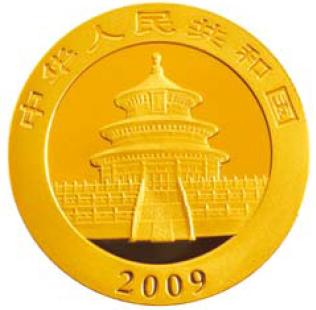 The solid demand for gold is not supported just by private individuals and panicky investors, but countries like China, India and Russia are ramping up investment in the yellow metal.
“… that the world’s biggest and fastest growing national economies are in the midst of an historic push to build up their stores of the precious metal,” according to Wealth Daily’s Luke Burgess.
“Today, the biggest buyers of gold aren’t private citizens or hedge-funds. Instead, nations like China, India, and Russia have moved forward to grab up every loose ounce of the metal…,” Burgess says.
There have been reports that the Chinese are buying gold assets to cover against rising inflation risk and global macroeconomic uncertainties. Beijing has long complained that the U.S. Federal Read more…
Why oil prices will spike again soon
How long till the next oil shock?
Energy prices have been coming down this spring as fears of a Middle East blowup fade. But persistent global demand, tepid supply growth and easy money mean it may not be long till the next damaging spike, Goldman Sachs economists say.
 Higher and higher
Oil prices could surge again by the end of 2012, economists Jan Hatzius and Andrew Tilton wrote in a note to clients this past weekend. They say the snail-like pace of global oil supply expansion – which Goldman projects at 1% or so annually – can’t keep a petroleum-addicted world economy rolling without prices rising, perhaps sharply.
So don’t get too used to paying a mere $3 and change for gasoline. Higher prices are on the way soon enough, thanks to stretched supplies and a Federal Reserve spigot that is likely to remain wide open for years to come.
“The fundamental story of increased oil scarcity is unchanged, and our commodity strategists now see distinct upside risks to their current forecast of $120/barrel for Brent crude by late 2012,” Hatzius and Tilton write. “So the impact of scarcer oil and higher oil prices on economic activity remains at the top of our list of worries.”
What makes higher oil prices almost inevitable is the depth of the jobs deficit in the United States. Unemployment is officially 9% but is more like 13% if you consider the low rate of labor force participation, says Bernstein Research strategist Vadim Zlotnikov. That number has fallen this year to levels not seen since 1985.
High joblessness and weak inflation will keep the fed funds rate near zero at least through next year and perhaps longer, Hatzius and Tilton write. That should help keep pushing unemployment slowly toward its long-run average of around 6% — but at the expense of further dollar depreciation, stronger global demand and, ultimately, higher oil prices.
So the selloff that has taken the crude price down to $100 or so in New York and $112 in Europe, where Brent is traded, may persist through much of 2011. But it won’t last Read more…
China Prepares To Launch Gold ETFs As Utah Becomes First State To Make Gold And Silver Legal Tender
 Following Friday’s news that China has now surpassed India as the world’s largest buyer of gold, it is becoming increasingly obvious that the country is trying to capitalize on the popular interest in the precious metal by transferring the trading infrastructure away from US to domestic capital markets. First, it recently launched a 1 kilo gold futures contract on the HK Merc in an obvious attempt to undermine the Comex monopoly in the space, and next it seems that China has the GLD plain in its sights, as it plans to start exchange-traded funds, tapping rising demand in China, the world’s biggest investment market for the precious metal. Often blamed for the recent volatility in the price of gold, precious metal ETFs have been primarily an instrument available to those with access to the US market. That appears to be ending, and with an entire nation suffering from gold fever (as inflation continues to be goalseeked by the China politburo above expectations in what appears to be a programmed attempt by the Chinese central planners to push its population into gold hoarding) and about to be offered a simple way of investing in (paper) gold, it is likely that the price of gold (and soon thereafter all other commodities) will see unprecedented spikes in price in either direction as millions more are given direct exposure to trading the non-dilutable currency equivalent.
From Bloomberg:
“There are some complexities, as the central bank is in charge of gold management, while we still need to go through the procedures for launching new exchange products,” Wang Zhe, chairman of the bourse, said at a Shanghai forum. There is no timetable and the exchange is working with regulators on the plan, Wang said. China is the world’s largest gold producer and second-largest in overall consumption.
China doesn’t have gold ETFs and investors usually choose to buy physical gold, or invest through contracts traded on the Shanghai Gold Exchange, the Read more…
United States to hit debt ceiling on Monday

WASHINGTON — The debt-laden US government’s credit card will hit its limit Monday, creating a cash crunch that puts the country’s credit standing at risk as politicians battle over its long-term deficit.
Reaching the $14.29 trillion ceiling set by Congress will not have an immediate impact on government finances, because the Treasury has found about ten weeks of wiggle-room in short-term adjustments and an unexpected April jump in tax revenues.
But with Republicans refusing to increase the ceiling without massive future spending cuts, the longer the fight over bridging the country’s deficit goes on, the higher the stakes will get.
If nothing is done by about August 2, there is a chance the United States, which has always merited a top-grade credit rating, could do the unthinkable — default on its debt payments.
Few think it will get that far, as the White House leads behind-the-scenes talks on a grand strategy on the deficit — with Republicans insisting on spending cuts and Democrats demanding tax increases as well.
Still, some liken the fight to a game of chicken being played with the country’s credit standing at Read more…
Silver to Surge to $450/oz and Gold to $12,000/oz – Cazenove’s Robin Griffiths
Gold and silver are higher this morning with the dollar, the British pound and commodity currencies falling in value. It is too early to tell whether the recent margin driven, paper sell off on the COMEX is over but physical supply remains limited while demand remains robust, particularly in China, India and wider Asia.

Cross Currency Rates
Knowledgeable experts continue to urge investors to own gold and silver due to the likelihood of much higher prices, currency and inflation risk.
One of the most respected global technical and macro strategists in the world, Robin Griffiths has said that silver and gold could rise to $450 and $12,000 per ounce respectively due to the debasement of Read more…
Is This The New Great Depression?
 One of the precious few things that politicians, historians, and economists can all agree on is that policy makers blew it in the Great Depression. During the singular moment when they should have most allowed free markets to take care of things—they compounded them with protectionism, isolationism, taxes, and tariffs.
In this video, James Grant, of Grant’s Interest Rate Observer, and Liaquat Ahamed, Pulitzer Prize winning author of Lords of Finance discuss the legacy being left behind by the central bankers of today.
James Grant has been called a wingnut, but you can immediately sense that he has studied cycles and monetary history. Last year, in the New York Times, he wrote an article in which he criticized the Fed, and longed for the classical gold standard of yesteryear:
Forbes Predicts U.S. Gold Standard Within 5 Years
 A return to the gold standard by the United States within the next five years now seems likely, because that move would help the nation solve a variety of economic, fiscal, and monetary ills, Steve Forbes predicted during an exclusive interview this week with HUMAN EVENTS.
“What seems astonishing today could become conventional wisdom in a short period of time,” Forbes said.
Such a move would help to stabilize the value of the dollar, restore confidence among foreign investors in U.S. government bonds, and discourage reckless federal spending, the media mogul and former presidential candidate said. The United States used gold as the basis for valuing the U.S. dollar successfully for roughly 180 years before President Richard Nixon embarked upon an experiment to end the practice in the 1970s that has contributed to a number of woes that the country is suffering from now, Forbes added.
If the gold standard had been in place in recent years, the value of the U.S. dollar would not have weakened as it has and excessive federal spending would have been curbed, Forbes told HUMAN EVENTS. The constantly changing value of the U.S. dollar leads to marketplace uncertainty and consequently spurs speculation in commodity investing as a hedge against inflation. Read more…


![[Most Recent Quotes from www.kitco.com]](https://i0.wp.com/www.kitconet.com/charts/metals/gold/t24_au_en_usoz_2.gif)
![[Most Recent Quotes from www.kitco.com]](https://i0.wp.com/www.kitconet.com/charts/metals/silver/t24_ag_en_usoz_2.gif)

 crisisboom
 CRISISBOOM
You must be logged in to post a comment.