Archive
US price increases hit consumers

Confirming what most US shoppers already suspected, the Labor Department on Thursday reported prices for everything from vegetables to unleaded fuel rose again in January.
The Labor Department’s consumer price index rose 0.4 percent for the month, a rate that was slightly higher than economists expected and which confirmed large price increases for commonly bought goods in the last year.
The figures showed gasoline prices have leaped over 13 percent in the last 12 months, while grocery prices rose slowly but Read more…
The Fed is Wrong About Commodity Prices
Author: David Weinstein
I imagine he has to say it, but Bernanke is wrong when he says US monetary policy has nothing to do with international commodity prices. At the height of the Egyptian crisis, which was partly driven by rising food prices, Bernanke couldn’t say, “Oh yea, US policy economic policy is part of the problem in Egypt.” This attitude, however, is both prevalent and respected, and it’s largely wrong.
First of all, commodities as a group are not commoditized – they are not all the same. For instance, the amount of gold in the world is largely fixed relative to annual gold production. Along with its historical position as a store a value, Gold’s consistent volume about ground is a primary reason for its currency-like quality; i.e. almost entirely driven by overall liquidity. Corn production, on the other hand can vary greatly from year to year given the amount of land devoted to it and the weather. Oil is somewhere in the middle because production can vary, but the worlds known reserves are relatively fixed. The resulting differences in price volatility have been studied ad nauseam and are most simply articulated by the so-called ‘cob-web model’ (see chart below).
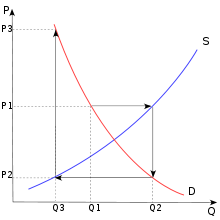
Very simply put: Read more…
China top bank sees explosive growth in gold demand and voracious appetite for silver
SHANGHAI (Reuters) –
 Demand in China for physical gold and gold-related investments is growing at an “explosive” pace and its appetite for the yellow metal is poised to remain robust amid inflation concerns, said an Industrial and Commercial Bank of China (ICBC) executive.
ICBC, the world’s largest bank by market value, sold about 7 tonnes of physical gold in January this year, nearly half the 15 tonnes of bullion sold in the whole of 2010, said Zhou Ming, deputy head of the bank’s precious metals department on Wednesday.
“We are seeing explosive demand for gold. As Chinese get wealthy, they look to diversify their investments and gold stands out as a good hedge against inflation,” Zhou told Reuters.
“There is also frantic demand for non-physical gold investments. We issued 1 billion yuan worth of Read more…
World Bank: Food prices at “dangerous levels”
 Global food prices have hit “dangerous levels” that could contribute to political instability, push millions of people into poverty and raise the cost of groceries, according to a new report from the World Bank.
The bank released a report Tuesday that said global food prices have jumped 29 percent in the past year, and are just 3 percent below the all-time peak hit in 2008. Bank President Robert Zoellick said the rising prices have hit people hardest in the developing world because they spend as much as half their income on food.
“Food prices are the key and major challenge facing many developing countries today,” Zoellick said. The World Bank estimates higher prices for corn, wheat and oil have pushed 44 million people into extreme poverty since Read more…
Inflation in China rises as food prices soar

In January, the price of fresh fruit soared by 34.8 percent over a year earlier, while eggs rose 20.2 percent, the National Bureau of Statistics reported.
Adding to a squeeze on food supplies, China’s wheat-growing northeast is in the grip of a severe drought that threatens its crop. Beijing has launched a $1 billion emergency campaign of cloud-seeding to induce rains and expanded irrigation.
Also in January, inflation that so far has been confined mostly to food began to spread to Read more…
Japan confirms China surpassed its economy in 2010
By TOMOKO A. HOSAKA
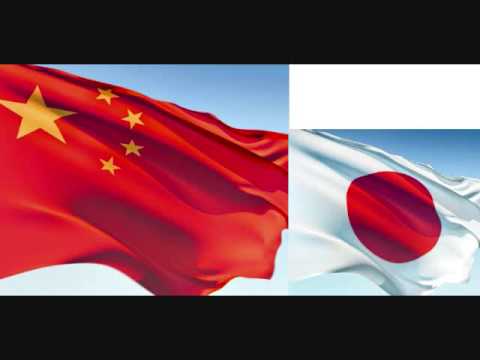 TOKYO — Japan confirmed Monday that China’s economy surpassed its own as the world’s second largest in 2010 and said a late-year downturn was Japan’s first quarterly contraction in more than a year.
Japan’s real GDP expanded 3.9 percent in the calendar year in the first annual growth in three years, but it wasn’t enough to hold off a surging China. Japan’s nominal GDP last year came to $5.4742 trillion, less than China’s total of $5.8786 trillion, the Cabinet Office said.
Gross domestic product shrunk at an annualized rate of 1.1 percent in the October-December quarter, a sharp reversal from a revised 3.3 percent expansion in the third quarter, the government said.
A slowdown in exports and weaker consumer demand at home led to the unsurprising downturn, which is expected to be temporary. The result was better than Kyodo news agency’s average market forecast of an annualized 2.2 percent decline.
China was acknowledged last year as having grown to the world’s second-largest economy, but the Japanese data confirming it were not available until Monday. The switch underscores the nations’ stark contrasts: China is growing rapidly and driving the global economy, while Japan is struggling with persistent deflation, an aging population and ballooning public debt.
Prime Minister Naoto Kan has pledged to revive the economy and make major reforms in the country’s tax and social welfare systems. His approval ratings are eroding quickly, however, as voters question his government’s ability to lead the country through its pressing problems.
The fourth-quarter figure translates to a 0.3 percent fall from the previous three-month period, according to the Cabinet Office’s preliminary data. Consumer spending, which accounts for some 60 percent of GDP, fell 0.7 percent. Auto sales slumped during the quarter after government subsidies for “green” vehicles expired in September.
Exports fell 0.7 percent from the previous quarter amid a strong yen and waning global demand. A rise in the Japanese currency reduces the value of exporters’ profits overseas and makes Japanese goods pricier in foreign markets.
The road ahead looks brighter, with economists saying GDP will expand this quarter in tandem with global growth. The head of Japan’s central bank, Masaaki Shirakawa, said last week that that recent signs indicate Japan is emerging from the “pause” and performing at par with other advanced economies.
Ryutaro Kono, chief economist at BNP Paribas ( BNPQY.PK – news – people ) in Tokyo, says exports and production have escaped their “soft patches.”
“The economy seems to be recovering again from December, so the negative growth in (the fourth quarter) need not become the basis for pessimism about Japan’s cyclical outlook,” he said in a report this month.
The supply of corn keeps getting smaller
 675 million bushels of corn may seem like a lot, but that is only an 18 day supply for the US grain market, and that is the reason corn prices pushed above $7 Wednesday on the CME. March corn did not close above that level, but settled at $6.98 per bushel following USDA’s February Supply and Demand report that indicated the ethanol industry was refining corn faster than previously thought.
Corn, beans and wheat prices have all been rising, but so has the price for ethanol. A year ago, ethanol was in the $1.70 per gallon range, but Wednesday closed at $2.457 per gallon, the highest it has been since the early summer price spike in 2008 when it exceeded $2.80 per gallon.
The result of the ethanol industry’s demand for corn tightens down the supply, says University of Missouri marketing specialist Melvin Brees. In his Crop Report Commentary Brees says USDA economists raised corn use by 70 million bushels and 50 million of that was added to Read more…
China sees U.S. stoking Brazil and India anger over yuan
By Zhou Xin and Koh Gui Qing
 BEIJING (Reuters) – The United States has incited Brazil and India to criticize China’s currency policy, but Beijing need not worry too much because it can defuse the tension through talks, a series of Chinese government advisers told Reuters.
Independent analysts warned, however, that a belief that Brazil and India are doing Washington’s bidding and are not truly aggrieved could make Beijing complacent and undermine fledgling ties between the emerging powers.
Increasingly widespread calls for a stronger yuan are awkward for China, which is accustomed to facing U.S. pressure over its tightly controlled exchange rate but has long tried to cast itself as the natural ally of other developing nations.
Brazil and India are unlikely to be any more successful than the United States in persuading Beijing to permit faster appreciation, researchers in Chinese government think tanks said.
“They must realize that the root of problem is not China but Read more…
World hunger threat Shown By Arab Protests:Economist
 DAKAR: Uprisings across the Arab world are just a foretaste of the instability facing other poor states unless a global food crisis is tackled, leading development economist Jeffrey Sachs said on Saturday.
Popular anger at rising food prices has been an explosive ingredient in the mix of grievances that triggered the fall of leaders in Egypt and Tunisia, and is now putting the heat on authorities in Algeria and Jordan.
Sachs, a long-time adviser of governments and world agencies on the fight against poverty, said the root causes applied right across an already unstable belt of states stretching from Iraq through the Sahara to the shores of Read more…
PHOTOS: $29 Cheez Whiz? High Arctic food costs
 These grocery shelves in the High Arctic community of Arctic Bay, Nunavut, have people talking this week — $38 for cranberry cocktail, $29 for Cheez Whiz, and a whopping $77 for a bag of breaded chicken.
Arctic Bay-based MLA Ron Elliott, who represents three of Canada’s most northern communities, said he is concerned about already high food prices going up even more in the High Arctic.
“It’s sort of the talk of the town,” he told CBC News on Thursday. “You go in and people are pointing [things] out, and it’s obvious to see that this has gone up, and that’s gone up.”
While groceries in Canada’s remote northern communities are generally more expensive than elsewhere in the country, due to shipping costs, Elliott said prices in his communities have skyrocketed since the federal government changed its northern food subsidy program in the past year.
Elliott said the new subsidy program, called Nutrition North, does not cover food items that are considered not to be healthy or perishable, although those items used to be covered under the government’s old Food Mail Program.
Elliott said the price hikes are hurting the most vulnerable people in his region, like elders and those on social assistance.
Even some healthy foods that are subsidized are still Read more…


![[Most Recent Quotes from www.kitco.com]](https://i0.wp.com/www.kitconet.com/charts/metals/gold/t24_au_en_usoz_2.gif)
![[Most Recent Quotes from www.kitco.com]](https://i0.wp.com/www.kitconet.com/charts/metals/silver/t24_ag_en_usoz_2.gif)

 crisisboom
 CRISISBOOM
You must be logged in to post a comment.