Archive
Global Press Freedom at Lowest Level in More Than Decade

Photo: Reuters
Journalists and activists participate in a rally calling for press freedom in central Ankara, Turkey, March 19, 2011 (file photo)
Freedom House, a U.S.-based group that monitors human rights around the world says the number of people with access to free and independent media has declined to its lowest level in more than a decade. In its newly released annual survey, the group says several key countries saw significant declines last year and that only one-in-six people live in countries with a press designated as free.
In this year’s annual index of global media freedom of 196 countries and territories, Freedom House says it rated 68 as “free” and the remaining two thirds as “partly free” or “not free.”
Freedom House Senior Editor Karin Karlekar says this is roughly an even breakdown, but a closer look reveals a different picture. “If you look at the population statistics, they are much bleaker, only Read more…
Sony suffers second data breach with theft of 25m more user details
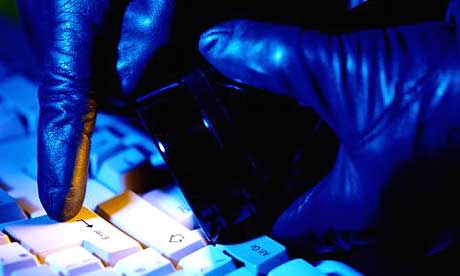 Sony has suffered a second enormous data breach with nearly 25m customers’ details from its SOE network stolen. Photograph: Nick Rowe/Getty Images
The crisis at Sony deepened on Tuesday as it admitted that an extra 25 million customers who played games on its Sony Online Entertainment (SOE) PC games network have had their personal details stolen – and that they were taken before the theft of 77 million peoples’ details on the PlayStation Network (PSN).
The electronics giant said the names, addresses, emails, birth dates, phone numbers and other information from PC games customers were stolen from its servers as well as an “outdated database” from 2007 which contained details of around 23,400 people outside the US. That includes 10,700 direct debit records for customers in Austria, Germany, the Netherlands and Spain, Sony said.
The dataset was stolen on 16 and 17 April, before the PSN break-in, which occurred from 17 to 19 April. Sony said that it had not previously thought that the data was copied by the hackers who broke into its systems.
A Sony spokeswoman in Tokyo admitted that the company was unable to predict where or how or when the next attack would come. “They are hackers. We don’t know where they’re going to attack next,” Read more…
EU set to unveil neutral net neutrality plans
The European Commission will unveil proposals to foster a neutral and competitive Internet on Tuesday (19 April), drawing praise from big industry for its cautiousness while consumer groups and activists lament its lack of substance. 
Background
Tim Berners Lee, often dubbed ‘the father of the Web’, ranks among the high-profile personalities to have publicly lobbied for regulation to mandate the neutrality of the Internet. However, others have argued that regulation is unnecessary and would threaten innovation.
At the heart of the issue is whether access to Internet services or content should be controlled and filtered rather than left free and provided according to the principle of ‘best effort’.
This principle implies that no provider can prioritise traffic on the Net for economic reasons. Instead, every user should be served with the providers’ ‘best effort’. This criterion has seen derogations in order to allow more professional use of the Internet. Therefore, a business user willing to pay more gets a faster and better connection.
However, extending this concept to many more users would run the risk of the majority getting such a poor service that it will prevent them from using the Internet. The borders between the two needs are currently being defined, and are subject to technological and regulatory developments.
The issue of net neutrality was first debated in the US a while ago, and is now generating intense debate in Brussels. It was also included in the EU’s review of telecoms rules (EurActiv 12/06/09).
While the US has long since passed legislation to ensure an open Internet, the EU has been struggling to catch up.
In a draft proposal seen by EurActiv, the European Commission does its homework on possible infringements of net neutrality but prefers to adopt a Read more…
How Our Government is Tracking and Databasing Your Every Move

Big Brother is Watching
The war on terror and cybersecurity are excuses that have spurred huge investments into the surveillance industry, which has become a war on “liberty and privacy.”
The Obama administration has moved forward with a Bush regime program to screen state computer traffic on private-sector networks, including those connecting people to the Internet, The Washington Post revealed July 3.
That project, code-name “Einstein,” is related to the much-larger, Read more…
Cell Phone Surveillance: Some Cell Phones Record Your Location Hundreds Of Times A Day
 Do you own a cell phone? Do you think that it is private and secure? You might want to think again. The truth is that there is virtually no privacy when it comes to cell phones. In fact, the amount of cell phone surveillance that goes on is absolutely staggering. For example, one German politician named Malte Spitz recently went to court to force Deutsche Telekom to reveal how often his cell phone was being tracked. What he found out was absolutely amazing. It turns out that in just one 6 month period, Deutsche Telekom recorded the longitude and latitude coordinates of his cell phone 35,000 times. Not only that, in the United States cell phone companies are actually required by law to be able to pinpoint the locations of their customers to within 100 meters. Most cell phone carriers are able to track their customers far more accurately than that. The truth is that your location will never again be truly “private” as long as you are carrying a cell phone.
And your conversations will not be private either. A whole host of people could be listening in on your cell phone calls. In fact, your cell phone can be used to spy on you even when you don’t have it on. For example, as one CNET News article noted, if law enforcement authorities are investigating you they can remotely activate the microphone on your cell phone and listen in on your conversations…. Read more…
Critical U.S. Infrastructure at Risk of Cyber Attack, Experts Warn

AP
Oct. 26: The reactor building of the Bushehr nuclear power plant in Iran.
Just as the computers that ran Iran’s nuclear program were sabotaged and crippled by a cyber “super worm” virus, the software used to run much of America’s industrial, transportation and power infrastructure — including nuclear power plants and major airports — is vulnerable to cyber attack, and two software companies have revealed dozens of successful hacks to prove it.
The issue lies in specialized software systems sold by Siemens, Iconics, 7-Technologies and others to power plants and other infrastructure. Called “supervisory control and data acquisition” systems, or SCADA, they run software solely for industrial use.
And it’s just as vulnerable as every other program on your Read more…
China Tightens Censorship of Electronic Communications
 BEIJING — If anyone wonders whether the Chinese government has tightened its grip on electronic communications since protests began engulfing the Arab world, Shakespeare may prove instructive.
A Beijing entrepreneur, discussing restaurant choices with his fiancée over their cellphones last week, quoted Queen Gertrude’s response to Hamlet: “The lady doth protest too much, methinks.” The second time he said the word “protest,” her phone cut off.
He spoke English, but another caller, repeating the same phrase on Monday in Chinese over a different phone, was also cut off in mid-sentence.
A host of evidence over the past several weeks shows that Chinese authorities are more Read more…
TIME: Everything’s Tracked- Get Over It
 In an astounding cover story for the March 21 issue of TIME called ‘Your Data for Sale,’ author Joel Stein tells readers to simply “get over” constant surveillance. The tagline, “Everything about you is being tracked– get over it” puts the issue in your face. Yeah, get over it, and the TSA porno-scanners and grope-downs, too.
Newsweek, like TIME, another Skull and Bones-dominated media organ, similarly published a shocker in 2009 with its cover story, ‘The Case for Killing Granny,’ preparing the masses to simply accept massive shifts in society’s norms as if it were a trifling occurrence. Unauthorized NSA wiretapping and other related surveillance (started long ago) was at least controversial during the Bush Administration, though it has unabashedly continued under Obama. Read more…
5 Ways DHS Violates the Constitution with Website Domain Seizures
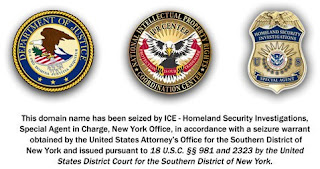
Last week, Bryan McCarthy, the 32 year old operator of ChannelSurfing.net, was arrested on charges of criminal copyright infringement. ChannelSurfing.net was one of the streaming sports sites that had its domain seized by federal authorities shortly before the Super Bowl as part of the “In Our Sites” program, run by the Department of Homeland Security (DHS) and the U.S. Immigration and Customs Enforcement (ICE). Prior to the seizure, McCarthy reportedly made more than $90,000 from advertisements on his site.
This arrest has once again raised questions about the In Our Sites program, in which the Government has seized thousands of domains accused, but not convicted, of copyright infringement, illegal streaming of sporting events, selling black market goods and distributing child pornography. Critics ranging from bloggers to individual Read more…
Pentagon fears Anonymous attack, re: WikiLeaks, Bradley Manning
 Tuesday the Pentagon acknowledged fears of an attack by the Internet activist group Anonymous. The Pentagon is worried about what has been dubbed “Operation Bradical” – threats made in the name of the hactivist group Anonymous against the Quantico Virgina base where suspected Wikileaks whistle-blower Private Bradley Manning is currently being held.
The Pentagon fears the loose Internet collective known as Anonymous will stage some sort of cyber attack (Operation Bradical) against those responsible for detaining Manning in a Quantico military brig, keeping him in solitary confinement and forcing him to strip nightly and stand at attention naked each morning.
Private Bradley Manning is a US soldier suspected of giving documents to WikiLeaks. Manning is charged with stealing classified files and is suspected as the source for numerous secret documents published on the WikiLeaks website in recent months.
The WikiLeaks incident has infuriated and embarrassed US officials. Many feel Manning is being treated in a cruel and inhumane way by U.S. authorities because of the embarrassing and damning revelations made possible by Manning’s alleged contributions to WikiLeaks
Andy Greenberg at Forbes reports:
In a crowdsourced document used to coordinate the group’s actions, Anonymous hackers name Department of Defense Press Secretary Geoff Morell and chief warrant officer Denise Barnes as targets and call on members to dig up personal information on both, including phone numbers, personal histories and home addresses. The goal of the operation, for now, is to “dox” the two officials, the typical Anonymous method of publishing personal information of victims and using it for mass harassment.
“Targets established,” reads the document, before naming Morell and Barnes. “We’re in the ruining business. And business is good.”


![[Most Recent Quotes from www.kitco.com]](https://i0.wp.com/www.kitconet.com/charts/metals/gold/t24_au_en_usoz_2.gif)
![[Most Recent Quotes from www.kitco.com]](https://i0.wp.com/www.kitconet.com/charts/metals/silver/t24_ag_en_usoz_2.gif)

 crisisboom
 CRISISBOOM
You must be logged in to post a comment.