Archive
Stocks Up, Houses Down, And What This Means for Most Americans

Put your ear to the ground and you can almost hear the bulls stampeding. The Dow closed above 12,000 Tuesday for the first time since June 2008. The Dow is up 4 percent this year after increasing 11 percent in 2010. The Standard & Poor 500 is also up 4 percent this year, and the Nasdaq index, up 3.7 percent.
“The U.S. economy is back!” says a prominent Wall Streeter.
Ummm. Not quite.
Corporate earnings remain strong (better-than-expected reports from UPS and Pfizer fueled Tuesday’s rally). The Fed’s continuing slush pump of money into the financial system is also lifting the animal spirits of Wall Street. Traders like nothing more than speculating with almost-free money. And tumult in the Middle East is pushing more foreign money into the relatively safe and reliable American equities market.
It’s simply wonderful, especially if you’re among the richest 1 percent of Americans who own more than half of all the shares of stock traded on Wall Street. Hey, you might feel chipper even if you’re among the next richest 9 percent, who own 40 percent.
But most Americans own a tiny sliver of Read more…
Saudis already have 2 Pakistani Nukes
 It’s a story that pops up again and again. Saudi Arabia has acquired at least 2 functional Nuclear Weapons from cash strapped Pakistan. Certainly Saudi Arabia has the money to buy nukes from sources like France, China, Russia, North Korea and Pakistan or even India.
The worrisome thing is that Pakistani nukes may be on the move and the west has very little knowledge or control over it. Pakistan is the most dangerous country on earth. It has a population of 185 million and the majority of people there hate the west and hate Americans. Intelligence experts privately concede that the battle for Pakistan is over. They are now a de facto enemy of the U.S. Al Qaida, the Taliban and the Muslim Brotherhood have won. The ties between Read more…
Something Large This Way Comes
 And so it picks up steam. What started in Iceland, instigated by Wall St, has now engulfed Tunisia, Yeman, Sudan, Egypt, Syria, Jordan and others yet to be made manifest. Saudi Prince Turki bin Abdul Aziz Al Saud has warned the country’s royal family to step down and flee before a military coup or a popular uprising overthrows the kingdom.
Julianne the Apostate can take the credit of kicking this ball down the hill as it was his release of some of those documents which demonstrated selected venality amongst certain countries’ leadership. It would have happened anyway, but the Apostate, it seems, was the spark. How this could be to Israel’s benefit is beyond me.
The control system is blowing apart at the seams. Anyone thinking the unrest across North Africa to the Middle East is part of a planned paradigm has got to be crazy. Certainly, there are organizational forces at work trying to ride on top of the chaos, but all Read more…
Cheap food may be a thing of the past

U.S. grain prices should stay unrelentingly high this year, according to a Reuters poll, the latest sign that the era of cheap food has come to an end.
U.S. corn, soybeans and wheat prices — which surged by as much has 50 percent last year and hit their highest levels since mid-2008 — will dip by at most 5 percent by the end of 2011, according to the poll of 16 analysts.
The forecasts suggest no quick relief for nations bedeviled by record high food costs that have stoked civil unrest. It means any extreme weather event in a grains-producing part of the world could send prices soaring further.
The expectations may also strengthen importers’ resolve to build bigger inventories after a year in which stocks of corn and soybeans in the United States — the world’s top exporter — dwindled to their lowest level in decades.
Story: Global food chain stretched to the limit Read more…
‘Something big’ transferred to Gaza Strip
Aaron Klein
 JERUSALEM – Egypt and Israel have information a large quantity of weapons, including new and sophisticated firepower, was smuggled from Egypt into the Hamas-controlled Gaza Strip in the last two days, according to informed Middle East security officials.
Israeli security officials fear a growing state of anarchy exists along the Gaza-Egypt border, with Islamist groups there taking advantage of the chaos in Egypt amid mass protests threatening the regime of President Hosni Mubarak. Egyptian security forces have been focused largely on quelling the riots.
“Something big was brought into the Gaza Strip,” said an informed security official.
The official said it was not known yet exactly what was transferred into Gaza, but he speculated it may have been a large quantity of antiaircraft missiles.
The Sinai borders the Gaza Strip as well as Israel’s southern border with Egypt.
Israeli officials say Israel agreed to allow the Egyptian army to move two battalions, or about 800 soldiers, into the Sharm el-Sheikh area on Sinai’s southern tip, far from Israel.
Oil Prices: Egypt’s Crisis Could Hurt Europe First
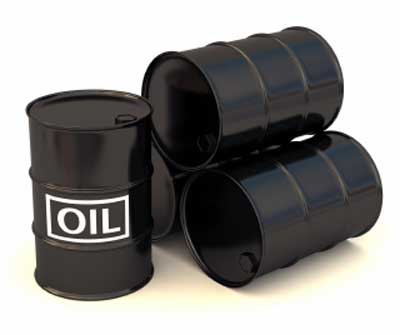 Some crude oil prices brushed $100 a barrel Monday as fears escalated that the violence in Egypt would spread to other parts of the oil-producing Middle East. But so far, no reports have surfaced that the disturbances in Egypt have disrupted oil deliveries.
Brent crude oil surged to $99.97 a barrel on London’s ICE futures exchange, up about 5% since the beginning of last week, when violence spread from Tunisia to Egypt. In U.S. trading, West Texas Intermediate shot up 1.7% on Monday, but was still about $10 a barrel cheaper than Brent crude, its European counterpart.
Julius Walker, a senior analyst at the International Energy Agency in Paris, says the organization has received no reports that oil shipments were being delayed, but the website of the agency that runs the Suez Canal has been shut down by the ban on Internet use in Egypt, so a precise reading isn’t available.
“Nothing has been affected. It’s just the worry of it,” Walker says.
A Chokepoint for Europe-Bound Oil
Egypt is a small oil producer, and its output is almost exactly equal to Read more…
As Egypt Explodes, Oil Set to Increase
By David A. Patten
 Violent anti-government riots in Egypt and a grassfire of unrest torching across the sands of the Middle East fueled fears of $200-a-barrel oil and an instability some say could spread to oil-rich Saudi Arabia, and beyond.
Police Friday clashed with tens of thousands of protesters in Cairo and Alexandria. Shortly after 11 a.m. ET, as a government-ordered curfew took effect, CNN carried pictures of dozens of military trucks and armored vehicles loading police and leaving downtown Cairo as Egyptian army regulars moved in.
“We have yet to see if they will take the place of the hated Egyptian police who have cracked down so violently,” CNN correspondent Ben Wedeman reported from Iraq before his communication was disrupted. The government had responded to the “day of rage” by pulling the plug on telephone and Internet links, so protesters could not communicate.
 The wave of unrest in the Middle East that began with the Jasmine Revolution is now having repercussions around the globe.
After the recent fall of governments in Tunisia and Lebanon, angry marches in Yemen, and the brutal crackdown in Egypt that has left seven dead and hundreds wounded, analysts worry that the governments of Algeria and Jordan could be next to see disturbances. Read more…
 Violent anti-government riots in Egypt and a grassfire of unrest torching across the sands of the Middle East fueled fears of $200-a-barrel oil and an instability some say could spread to oil-rich Saudi Arabia, and beyond.
Police Friday clashed with tens of thousands of protesters in Cairo and Alexandria. Shortly after 11 a.m. ET, as a government-ordered curfew took effect, CNN carried pictures of dozens of military trucks and armored vehicles loading police and leaving downtown Cairo as Egyptian army regulars moved in.
“We have yet to see if they will take the place of the hated Egyptian police who have cracked down so violently,” CNN correspondent Ben Wedeman reported from Iraq before his communication was disrupted. The government had responded to the “day of rage” by pulling the plug on telephone and Internet links, so protesters could not communicate.
The wave of unrest in the Middle East that began with the Jasmine Revolution is now having repercussions around the globe.
After the recent fall of governments in Tunisia and Lebanon, angry marches in Yemen, and the brutal crackdown in Egypt that has left seven dead and hundreds wounded, analysts worry that the governments of Algeria and Jordan could be next to see disturbances. Read more…
Pakistan earthquake felt in India and the Middle East


Tremors from a powerful earthquake that rattled many parts of Pakistan early Wednesday were felt as far as New Delhi, 700 miles away.
The 7.2 magnitude quake hit in a sparsely-populated area near the nation’s borders with Iran and Afghanistan, 640 miles west-southwest of Islamabad, according to the U.S. Geological Survey.
No fatalities have been reported.
Officials in Karen, a town in a sparsely populated area close to the epicenter, told the Associated Press that the town suffered no widespread damage.
People came out of their houses in the southern city of Karachi, home to 18 million people, but no major damage was reported there either.
Tremors shook structures in many other parts of the country and were felt as far as Dubai in the Middle East.
The earthquake’s intensity was just below that of another earthquake measuring 7.6 that struck parts of northern Pakistan in 2005 and killed more than 70,000 people.
Government officials warned of the danger of aftershocks in coming days. In some instances such aftershocks have come within a week of previous earthquakes.
“It’s not uncommon for this region to have earthquakes. It is where two tectonic plates come together” CNN quoted Kurt Frankel of the Georgia Institute of Technology.
In Pakistan’s capital Islamabad a Western diplomat quoted by CBS News warned that further damage from the earthquake, notably any of its aftershocks, could seriously undermine Pakistan’s future, right at a time when the United States is urging the country to extend more cooperation in its campaign to fight militants.
“A humanitarian crisis in Pakistan caused by the earthquake will only undermine U.S. interests,” the diplomat said. “As it is, we must all worry about instability in a country armed with nuclear weapons and with political and economic problems,” he added.


![[Most Recent Quotes from www.kitco.com]](https://i0.wp.com/www.kitconet.com/charts/metals/gold/t24_au_en_usoz_2.gif)
![[Most Recent Quotes from www.kitco.com]](https://i0.wp.com/www.kitconet.com/charts/metals/silver/t24_ag_en_usoz_2.gif)

 crisisboom
 CRISISBOOM
You must be logged in to post a comment.