Archive
Iranian warships’ passage through Suez put back two days

Iran’s Fars news agency has identified the 1,500-tone Alvand as one of the warships heading to the Suez Canal
The passage of two Iranian naval ships through the Suez Canal has been put back to Wednesday, a canal official said on Sunday as Israel expressed its grave concern about the Mediterranean-bound vessels.
“The shipping agent handling the two Iranian warships has told the canal administration to push back their passage by two days,” the official told AFP on condition of anonymity.
He did not elaborate on the reasons for the delay, but confirmed that the new day of passage through the waterway that links the Mediterranean Sea to the Red Sea would be Wednesday.
Reportedly bound for Syria on a journey that would Read more…
China Prevents Release of U.N. Report on North Korea
 China has advised other nations on the U.N. Security Council that it intends to prevent the release of a U.N. document that charges North Korea with flouting international sanctions placed on its nuclear activities, Reuters reported yesterday (see GSN, Feb. 16).
The Security Council committee that monitors implementation of U.N. sanctions on the Stalinist state received the report at the end of January from the U.N. Panel of Experts on North Korea. Western diplomats said Beijing advised it would not allow the report to be forwarded to the broader Security Council for dissemination. The decision was perplexing to some as a Chinese expert was involved in drafting the report.
As one of five permanent Security Council members, China has veto authority over decisions made by the body. As the sanctions committee must have total agreement on all actions, Beijing can also block the Read more…
FBI: 100 Percent Chance of WMD Attack
By Ronald Kessler
Newsmax
 The probability that the U.S. will be hit with a weapons of mass destruction attack at some point is 100 percent, Dr. Vahid Majidi, the FBI’s assistant director in charge of the FBI’s Weapons of Mass Destruction Directorate, tells Newsmax.
Such an attack could be launched by foreign terrorists, lone wolves who are terrorists, or even by criminal elements, Majidi says. It would most likely employ chemical, biological, or radiological weapons rather than a nuclear device.
NATO Saw Potential For Russian Tactical Nuke Use, Cable Says
NATO in 2009 judged that the Russian armed forces remained ready to use tactical nuclear arms to respond to low-level or other military conflicts, the Associated Press reported yesterday (see GSN, Feb. 14).
 In general, the alliance assessed that Russia’s military was prepared to deal with no more than a medium-level conflict in the nation’s western sector, according to a diplomatic dispatch from the U.S. mission to NATO made public by the transparency organization WikiLeaks. Two large-scale Russian military drills conducted in 2009 were handicapped by personnel shortfalls and outdated technology, the document said (Slobodan Lekic, Associated Press/Google News, Feb. 14).
“(Russia is) still relying on the use of tactical nuclear weapons, even in local or regional conflicts,” the Xinhua News Agency quoted the dispatch as saying.
NATO’s conventional military edge is thought to be a key reason for the nuclear power’s continued holding of an estimated 2,000 battlefield nuclear weapons within Russian borders. Comparatively, the United States is believed to have only 200 nonstrategic nuclear arms fielded in five NATO states.
Washington has announced it wants to begin talks within one year with Moscow on negotiating a pact that would limit the two sides’ tactical nuclear weapons. The former Cold War antagonists recently enacted the New START arms control pact, which caps each sides’ deployed strategic nuclear arsenal at 1,550 (Xinhua News Agency/People’s Daily Online, Feb. 15).
Pakistan successfully test fires Hatf-VII missile
Pakistan successfully test fires Hatf-VII missile
 The missile can carry conventional and other warheads, the ISPR said. — Photo by AFP (File)
ISLAMABAD: Pakistan’s military says it has successfully test-fired a cruise missile capable of carrying ”strategic and conventional” war heads.
An army statement says the Hatf-VII or Babur missile, which has a range of 360 miles (600 kilometers), was test-fired from an undisclosed location Thursday. The statement did not specifically say if the missile could carry nuclear warheads.
Senior army officials and scientists attended the testing.
Pakistan and its nuclear-armed rival neighboring India routinely test different versions of their missiles. The two countries have fought three wars since they gained independence from Britain in 1947. – AP
APP adds:
Chairman Joint Chiefs of Staff Committee, officers and scientists witnessed the test.
President Asif Ali Zardari and Prime Minister Yousaf Raza Gilani congratulated the scientists and engineers for successfully conducting the test.
Iran unveils missiles, satellites as warning to foes
 TEHRAN (Reuters) – Iran showed off new missile and satellite technology on Monday, and told its enemies it had “complete domination” of the entrance to the oil-rich Gulf.
As part of Iran’s annual revolution celebrations, a time traditionally marked by new technological and military advances, President Mahmoud Ahmadinejad unveiled locally-made satellites while a senior commander showed off mass produced missiles.
“We should reach a point where we will be able to provide our knowledge and technology in the aerospace field to other countries,” Ahmadinejad said in a speech, unveiling the satellites he said were for scientific purposes, and showing film of a satellite-carrier rocket.
Although Iran is not engaged in any military conflict, it is on constant alert against possible attacks from the United States and Israel which have not ruled out possible pre-emptive strikes to stop Tehran getting nuclear weapons.
Iran says it has no intention of making nuclear bombs and that its atomic programme, which is the subject of U.S., European and U.N. sanctions, is entirely peaceful.
In 2009, Iran launched a domestically-made satellite into orbit for the first time, a step that increased the Read more…
Leaked cables reveal anger at regime may make Libya the next Arab domino to fall
THE violence and corruption of members of Colonel Muammar Gaddafi’s family have made Libya a gangster state with a worse record of governance than Egypt or Tunisia, according to leaked US diplomatic cables.
 The documents reveal previously undisclosed details of how family greed, rivalry and extremism have complicated British and US efforts to normalize relations with Libya since it decided to abandon nuclear weapons and renounce terrorism. Gaddafi’s children plunder the country’s oil revenues, run a kleptocracy and operate a reign of terror that has created simmering hatred and resentment among the people, according to the cables released by WikiLeaks.
In the light of the upheavals in the Arab world, the diplomatic traffic also shows that far from being stable, Libya could be another corrupt authoritarian domino poised to fall.
One intriguing sequence of cables tells how Switzerland faced down threats after Swiss police arrested Hannibal Gaddafi, a younger son, and his wife for allegedly abusing two of their domestic staff.
Swiss police officers drew their guns and fought to disarm two Read more…
WikiLeaks: US agrees to tell Russia Britain’s nuclear secrets
The US secretly agreed to give the Russians sensitive information on Britain’s nuclear deterrent to persuade them to sign a key treaty, The Daily Telegraph can disclose.

Information about every Trident missile the US supplies to Britain will be given to Russia as part of an arms control deal signed by President Barack Obama next week.
Defence analysts claim the agreement risks undermining Britain’s policy of refusing to confirm the exact size of its nuclear arsenal.
The fact that the Americans used British nuclear secrets as a bargaining chip also sheds new light on the so-called “special relationship”, which is shown often to be a one-sided affair by US diplomatic communications obtained by the WikiLeaks website.
Details of the behind-the-scenes talks are contained in more than 1,400 US embassy cables published to date by the Telegraph, including almost 800 sent from the London Embassy, which are published online today. The documents also show that: Read more…
Russia Fields Ballistic Missiles in South Ossetia, Report Says
 Russia has moved Tochka ballistic missiles to the breakaway Georgian territory of South Ossetia, Interfax reported last week (see GSN, Aug. 26, 2010).
“The Georgian special services have been informed about the presence of the rockets in South Ossetia, which are capable to effectively repel any aggression from Tbilisi,” Georgia, an insider from Russia’s Southern Military District told the news agency.
Also called the SS-21 Scarab, the short-range, single-warhead missile can hit targets within 75 miles, according to Interfax (Interfax, Jan. 24).
Georgia and Russia fought a brief war in summer 2008 after Tbilisi tried to re-exert control over South Ossetia. Since then, Moscow has recognized the independence of Abkhazia and South Ossetia and constructed military facilities in the two areas.
Georgia last week denounced the reported transfer of the Read more…
WikiLeaks: tension in the Middle East and Asia has ‘direct potential’ to lead to nuclear war
Tension in the Middle East and Asia has given rise to an escalating atomic arms and missiles race which has “the direct potential to lead to nuclear war,” leaked diplomatic documents disclose.
By Heidi Blake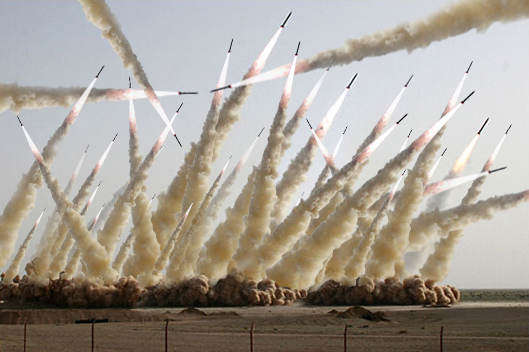 Rogue states are also increasing their efforts to secure chemical and biological weapons, and the means to deploy them, leaving billions in the world’s most densely populated area at risk of a devastating strike, the documents show.
States such as North Korea, Syria and Iran are developing long-range missiles capable of hitting targets outside the region, records of top-level security briefings obtained by WikiLeaks show.
Long-running hostilities between India and Pakistan – which both have nuclear weapons capabilities – are at the root of fears of a nuclear conflict in the region. A classified Pentagon study estimated in 2002 that a nuclear war between the two countries could result in 12 million deaths.
Secret records of a US security briefing at an international non-proliferation summit in 2008 stated that “a nuclear and missile arms race [in South Asia] has the Read more…


![[Most Recent Quotes from www.kitco.com]](https://i0.wp.com/www.kitconet.com/charts/metals/gold/t24_au_en_usoz_2.gif)
![[Most Recent Quotes from www.kitco.com]](https://i0.wp.com/www.kitconet.com/charts/metals/silver/t24_ag_en_usoz_2.gif)

 crisisboom
 CRISISBOOM
You must be logged in to post a comment.