Archive

Posts Tagged ‘Russia’

Russia Launches Long-Delayed Deep Space Radio Telescope

July 19, 2011 Comments off

space.com

Russia's Spektr-R Space Radio Observatory
An artist’s depiction of Russia’s huge Spektr-R radio astronomy satellite in Earth orbit. The satellite launched on July 18, 2011.
CREDIT: NPO Lavochkin

PARIS — Russia’s long-delayed Spektr-R radio telescope successfully launched July 18 aboard a Zenit rocket from the Baikonur Cosmodrome in Kazakhstan, the country’s Federal Space Agency said.

There was no immediate word on the operational status of the new radio observatory beyond the fact that it was placed into the planned elliptical orbit that peaks nearly 207,000 miles (330,000 kilometers) above the Earth, and reaches a low of about 621 miles (1,000 km).

Featuring a giant 30-foot (10-meter) wide antenna, the Spektr-R observatory is Read more…

‘Ice Wars’ heating up the Arctic

July 17, 2011 Comments off

cnn

Click to play
Scrambling for a piece of the Arctic pie

Editor’s note: CNN correspondent Kaj Larsen recently visited the Arctic to observe the U.S. naval exercise known as ICEX. His experience is part of the CNN documentary “Ice Wars,” which will air at 8 p.m. ET Sunday on CNN Presents.

(CNN) — On a small, floating piece of ice in the Beaufort Sea, several hundred miles north of Alaska, a group of scientists are documenting what some dub an “Arctic meltdown.”

According to climate scientists, the warming of the region is shrinking the polar ice cap at an alarming rate, reducing the permafrost layer and wreaking havoc on polar bears, arctic foxes and other indigenous wildlife in the region.

What is bad for the animals, though, has been good for commerce.

The recession of the sea ice and the reduction in permafrost — combined with advances in technology — have allowed access to oil, mineral and natural gas deposits that were previously trapped in the ice.

The abundance of these valuable resources and the opportunity to exploit them has created a Read more…

China’s military modernization in numbers

July 13, 2011 Comments off

telegraph

A look at the key figures that tell the tale of China’s increasing military power:
China increasing military use of space with new satellites

China is taking rapid strides towards creating a network of reconnaissance satellites Photo: REUTERS

 , Shanghai

* +12.6 per cent – the rise in China’s official military budget to around £56.2 billion, still a fraction of the £351 billion that the US has allocated for its core defence budget. (The UK spends £37 billion)

* £96 billion – What the US believes that China is actually spending on defence, rather than the stated figures.

* -22pc – the fall in the number of standing troops in the People’s Liberation Army as China pushes through its modernization programme. The army will shrink from 2.3 million soldiers to 1.8 million, still the largest standing Read more…

Pakistan tells US to leave `drone attack base`

June 30, 2011 Comments off

paktribune

RAWALPINDI: Pakistan on Wednesday told the United States to leave a remote desert air base reportedly used as a hub for covert CIA drone attacks.

“We have told them (US officials) to leave the Shamsi Airbase,” Defence Minister Ahmed Mukhtar said while talking to journalists here. His remarks are the latest indication of Pakistan attempting to limit US activities since a clandestine American military raid killed Osama bin Laden.

The minister reiterated that the trust deficit between Pakistan and the United States has increased after the Read more…

China eyes Canada oil, US’s energy nest egg

June 28, 2011 1 comment

thestar

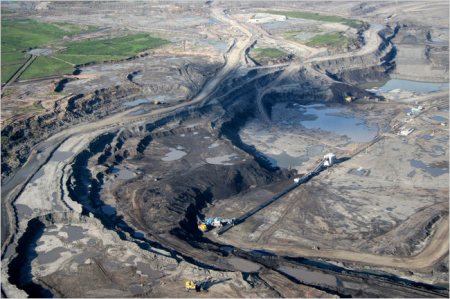
CALGARY, Alberta: In the northern reaches of Alberta lies a vast reserve of oil that the U.S. views as a pillar of its future energy needs.

China, with a growing appetite for oil that may one day surpass that of the U.S., is ready to spend the dollars for a big piece of it.

The oil sands of this Canadian province are so big that they will be able to serve both of the world’s largest economies as production expands in the coming years. But that will mean building at least two pipelines, one south to the Texas Gulf Coast and another west toward the Pacific, and that in turn means fresh environmental battles on top of those already raging over the costly and energy-intensive method of extracting oil from sand.

Most believe that both will eventually be built. But if the U.S. doesn’t approve its pipeline promptly, Canada might increasingly look to China, thinking America doesn’t want a big share in what environmentalists call “dirty oil,” because they say it increases greenhouse gas emissions.

Alberta has the world’s third largest oil reserves, more than 170 billion barrels. Daily production of 1.5 million barrels from the oil sands is expected to nearly triple to 3.7 million in 2025. Overall, Alberta has more oil than Read more…

Global diabetes cases double to 347 million in less than 30 years, study shows

June 27, 2011 Comments off

globalpost

The number of adults with diabetes in 2008 doubled to 347 million globally since 1980, a study in the journal Lancet says. That is about 10 percent of the world’s adults, and the prevalence of the disease is rising rapidly.

Researchers from Imperial College London and Harvard University in the U.S. looked at data from 2.7 million people worldwide, using statistical techniques to project a global number, according to BBC News. The study found that found that the diabetes rate had either risen or stayed the same in virtually every country.

Although most of the increase was due to population growth and a larger number of elderly people, increased obesity and inactivity, already strong trends in the U.S. and other wealthy western countries, are contributing to the increase in the disease in developing nations including India and countries in Latin America, the Caribbean and the Middle East, according to the Washington Post.

The study, funded by the Bill & Melinda Gates Foundation and the World Health Organization, is a more comprehensive calculation of diabetes prevalence than some previous estimates, according to Read more…

Russia, China Will Trade In Rubles,Yuan

June 24, 2011 Comments off

rian

Russian Central Bank

Russian Central Bank

Russia and China will switch to trade in rubles and yuan to boost bilateral trade and economic cooperation, following an agreement signed between the central banks of both countries, Russian Central Bank Deputy Chairman Viktor Melnikov said on Thursday.

“This agreement allows for settlements through Russian and Chinese banks not only in the freely convertible currencies but also in the yuan and the ruble,” Melnikov said.

Russia and China have also agreed to boost bilateral trade from $60 billiion in 2010 to $100 billion by 2015 and to $200 billion by 2020, Melnikov said.

People’s Bank of China Deputy Chairman Ma Delun said the agreement would give the two nations the opportunity to increase the value of deals in their national currencies and “help bring them closer to international reserve currencies.”

The deal will also help Russia and China reduce foreign exchange risks and currency conversion costs, Ma and Melnikov said

Categories: China, Russia Tags: , , , ,

France transfers sensitive warship technology to Russia

June 20, 2011 1 comment

rian.ru

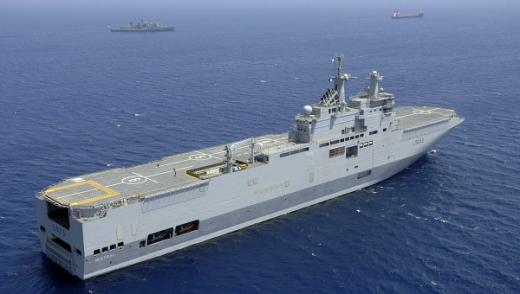
French-built Mistral class amphibious assault ship

© AFP/ Eric Feferberg

France has transferred to Russia all the technology it asked for under a $1.7-billion deal for two French-built Mistral class amphibious assault ships for the Russian Navy, a Russian arms exporter said on Monday.

Under the deal signed on Friday, the first warship will be delivered in 2014 and the second in 2015.

“The French side has transferred all technologies, including the Zenit-9 [command and control] system, as well as two other systems,” said Anatoly Isaikin, head of the Rosoboronexport state-controlled arms exporter.

A formal contract for the construction of the two Mistral class ships will be Read more…

Nations to Spend $1 Trillion on Nukes, Group Says

June 20, 2011 Comments off

globalsecuritynewswire

The planet’s nine nuclear weapons states are anticipated in the next 10 years to expend $1 trillion on acquiring and updating their systems, a prominent nuclear disarmament organization said (see GSN, June 7).

The group Global Zero — whose goal is total nuclear disarmament no later than 2030 — calculated the nuclear weapons expenditure figures for China, France, India, Israel, North Korea, Pakistan, Russia, the United Kingdom and the United States, the Financial Times reported. The organization is seeking to bring attention to the high price countries pay for their nuclear arsenals in a time of increasing government budget restraints.

Nuclear costs among the nine nations this year are estimated at $100 billion, with similar annual numbers anticipated throughout the decade, according to Global Zero.

The organization determined that nuclear arsenal expenditures take up roughly 9 percent of the countries’ total military spending; that percentage is anticipated to increase as traditional defense programs are curtailed in a number of the nations. Nuclear weapons spending encompasses research, development, weapons assessments and acquisitions.

“Spending will increase because of decisions by both nations to upgrade and replace,” Global Zero founder Bruce Blair said. “Modernization is progressing at such a pace we are seeing more spending on nuclear weapons than at any time since the Cold War.”

The group is to convene a two-day forum in London this week with participants including Russian Federation Council international affairs committee Chairman Mikhail Margelov, ex-Indian defense chief Jaswant Singh, ex-CIA intelligence agent Valerie Plame and multiple senior Chinese officials.

Global Zero wants to see other nuclear nations besides the United States and Russia take part in formal discussions on nuclear arms control.

The two former Cold War rivals together hold 95 percent of the planet’s nuclear weapons. They recently implemented a bilateral treaty that requires both sides to reduce their deployed stockpiles of strategic warheads to 1,550. U.S. President Obama has said he would like to see negotiations with Moscow for a treaty on tactical weapons begin in 2012 (see GSN, June 2; James Blitz, Financial Times, June 19).

Shiveluch volcano erupts in northern Russia

June 17, 2011 Comments off

hindustantimes

A volcano in northern Russia has erupted, and is churning out ash to a height of 10,000 metres, scientists said on Friday. The 3,283-metre Shiveluch volcano increased activity in May 2009 and has been periodically spewing ash from three to eight kilometres. “Low clouds prevent us from getting a clear visual of the event, but our seismic data indicates that Shiveluch has churned out ash plumes to a height of up to 10,000 metres,” said an official at the Far Eastern Institute of Volcanology and Seismology.

Scientists said that the volcanic activity over the past two-three years has altered the contour of the volcano, with the crater increasing in size by nearly 50% and the slopes becoming far steeper than before.

The current eruption poses no immediate threat to nearby settlements. But the ash fallouts could be hazardous to health and the environment.