Archive
Nuclear nightmare: Japanese reactor meltdown could propel ‘death cloud’ to US West Coast
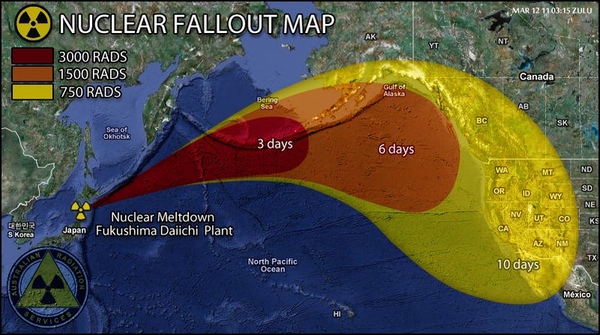
Some Japanese officials have admitted that Tokyo Electric’s Fukushima Dai-Ichi atomic reactor No. 1 may experience a total meltdown. That disaster would be followed by the release of a deadly radioactive death cloud that would drift over the Pacific and poison the people of the U.S. West Coast.
A worried Nuclear and Industrial Safety Agency spokesman Yuji Kakizaki warned:“If the fuel rods are melting and this continues, a reactor meltdown is possible,” Kakizaki said.
A core meltdown of the nuclear pile occurs from an intense build-up of heat Read more…
North Korean Nukes Might Fit on Missiles, Aircraft: U.S.
 (Mar. 11) – U.S. National Intelligence Director James Clapper, left, and Defense Intelligence Agency Director Lt. Gen. Ronald Burgess attend a Senate Armed Services Committee hearing on Thursday. Burgess warned North Korea might now possess nuclear weapons suitable for delivery by missiles and bomber aircraft (Mark Wilson/Getty Images).
North Korea could now possess nuclear warheads compact enough to be fitted to missiles and carried by bomber planes, U.S. Defense Intelligence Agency Director Lt. Gen. Ronald Burgess said on Thursday (see GSN, March 10).
(Mar. 11) – U.S. National Intelligence Director James Clapper, left, and Defense Intelligence Agency Director Lt. Gen. Ronald Burgess attend a Senate Armed Services Committee hearing on Thursday. Burgess warned North Korea might now possess nuclear weapons suitable for delivery by missiles and bomber aircraft (Mark Wilson/Getty Images).
“The North may now have several plutonium-based nuclear warheads that it can deliver by ballistic missiles and aircraft as well as by Read more…
Japan may have hours to prevent nuclear meltdown
NEW YORK (Reuters) – Japanese officials may only have hours to cool reactors that have been disabled by Friday’s massive earthquake and tsunami or face a nuclear meltdown.
Tokyo Electric Power Co (TEPCO) (9501.T) is racing to cool down the reactor core after a highly unusual “station blackout” — the total loss of power necessary to keep water circulating through the plant to prevent overheating.
Daiichi Units 1, 2 and 3 reactors shut down automatically at 2:46 p.m. local time due to the earthquake. But about an hour later, the on-site diesel back-up generators also shut, leaving the reactors without Read more…
Iran Broadens Search for Raw Uranium: Intel
 An intelligence assessment by an International Atomic Energy Agency member nation says Iran has broadened its secretive worldwide effort to secure unrefined uranium for its atomic work, the Associated Press reported today (see GSN, Feb. 23).
The finding fits with estimates that indigenous sources of raw uranium were insufficient for the Persian Gulf nation’s nuclear activities, according to AP. The United States and its allies have expressed concern that Iran’s uranium enrichment program could generate nuclear-weapon material, but Tehran has maintained its atomic efforts are geared strictly toward civilian endeavors.
Iranian Foreign Minister Ali Akbar Salehi held an undisclosed meeting in January with high-level managers of mineral extraction in Zimbabwe “to resume negotiations … for the benefit of Iran’s uranium procurement plan,” the document states.
“This follows work carried out by Iranian engineers to map out uranium deposits in Africa and assess the amount of uranium they contain,” according to its two-page summary.
Salehi’s trip is an example of Iranian uranium acquisition activities that could encompass more than Read more…
Russia, Iran to Ink Medical Isotope Export Deal
An agreement is being finalized for Russia to export medical isotopes to Iran, the Russian state-owned nuclear firm Rosatom announced yesterday (see GSN, Feb. 22).

Israeli President Shimon Peres delivers a speech in Madrid today. Peres said the passage of two Iranian navy ships through the Suez Canal to the Mediterranean Sea showcased the potential threat of a nuclear-armed Iran (Javier Soriano/Getty Images).
A spokesman for the organization did not elaborate on the timing of the anticipated signing, RIA Novosti reported. Tehran’s need for molybdenum 99 and iodine 131 was addressed in talks between Iranian officials and Rosatom head Sergei Kiriyenko (RIA Novosti, Feb. 22).
The deal would involve transfers of each isotope from Russia to Iran every week, Interfax reported.
Under a 2009 bid put forward by the International Atomic Energy Agency, Iran would have exchanged 1,200 kilograms of low-enriched uranium for material to fuel a medical isotope production reactor in Tehran. The Middle Eastern state ultimately rejected the plan worked out with France, Russia and the United States, which was aimed in part at deferring Iran’s ability to produce sufficient weapon material for a bomb long enough to more fully address U.S. and European concerns about Iranian enrichment activities. Tehran has insisted its atomic ambitions are strictly peaceful.
Iran since December has two rounds of talks with Germany and permanent U.N. Security Council member states Read more…
China Prevents Release of U.N. Report on North Korea
 China has advised other nations on the U.N. Security Council that it intends to prevent the release of a U.N. document that charges North Korea with flouting international sanctions placed on its nuclear activities, Reuters reported yesterday (see GSN, Feb. 16).
The Security Council committee that monitors implementation of U.N. sanctions on the Stalinist state received the report at the end of January from the U.N. Panel of Experts on North Korea. Western diplomats said Beijing advised it would not allow the report to be forwarded to the broader Security Council for dissemination. The decision was perplexing to some as a Chinese expert was involved in drafting the report.
As one of five permanent Security Council members, China has veto authority over decisions made by the body. As the sanctions committee must have total agreement on all actions, Beijing can also block the Read more…
Scientists Warn Iran Could Produce Enough Nuclear Material for Warhead in 5 Months


 ISTANBUL — The U.S. is joining five other world powers for talks with Iran this week publicly confident that international efforts have slowed Tehran’s capacity to make nuclear arms and created more time to press Tehran to accept curbs on its atomic activities.
But while diplomats and officials at the International Atomic Energy Agency — the U.N. nuclear monitor — agree that Iran’s enrichment program has struggled over past years, the Federation of American Scientists warns against complacency.
It notes impressive improvements in the performance of the Iranian machines that enrich uranium — an activity that has provoked U.N. sanctions because it could be used to make nuclear weapons.
Washington’s message is essentially this: Iran is struggling with uranium enrichment, a process that can create both nuclear fuel and fissile warhead material. Significantly, that view is backed by Israel, Iran’s implacable foe and considered to have the Mideast’s best intelligence on Iran’s nuclear strivings.
If true, that leaves more time to negotiate in hopes Iran will come around and give up enrichment — thereby removing the threat of an Israeli or U.S. military strike on Iran’s nuclear Read more…
WikiLeaks: Iran developing nuclear bomb with help of more than 30 countries
The Norwegian newspaper Aftenposten quotes U.S. diplomatic cables as saying that Iran is racing to achieve nuclear bomb before its economy collapses due to sanctions.
Iran has been developing contacts in more than 30 countries to acquire technology, equipment and raw materials needed to build a nuclear bomb, a Norwegian newspaper said on Sunday, citing U.S. diplomatic cables.
Aftenposten said that according to the cables, obtained by WikiLeaks, more than 350 Iranian companies and organizations were involved in the pursuit of nuclear and missile technology between 2006 and 2010.
 Technicians measuring parts of Iran's Bushehr nuclear power plant in this undated photo. |
|
| Photo by: AP |
Iran says its nuclear program has purely peaceful aims but the West suspects is designed to develop a weapons capability.
“For years, Iran has been working systematically to acquire the parts, equipment and technology needed for developing such weapons, in violation of UN sanctions against the country Read more…


![[Most Recent Quotes from www.kitco.com]](https://i0.wp.com/www.kitconet.com/charts/metals/gold/t24_au_en_usoz_2.gif)
![[Most Recent Quotes from www.kitco.com]](https://i0.wp.com/www.kitconet.com/charts/metals/silver/t24_ag_en_usoz_2.gif)

 crisisboom
 CRISISBOOM
You must be logged in to post a comment.