Archive
6.3 Peru Earthquake: Tremor Strikes Central Coastline

A powerful earthquake of 6.3-magnitide has struck the central coastline of Peru, according to the U.S. Geological Survey (USGS).
Peruvian officials said at least 110 people have been injured by the quake; however, it is too early to assess the overall damage wrought by the natural disaster.
“The majority [of wounded] are suffering trauma and cuts,” Fernando Leon Castaneda, manager of a local hospital, told Radio Programas del Peru (RPP).
The tremor hit right after midnight, with its epicenter about 9 miles southeast of the city of Ica. Reportedly, it was felt across the southern and central parts of the mountainous Andes nation.
Ica is about 168 miles south of the capital city of Lima.
Ica itself has suffered damage to some buildings, as well as the loss of electrical power.
“We felt a terrible earthquake that’s really scared us,” Ica resident Blanca Cabanilla told the local radio. “It was similar to Read more…
Japan Earthquake 2012: Study Warns of Major Tokyo Quake
Japan has already suffered one earthquake in 2012. But the New Year’s Day rumble caused little damage because it was centered deep below the surface. A new study warns, however, that the Tokyo region has a 70 percent chance of experiencing a major earthquake within four years.
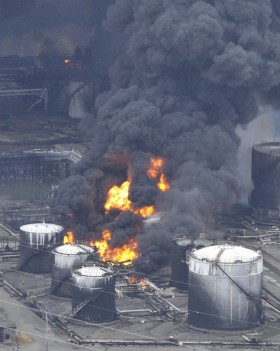
(Photo: Reuters / Kyodo) On March 11, a tsunami triggered by a massive earthquake resulted in widespread damage in Japan's Fukushima prefecture and destroyed a nuclear power plant. Vehicles, ships, buildings were washed away by the giant flood that resulted from the 8.9 magnitude quake. A new study suggests the Tokyo region of Japan could suffer another major earthquake within four years.
Seismologists at the University of Tokyo said the study was based on an increase in earthquake activity in the region following the devastating March 11 earthquake and tsunami that killed almost 20,000 and led to a nuclear disaster. Working at the university’s earthquake research institute, the seismologists said the number of earthquakes in the region is rising — to 343 of 3.0 magnitude or higher in the past six months versus 47 the previous six months.
The seismologists believe that the probability of bigger earthquakes increases proportionately with smaller earthquakes. Therefore, the team has calculated a 98 percent chance of a 6.7 to 7.2 magnitude earthquake for the Tokyo region in the 30 years and a 70 percent chance over the next four years.
“When we ask when a probability of such a quake reaches 70%, then we get a 70% chance over the Read more…
Magnitude 5.1 – FOX ISLANDS, ALEUTIAN ISLANDS, ALASKA

Why Have There Been So Many Earthquakes Recently?
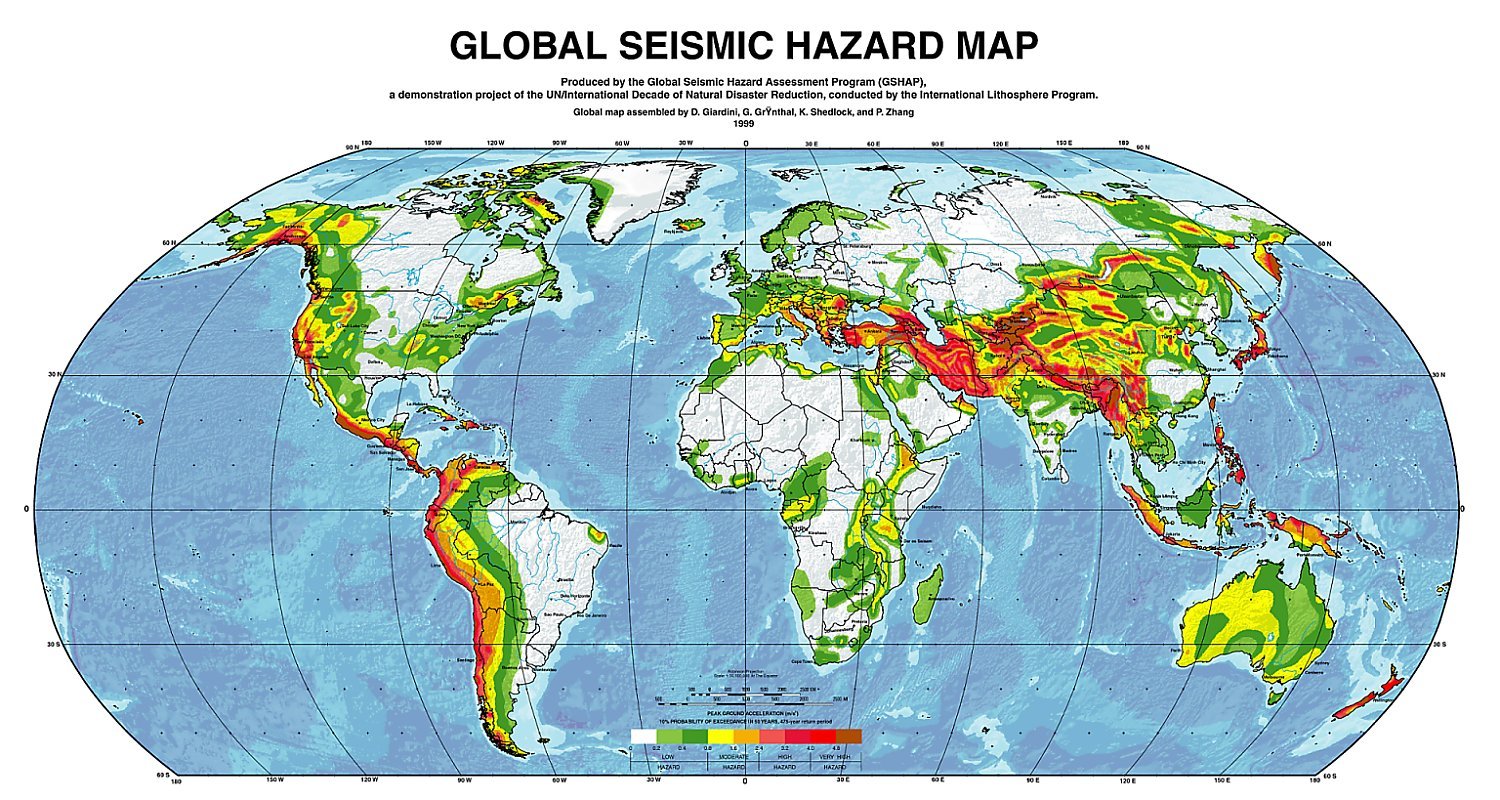
Click to Enlarge
I think most people – certainly myself – get that grim “what, another one?” feeling when you first hear news that there has been a big earthquake.
But is it justified? In other words, have we recently been experiencing an increased rate of earthquakes? This from Beroza (2012),
For a nearly 40-y period after the February of 1965 M 8.7 Rat Islands, Alaska earthquake, the world did not experience a single great earthquake; however, in the 7 y since late December of 2004, there have been a barrage of five great earthquakes. These earthquakes include the 2004 M 9.1 Sumatra, Indonesia earthquake; the 2005 M 8.7 Nias, Indonesa earthquake; the 2007 M 8.5 Bengkulu, Indonesia earthquake; the 2010 M 8.8 Maule, Chile earthquake; and the Read more…
30 5.0+ Earthquakes Worldwide in the last 7 days


There has been an recent increase of earthquakes measuring 5.0 and above globally from various parts of the world from Iran to Chile. Over the last four days there has been four consecutive earthquakes measuring 6.0+ each day. Here is a rundown of the latest… Read more…
Chile Earthquake Strikes Today: Panic Felt
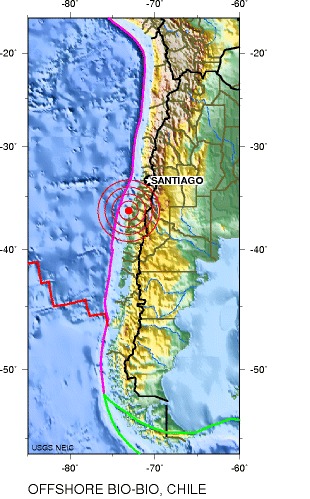 Only yesterday we reported on an earthquake in Mexico and earlier today about another earthquake in Hawaii. A further earthquake has now been reported off the coast of Chile with a magnitude of 6.2. There are no reports yet of any people injured or damage but the quake did cause panic.
The quake happened at 1:04 pm local time, that’s 4:04 pm UTC or 11:04 am EST at a depth of 18.5 miles (29.7 km). According to the USGS the epicenter was 31 miles (50 km) north of Concepcion, Bio-Bio, Chile, 49 miles (80 km) southwest of Cauquennes, Maule, Chile, 55 miles (90 km) west-northwest of Chillan, Bio-Bio, Chile or 244 miles (393 km) south-southwest of Santiago, Chile.
The national emergency office of Chile said no immediate reports had come in about injuries. A tsunami warning was not issued. The effects of today’s temblor were widely felt though Read more…
Waiting For Death Valley’s Big Bang: A Volcanic Explosion Crater May Have Future Potential
nanopatentsandinnovations.blogspot.com

5.0 Earthquake Hits Hawaii, At Least 20 Aftershocks Felt

Residents and people vacationing in Hawaii on Sunday felt the effects of a magnitude 5.0 earthquake that rattled the area about 4 miles south of the active Pu’u O’o crater on the Kilauea volcano’s east rift zone.
According to reports the hypcentral depth was approximately 5 miles deep and there is no threat of a tsunami. No report damage was reported at the time of the earthquake.
According to reports a set of smaller quakes were reported within 10 minutes of the first quake and in the the Read more…
Rare Caterpillar-like Horizontal Earthquake Discovered
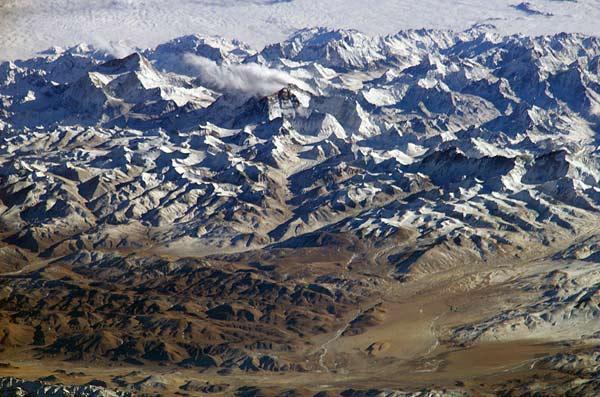
Mount Everest in the Himalayas. CREDIT: NASA Earth Observatory.
Imagine that, as you sit at your desk or in your living room reading this story, your entire city suddenly snaps a foot to the south.
That’s what happened to the city of Kohat, Pakistan, in 1992. A magnitude-6.0 earthquake moved a 30-square-mile (80-square-kilometer) swath of land one foot (30 centimeters) horizontally in a split second, leveling buildings and killing more than 200 people.
The area hadn’t experienced many temblors before, making the earthquake an unusual occurrence. Now, 20 years later, geologists have used satellite and seismic data to track down the cause of that rare quake — an equally rare type of fault.
“The pattern we saw was absolutely a dead ringer for a horizontal fault,” said Roger Bilham, a geophysicist at the University of Colorado at Boulder. “But here’s the problem: How do you get a horizontal earthquake?”
Perfectly horizontal
Most earthquakes occur at near-vertical faults, such as the strike-slip San Andreas Fault or the thrust fault that caused the 2011 Japan earthquake. The Kohat Plateau earthquake occurred on a Read more…
Some earthquakes expected along Rio Grande Rift in Colorado and New Mexico, new study says
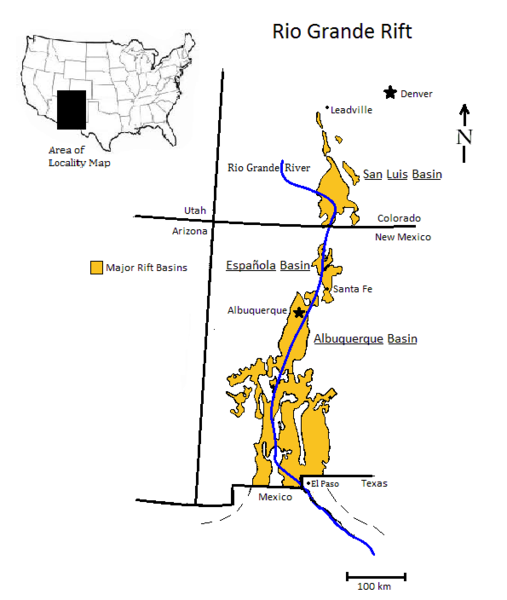
Click to Enlarge
(PhysOrg.com) — The Rio Grande Rift, a thinning and stretching of Earth’s surface that extends from Colorado’s central Rocky Mountains to Mexico, is not dead but geologically alive and active, according to a new study involving scientists from the University of Colorado Boulder’s Cooperative Institute for Research in Environmental Sciences.
“We don’t expect to see a lot of earthquakes, or big ones, but we will have some earthquakes,” said CU-Boulder geological sciences Professor Anne Sheehan, also a fellow at CIRES. The study also involved collaborators from the University of New Mexico, New Mexico Tech, Utah State University and the Boulder-headquartered UNAVCO. The Rio Grande Rift follows the path of the Rio Grande River from central Colorado roughly to El Paso before turning southeast toward the Gulf of Mexico.
Sheehan was not too surprised when a 5.3 magnitude earthquake struck about 9 miles west of Trinidad, Colo., in the vicinity of the Rio Grande Rift on Aug. 23, 2011. The quake was the largest in Read more…


![[Most Recent Quotes from www.kitco.com]](https://i0.wp.com/www.kitconet.com/charts/metals/gold/t24_au_en_usoz_2.gif)
![[Most Recent Quotes from www.kitco.com]](https://i0.wp.com/www.kitconet.com/charts/metals/silver/t24_ag_en_usoz_2.gif)

 crisisboom
 CRISISBOOM
You must be logged in to post a comment.