Archive
Jim Rogers Says $200 Oil Will Lead Massive Commodity Surge
When it comes to state visits the devil is in the detail. It’s the nuances of the arrangements that allow you to calibrate just how important a relationship is. That’s why the world has been watching the visit of the Chinese President Hu Jintao with such attention. The state dinner at the White House – described as an “intimate” event – apparently signifies that Washington rates China as pretty much the most important nation, economically, on earth. But the visit has also prompted much speculation in the press about how long the Chinese economic miracle can last and whether it is about to come to a juddering halt. Jim Rogers, the legendary investor who co-founded the Quantum Fund with George Soros, has moved his family to Singapore and is making sure his two young daughters can speak Mandarin. He spoke to the Business Daily’s Justin Rowlatt.
Transcript is below
 Jim Rogers: The largest creditor nations in the world are in Asia now: China, Korea, Japan, Hong Kong. This is where the assets are. You know who the debtors are and where they are.
Justin Rowlatt: But listen, I mean the Chinese economy is still way behind the American economy is and it is about the third the size of the American economy.
Jim Rogers: Yes, of course. They had a disaster for 300 years, but about 30 years ago, they woke up, they changed their minds and they said we got to try something new. They unleashed entrepreneurship and capitalism again, and they have been astonishing for 30 years. It takes a while to go from a disaster to rival the Americans, but they are on their way.
Justin Rowlatt: Do you really believe the Chinese boom can continue, because lots of people are saying there are all sorts of asset price bubbles that are going to trip the Chinese up in the coming years?
Jim Rogers: Well, the only asset bubble I see potentially in China is in urban coastal real estate, but real estate is not nearly the entire Chinese economy as it was in America and the U.K. Sure, they will have setbacks.
Justin, in the 19th Century, America had a horrible civil war. We had 15 depressions with a ‘D.’ We had very few human rights. We had massacres in the streets regularly. We had very little rule of law. You could buy and sell – you can still buy and sell congressmen in America, but in those days they were cheap. America had horrible problems, but they came out of that and had a pretty good 20th Century. Read more…
12 Economic Collapse Scenarios That We Could Potentially See In 2011
 What could cause an economic collapse in 2011? Well, unfortunately there are quite a few “nightmare scenarios” that could plunge the entire globe into another massive financial crisis. The United States, Japan and most of the nations in Europe are absolutely drowning in debt. The Federal Reserve continues to play reckless games with the U.S. dollar. The price of oil is skyrocketing and the global price of food just hit a new record high. Food riots are already breaking out all over the world. Meanwhile, the rampant fraud and corruption going on in world financial markets is starting to be exposed and the whole house of cards could come crashing down at any time. Most Americans have no idea that a horrific economic collapse could happen at literally any time. There is no way that all of this debt and all of this financial corruption is sustainable. At some point we are going to reach a moment of “total system failure”.
So will it be soon? Let’s hope not. Let’s certainly hope that it does not happen in 2011. Many of us need more time to prepare. Most of our families and friends need more time to prepare. Once this thing implodes there isn’t going to be an opportunity to have a “do over”. We simply will not be able to put the toothpaste back into the tube again.
So we had all better be getting prepared for hard times. The following are 12 economic collapse scenarios that we could potentially see in 2011….
#1 U.S. debt could become a massive crisis at any moment. China is saying all of the right things at the moment, but many analysts are openly worried about what could happen if China suddenly decides to start dumping all of the U.S. debt that they have accumulated. Right now about the only thing keeping U.S. government finances going is the ability to borrow gigantic amounts of money at extremely low interest rates. If anything upsets that paradigm, it could potentially have enormous consequences for the entire world financial Read more…
What is Plan B if China dumps its U.S. debt?


 NEW YORK (Reuters) – When borrowing money it’s always good to have a Plan B in case a big creditor pulls the plug. That should be true whether the sum is a few thousand dollars or about a trillion, the size of the United States government’s debt to China.
With Chinese President Hu Jintao due to arrive in Washington on Tuesday, it is worth asking about U.S. officials’ Plan B just in case one day relations take a surprise turn for the worse and Beijing dumps its holdings of U.S. treasuries.
China is officially the United States’ biggest foreign creditor, with roughly $900 billion in Treasury holdings — or over $1 trillion with Hong Kong’s holdings included.
That means it could do severe damage to U.S. debt markets if it suddenly started selling large amounts.
Most experts say if there were signs of this happening, the U.S. government would go for a combination of persuading Americans to buy more U.S. debt, the same way they did in World War II, and finding friendly foreign governments to make additional purchases.
Banks could be called on to increase their holdings of treasuries, and as a last resort, the Federal Reserve could also be called on to fill the gap, though this could risk turning any dollar weakness into a slump. Read more…
Treasury Five-Year Notes Advance as Bernanke Predicts Slow Growth in Jobs
 Treasury five-year notes had the first back-to-back weekly gains since October as U.S. payrolls grew less than forecast and Federal Reserve Chairman Ben S. Bernanke said the labor market’s recovery will be gradual.
Yields on the notes touched the lowest level in two weeks yesterday after Labor Department data showed nonfarm payrolls expanded by 103,000 last month, versus a median forecast of 150,000 in a Bloomberg News survey. The Treasury will sell $66 billion in securities next week in the year’s first note and bond auctions.
“The five-year leads the way up, and it leads the way down,” said Brian Edmonds, head of interest-rates at Cantor Fitzgerald LP in New York, one of central bank’s 18 primary dealers. “The Fed chairman is setting expectations back further and making people aware that there aren’t a lot of quick fixes and it’s not going to turn on a dime.”
The yield on the five-year note fell five basis points yesterday, or 0.05 percentage point, to 1.96 percent, from 2.01 percent on Dec. 31, according to BGCantor Market Data. It touched 1.93 percent, the lowest since Dec. 21. The yield hadn’t declined for more than a single week at a time since Oct. 8.
Benchmark 10-year note yields rose three basis points to 3.32 percent, from 3.29 percent at the end of last week. Two- year note yields were little changed at 0.59 percent. Read more…
National Debt $200 Trillion Dollars
Dr. Laurence Kotlikoff economics professor at Boston University, discusses the national debt and unfunded liabilities – Aug. 11, 2010
Using CBO data, Kotlikoff says the real national debt is $202 trillion.
Compare the official deficit numbers for July – $165 billion – with the numbers for all of 2002 – where $165 billion covered the deficit for the entire fiscal year.
—
Excerpt:
The Congressional Budget Office whose Long-Term Budget Outlook, released in June, shows an even larger problem.
‘Unofficial’ Liabilities
Based on the CBO’s data, I calculate a fiscal gap of $202 trillion, which is more than 15 times the official debt. This gargantuan discrepancy between our “official” debt and our actual net indebtedness isn’t surprising. It reflects what economists call the labeling problem. Congress has been very careful over the years to label most of its liabilities “unofficial” to keep them off the books and far in the future.
2010 in Review-Commodities affected by World Events
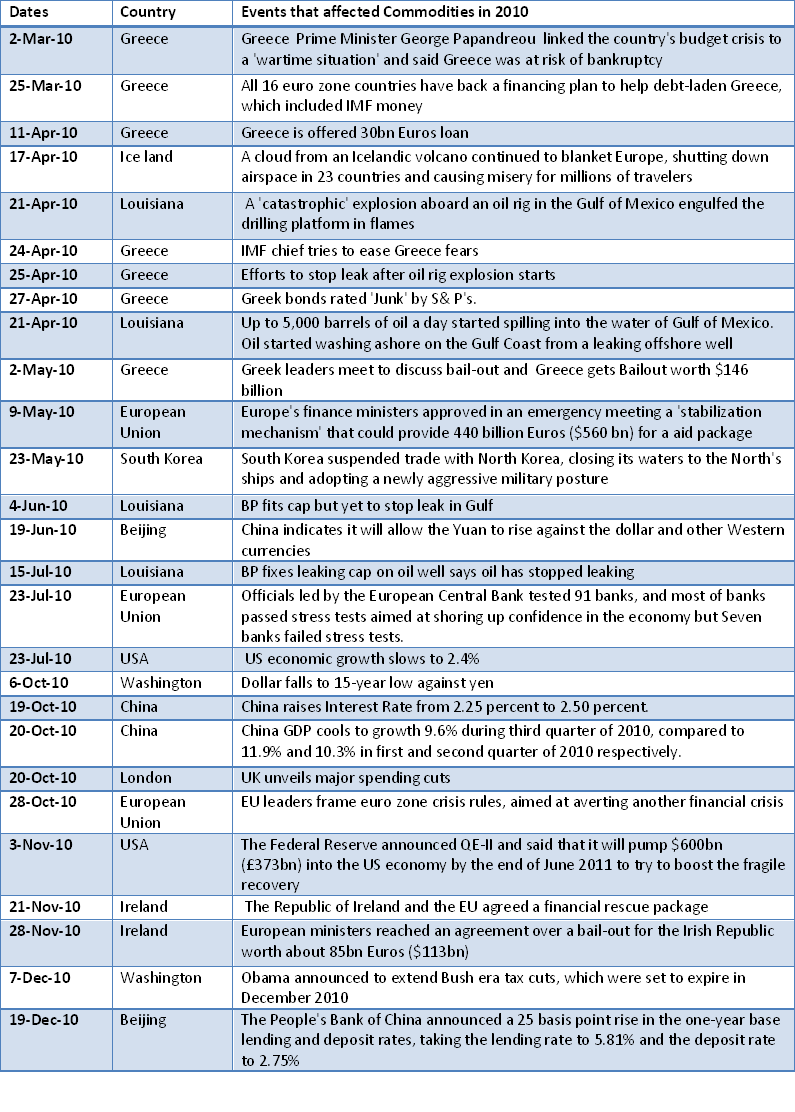 Notable events that affected commodity prices in 2010
IN THE STOCK MARKET, IT’S 1937 ALL OVER AGAIN
One of the most worrisome problems in the stock market right now is that we are basically repeating the exact same situation that occurred from 1937 to 1942.
Most Americans think we’ve had this amazing stock market recovery since the financial crisis of 2008… and we have to a certain extent.
But we are by no means out of the woods.
In fact, during America’s last real economic collapse, in the 1930s and 1940s, we saw a similar drop and recovery… before the markets crashed all over again.
In fact, the situation is eerily similar.
 Look at this chart… it’s one of the scariest I’ve seen in a long time. It shows an overlay of what happened in the stock market in 1937 compared to 2008. In both situations, we saw big crashes, of about the exact same magnitude… then a big recovery, again of about the same size.
But what will happen next?
Well, if history is any guide, we could well have another big leg down in the stock market. That’s exactly what happened 70 years ago.
And with all of the problems left unresolved in our economy today, it could certainly happen again, especially if the U.S. dollar loses its reserve status.
http://www.stansberryresearch.com/pro/1011PSIENDVD/PPSILC42/PR
Either America Or China Will Crash In 2011
Andy Xie’s latest sees the liquidity war getting worse in 2011.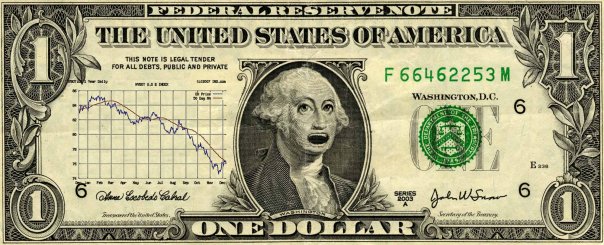
America will continue to pump the financial system with liquidity via tax cuts and quantitative easing. China will keep the yuan cheap and avoid clamping down on inflation.
The tense equilibrium can’t last for long, as either sovereign debt or inflation gets too heavy to bear. Whoever lasts longer, wins.
The most likely candidates to trigger the next global crisis are the U.S.’s sovereign debt or China’s inflation. When one goes down first, the other can prolong its economic cycle. China may have won the last race. To win the next one, China must tackle its inflation problem, which is ultimately a political and structural issue, in 2011. If China does, the U.S. will again be the cause for the next global crisis. China will suffer from declining exports but benefit from lower oil prices.
On the other hand, if China has a hard landing, the U.S.’s trade deficit can drop dramatically, maybe by 50 percent, due to lower import prices. It would boost the dollar’s value and bring down the U.S.’s treasury yield. The U.S. can have lower finacing costs and lower expenditures. The combination allows the U.S. to enjoy a period of good growth.
Xie notes that China may have the advantage here. While America has committed to a liquidity hose, Beijing still has the opportunity to crack down on inflation:
China’s inflation problem stems from the country’s rapid monetary growth in the past decade. That is due to the need to finance a vast property sector, which is, in turn, to generate fiscal revenues for local governments to finance their vast expenditure programs. Unless something is done to limit local government expenditure, China’s inflation problem is likely to get out of control…
There are two ways to limit local government expenditure. One is to cut their funding source. Their main revenue sources are land sales, property taxes, and bank loans. The last source is drying up a bit, as banks are saddled with high exposure to the sector already and are trying to decrease it. This change isn’t biting yet because local governments haven’t spent all the money they borrowed before.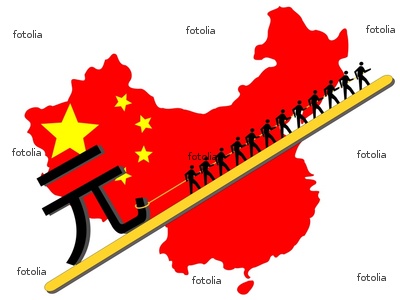
China needs America to consume their goods. This is the only way to keep its 1.3 billion people working and prevent protests and cause social instability. America has lost it manufacturing bases. They have only the printing press to print fit currency. America needs cheap imports from China to keep the illusion of high standard of living that they are used too.


![[Most Recent Quotes from www.kitco.com]](https://i0.wp.com/www.kitconet.com/charts/metals/gold/t24_au_en_usoz_2.gif)
![[Most Recent Quotes from www.kitco.com]](https://i0.wp.com/www.kitconet.com/charts/metals/silver/t24_ag_en_usoz_2.gif)

 crisisboom
 CRISISBOOM
You must be logged in to post a comment.