Archive
China’s inflation to accelerate as food costs rise
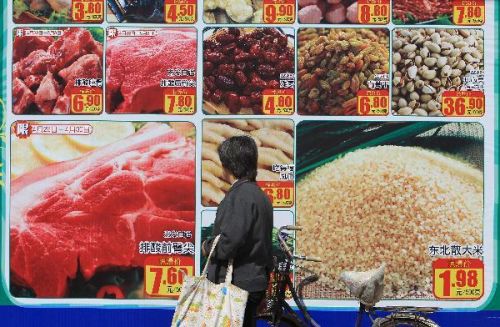 China’s top economic planning agency said inflation will accelerate this month, bolstering analysts’ forecasts for the rate to reach 6 percent, the highest level since July 2008.
“The overall level of prices remains high and inflation will remain elevated for some months although the overall situation is controllable,” the National Development and Reform Commission said on its website today.
China has raised interest rates four times since September, limited bank lending and boosted food supplies as rising prices threaten to fuel social unrest. The Shanghai Composite Index has fallen more than 13 per cent from this year’s April high on concern that tightening measures will drag down growth.
“Inflation is going to be stubbornly high in 2011 and it’s largely a food story,” said Tim Condon, head of Asia research at ING Groep NV in Singapore. Authorities may be reluctant to keep Read more…
Hike in worldwide food prices forces change in diet as more go hungry
Costs rise 37 per cent in past year; more women, girls negatively impacted
Soaring food prices over the past year have prompted 17 per cent of Canadians to change their diets due to the higher cost of food. But Canadians haven’t yet felt the full impact of raw food price increases, in part because of our strong dollar.
Photograph by: Noah Seelam, AFP, Getty Images, Postmedia News
Soaring food prices and health concerns are prompting people around the world to change what they eat, according to a new 17-nation survey done for Oxfam. And Canadians aren’t exempt from the trend.
Of the 16,421 people surveyed by GlobeScan, 53 per cent said say they’re no longer eating the same foods they did two years ago. Nearly four in 10 of those say some of the food they used to eat is now too expensive, while one-third changed their diets for health reasons.
“The rising cost of food is pushing more Read more…
European drought raises fears of food riots

The cracked river-bed near the village of Ancenis, in western France, where severe water restrictions have been impressed. Picture: AFP Source: AFP
BERNARD Maquis’s cattle would normally be grazing in the lush green pastures of the Limousin region, in central France, at this time of year.
Instead, they are eating hay intended for the winter after months of drought have turned the fields yellow.
He is wondering whether it might be better to sell his cows at a reduced price rather than find himself without fodder by the end of the autumn. “I’m starting to sleep badly,” he said.
Mr Maquis is not alone. With northern Europe facing its worst drought since 1976, politicians in the West are expecting protests Read more…
World Hunger and Food Shortages Are Pressing Global Issues, Say Experts in Current Events and Politics
 PASADENA, Calif.–(BUSINESS WIRE)–In an article for the quarterly journal Vision titled “What Shall We Eat and Drink?” publisher and international relations scholar David Hulme discusses the global issues of world hunger and water security. Slicing through the Gordian Knot of current events and politics, Hulme explores the complex factors relating to food shortages and the building water crisis.
People share a universal need to eat and drink, yet nearly a billion people go hungry every day. Concerns about food and water shortages were behind the eight goals of the 2000 UN Millennium Declaration, with the primary Millennium Development Goal being to reduce the number of undernourished and poverty-stricken people in developing countries from the current 16 percent to 10 percent by 2015.
“Part of the difficulty,” writes Hulme, “arises from the potential volatility of food prices accentuated by natural disasters, severe weather, surging fuel Read more…
The Coming Food Shocks: Background
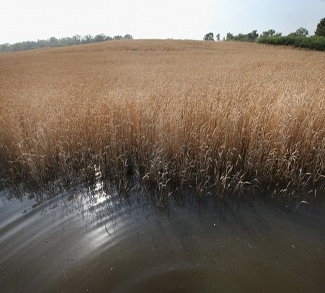 The food crisis of 2008 was never resolved; it was merely put on hold by a global financial meltdown. Now, any serious discussion on a sustained economic recovery should take for granted that food prices will once again spike, bringing about a cascade of geopolitical consequences.
The sheer number of upward pressures on food prices makes it difficult to imagine a scenario that doesn’t have them spiking rather dramatically over the next few decades. This will result in not only an increase in global poverty, devastating some of the most vulnerable populations in the world, but it will also put stress on the new social contract that has emerged in certain rising powers- particularly the development-for-autocracy consensus in Read more…
Alarming Number of Disasters Striking World “Food Baskets”
Millennium-Ark
May 16, 2011
Holly Deyo
Dear Friends and Readers of Millennium-Ark,
For the last 5 years, we have posted countless articles covering both natural disasters and their impact on our food supplies as well as on many other timely topics. After several decades of monitoring these events, it’s hard to convey how shocked we are by the sheer number of disasters that have occurred just in the first 4 months of 2011.
Yesterday, all day, I spent analyzing natural disasters and plotted them against our food belts. Never, ever, have I seen so many federally declared disasters this early in the year.
The DHS/FEMA maps were defined by 2 colors: blue signified no disasters (to distinguish the disaster-free areas from water, they are shown in white below) and yellow indicated declared disasters. Map after map, state after state were mostly yellow. Surely this must be an error? Thinking through the numerous news items on Earth Changes, with sinking feeling, I knew they were correct. It was only when the state information was transferred to a single national map, the implications become uncomfortably clear.
Notice how many disasters have occurred in food-producing areas. They are striking the heart of our food growing regions. Many food crops have been wiped out by drought, flood, hail and freezes. These food destroyers are occurring in greater frequency and having larger impact. America’s food belts are taking mighty hits. Some growing areas will not recover this entire year.

USDA: Food prices to rise further during rest of 2011
World instability+Food Prices+Oil+Floods+Droughts+Inflation=A Hungry and Broke You/Me
 A federal study finds food prices will take a bigger bite out of Iowans’ food budgets this year. Rick Volpe, an economist with the U-S Department of Agriculture, says a trip to the grocery store will mean either less food in your cart or less money in your wallet.
“It will be hard to pay roughly the same amount you paid in 2010,” Volpe says. “There is no question that the food budget is going up for a lot of households.” Volpe says the highest price hikes will be seen in the supermarket’s meat and dairy cases.
“We’re forecasting a seven-to-eight-percent increase in retail beef prices and six-and-a-half to seven-and-a-half for pork,” he says. “Your milk, yogurt and cheese, we are forecasting about a five-percent increase.”
Volpe says there are several reasons for the hike in food prices but the rising cost of fuel is foremost. Triple-A-Iowa says the Read more…
World Bank president: ‘One shock away from crisis’
 The president of the World Bank has warned that the world is “one shock away from a full-blown crisis”.
Robert Zoellick cited rising food prices as the main threat to poor nations who risk “losing a generation”.
He was speaking in Washington at the end of the spring meetings of the World Bank and International Monetary Fund.
Meanwhile, G20 finance chiefs, who also met in Washington, pledged financial support to help new governments in the Middle East and North Read more…
Surging Food Prices Could Thrust Millions Into Poverty In Emerging Europe: World Bank

WASHINGTON, April 16 (Bernama) — The recent price hikes in food and energy could push more than five million people in Eastern Europe and Central Asia into poverty, reports the China’s Xinhua news agency, quoting World Bank’s official.
Yvonne Tsikata, the director for Poverty reduction and economic management of the World Bank’s Europe and Central Asia region said: “The poorest people in the region will suffer the most from the high food and energy price inflation, which reduces their purchasing power’.
She said that the region’s poor often spend half of their income on food, and Read more…
World Bank: Food prices have entered the ‘danger zone’
 Robert Zoellick, World Bank president, said food prices are at “a tipping point”, having risen 36pc in the last year to levels close to their 2008 peak. The rising cost of food has been much more dramatic in low-income countries, pushing 44m people into poverty since June last year.
Another 10pc rise in food prices would push 10m into extreme poverty, defined as an effective income of less than $1.25 a day. Already, the world’s poor number 1.2bn.
Mr Zoellick said he saw no short term reversal in the damaging effect of food inflation, which is felt much more in the developing world as packaging and distribution accounts for a far larger proportion of the cost in the advanced economies.
Asked if he thought prices would remain high for a year, Mr Zoellick said: “The general trend lines are ones where we are in a danger zone… because prices have already gone up and stocks are relatively low.”
Rising prices have been driven by the changing diet of the ballooning middle classes in the emerging markets. “There is a demand change going on, with the higher incomes in developing countries. People will eat more meat products, for example, that will use more grain.
“I am not suggesting that the improved diets in the developing world are the source of the problem but it means it takes longer to Read more…


![[Most Recent Quotes from www.kitco.com]](https://i0.wp.com/www.kitconet.com/charts/metals/gold/t24_au_en_usoz_2.gif)
![[Most Recent Quotes from www.kitco.com]](https://i0.wp.com/www.kitconet.com/charts/metals/silver/t24_ag_en_usoz_2.gif)

 crisisboom
 CRISISBOOM
You must be logged in to post a comment.