Archive
Digital Privacy and the Fifth Amendment
 The Internet has vastly changed society. It’s one of those things that we can’t imagine living without, and we can’t imagine how we got by without the Internet just a few decades ago. However, something that changes society as drastically as the Internet has also alters legal boundaries, laws, and interpretations. The 5th Amendment, which protects American citizens’ right to due process and against self-incrimination, among other things, is no exception.
A federal judge in Colorado recently ruled that your computer is not granted those protections under the 5th Amendment. Even encrypted data that’s stored on your computer or an external hard drive would be subject to investigation, and giving up that information is equivalent to complying with a search warrant. The question of the 5th Amendment, privacy, and the law has always been a muddy one. How much digital privacy do people actually have? Is handing over our digital information, such as Read more…
ACLU warns bill would gut video privacy law
 The American Civil Liberties Union on Tuesday expressed its concern with proposed changes to the Video Privacy Protection Act (VPPA), which would allow companies to gain perpetual consent to sharing their customers’ video rental records.
At a Senate Judiciary subcommittee on Privacy, Technology and the Law hearing on Tuesday lawmakers debated changes to the law, which requires companies to ask for consent every time they disclose records.
Netflix and other Internet-based companies would like to see the law changed so that they could share their customers’ rental history with social media sites and other third-parties.
But the ACLU said in a letter (PDF) that changing the law would Read more…
Privacy rights battle just beginning
THE ISSUE: Ruling on GPS attachment
OUR VIEW: Technology forcing need for clarification on privacy rights
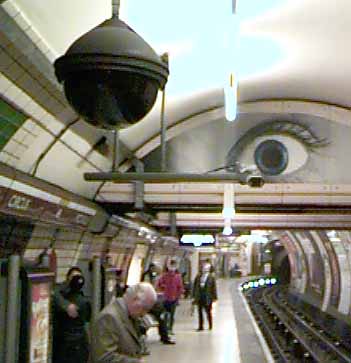 The U.S. Supreme Court rightly ruled n United States vs. Jones that secretly tracking people’s movements by attaching GPS devices to their cars violated the Fourth Amendment’s ban on unreasonable searches unless police first get a warrant from a judge.
While the justices came down firmly on the side of privacy in this case, the battle is just beginning to protect privacy rights in this age of technology when more eyes are watching us than ever before.
The court’s ruling validates the belief that people have a reasonable expectation that they will not be subject to constant monitoring by the government, and that escalating secretive technological surveillance violates a person’s reasonable expectation of privacy.
“We have entered a new and frightening age when advancing technology is erasing the Fourth Amendment,” says John W. Whitehead, president of The Rutherford Institute.
“Thankfully, in recognizing that the placement of a GPS device on Antoine Jones’s Jeep violated the Read more…
New Mobile-Phone Privacy Law Proposed
 Rep. Edward Markey (D-Massachusetts) unveiled draft legislation Monday requiring mobile-phone carriers to reveal if they are employing tracking software such as Carrier IQ.
“Consumers have the right to know and to say ‘no’ to the presence of software on their mobile devices that can collect and transmit their personal and sensitive information,” Markey said in The Hill.
Under the Mobile Device Privacy Act (.pdf), consumers would have to consent that data from their phones would be sent to third parties, like Carrier IQ in Mountain View, California.
Carrier IQ has said that its software was secretly installed on some 150 million phones. It conceded that it Read more…
Is The NYPD Experimenting With Drones Over The City? Evidence Points To Yes
Miami, Cities In Texas Also Said To Be Trying This New Way To Be Eye In The Sky

Drones like this one could very well be hovering over New York City soon. (Photo courtesy: Miami-Dade Police Special Response Team)
NEW YORK (CBSNewYork) — They’re used in war zones for surveillance and military strikes.
But are there plans to deploy drones in the Big Apple to keep an eye on New Yorkers?
More and more people believe it’s inevitable, reports CBS 2’s Don Dahler.
Drones are unmanned aircraft that can fly at low altitudes and shoot live video — or shoot live missiles.
Surveillance cameras already dot the city’s streets, but is the NYPD exploring the use of even more eyes in the skies, in the form of drones? Some evidence points to yes.
A website named Gay City News posted an e-mail it says it acquired through the Freedom of Information Act. It’s purportedly from a Read more…
Homeland Security Wants to Spy on 4 Square Miles at Once
 It’s not just for the Afghanistan and Iraq wars anymore. The Department of Homeland Security is interested in a camera package that can peek in on almost four square miles of (constitutionally protected) American territory for long, long stretches of time.
Homeland Security doesn’t have a particular system in mind. Right now, it’s just soliciting “industry feedback” on what a formal call for such a “Wide Area Surveillance System” might look like. But it’s the latest indication of how powerful military surveillance technology, developed to find foreign insurgents and terrorists, is migrating to the home front.
The Department of Homeland Security says it’s interested in a system that can see between five to 10 square kilometers — that’s between two and four square miles, roughly the size of Brooklyn, New York’s Bedford-Stuyvesant neighborhood — in its “persistent mode.” By “persistent,” it means the cameras should stare at the area in question for an unspecified number of hours to collect what the military likes to call “pattern of life” data — that is, what “normal” activity looks like for a given area. Persistence typically depends on Read more…
Dronology: US flying eye spies on people at home
America’s controversial use of its drones in Asia may have caused overwhelming anger, but now it’s threatening to do the same at home. Washington’s key spying weapon in overseas operations is becoming a common tool for U.S. police, stirring up privacy concerns among more and more Americans.
No Warrant Needed for GPS Monitoring, Judge Rules

A Missouri federal judge ruled the FBI did not need a warrant to secretly attach a GPS monitoring device to a suspect’s car to track his public movements for two months.
The ruling, upholding federal theft and other charges, is one in a string of decisions nationwide supporting warrantless GPS surveillance. Last week’s decision comes as the Supreme Court is expected to rule on the issue within months in an unrelated case.
The ruling from Magistrate David Noce mirrored the Obama administration position before the Supreme Court during oral arguments on the topic in November. In short, defendant Fred Robinson, who was suspected of fudging his time sheets for his treasurer’s office job for the city of St. Louis, had no reasonable expectation of privacy in his public movements, Magistrate Noce said.
Noce ruled: (.pdf)
Here, installation of the GPS tracker device onto defendant Robinson’s Cavalier was not a Read more…
Wireless Data From Every Light Bulb (Video)
New data spill shows risk of online health records
Until recently, medical files belonging to nearly 300,000 Californians sat unsecured on the Internet for the entire world to see.
 There were insurance forms, Social Security numbers and doctors’ notes. Among the files were summaries that spelled out, in painstaking detail, a trucker’s crushed fingers, a maintenance worker’s broken ribs and one man’s bout with sexual dysfunction.
At a time of mounting computer hacking threats, the incident offers an alarming glimpse at privacy risks as the nation moves steadily into an era in which every American’s sensitive medical information will be digitized.
Electronic records can lower costs, cut bureaucracy and ultimately save lives. The government is offering bonuses to early adopters and threatening penalties and cuts in Read more…


![[Most Recent Quotes from www.kitco.com]](https://i0.wp.com/www.kitconet.com/charts/metals/gold/t24_au_en_usoz_2.gif)
![[Most Recent Quotes from www.kitco.com]](https://i0.wp.com/www.kitconet.com/charts/metals/silver/t24_ag_en_usoz_2.gif)

 crisisboom
 CRISISBOOM
You must be logged in to post a comment.