Archive
Russia Fields Ballistic Missiles in South Ossetia, Report Says
 Russia has moved Tochka ballistic missiles to the breakaway Georgian territory of South Ossetia, Interfax reported last week (see GSN, Aug. 26, 2010).
“The Georgian special services have been informed about the presence of the rockets in South Ossetia, which are capable to effectively repel any aggression from Tbilisi,” Georgia, an insider from Russia’s Southern Military District told the news agency.
Also called the SS-21 Scarab, the short-range, single-warhead missile can hit targets within 75 miles, according to Interfax (Interfax, Jan. 24).
Georgia and Russia fought a brief war in summer 2008 after Tbilisi tried to re-exert control over South Ossetia. Since then, Moscow has recognized the independence of Abkhazia and South Ossetia and constructed military facilities in the two areas.
Georgia last week denounced the reported transfer of the Read more…
Hundreds of Russians protest against Putin
 MOSCOW (AP) — About 500 people demonstrated in a central Moscow square on Monday to demand the ouster of Prime Minister Vladimir Putin and his “rule of thieves.”
The rally took place peacefully, but police detained a separate group of 20 opposition activists nearby. About 60 protesters also were detained in St. Petersburg, one of a number of other cities where demonstrations were held.
Prominent opposition leader Boris Nemtsov, who was arrested and jailed for 15 days following a similar demonstration a month ago, kept up his assault on Russia’s longtime leader as he addressed the protesters on Moscow’s Triumph Square.
He compared Putin to Egyptian President Hosni Mubarek, who is facing mass unrest after 30 years in power.
“Please, someone tell me how our Read more…
Russia threatens NATO with nukes
Press TV
The Russian president has called on NATO to clarify Moscow’s role in a European missile system, warning if no agreement is reached, Russia will be forced to deploy “offensive” nuclear weapons.


“So this is not a joking matter. We expect from our NATO partners a direct and unambiguous answer,” Dmitry Medvedev said during a meeting with Russia’s NATO envoy Dmitry Rogozin.
“In either case, we are either together with NATO, or we separately find an adequate response to the existing problem,” he said.
Under former US President George W. Bush the United States proposed a plan to deploy a missile system in Poland and the Czech Republic — a plan which was fiercely opposed to by Russia. Moscow said it would deem such a deployment a threat to its sovereignty and would properly respond to it.
US President Barack Obama later scrapped the plan proposing Russia to join the missile system.
Russia and NATO agreed to cooperate on a joint missile system plan in Europe during a NATO-Russia Council meeting in Lisbon in November last year.
The parties agreed to formulate terms for cooperation on the missile system by June 2011.
“Either we agree to certain principles with NATO, or we fail to agree, and then in the future we are forced to adopt an entire series of unpleasant decisions concerning the deployment of an offensive nuclear missile group,” Medvedev was quoted by AFP as saying.
New Russian Missile Penetrates Missile Defense
William Chedsey
The chief of a secretive Russian military industrial corporation boasted to a Russian news agency that a new intercontinental nuclear missile it is helping to build cannot be stopped by proposed U.S. or European missile defenses.
Artur Usenkov, head of the firm Rosobshemash (Russian General Engineering), last week told ITAR-TASS that its unnamed replacement rocket for the aging SS-18 intercontinental ballistic missile, a project begun in 2009 and to be completed possibly as early as 2017, will get past any nuclear missile shield, the London Telegraph reported.
“This applies in the fullest sense to the USA’s anti-missile defense system and to NATO’s European missile defense system,” Usenkov said. The SS-18 is the only heavy ICBM the original START treaty allowed Russia to deploy; its range encompasses the entire continental United States. Read more…
Russia To Adopt Universal ID Card in 2012
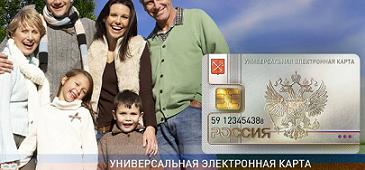 2012 will be the year of universal ID cards in Russia.
For all those conspiracy theorists out there, 2012 just got a little more ominous. As required by legislation passed this last summer, Russia will adopt a universal ID card starting next year. The Universal Electronic Card (UEC) is intended to eventually replace all local, regional, and national forms of ID, providing a central database through which Russians can access everything from medical insurance to ATMs. According to the official website, the UEC will be adopted by around 1000 national and regional services along with about 10,000 commercial enterprises. The mayor of Moscow has already declared it will be able to handle public transportation there, and we can expect similar adoptions throughout the nation. Will all Russians be carrying a single form of ID that is their only passport to all public and private services? Looks like it. A similar project has started in India, and there are experiments for related concepts in Mexico. Universal ID is starting to catch on around the globe. Where will it spread to next?
Ostensibly, the UEC is designed to push the Russian ID Read more…
Moscow Airport Bombing kills 35: Domodedovo security “soft”
 A suspected ‘black widow’ is said to be behind the suicide blast in Russia’s busiest Domodedovo International Airport in which at least 35 were killed and 178 injured, reports said today.
One of the eyewitnesses questioned by the investigators said he had seen how the hand baggage of a woman dressed in black exploded, according to Interfax.
“The eyewitness declared that the young woman was dressed in black and the explosives were in the bag or suitcase on the floor next to her,” a source was quoted as saying by the agency. It said the security agencies were aware of the possible terror attacks, and were looking for ‘Black Widows’ of the slain militants from the Caucasus, who had carried out all suicide attacks in past, including twin blasts in Moscow metro stations in March 2010.
Investigators say that the bomb blast in the arrival hall overnight, which killed at least 35 people and injured more than 100, was detonated by a suicide bomber.
Airports around the world are likely to boost security checks in the wake of Monday’s deadly bombing in Moscow, experts say.
Eyewitnesses describe horrific scenes. Read more…
POLE SHIFT PHENOMENA REPORTED by RUSSIAN SCIENTISTS
ALEXEY N. DMITRIEV

The Sun
Let’s begin with the Sun. The Sun is the center of our Solar System, and all life that is on this Earth came from the Sun. If there were no Sun, we would not be alive. This is simply scientific fact. And so any changes that occur in or on the Sun will eventually affect every person alive. The solar activity during this last sunspot cycle was greater than anything ever seen before. Yet every astronomer that I talked to about this except one insisted that everything was “normal.” That one person, who worked at NASA, claimed that what was going on within the Sun was absolutely incredible. She also said that she was not “allowed” to talk about it. But she talked anyway, because she felt that the world needed to know, but at the same time she asked that I not publicly discuss what she had said. Sort of a Catch-22. So the photo at left is just a hint (click on it for a larger view). It’s a recent picture of the Sun from, I believe, the year 2000, showing multiple sunspots ringing the sun on the two latitudes of 19.48 north and south. Some of you will see the significance of this much energy’s being emitted at this particular location.
So let’s look at the obvious question: Read more…
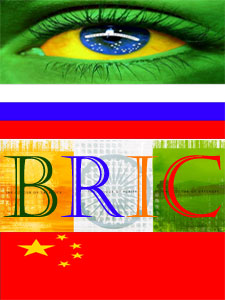
BRIC-The Trillion Dollar World Club
Brazil, Russia, India and China matter individually. But does it make sense to treat the BRICs—or any other combination of emerging powers—as a block?
 IN ANY global gathering, the American president is usually seen, at a minimum, as primus inter pares: the one who can make or break the final bargain and select his favoured interlocutors. So in Copenhagen last December, as negotiations for a new climate-change
treaty were entering their final hours, a hastily convened meeting between Barack Obama and China’s prime minister, Wen Jiabao, looked as if it would be the critical moment when a deal might be struck. But when the president turned up, he found not only Mr Wen but the heads of government of Brazil, South Africa and India. This was unexpected. The Americans even thought the Indians had already left the summit. What was conceived as a bilateral talk turned instead into a negotiation with an emerging-market block. As an additional sign that things were changing in the world, the president got a finger-wagging from one of Mr Wen’s hangers-on. But at least Mr Obama was in the room; Europeans were shut out while the emerging powers and America put the final touches to their deal.
This week the same developing countries are meeting again, in Brasília. On April 15th Brazil, India and South Africa—rising powers that are also democracies—put their heads together. The next day South Africa will drop out and Russia and China will join the party, to create a meeting of the so-called BRICs.
For this group, it is a second summit; last June their leaders met in Yekaterinburg, in Russia. That inaugural summit, which produced almost nothing concrete, appeared to be Read more…


![[Most Recent Quotes from www.kitco.com]](https://i0.wp.com/www.kitconet.com/charts/metals/gold/t24_au_en_usoz_2.gif)
![[Most Recent Quotes from www.kitco.com]](https://i0.wp.com/www.kitconet.com/charts/metals/silver/t24_ag_en_usoz_2.gif)

 crisisboom
 CRISISBOOM
You must be logged in to post a comment.