Archive
The Youth Unemployment Bomb
From Cairo to London to Brooklyn, too many young people are jobless and disaffected. Inside the global effort to put the next generation to work

Cairo, Egypt: A cloud of tear gas drives back antigovernment protesters on Jan. 28 Jorge Dirkx/Reporters/Redux
By Peter Coy
In Tunisia, the young people who helped bring down a dictator are called hittistes—French-Arabic slang for those who lean against the wall. Their counterparts in Egypt, who on Feb. 1 forced President Hosni Mubarak to say he won’t seek reelection, are the shabab atileen, unemployed youths. The hittistes and shabab have brothers and sisters across the globe. In Britain, they are NEETs—”not in education, employment, or training.” In Japan, they are freeters: an amalgam of the English word freelance and the German word Arbeiter, or worker. Spaniards call them mileuristas, meaning they earn no more than 1,000 euros a month. In the U.S., they’re “boomerang” kids who move back home after college because they can’t find work. Even fast-growing China, where labor shortages are more common than surpluses, has its “ant tribe”—recent college graduates who crowd together in cheap flats on the fringes of big cities because they can’t find well-paying work.
In each of these nations, an economy that can’t generate enough jobs to absorb its young people has created a Read more…
A New World Order Reserve Currency
 What do the riots in Egypt and a new world reserve currency have in common?
Perhaps more than we think.
Consider the following statements from George Soros in a recent interview:
Some statements of Soros (who happens to be a Fabian Socialist):
The efficient market hypothesis has failed.
Markets are not tending toward equilibrium.
There is imperfect knowledge of regulators and market participants.
He has an economic theory that is “more relevant” than the dominant one and is supporting an institute for new economic thinking….
Inflation (in the United States) is helpful because the burden of debt was getting too heavy.
The problem is you don’t have a Read more…
WikiLeaks: tension in the Middle East and Asia has ‘direct potential’ to lead to nuclear war
Tension in the Middle East and Asia has given rise to an escalating atomic arms and missiles race which has “the direct potential to lead to nuclear war,” leaked diplomatic documents disclose.
By Heidi Blake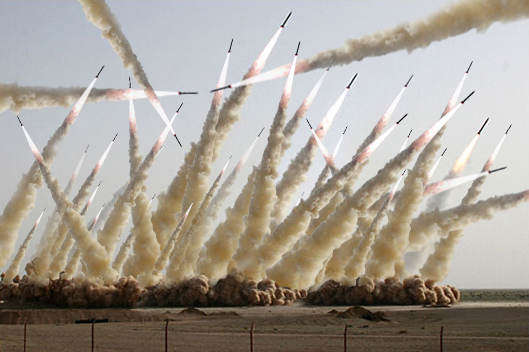 Rogue states are also increasing their efforts to secure chemical and biological weapons, and the means to deploy them, leaving billions in the world’s most densely populated area at risk of a devastating strike, the documents show.
States such as North Korea, Syria and Iran are developing long-range missiles capable of hitting targets outside the region, records of top-level security briefings obtained by WikiLeaks show.
Long-running hostilities between India and Pakistan – which both have nuclear weapons capabilities – are at the root of fears of a nuclear conflict in the region. A classified Pentagon study estimated in 2002 that a nuclear war between the two countries could result in 12 million deaths.
Secret records of a US security briefing at an international non-proliferation summit in 2008 stated that “a nuclear and missile arms race [in South Asia] has the Read more…
Cheap food may be a thing of the past

U.S. grain prices should stay unrelentingly high this year, according to a Reuters poll, the latest sign that the era of cheap food has come to an end.
U.S. corn, soybeans and wheat prices — which surged by as much has 50 percent last year and hit their highest levels since mid-2008 — will dip by at most 5 percent by the end of 2011, according to the poll of 16 analysts.
The forecasts suggest no quick relief for nations bedeviled by record high food costs that have stoked civil unrest. It means any extreme weather event in a grains-producing part of the world could send prices soaring further.
The expectations may also strengthen importers’ resolve to build bigger inventories after a year in which stocks of corn and soybeans in the United States — the world’s top exporter — dwindled to their lowest level in decades.
Story: Global food chain stretched to the limit Read more…
The coming US Depression has an added dimension: “…a huge underclass of very desperate people with their minds chemically blown beyond anybody’s comprehension” which may fuel unprecedented unrest.
by Tom Dennen
Money talks and here is what it is saying: Here are the Current Account Balances of 163 Countries in the World COMPARED WITH LEVELS OF STREET VIOLENCE (all except Egypt at the bottom of the debt list) :
Notice the amazing entry at the bottom of this list (scroll down) taken from Gerald Celentes’ Trends Journal, the full report, 2011.The Current Account Balance records a country’s net trade in goods and services, plus net earnings from rents, interest, profits, and dividends, and net transfer payments (such as pension funds and worker remittances) to and from the rest of the world during the period specified. These figures are calculated on an exchange rate basis, i.e., not in purchasing power parity (PPP) terms.
China is No. 1, Hong Kong No. 15, Egypt N.37 … check who is No. 163
World Ranking – Current Acct Balance (in Millions of US$)
1 People’s Republic of China (PRC) 179,100
2 Japan 174,400
3 Germany 134,800 Read more…
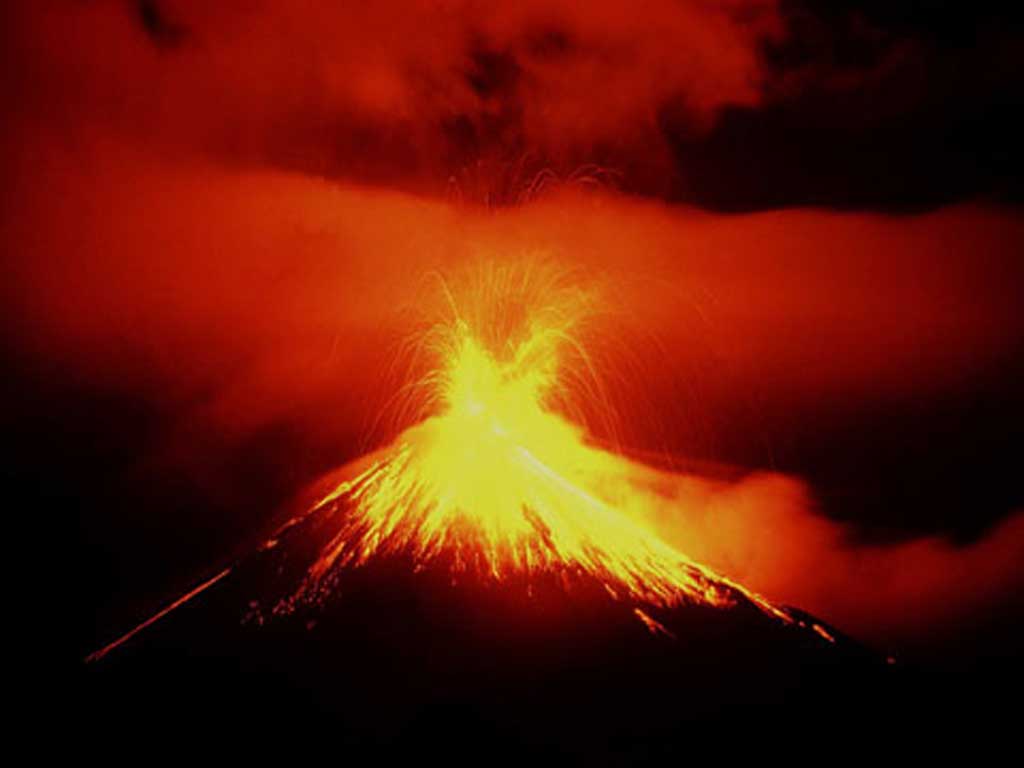
All the volcano webcams of the world
Pacific
Kilauea – info – webcams: Pu’u O’o | Thanksgiving Eve Breakout | Halema`uma`u Crater from HVO | Halema`uma`u Crater overlook
Mariana Islands (United States)
Western/Southern Pacific
World needs $100 trillion more credit, says World Economic Forum
The world’s expected economic growth will have to be supported by an extra $100 trillion (£63 trillion) in credit over the next decade, according to the World Economic Forum.

This doubling of existing credit levels could be achieved without increasing the risk of a major crisis, said the report from the WEF ahead of its high-profile annual meeting in Davos.
But researchers warned that leaders must be wary of new credit “hotspots”, where too much lending takes place, as the world emerges from a financial catastrophe blamed in large part “to the failure of the financial system to detect and constrain” these areas of unsustainable debt.
“Pockets of credit grew rapidly to excess – and brought the entire financial system to the brink of collapse,” said the report, written in conjunction with consulting firm McKinsey. “Yet, credit is the lifeblood of the economy, and much more of it will be needed to sustain the recovery and enable the developing world to achieve its growth potential.”
The global credit stock has already doubled in recent years, from $57 trillion to $109 trillion between 2000 and 2009, according to the report.
The WEF said the continued demand for credit could be met “responsibly, sustainably – and with fewer crises”. However, it cautioned that to achieve this goal, financial institutions, regulators, and policy makers need more robust indicators of unsustainable lending, risk, and credit shortages.
Bumblebee Species Decline 96 Percent
 New research published in the journal Proceedings of the National Academy of Sciences has found that another vitally important pollinator, the bumblebee, is in serious decline. According to the figures, there has been a shocking 96 percent decline in four major species of the bumblebee, and an up to 87 percent decrease in their overall geographic coverage.
“We provide incontrovertible evidence that multiple Bombus species have experienced sharp population declines at the national level,” explained researchers in their report. And in a phone interview with Reuters, study author Sydney Cameron from the University of Illinois, Urbana, explained that these bumblebee species are “one of the most important pollinators of native plants.”
Over the course of three years, the research team evaluated 382 different sites in 40 states, and mulled data from over 73,000 museum records. They determined that bumblebees are needed to pollinate various fruits and vegetables, and that they accomplish this task in a very unique way.
“The 50 species (of bumblebees) in the United States are traditionally associated with prairies and with high alpine vegetations,” said Cameron. “Just as important — they land on a flower and they have this behavior called buzz pollination that enables them to cause pollen to fly off the flower.”
In other words, without bumblebees and the special way in which they pollinate, entire segments of agriculture are threatened with extinction. Like honeybees and bats, bumblebees are vital in order to grow food. Without them, humanity will starve to death.
Misleadingly, many experts largely blame various pathogens, fungi and viruses for the die-offs of these pollinators, while giving only a brief mention — if any at all — to the toxic pesticides and herbicides that are increasingly being linked to things like colony collapse disorder (CCD), the name given to the mass bee die-off phenomenon. A recently leaked report, for instance, has revealed that a popular Bayer herbicide is responsible for killing off bees.
Food Shortages Will Become A Global Crisis: 7 Reasons

Food inflation is here and it’s here to stay. We can see it getting worse every time we buy groceries. Basic food commodities like wheat, corn, soybeans, and rice have been skyrocketing since July, 2010 to record highs. These sustained price increases are only expected to continue as food production shortfalls really begin to take their toll this year and beyond.
This summer Russia banned exports of wheat to ensure their nation’s supply, which sparked complaints of protectionism. The U.S. agriculture community is already talking about rationing corn over ethanol mandates versus supply concerns. We’ve seen nothing yet in terms of food protectionism.
Global food shortages have forced emergency meetings at the U.N. Food and Agriculture Organization where they claim “urgent action” is needed. They point to extreme weather as the main contributing factor to the growing food shortages. However, commodity speculation has also been targeted as one of the culprits.
It seems that the crisis would also present the perfect opportunity and the justification for the large GMO food companies to force their products into skeptical markets like in Europe and Japan, as recently leaked cables suggest. One thing is for sure; food shortages will likely continue to get worse and eventually become a full-scale global food crisis.
Here are seven reasons why food shortages are here to stay on a worldwide scale:
1. Extreme Weather: Extreme weather has been a major problem for global food; from summer droughts and heat waves that devastated Russia’s wheat crop to the ongoing catastrophes from ‘biblical flooding’ in Australia and Pakistan. And it doesn’t end there. An extreme winter cold snap and snow has struck the whole of Europe and the United States. Staple crops are failing in all of these regions making an already fragile harvest in 2010 even more critical into 2011. Based on the recent past, extreme weather conditions are only likely to continue and perhaps worsen in the coming years.
2. Bee Colony Collapse: The Guardian reported this week on the USDA’s study on bee colony decline in the United States: “The abundance of four common species of bumblebee in the US has dropped by 96% in just the past few decades.” It is generally understood that bees pollinate around 90% of the world’s commercial crops. Obviously, if these numbers are remotely close to accurate, then our natural food supply is in serious trouble. Luckily for us, the GMO giants have seeds that don’t require open pollination to bear fruit.

3. Collapsing Dollar: Commodity speculation has resulted in massive food inflation that is already creating crisis levels in poor regions in the world. Food commodity prices have soared to record highs mainly because they trade in the ever-weakening dollar. Traders will point to the circumstances described in this article to justify their gambles, but also that food represents a tangible investment in an era of worthless paper. Because the debt problems in the United States are only getting worse, and nations such as China and Russia are dropping the dollar as their trade vehicle, the dollar will continue to weaken, further driving all commodity prices higher.
4. Regulatory Crackdown: Even before the FDA was given broad new powers to regulate food in the recent Food Safety Modernization Act, small farms were being raided and regulated out of business. Now, the new food bill essentially puts food safety under the direction of the Department of Homeland Security where the food cartel uses the government to further consolidate their control over the industry. Militant police action is taken against farmers suspected of falling short on quality regulations. It is the power to intimidate innocent small farmers out of the business.
 5. Rising oil prices: In 2008, record oil prices that topped $147 per barrel drove food prices to new highs. Rice tripled in 6 months during the surge of oil prices, along with other food commodities. The price of oil affects food on multiple levels; from plowing fields, fertilizers and pesticides, to harvesting and hauling. Flash forward to 2011: many experts are predicting that oil may reach upwards of $150-$200 per barrel in the months ahead. As oil closed out 2010 at its 2-year highs of $95/bbl, it is likely on pace to continue climbing. Again, a weakening dollar will also play its part in driving oil prices, and consequently, food prices to crisis levels.
6. Increased Soil Pollution: Geo-engineering has been taking place on a grand scale in the United States for decades now. Previously known in conspiracy circles as ‘chemtrailing,’ the government has now admitted to these experiments claiming they are plan “B” to combat global warming. The patents involved in this spraying are heavy in aluminum. This mass aluminum contamination is killing plants and trees and making the soil sterile to most crops. In an astonishing coincidence, GMO companies have patented aluminum-resistant seeds to save the day.
The equation is actually quite simple: food is a relatively inelastic commodity in terms of demand. In other words, people need to eat no matter how bad the economy gets. Thus, demand can be basically measured by the size of the population. Therefore, as demand remains steady while the 7 supply pressures outlined above continue to worsen, food prices will have only one place to go — up, up, and up.
As international agencies scramble to find “solutions,” their energy may be just as well spent on questioning if this famine scenario is being purposely manipulated for profits. Regardless, the average person would be very wise to stock up on food staples as an investment, and frankly to survive the worsening food crisis


![[Most Recent Quotes from www.kitco.com]](https://i0.wp.com/www.kitconet.com/charts/metals/gold/t24_au_en_usoz_2.gif)
![[Most Recent Quotes from www.kitco.com]](https://i0.wp.com/www.kitconet.com/charts/metals/silver/t24_ag_en_usoz_2.gif)

 crisisboom
 CRISISBOOM
You must be logged in to post a comment.