Ozone layer damaged by unusually harsh winter

April 6, 2011 1 comment

independent

An image of total ozone column profile around the North Pole on March 30, 2011, developed by the Finnish Meteorological Institute using satellite and ground-based data, is seen in this handout, April 5, 2011. Satellite measurement of total ozone from OMI (Ozone Monitoring Instrument) shows a region of low ozone (blue region) above the Arctic regions. As of late March the ozone-poor region is shifted away from the pole and covers Greenland and Scandinavia. — WMO via Reuters

The stratospheric ozone layer, which shields the Earth from the Sun’s harmful ultraviolet rays, has been damaged to its greatest-ever extent over the Arctic this winter.

The protective layer of gas, which can be destroyed by reactions with industrial chemicals, has suffered a loss of about 40 per cent from the start of winter until late March, exceeding the previous seasonal loss of about 30 per cent, according to the World Meteorological Organisation (WMO).

The phenomenon is annual in the Antarctic, where after its discovery in the 1980s it came to be known as the “ozone hole“. Although CFC levels are now dropping, they remain in the atmosphere for so long that they will still be causing ozone depletion for decades in certain conditions, particularly the intense cold of the stratosphere.

Arctic ozone conditions vary more and the temperatures are always warmer than over Antarctica, where the ozone hole forms high in the stratosphere near the South Pole each winter and spring. Because of changing weather and temperatures, some Arctic winters experience almost no ozone loss – but others with exceptionally cold stratospheric conditions can occasionally lead to substantial ozone depletion.

This is what has happened over the Arctic this winter; for while at ground level the Arctic region was unusually warm, temperatures 15-20km above the Earth’s surface plummeted. WMO officials say the latest losses, which are unprecedented, were detected in Read more…

Moment of truth for Yemen

April 6, 2011 Comments off

reliefweb


“The shooting started from different buildings around the same time and continued for more than 30 minutes.”

An eyewitness describing to Amnesty International an attack on a protest camp in Sana’a on 18 March 2011 which reportedly left 52 people dead.

The first few months of 2011 have seen a rapid deterioration in the human rights situation in Yemen. The most shocking manifestation of this has been the brutal repression of protests calling for reform, and increasingly for President Ali Abdullah Saleh to stand down, fuelled by frustration at corruption, unemployment and repression of freedoms in the country and partly inspired by events in Tunisia and Egypt. Scores of protesters have been killed and hundreds injured after security forces have repeatedly used live ammunition to break up demonstrations.

The response of the authorities has been woefully inadequate. While investigations have been announced into some of the killings, they inspire little confidence. In some cases, almost no details have been made public about the nature and scope of the investigation. In others, information revealed about the nature of the investigating body raises serious questions about its ability to conduct thorough, independent and impartial investigations. As far as Amnesty International is aware, the judicial authorities have launched only one investigation – into the killings of protesters on 18 March. No judicial proceedings against members of the security forces are known to have been opened.

The track record of the authorities in investigating allegations of serious human rights violations by the security forces is very poor. Crucially, they have failed to adequately investigate reports of massive violations committed in the context of the unrest in the south Read more…

Manipulating morals: scientists target drugs that improve behaviour

April 6, 2011 2 comments

guardian

Prozac 

Existing drugs such as Prozac are already known to affect moral behaviour, but scientists predict that advances may allow more sophisticated manipulations. Photograph: Scott Camazine/Alamy

A pill to enhance moral behavior, a treatment for racist thoughts, a therapy to increase your empathy for people in other countries – these may sound like the stuff of science fiction but with medicine getting closer to altering our moral state, society should be preparing for the consequences, according to a book that reviews scientific developments in the field.

Drugs such as Prozac that alter a patient’s mental state already have an impact on moral behaviour, but scientists predict that future medical advances may allow much more sophisticated manipulations.

The field is in its infancy, but “it’s very far from being science fiction”, said Dr Guy Kahane, deputy director of the Oxford Centre for Neuroethics and a Wellcome Trust biomedical ethics award winner.

“Science has ignored the question of moral improvement so far, but it is now becoming a big debate,” he said. “There is already a Read more…

StunRay disables your brain with inverse blindness

April 6, 2011 Comments off

dvice.com

Until we figure out how to make a phaser that can be set to stun, we’ve been stuck with non less-lethal options like tasers (which can kill) and laser dazzlers (which can cause eye damage). StunRay is basically just a big flashlight, except with the ability to disable you by causing “inverse blindness.”

If you’re wondering what inverse blindness looks like, it’s easy to do to yourself: just stare at a bright light for a minute or two and then look around. It’s not dark, really, but you can’t see anything very well, and it’s because the exposure to bright light has overloaded the neurons that connect your retinas to your brain, and mostly all you can see is a featureless white expanse. The technical term for this is “loss of contrast sensitivity,” and it’s an effective way of disabling someone.

A company called Genesis Illumination is working what’s basically a giant fancy flashlight called StunRay that can inflict this loss of contrast sensitivity or inverse blindness or neural overload or whatever you want to call it on people at long range in a split second. Each burst of super bright light incapacitates subjects for five seconds or so without causing any pain, and subjects fully recover in about five minutes. The “fully recover” bit is key, since StunRay won’t roast your eyeballs like a laser dazzler can.

StunRay uses a 75 watt bulb, which doesn’t seem like much, but with some fancy optics, the device is able to focus its light beam to be ten times brighter than an aircraft landing light, even up to 150 feet away. And in case you were wondering, and I’m sure you were, this is bright enough to read a newspaper from a mile away.

Genesis Illumination just received a patent for StunRay, so in the near future, we’ll be able to rely on one single device for both our disabling and long distance newspaper-reading needs.

Leading Israelis push for two-state solution with new peace initiative

April 6, 2011 Comments off

guardian

Gaza funeral

A father weeps at the funeral of his 21-year-old son, killed on Tuesday by Israeli fire in northern Gaza. Photograph: Mohammed Abed/AFP/Getty Images

A group of prominent Israelis, including heads of the army and security services, hope to revive the peace initiative by announcing details of possible treaties with the Palestinians, Syria and Lebanon.

The Israeli Peace Initiative, a two-page document, states that Israel will withdraw from the land it occupied in 1967 in both the West Bank and the Golan Heights, and pay compensation to refugees. The document has been given to Binyamin Netanyahu, the prime minister, who has said he will read it with interest.

The authors of the document, which will be launched at a press conference in Tel Aviv on Wednesday, say that it is partly inspired by the revolutions that have taken place in the Middle East. It presents an opportunity for Israelis to participate in the “winds of change” blowing through the Middle East, they say.

“We looked around at what was happening in neighbouring countries and we said to ourselves, ‘It is about time that the Israeli public Read more…

Arctic meltwater could lower temperatures at home, study warns

April 6, 2011 Comments off

www.telegraph

Arctic meltwater could lower temperatures at home, study warns

A pool of melted ice water could move south towards Britain Photo: REX FEATURES

The pool, which has grown by more than a fifth over the last decade, could interrupt the flow of the Gulf Stream which brings warm water from the tropics, raising average European temperatures by between five and ten degrees Celsius.

Scientists are monitoring the large area of cold water amid fears that changing wind patterns could move it south towards the North Atlantic.

A study by 17 institutes from ten European countries warned that the effects of the melted ice could be abrupt in altering the balance of the Thermohaline Circulation, which keeps warmer waters flowing across the Atlantic.

One theory is that the circulation could slow down dramatically within two decades sending average temperatures plummeting.

The possibility echoes the plot of the 2004 disaster movie The Day After Tomorrow, which depicted the catastrophic effects on world climates when the delicate balance maintained by ocean circulation is suddenly lost.

Scientists have also expressed concern on the environment should the pool of largely fresh water enter the Atlantic altering its salinity levels.

Laura de Steur, an oceanographer at the Royal Netherlands Institute for Sea Research, who helped lead the study told The Times: “Large regional changes could be in store if the ocean circulation changes.”

But researchers have been unable to accurately predict if or when the pool with move southwards.

Japan stops leaks from nuclear plant

April 6, 2011 Comments off

www.reuters.com

Main Image

TOKYO (Reuters) – Engineers have stopped highly radioactive water leaking into the sea from a crippled Japanese nuclear power plant, the facility’s operator said on Wednesday, a breakthrough in the battle to contain the worst nuclear crisis since Chernobyl.

However, Tokyo Electric Power (TEPCO) still needs to pump contaminated water into the sea because of a lack of storage space at the facility.

“The leaks were slowed yesterday after we injected a mixture of liquid glass and a hardening agent and it has now stopped,” a TEPCO spokesman told Reuters.

Desperate engineers had been struggling to stop the leaks and had used sawdust, newspapers and concrete as well as liquid glass to try to stem the flow of the highly-contaminated water.

Japan is facing its worst crisis since World War Two after a 9.0 magnitude earthquake and tsunami hit its northeast coast, leaving Read more…

UPDATE 2-Oil could hit $200-$300 on Saudi unrest-Yamani

April 5, 2011 Comments off

reuters.com


LONDON, April 5 (Reuters) – Oil prices could rocket to $200- $300 a barrel if the world’s top crude exporter Saudi Arabia is hit by serious political unrest, former Saudi oil minister Sheikh Zaki Yamani told Reuters on Tuesday.

Yamani said he saw no immediate sign of further trouble following protests last month calling for political reforms but said that underlying discontent remained unresolved.

“If something happens in Saudi Arabia it will go to $200 to $300. I don’t expect this for the time being, but who would have expected Tunisia?” Yamani told Reuters on the sidelines of a conference of the Centre for Global Energy Studies (CGES) which he chairs.

“The political events that took place are there and we don’t expect them to finish. I think there are some surprises on the horizon,” he said in a speech.

Saudi King Abdullah offered $93 billion in handouts in March in an effort to stave off unrest rocking the Arab world.

So far, demonstrations in the Kingdom have been small in scale and police were able to easily disperse a Shi’ite protest in the oil-producing eastern province last month.

But Yamani said that the reluctance of people to participate in popular protests was merely concealing underlying discontent.

“Some people relax about the situation in Saudi Arabia because the Saudi Islamic brand prohibits people to go to the street and to talk,” he said in a speech.


SAUDI TIME BOMB

Oil traded at two-and-a-half-year highs above $121 a barrel LCOc1 on Tuesday. Libya’s rebellion has shut its oil exports, stoking fears of disruptions in other major producers.

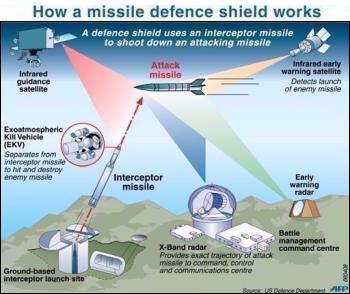
U.S. wants to use India in missile shield against Russia, China

April 5, 2011 Comments off

thehindu.com


The United States has been trying to rope in India for its plans to build a global missile defence system threatening Russia and China, the Komsomoloskaya Pravda, a popular Russian daily published from Moscow reported on Thursday.

In a story based on the WikiLeaks releases, the report said the U.S. has not only been planning to deploy a missile shield against Russia in Europe, but had also been negotiating with countries along Russia’s borders, such as Japan and India, to jointly build missile defences that would also target Russia.

“The noose [around Russia] is tightening,” the newspaper said. “Thanks to WikiLeaks, it has become known that Washington has been simultaneously conducting talks with countries in other parts of the world for building U.S. missile defences on their territories. Those are different countries, but they form a chain around Russia.”

A 2007 confidential cable from the U.S. embassy in New Delhi carried by the daily refuted media reports that India had abruptly turned its back on a 2005 agreement with the U.S. to cooperate on missile defences. The cable said the Indian media had misinterpreted remarks by External Affairs Minister Pranab Mukherjee after the Russia-India-China trilateral meeting in Harbin, China, on October 24, 2007. Mr. Mukherjee had dismissed as “groundless” the idea that India was going to join a U.S.-led missile defence system.

Misconstrued

“MEA contacts confirm this did not mean India was not interested in continuing to cooperate with the U.S. on missile defence technology and that there has been no change from the current level of bilateral missile defence cooperation,” the U.S. embassy cable said.

The “MEA contacts” explained that Mr. Mukherjee’s comments were “misconstrued” by the Indian press. When Mr. Mukherjee said that “India does not take part in such military arrangements,” the officials said, he had had in mind the U.S. plan to install a missile-detection system in Europe, which his Russian and Chinese counterparts referred to in the same press interaction. Read more…

Is this the first ever portrait of Jesus? The incredible story of 70 ancient books hidden in a cave for nearly 2,000 years

April 5, 2011 Comments off

dailymail

The image is eerily familiar: a bearded young man with flowing curly hair. After lying for nearly 2,000 years hidden in a cave in the Holy Land, the fine detail is difficult to determine. But in a certain light it is not difficult to interpret the marks around the figure’s brow as a crown of thorns.

The extraordinary picture of one of the recently discovered hoard of up to 70 lead codices – booklets – found in a cave in the hills overlooking the Sea of Galilee is one reason Bible historians are clamouring to get their hands on the ancient artefacts.

If genuine, this could be the first-ever portrait of Jesus Christ, possibly even created in the lifetime of those who knew him.

Discovery: The impression on this booklet cover shows what could be the earliest image of Christ
Discovery: The impression on this booklet cover shows what could be the earliest image of Christ Read more…