US NATO Commander Admits Al-Qaeda Linked To Libyan Rebels
Steve Watson
Infowars.com
March 29, 2011
A top ranking NATO Commander has admitted that intelligence has uncovered elements of “al qaeda” amongst Libyan rebel fighters currently receiving tactical military support from US and European led operations inside the country.
The admission serves as yet more confirmation that radical Islamic fundamentalists are part of the opposition groups attempting to oust the nationalist dictatorship of Muammar Gaddafi, with the help of the US and its NATO allies.
“We are examining very closely the content, composition, the personalities, who are the leaders of these opposition forces,” Admiral James Stavridis, NATO’s Supreme Allied Commander, Europe, and also the commander of U.S. European Command, said during testimony at the U.S. Senate.
“…we have seen flickers in the intelligence of potential al Qaeda, Hezbollah, we’ve seen different things.” Stavridis said, while adding that the rebels leadership appeared to be comprised also of “responsible men and women”.
Ohio panel OKs measure to limit collective bargaining rights for 350,000 public workers
 Democrats and union leaders blasted the latest Republican changes to Senate Bill 5 today, including those that would allow workers to decline to pay union dues, even if they are covered by a union contract, and allowing government employers to refuse to deduct union payments that are directed to political action committees.
“They’ve clearly made a horrible bill even worse,” said William Leibensperger, vice-president of the Ohio Education Association.
Under many negotiated contracts, workers who do not want to join a union, but are still covered by terms of the union contract, must still pay dues known as “fair share.” The bill would no longer allow a fair-share requirement in union contracts.
“That kind of amendment really shines the light on what this bill is all about, which is silencing the voice of people who collectively bargain on behalf of their members, and, in our case, on behalf of the children we work with,” Liebensperger said.
Republicans have argued that workers who do not want to join the local union should not have Read more…
Four Develop Vaccinia Infections Stemming From Smallpox Shot
 Four individuals became infected with the vaccinia virus through direct or second-hand exposure to a U.S. service member who had been vaccinated against smallpox, the Center for Infectious Disease Research and Policy reported on Monday (see GSN, Feb. 3).
The service member received his smallpox shot on February 23, 2010. Four days later he participated in wrestling matches, during which the covering over the injection spot fell off. The two men he wrestled against developed skin lesions within several days. One of the men on March 5 wrestled another man, who later Read more…
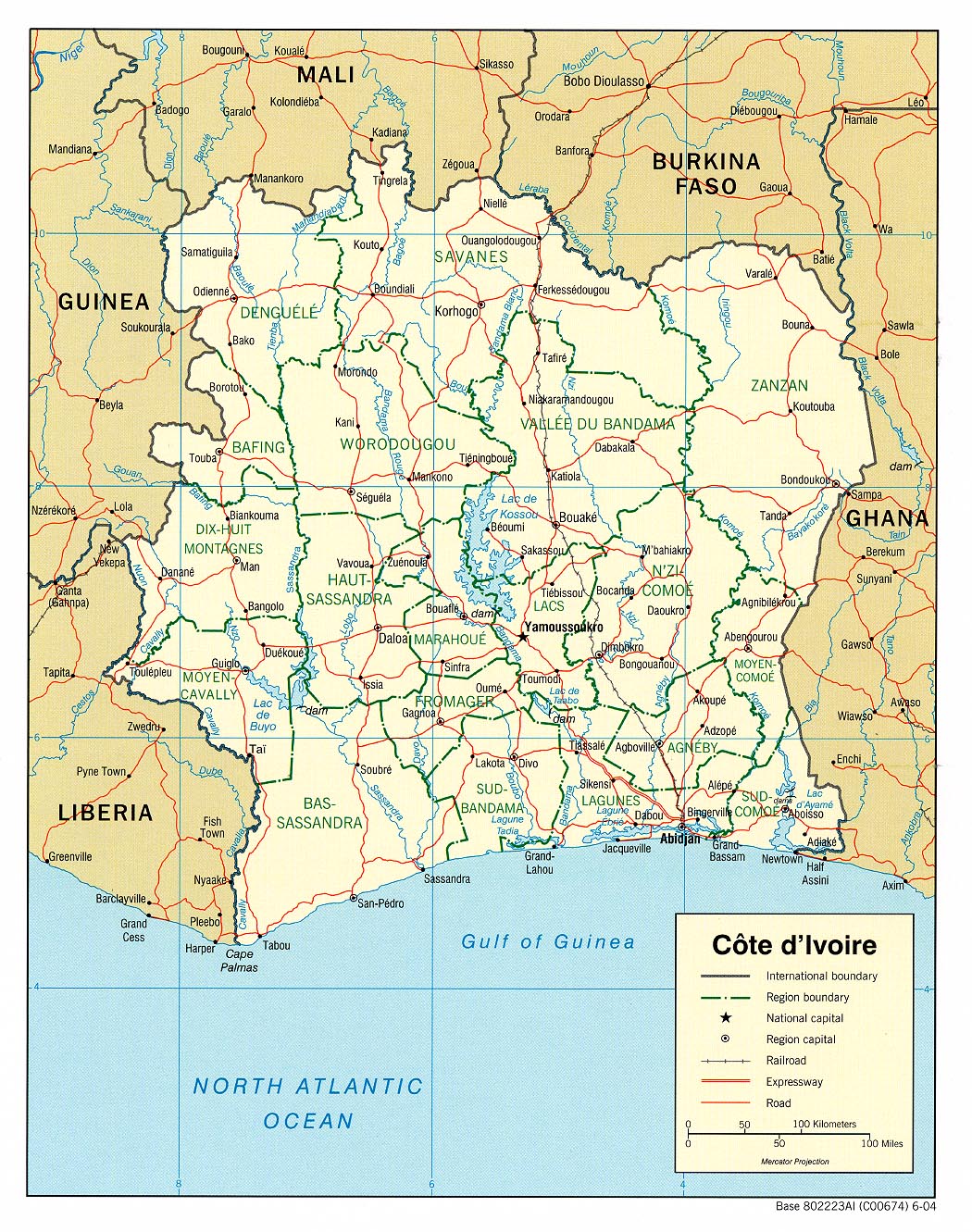
Ivory Coast Rebels Advance South, Closing in on Abidjan and Key Cocoa Port
 Troops loyal to Alassane Ouattara, the internationally recognized winner of November’s presidential election in Ivory Coast, moved closer to Abidjan and a key cocoa-exporting port, adding to pressure on embattled incumbent President Laurent Gbagbo.
The Republican Forces seized at least five towns this week and moved to within 240 kilometers (149 miles) of Abidjan, the commercial capital, after taking the eastern town of Abengourou yesterday, said Meite Sindou, spokesman for Ouattara’s prime minister and defense minister, Guillaume Soro.
“It seems the security forces of Laurent Gbagbo refused to fight when the rebels entered the town,” said Modeste Kouao, a resident of Abengourou.
Until now, the loyalty of the army and police has proved key to Gbagbo’s ability to retain control of much of the world’s top cocoa producer. He refuses to hand power to Ouattara, alleging electoral fraud in the election on Nov. 28.
“Militarily, Gbagbo is weak,” said Rinaldo Depagne, a Dakar-based analyst for International Crisis Group. “If he wants to stay, he’s got to put all the forces he has in Abidjan and he’s got to try to stop the progression of rebels inside Abidjan. Inside the army you’ve got mass Read more…
EU to ban cars from cities by 2050

The European Commission on Monday unveiled a “single European transport area” aimed at enforcing “a profound shift in transport patterns for passengers” by 2050.
The plan also envisages an end to cheap holiday flights from Britain to southern Europe with a target that over 50 per cent of all journeys above 186 miles should be by rail.
Top of the EU’s list to cut climate change emissions is a target of “zero” for the number of petrol and diesel-driven cars and lorries in the EU’s future cities.
Siim Kallas, the EU transport commission, insisted that Brussels directives and new taxation of Read more…
Officials: Yemen a Bigger Security Threat Than Libya
WASHINGTON — As the United States spearheads the attack against Libyan leader Muammar Qadhafi’s military assets, key former officials said an even bigger threat to U.S. national security comes from Yemen, a country that hosts many militants and is now enmeshed in a civil uprising that is threatening to unseat U.S.-backed President Ali Abdullah Saleh (see GSN, Feb. 10).

(Mar. 28) - Protesters on Tuesday chant slogans during a demonstration calling for an end to Yemeni President Ali Abdullah Saleh's 32-year rule. Unrest in Yemen could threaten U.S. efforts to fight extremism in the country, key former officials said (Ahmad Gharabli/Getty Images).


Saleh has been a crucial American ally in combating al-Qaeda in the Arabian Peninsula, a group that chief U.S. counterterrorism analyst Michael Leiter recently called the “most significant risk to the U.S. homeland” and the most poised to successfully attack American cities (see GSN, Dec. 21, 2010). Former Homeland Security Secretary Michael Chertoff and government officials said the current instability in Yemen appears likely to threaten already strained U.S. counterterrorism efforts and could provide new opportunities for AQAP to launch attacks.
“From a security standpoint, our interest in what happens in Yemen is much more significant than our interest in Libya,” Chertoff told National Journal. “In Libya it’s a humanitarian issue — there’s some security issue, but really, Yemen is a critical issue.”
Saleh’s three-decade rule appears to be hanging by a thread, as reports late on Thursday suggested that Saleh could resign “within days,” which would, albeit belatedly, meet protesters’ demands that he step down immediately.
Facing a public outcry, Saleh already promised that he would not seek another term in 2013. With the recent violence, he had reportedly been trying to time his Read more…
Sixth Study in Recent Months Linking Mercury in Flu Shots to Brain Damage, Autism
 The toxic effects of the mercury, also known in vaccines as Thimerosal, have once again been confirmed, this time by researchers from the University of Brazil. Marking the sixth major study in recent months to condemn the use of mercury in medicine, the new study reveals that mercury causes serious brain damage, and is linked to autism and other developmental diseases in children and Alzheimer’s disease in adults.
Dr. Jose Dorea and his colleagues conducted an extensive, peer-reviewed analysis of various studies and available information in major databases that address the effects of low-dose Thimerosal, or ethylmercury, on neural tissue and behavior. They found conclusively that Thimerosal accumulates in brain tissue, negatively affects brain development, and harms brain cells.
“Mercury is known to cause serious harm, especially to fetuses and children because of their Read more…
Billion-plus people to lack water in 2050: study
(AFP)

WASHINGTON – More than one billion urban residents will face serious water shortages by 2050 as climate change worsens effects of urbanization, with Indian cities among the worst hit, a study said Monday.
The shortage threatens sanitation in some of the world’s fastest-growing cities but also poses risks for wildlife if cities pump in water from outside, said the article in the Proceedings of the National Academy of Sciences.
The study found that under current urbanization trends, by mid-century some 993 million city dwellers will live with less than 100 liters (26 gallons) each day of water each — roughly the amount that fills a personal bathtub — which authors considered the daily minimum.
Adding on the impact of climate change, an additional 100 million people will lack what they Read more…
Woman who predicted Japan earthquake says another will happen March 31, 2011
She was correct in predicting the Japan quake, but I pray that she is wrong on the next…
I would have to disagree with the stockpiling ammo quote because you never know…
12 Warning Signs of U.S. Hyperinflation
 One of the most frequently asked questions we receive at the National Inflation Association (NIA) is what warning signs will there be when hyperinflation is imminent. In our opinion, the majority of the warning signs that hyperinflation is imminent are already here today, but most Americans are failing to properly recognize them. NIA believes that there is a serious risk of hyperinflation breaking out as soon as the second half of this calendar year and that hyperinflation is almost guaranteed to occur by the end of this decade.
In our estimation, the most likely time frame for a full-fledged outbreak of hyperinflation is between the years 2013 and 2015. Americans who wait until 2013 to prepare, will most likely see the majority of their purchasing power wiped out. It is essential that all Americans begin preparing for hyperinflation immediately.
Here are NIA’s top 12 warning signs that hyperinflation is about to occur: Read more…


![[Most Recent Quotes from www.kitco.com]](https://i0.wp.com/www.kitconet.com/charts/metals/gold/t24_au_en_usoz_2.gif)
![[Most Recent Quotes from www.kitco.com]](https://i0.wp.com/www.kitconet.com/charts/metals/silver/t24_ag_en_usoz_2.gif)

 crisisboom
 CRISISBOOM
You must be logged in to post a comment.