Archive
Kill Switch Beta: Government Blocks 84,000 Websites
Kurt Nimmo
Infowars.com
February 16, 2011
Under the banner of fighting child pornography, the Department of Homeland Security and the Department of Justice knocked out 84,000 websites last week. The websites did not host or link to child pornography as the government claims.
“As part of ‘Operation Save Our Children‘ ICE’s Cyber Crimes Center has again seized several domain names, but not without making a huge error. Last Friday, thousands of site owners were surprised by a rather worrying banner that was placed on their domain,” reports TorrentFreak, a tech site.
Senator Joe Lieberman peddles his kill switch legislation under the rubric of the phony war on terror.
“Advertisement, distribution, transportation, receipt, and possession of child pornography constitute federal crimes that carry penalties for first time offenders of up to 30 years in federal prison, a $250,000 fine, forfeiture and restitution,” was the message visitors to the sites were Read more…
China top bank sees explosive growth in gold demand and voracious appetite for silver
SHANGHAI (Reuters) –
 Demand in China for physical gold and gold-related investments is growing at an “explosive” pace and its appetite for the yellow metal is poised to remain robust amid inflation concerns, said an Industrial and Commercial Bank of China (ICBC) executive.
ICBC, the world’s largest bank by market value, sold about 7 tonnes of physical gold in January this year, nearly half the 15 tonnes of bullion sold in the whole of 2010, said Zhou Ming, deputy head of the bank’s precious metals department on Wednesday.
“We are seeing explosive demand for gold. As Chinese get wealthy, they look to diversify their investments and gold stands out as a good hedge against inflation,” Zhou told Reuters.
“There is also frantic demand for non-physical gold investments. We issued 1 billion yuan worth of Read more…
Solar Flare Causes Problems for China’s Radio Communications
A solar flare—the strongest one in four years—messed with China’s communications in the southern portion of the country over the past several days, according to media reports.
The recent, massive solar flare that was emitted by the sun on Tuesday caused a Read more…
Inflation in China rises as food prices soar

In January, the price of fresh fruit soared by 34.8 percent over a year earlier, while eggs rose 20.2 percent, the National Bureau of Statistics reported.
Adding to a squeeze on food supplies, China’s wheat-growing northeast is in the grip of a severe drought that threatens its crop. Beijing has launched a $1 billion emergency campaign of cloud-seeding to induce rains and expanded irrigation.
Also in January, inflation that so far has been confined mostly to food began to spread to Read more…
CIA Director Leon Panetta Warns of Possible Cyber-Pearl Harbor
Top Intelligence-Security Officials Say Computer Attacks Increasing
By JASON RYAN
 Top U.S. intelligence officials have raised concerns about the growing vulnerability the United States faces from cyberwarfare threats and malicious computer activity that CIA Director Leon Panetta said “represents the battleground for the future.”
“The potential for the next Pearl Harbor could very well be a cyber-attack,” he testified on Capitol Hill Thursday before the House Permanent Select Committee on Intelligence.
Director of National Intelligence James Clapper also appeared, telling the committee, “This threat is increasing in scope and scale, and its impact is difficult to overstate.”
There are roughly 60,000 new malicious computer programs identified each day, Clapper said, citing industry estimates.
“Some of these are what we define as advanced, persistent threats, which are Read more…
US Internet censorship fight falling short: report

WASHINGTON — State Department efforts to combat Internet censorship in China and other countries have fallen short and funding for the drive should be shifted to another US agency, a Senate committee report says.
The Senate Foreign Relations Committee report sharply criticizes the State Department for being slow in spending money allocated by Congress for Internet Censorship Circumvention Technology (ICCT).
The report, a copy of which was obtained by AFP, recommends that the funding be given instead to the Broadcasting Board of Governors (BBG), which oversees the Voice of America, Radio Free Asia and other US radio and TV networks.
The report is to be released on Tuesday, the same day Secretary of State Hillary Clinton is scheduled to Read more…
Japan confirms China surpassed its economy in 2010
By TOMOKO A. HOSAKA
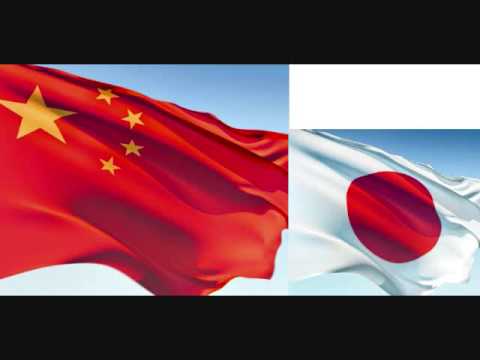 TOKYO — Japan confirmed Monday that China’s economy surpassed its own as the world’s second largest in 2010 and said a late-year downturn was Japan’s first quarterly contraction in more than a year.
Japan’s real GDP expanded 3.9 percent in the calendar year in the first annual growth in three years, but it wasn’t enough to hold off a surging China. Japan’s nominal GDP last year came to $5.4742 trillion, less than China’s total of $5.8786 trillion, the Cabinet Office said.
Gross domestic product shrunk at an annualized rate of 1.1 percent in the October-December quarter, a sharp reversal from a revised 3.3 percent expansion in the third quarter, the government said.
A slowdown in exports and weaker consumer demand at home led to the unsurprising downturn, which is expected to be temporary. The result was better than Kyodo news agency’s average market forecast of an annualized 2.2 percent decline.
China was acknowledged last year as having grown to the world’s second-largest economy, but the Japanese data confirming it were not available until Monday. The switch underscores the nations’ stark contrasts: China is growing rapidly and driving the global economy, while Japan is struggling with persistent deflation, an aging population and ballooning public debt.
Prime Minister Naoto Kan has pledged to revive the economy and make major reforms in the country’s tax and social welfare systems. His approval ratings are eroding quickly, however, as voters question his government’s ability to lead the country through its pressing problems.
The fourth-quarter figure translates to a 0.3 percent fall from the previous three-month period, according to the Cabinet Office’s preliminary data. Consumer spending, which accounts for some 60 percent of GDP, fell 0.7 percent. Auto sales slumped during the quarter after government subsidies for “green” vehicles expired in September.
Exports fell 0.7 percent from the previous quarter amid a strong yen and waning global demand. A rise in the Japanese currency reduces the value of exporters’ profits overseas and makes Japanese goods pricier in foreign markets.
The road ahead looks brighter, with economists saying GDP will expand this quarter in tandem with global growth. The head of Japan’s central bank, Masaaki Shirakawa, said last week that that recent signs indicate Japan is emerging from the “pause” and performing at par with other advanced economies.
Ryutaro Kono, chief economist at BNP Paribas ( BNPQY.PK – news – people ) in Tokyo, says exports and production have escaped their “soft patches.”
“The economy seems to be recovering again from December, so the negative growth in (the fourth quarter) need not become the basis for pessimism about Japan’s cyclical outlook,” he said in a report this month.
Panama Canal rail alternative built by China considered by Colombia
A 136 mile rail alternative to the Panama Canal built by China is being considered by Colombia in a move that would boost trade between Asia and South America.

The ‘dry canal’ would link Colombia’s Atlantic and Pacific coasts by rail, according to Juan Manuel Santos, the president of Colombia.
“It’s a real proposal… and it is quite advanced,” he told The Financial Times. “I don’t want to create exaggerated expectations, but it makes a lot of sense.”
The project is one of several Chinese proposals designed to help boost transport links between the two continents.
It is also hoped the rail link would help encourage the US to ratify a four-year-old free-trade agreement. Agreements with Colombia and Panama, which would Read more…
Chinese Develop Gait-Biometrics Surveillance
Another way to be under surveillance.

A confidential United States embassy dispatch released by Wikileaks provides details about a new technology developed by the Chinese Academy of Science to identify people by their gait.
The technology is designed to be deployed beneath existent flooring. From there it measures pedestrian pace and walking pressure to create a unique biometrics profile which can be used to identify and track the movements of individuals without their knowledge…
According to the dispatch, when questioned about the technology’s potential applications, scientists “stated the device was being used by ‘secret’ customers and was not available on the commercial market.” Officials went on to note the technology was involved with “Program 863.”
Program 863, or the State High Tech Development Plan, is a civil-military program created in 1986, according to Lev Navrozov – a former dissident Soviet writer – for the purpose of developing a “post-nuclear superweapon” possibly incorporating nanotechnology.
China sees U.S. stoking Brazil and India anger over yuan
By Zhou Xin and Koh Gui Qing
 BEIJING (Reuters) – The United States has incited Brazil and India to criticize China’s currency policy, but Beijing need not worry too much because it can defuse the tension through talks, a series of Chinese government advisers told Reuters.
Independent analysts warned, however, that a belief that Brazil and India are doing Washington’s bidding and are not truly aggrieved could make Beijing complacent and undermine fledgling ties between the emerging powers.
Increasingly widespread calls for a stronger yuan are awkward for China, which is accustomed to facing U.S. pressure over its tightly controlled exchange rate but has long tried to cast itself as the natural ally of other developing nations.
Brazil and India are unlikely to be any more successful than the United States in persuading Beijing to permit faster appreciation, researchers in Chinese government think tanks said.
“They must realize that the root of problem is not China but Read more…


![[Most Recent Quotes from www.kitco.com]](https://i0.wp.com/www.kitconet.com/charts/metals/gold/t24_au_en_usoz_2.gif)
![[Most Recent Quotes from www.kitco.com]](https://i0.wp.com/www.kitconet.com/charts/metals/silver/t24_ag_en_usoz_2.gif)

 crisisboom
 CRISISBOOM
You must be logged in to post a comment.