Archive
China preparing for space warfare
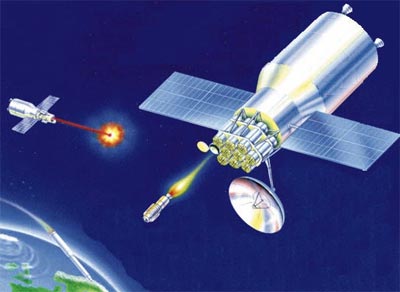 Army Lt. Gen. Ronald L. Burgess, director of the Defense Intelligence Agency, disclosed new details of China’s space weapons programs last week, including information regarding China’s anti-satellite missiles and cyber warfare capabilities.
Burgess stated in little-noticed written testimony prepared for an appearance before the Senate Armed Services Committee that Beijing is developing missiles, electronic jammers, and lasers for use against satellites.
Much of the space warfare activity is being carried out under the guise of China’s supposedly non-military space program, he said.
“The space program, including ostensible civil projects, supports China’s growing ability to deny or degrade the space assets of potential adversaries and enhances China’s conventional military capabilities,” Burgess said.
“China operates satellites for Read more…
IEA: China buys more oil from Iran

Didier Houssin, IEA director of energy markets and security, said on Tuesday that Beijing is the world’s second-biggest crude consumer and may continue to increase oil imports from Iran.
“China has been buying more crude and may continue to do so,” he said at the International Petroleum Week conference.
Earlier this month, the IEA predicted that China’s purchases of Iranian crude would slow in the first three months of the year.
This comes while the IEA’s latest report predicts that China’s oil demand would Read more…
China Engaging the Arctic
 The United States is shifting its focus from the Atlantic across to the Pacific. However, if an Arctic century is on the horizon, then China is at the forefront of it. While Washington enhances its relationships across the Asia-Pacific basin, Beijing is busy engaging Arctic Ocean coastal states en masse. The Middle Kingdom is apparently interested in the commercial viability of new shipping lanes and developing the resources that lie underneath and along the Arctic seabed. Ostensibly to achieve its objectives, China is engaging the region at an unprecedented pace. Beijing’s comprehensive engagement of Arctic states demonstrates that China’s ambition isn’t just to be a Pacific power, but a global one. Questions that remain are: what is Beijing’s intention in the Arctic, and by extension what type of global power will China be?
China has been in the Arctic since the early 1990s, but only recently began seeking to enhance its engagement there as a permanent observer in the Arctic Council. The Arctic Council is a high-level intergovernmental forum that addresses issues such as the management of resources, climate change, and Arctic environment maintenance. The Council has Full article here
China Could Soon Overtake India As The Biggest Gold Market In The World

HONG KONG (AP) — China is poised to overtake India to become the world’s biggest gold market this year as rising incomes fuel demand for the precious metal and a weak rupee diminishes Indian purchases, an industry group said Thursday.The amount of gold bought in China rose 20 percent in 2011 over the year before to 770 metric tons, the World Gold Council said in its annual report. That put China behind only first-place India, where 933 metric tons were bought.
Worldwide, the amount of gold purchased rose 0.4 percent to 4,0671 metric tons worth $205.5 billion.
The council said it’s “likely that China will emerge” as the world’s largest gold market for the first time in 2012.
Rising incomes in China, which is the world’s No. 2 economy, have resulted in a surge in demand for gold jewelry and other luxury goods. China became the world’s largest market for gold jewelry in the second half of 2011 as demand rose in every quarter, the report said.
Gold bars, coins and other gold-backed products are also popular because of a lack of Read more…
As US Navy shrinks, China launches more, better war ships
 HONG KONG — As looming budget cuts force the Pentagon to plan for a smaller US navy, China is accelerating the launch of new, increasingly capable warships as part of a sustained drive to become a major maritime power.
Shanghai’s Hudong Zhonghua Shipbuilding Company late last month launched the fourth of China’s new 071 amphibious landing ships according to reports carried by Chinese military web sites and the state-controlled media.
While most attention has been drawn to the ongoing sea trials of China’s first aircraft carrier, military analysts say the expanding fleet of 20,000-ton landing ships, the biggest domestically designed and built vessels in the Chinese navy, delivers a far more immediate boost to Beijing’s global influence.
“Having a significant fleet of large amphibious assault vessels clearly suggests a desire for power projection,” says Christian Le Miere, a maritime security researcher at the International Institute for Strategic Studies in London.
“If you want the surgical insertion of forces, for a range of reasons, then you need amphibious response ships.”
Military rivalry
China’s naval buildup comes amid mounting Read more…
China’s Military Spending to Double by 2015

- Associated Press
- Chinese Air Force J-10 fighter jets take off during training in Lhasa, the capital of Tibet.
China’s defense budget will double by 2015, making it more than the rest of the Asia Pacific region’s combined, according to a report from IHS Jane’s, a global think tank specializing in security issues.
Beijing’s military spending will reach $238.2 billion in 2015, compared with $232.5 billion for rest of the region, according to the report. That would also be almost four times the expected defense budget of Japan, the next biggest in the region, in 2015, the report said.
The new report was released as China’s Vice President, Xi Jinping, arrived in Washington at the start of a four-day visit to the U.S. that is seen as a prelude to his expected promotion to Communist Party chief in a once-a-decade leadership change in the fall.
Mr Xi, who is also Vice Chairman of the Party’s Central Military Commission, is due to visit the Pentagon on Tuesday after meeting his counterpart, Joe Biden, and Presdent Obama at the White House earlier in the day.
Ahead of the visit, he and other Chinese officials had expressed concern about Link to article
The West’s First War with China
 This month marks the 350th anniversary of the West’s first war with China. In February 1662, Generalissimo Zheng Chenggong swept the Dutch off of Taiwan, bringing the island under Chinese rule for the first time in history. The Dutch were Europe’s most dynamic colonial power, and the Taiwan colony was their largest holding in Asia, so the war is fascinating from the perspective of global history, touching on the question of the global balance of power in the pre-modern world.
But the war also has lessons for today, because among the factors that enabled the Chinese to win was a rich, effective, and, to Westerners, mysterious military tradition – a strategic culture that provided a discernable boost to Chinese warcraft. The Dutch, famous in Europe for their weapons, tactics, and logistics, found themselves hopelessly outclassed by the Chinese. Since military leaders in China today are Read more…
China is flexing its muscles in the Pacific Ocean
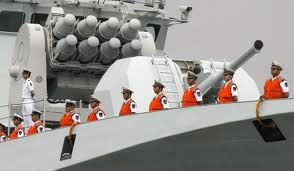
China’s Navy ships moved to the Western part of the Pacific for military exercise. In response Tokyo expressed its concern about the growing naval activity of the Chinese Armed Forces in that region.
According to Japanese mass media, a group consisting of four battle ships (frigates) of the Chinese Navy passed through the waters between the Japanese islands of Okinawa and Miyako. The Chinese Defense Ministry already made a statement that the tour of the ships is connected to the preparation of the annual military exercise of routine nature. In response to the concern of the Japanese side, Beijing stated that China has a free right to pass in those waters. According to the Chinese authorities, that is completely Read more…
Russia, China to Jointly Build Mi-2A Helicopters
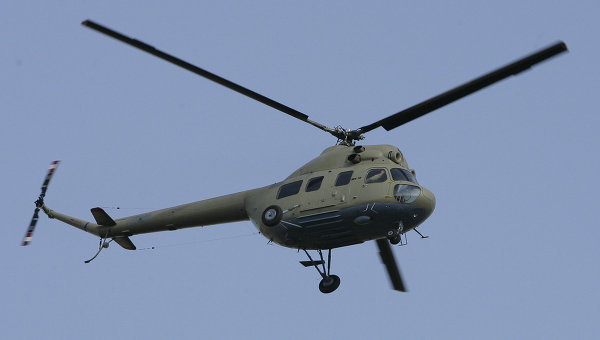 Russian helicopter maker Rostvertol and Chinese Xi’Ao Aeroplane Manufacturing will build a plant in northern China capable of manufacturing 100 lightweight civil Mi-2A helicopters annually, Xinhua said on Monday.
The first phase of the plant, located on 47 hectares in Hebei Province, will be completed by the end of July, Xinhua said citing local officials.
The investment for the first phase is estimated at $224 million.
The plant will also serve as a repair hub for Russia’s Mi-series choppers in the Asia region.
Mi-2A is a modernized version of the Russian Mi-2 Hoplit helicopter, which features a new power plant, advanced piloting and navigation equipment, and significant flight performance improvement.
Have Chinese Had Enough?
 Chinese leaders have always identified international politics with struggle – the struggle for sovereignty, status and prosperity. In recent years, offering lucrative business opportunities to other countries and investing in scores of official dialogues allowed Beijing to claim a course of peaceful development. And many countries gave it the benefit of the doubt, at least for a while.
But China now faces growing resistance as even some Chinese begin to question how peaceful the country’s rise can really be. Either way, the Year of the Dragon looks set to be a strategic watershed for Chinese diplomacy.
Centrality invariably means trouble in geopolitics, and certainly for China. I remember strolling underneath the weeping willows of Beijing’s Ritan Park with a retired ambassador who neatly summed up the problem China faces: “If we do well, our neighbors see that as a threat. If we are in trouble, that is perceived as a threat as well. We are a challenge just by being here.”
It’s this diplomatic claustrophobia that explains why Chinese leaders have been so eager to Read more…


![[Most Recent Quotes from www.kitco.com]](https://i0.wp.com/www.kitconet.com/charts/metals/gold/t24_au_en_usoz_2.gif)
![[Most Recent Quotes from www.kitco.com]](https://i0.wp.com/www.kitconet.com/charts/metals/silver/t24_ag_en_usoz_2.gif)

 crisisboom
 CRISISBOOM
You must be logged in to post a comment.