Archive
Iran Opens Oil Bourse – Harbinger of Trouble for New York and London?
 The last three years of global recession have dealt a major blow to American capitalist ideas trumpeted throughout the world on the value of “free markets.” Wall St has been revealed as a form of casino economy, with the bankster insiders gambling with other people’s, and eventually, the government’s money in the form of bailouts. As the Republicans in Congress, scenting victory in the 2012 presidential elections, hold a gun to the Obama administration’s head and rating agencies consider downgrading U.S. government bonds in light of Washington’s possible defaulting, many ideas around the world that previously seemed implausible because of the dominance of the U.S. economy are garnering renewed interest.
Not surprisingly, many of these concepts originate in countries not enamored with Washington’s influence, perhaps none so more than “Axis of Evil” charter member Iran, which has seen its economy Read more…
As The Dollar And The Euro Continue To Collapse, How High Is That Going To Push The Price Of Gold?
 Right now, the global financial system is facing a crisis that is really unprecedented. The reserve currency of the world (the U.S. dollar) is collapsing and the second most powerful currency on the planet (the euro) is also collapsing. As the major paper currencies of the globe crumble, the hunger that investors around the world have for gold continues to grow. Today, the price of gold hit an all-time record of $1607.90 an ounce. But that record surely will not live for long. The truth is that gold has been steadily climbing for quite some time now. A year ago, the price of gold was hovering around $1200 an ounce and and many “mainstream economists” scoffed at the idea that the price of gold could go significantly higher. Well, nobody is laughing now. As colossal debt loads continue to crush both Europe and the United States, the euro and the dollar are Read more…
Doing The Global Currency Shuffle
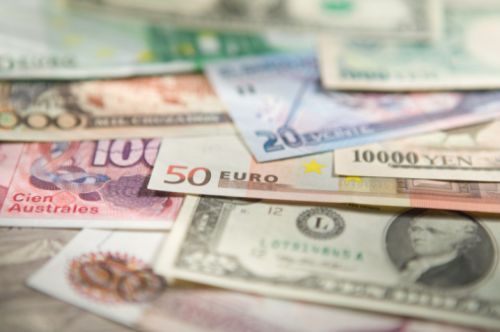 In mainstream financial circles, the concept of a global currency is often spoken of only with an atmosphere of caution. It is approached always in hypothetical terms. It is whispered of as some far off dream; a socio-economic moon landing in the far reaches of fiscal space. Perhaps in 2015, or 2020, or maybe 2050, but certainly never just over the horizon, or right around the corner posing as an innocuous trade asset created over 40 years ago and used only on rare occasions. Unfortunately, the development of a centralized global security representing the creation of a supranational economic body is much closer than many would care to admit…
The most common argument made in the mainstream against a global currency taking shape is the Read more…
Currencies dropping like stones
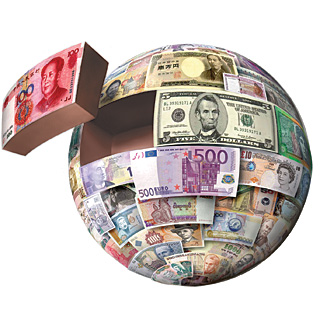 The markets have not yet thought about it, but the biggest threat to the Euro is not Greece, Ireland or Portugal, but the dangers posed by the fourth largest economy in Europe, which is also the third largest in the Eurozone, that of Italy. Italy is passing austerity measures but the measures may not be enough. The problem that the Euro faces is that there is little central control over the EU economy, control that exists affects states within Europe that have not adopted the Euro, as well as those that have.
Eleven years ago when the merits of the Euro were debated I argued against it. I was not fondly wishing to hold on to the pound sterling for sentimental reasons. I felt that there was a Read more…
Food prices continue to skyrocket, even when gas prices fall
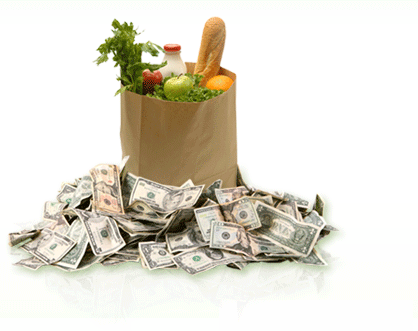 Food prices are skyrocketing. Part of the reason why is because, as the world’s population rises, so too has food consumption.
Another reason, at least here in the United States, is because the dollar has slipped in value in recent months.
But one of the primary reasons why prices are climbing so dramatically is because fuel prices have shot up in the past year. Yet even as gas and diesel prices have begun to fall recently, food costs haven’t.
According to fuel price-tracking Web site Gasbuddy.com, prices have slipped nearly 20 cents in the past month, or just over 5 percent. But prices for commodities and some staples like coffee, bacon, fruits, meat, pastas and other items have shot up 40 percent in the past year. Cotton, too, has risen dramatically, making clothing more expensive.
As an example, the price of grapes has climbed 30 percent, while cabbage has risen 17 percent and orange juice 5 percent.
And while the government’s official inflation rate of 3.6 percent (annualize) doesn’t seem serious, that figure is masking the true cost of a number of commodities Americans traditionally buy.
For example, Read more…
Gold Rises As Greek Parliament Approves Austerity
 Photo: Mike Herpel.
Gold traded higher for a second day on word that the government of Greece will accept austerity measures despite the overwhelming rejection of the IMF and EU plan by the Greek people.
“By now we think (the Greek vote) should be priced and the gold price shouldn’t react to a large extent if the austerity package is really approved later in the day,” Commerzbank analyst Daniel Briesemann told Reuters.
Reuters reported that its 19-commodity index rose 1.7 percent on Tuesday, the most significant daily rise in nearly six weeks, driven primarily by the news from Greece.
In addition to boosting gold, the news pushed the euro up over the dollar. Speculation that the Greek crisis will not stop the European Central Bank from raising interest rates next week also contributed to the fall of the dollar, according to Bloomberg. The ECB raised Read more…
China ratings house says US defaulting: report
 BEIJING — A Chinese ratings house has accused the United States of defaulting on its massive debt, state media said Friday, a day after Beijing urged Washington to put its fiscal house in order.
“In our opinion, the United States has already been defaulting,” Guan Jianzhong, president of Dagong Global Credit Rating Co. Ltd., the only Chinese agency that gives sovereign ratings, was quoted by the Global Times saying.
Washington had already defaulted on its loans by allowing the dollar to weaken against other currencies — eroding the wealth of creditors including China, Guan said.
Guan did not immediately respond to AFP requests for comment.
The US government will run out of room to spend more on August 2 unless Read more…
All Eyes on the U.S. Dollar: Danielle Park
What Would Fractional Silver Mean?
 In Mid-may of this year, something curious happened, which I’d not seen before.
I’ve been following the course of where the dollar was heading and how it related to the pricing of gold and silver. Typically, I follow a number of sources for information, then try to wrap all those opinions into something concise, allowing me to share it with others. Most everyone following precious metals knows how GATA has been beating the drum about gold manipulation for quite some time now. History (past and current) is a very good place to start down the rabbit trail.
Informed people (like Paul Craig Roberts, Bob Chapman, Gerald Celente, Robby Noel, Lindsey Williams) have also helped shape a number of my opinions and speculations regarding where this economy is heading. Again, these are all very credible individuals who’ve been reporting on “real” financial issues for a number of years, if not decades now. And, even though it can be a bad habit, tune into the mainstream media to hear what they are trying to make the public believe for that moment. Every so often, they slip and Read more…
China’s yuan at record ahead of Washington talks
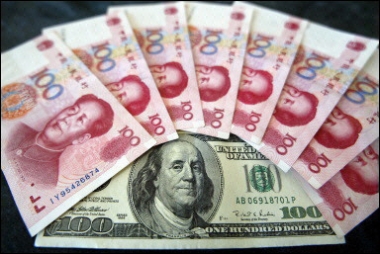 HONG KONG (MarketWatch) — China’s yuan rose to a fresh record against the U.S. dollar on Monday, edging up a fraction from its close in the previous trading session ahead of senior-level talks between Chinese and U.S. officials, slated for later Monday in Washington. China’s central bank set the official central parity rate for the U.S. dollar at 6.4988 yuan, compared to Friday’s setting of 6.5003 yuan. The level represented a record high against the dollar, according to the state-run Xinhua news agency. The U.S. dollar dropped below the 6.50-level for the first time on April 29, and was at 6.4955 around midday in East Asia on Monday, according to FactSet data.


![[Most Recent Quotes from www.kitco.com]](https://i0.wp.com/www.kitconet.com/charts/metals/gold/t24_au_en_usoz_2.gif)
![[Most Recent Quotes from www.kitco.com]](https://i0.wp.com/www.kitconet.com/charts/metals/silver/t24_ag_en_usoz_2.gif)

 crisisboom
 CRISISBOOM
You must be logged in to post a comment.