Archive
FEMA to confiscate food from local farms in emergencies?
 Since our nation’s founding the federal government has, in times of emergency, claimed extra-constitutional powers and authority. Under the guise of acting in the public’s best interests, Washington has taken away privacy rights, free speech, and habeas corpus, among others. There’s no reason to think it wouldn’t happen again.
With that in mind, would it surprise you to find out that if disaster strikes in your part of the country, the federal government is prepared to take over local food supplies, in part by confiscating farms?
It shouldn’t, says “Farmer Brad,” a Texas-based farmer who said in an interview about food security with Mike Adams for Natural News TV that during Hurricane Katrina, an inventory of local farms and what they produced was conducted by the Federal Emergency Management Agency.
“FEMA was doing an inventory of all the farms around … metroplexes,” he said, which included nearby Houston and other large cities. “They started calling up farms and wanted to know where farms were, and they were being prepared to maybe take food if they need to, from farms, you know, for a crisis like that.”
Brad, of HomeSweetFarm.com, said that while the agency didn’t come right out and say they would confiscate crops and cattle, Read more…
Surging Food Prices Could Thrust Millions Into Poverty In Emerging Europe: World Bank

WASHINGTON, April 16 (Bernama) — The recent price hikes in food and energy could push more than five million people in Eastern Europe and Central Asia into poverty, reports the China’s Xinhua news agency, quoting World Bank’s official.
Yvonne Tsikata, the director for Poverty reduction and economic management of the World Bank’s Europe and Central Asia region said: “The poorest people in the region will suffer the most from the high food and energy price inflation, which reduces their purchasing power’.
She said that the region’s poor often spend half of their income on food, and Read more…
Warning of Recurring Food Crises
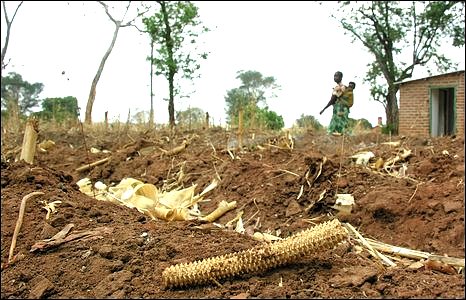 Soaring and volatile food prices have experts warning of recurring food crises, putting poor people – especially women and children – at risk.
Similar conditions existed during the 2007/2008 food crisis, when high prices and shortages ignited unrest in many countries around the world.
IFPRI, the International Food Policy Research Institute, is calling for urgent action to prevent a repeat of the crisis. Director-General Shenggen Fen says, “Many food items have become more expensive…since last May or June. Wheat prices have almost doubled. The maize price has also increased substantially. Many meat products, dairy products have also increased substantially.”
While the situation is not as serious as the food crisis three years ago, Fen says, “If we don’t take urgent actions, food prices will continue to rise and the poor people will suffer.”
What’s triggering the price hikes? Read more…
Japan nuclear crisis on edge as toll of dead or missing surpasses 21,000 Radiation traces found in food and water
TOKYO — Japan hoped power lines restored to its stricken nuclear plant may help solve the world’s worst atomic crisis in 25 years, triggered by an earthquake and tsunami that also left more than 21,000 people dead or missing.The Asian nation’s people are in shock at both the ongoing battle to avert deadly radiation at the six-reactor Fukushima plant and a still-rising death toll from the March 11 disaster.
The world’s third largest economy has suffered an estimated $250 billion of damage with entire towns in the northeast obliterated in Japan’s darkest moment since World War Two.
Tokyo’s markets are closed for a holiday on Monday.
Elsewhere, investors will be weighing risks to the global economy from Japan’s multiple crisis, along with conflict in Libya and other unrest in the Arab world.
Easing Japan’s gloom briefly, local TV showed one moving Read more…
Japan crisis: ‘There’s no food, tell people there is no food’

The unshaven man in a tracksuit stops his bicycle on the roadside and glances over his shoulder to check that he is unobserved. Satisfied, he reaches quickly into the sludge-filled gutter, picks up a discarded ready-meal and stuffs it into a plastic carrier bag.
In another time, another place, Kazuhiro Takahashi could be taken for a tramp, out scavenging for food after a long night on the bottle. In fact, he is just another hungry victim of Japan’s tsunami trying to find food for his family.
“I am so ashamed,” says the 43-year-old construction worker after he realises he has been spotted. “But for three days we haven’t had enough food. I have no money because my house was washed away by the tsunami and the cash machine is not working.”
If his haul wasn’t so pitiful — his bag had two packets of defrosted prawn dumplings and a handful of Read more…
The Causes of Rising Food Prices
 Food prices are rising quickly around the world. Part of the problem is weather. The winter wheat crop in China has been poor. Australia has suffered floods, while Russia has undergone a drought. The earthquake and tsunami in Japan, no doubt, will hammer the very intensive agricultural production of the limited arable land on that archipelago. Weather-related agricultural problems, however, balance out fairly quickly. Mythical “global warming” aside, weather has ups and downs, and farmers, who are smart folks, take that into account. The Soviet Union, whose vassal state the Ukraine was once one of the best farmlands on earth, never managed to feed its people well, because a communist-controlled economy destroys Read more…
Recent droughts and floods have contributed to increases in food prices
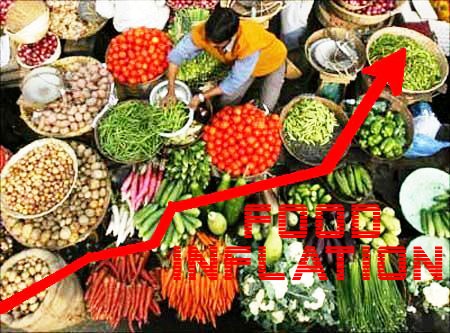 These are pushing millions more people into poverty and hunger, and are contributing to political instability and civil unrest. Climate change is predicted to increase these threats to food security and stability. Responding to this, the world’s largest agriculture research consortium today announced the creation of a new Commission on Sustainable Agriculture and Climate Change.
Chaired by the United Kingdom’s Chief Scientific Adviser, Professor Sir John Beddington, the Commission will in the next ten months seek to build international consensus on a clear set of policy actions to help global agriculture adapt to climate change, achieve food security and reduce poverty and greenhouse gas emissions.
There is a rich body of scientific evidence for sustainable agriculture approaches that can increase production of food, fiber and fuel, help decrease poverty and benefit the environment, but agreement is needed on how best to put these approaches into action at scale. Evidence also shows Read more…
Wikileaks, Bahrain and Saudi: Concerns over Rising Food Prices Spread

Bahrain, which saw deadly protest this month, is eager to control the price of food according to Wikileaks
Rising food prices have been at the centre of the recent riots to hit the Arab world and so it comes as no surprise that many Arab nations are working hard to avoid similar food price rises.
According to the Wikileak revelations, Bahrain increased government subsidies in an effort to off-set rising prices for lower-income families in 2008 and has promised more generous subsidies recently. Even so, this hasn’t stopped political turmoil as the tiny Gulf state has been rocked by explosive protests this month that left seven dead and hundreds injured when troops opened fire on protesters.
Bahrain, which has a population of just over 1 million, has struggled with rising Read more…
FEMA orders”$1 Billion “in dehydrated food,Terror threats rising
 Terror threats appear to be on the rise as FEMA has rushed a $1 Billion order of dehydrated food in the event of attacks on domestic targets in the US.
This is also coming on the heels of one of the largest terror drills performed by the US Navy on American soil, as Operation Solid Curtain is taking place this week.
In an article Tuesday from the Beaufort Observer, many of the largest suppliers of dehydrated foods in the country are dropping their distributors and customers to dedicate their resources to supplying a billion dollar FEMA request and purchase.
One of the nation’s largest suppliers of dehydrated food has cut loose 99% of their dealers and distributors. And it’s not because of the poor economy. It’s because this particular industry leader can no longer supply their regular distribution channels. Why not? Because they’re using every bit of manufacturing capacity they have to fulfill massive Read more…
Ethiopia will soon arise to protest
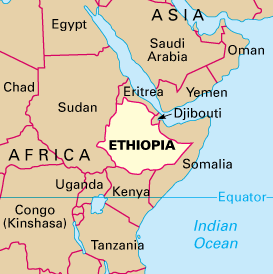
WINDS OF CHANGE CONTINUES BLOWING Major developments in 6 African countries and other Arab nations. And Ethiopians fate!
Today, the drama of utmost importance is underway in different parts of the world, specially, in the North African countries. After its beginning in Tunisia, the flammable and miserable peoples voices is fast circulating from country to country. The basic demands of peoples of these nations is clear; the quest for better living conditions, jobs, respect of human and democratic rights and so on.
What makes special the current movement in Africa and the Arab world is women’s and children’s gather out in the streets to oppose the rotten regime of their country. More of less the peaceful demonstration were carried out with fruitful results in Egypt and Tunisia. On the other way, in LIBYA and Lebanon the governments use machine guns to disperse protesters. A people went out bare handed shot by government mercenaries. Though, the protesters are still going on. as the Tunisian protests were still escalating,
What we are observing in North Africa and Middle East are the results of unfolded dramas left on the society for decades. The Bahrain and Libyan Governments uses their special forces to disperse the protesters. They come up against the protesters by hiring foreign mercenaries to fire against the peaceful demonstrators.
Let’s see the blowing winds of change in these Countries
TUNISIA: When the demonstrations started on 17 December, It wasn’t expected. Just before the December protests began, WikiLeaks released internal U.S. State Department communications in Read more…


![[Most Recent Quotes from www.kitco.com]](https://i0.wp.com/www.kitconet.com/charts/metals/gold/t24_au_en_usoz_2.gif)
![[Most Recent Quotes from www.kitco.com]](https://i0.wp.com/www.kitconet.com/charts/metals/silver/t24_ag_en_usoz_2.gif)

 crisisboom
 CRISISBOOM
You must be logged in to post a comment.