Archive
Even Donald Trump Is Warning That An Economic Collapse Is Coming
 In a shocking new interview, Donald Trump has gone farther than he ever has before in discussing a potential economic collapse in America. Using phrases such as “you’re going to pay $25 for a loaf of bread pretty soon” and “we could end up being another Egypt”, Trump explained to Newsmax that he is incredibly concerned about the direction our economy is headed. Whatever you may think of Donald Trump on a personal level, it is undeniable that he has been extremely successful in business. As one of the most prominent businessmen in America, he is absolutely horrified about what is happening to this nation. In fact, he is so disturbed about the direction that this country is heading that he is seriously considering running for president in 2012. But whether he decides to run in 2012 or not, what Trump is now saying about the U.S. economy should be a huge wake up call for all of us.
Trump says that the U.S. government is broke, that all of our jobs are being shipped overseas, that other nations are heavily taking advantage of us and that the value of the U.S. dollar is being destroyed. The following interview with Trump was originally posted on Newsmax and it is really worth watching….
Now, you may or may not think much of Donald Trump as a politician, but when a businessman of his caliber starts using apocalyptic language to describe where the U.S. economy is headed perhaps we should all pay attention.
The following are 12 key quotes that were pulled out of Trump’s new interview along with some facts and statistics that show that what Trump is saying is really happening. Read more…
“War Without Borders”: Washington Intensifies Push Into Central Asia
By Rick Rozoff
A recent editorial on the website of Voice of America reflected on last year being one in which the United States solidified relations with the five former Soviet republics in Central Asia: Kazakhstan, Kyrgyzstan, Tajikistan, Turkmenistan and Uzbekistan.
 One or more of the five nations border Afghanistan, Russia, China and Iran and several more than one of the latter. Kazakhstan, for example, adjoins China and Russia.
The U.S. and Britain, with the support of the North Atlantic Treaty Organization, invaded Afghanistan and fanned out into Kyrgyzstan, Tajikistan and Uzbekistan in October of 2001, less than four months after Russia, China, Kazakhstan, Kyrgyzstan, Tajikistan and Uzbekistan founded the Shanghai Cooperation Organization (SCO) to foster expanding economic, security, transportation and energy cooperation and integration in and through Central Asia. In 2005 India, Iran and Pakistan joined the SCO as observers and Afghan President Hamid Karzai has attended its last five annual heads of state summits. [1]
Now the U.S. and the NATO have over 150,000 troops planted directly south of three Central Asian nations.
Kazakhstan and Turkmenistan are also on the Caspian Sea, a reservoir of oil and natural gas whose dimensions have only been accurately determined in the past twenty years and where American companies are active in hydrocarbon projects.
After the U.S. invasion of Afghanistan, the Pentagon and its NATO allies deployed military forces to, in addition to Soviet-constructed air bases in Afghanistan, bases in Kyrgyzstan, Tajikistan and Uzbekistan. The first two countries Read more…
WikiLeaks: tension in the Middle East and Asia has ‘direct potential’ to lead to nuclear war
Tension in the Middle East and Asia has given rise to an escalating atomic arms and missiles race which has “the direct potential to lead to nuclear war,” leaked diplomatic documents disclose.
By Heidi Blake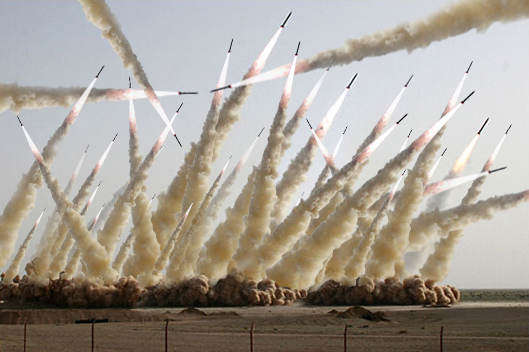 Rogue states are also increasing their efforts to secure chemical and biological weapons, and the means to deploy them, leaving billions in the world’s most densely populated area at risk of a devastating strike, the documents show.
States such as North Korea, Syria and Iran are developing long-range missiles capable of hitting targets outside the region, records of top-level security briefings obtained by WikiLeaks show.
Long-running hostilities between India and Pakistan – which both have nuclear weapons capabilities – are at the root of fears of a nuclear conflict in the region. A classified Pentagon study estimated in 2002 that a nuclear war between the two countries could result in 12 million deaths.
Secret records of a US security briefing at an international non-proliferation summit in 2008 stated that “a nuclear and missile arms race [in South Asia] has the Read more…
Saudis already have 2 Pakistani Nukes
 It’s a story that pops up again and again. Saudi Arabia has acquired at least 2 functional Nuclear Weapons from cash strapped Pakistan. Certainly Saudi Arabia has the money to buy nukes from sources like France, China, Russia, North Korea and Pakistan or even India.
The worrisome thing is that Pakistani nukes may be on the move and the west has very little knowledge or control over it. Pakistan is the most dangerous country on earth. It has a population of 185 million and the majority of people there hate the west and hate Americans. Intelligence experts privately concede that the battle for Pakistan is over. They are now a de facto enemy of the U.S. Al Qaida, the Taliban and the Muslim Brotherhood have won. The ties between Read more…
DEADLY SUPERBUG NDM-1 in BRITAIN
 The bacteria have spread from India and Pakistan and are now being found in hospitals here
Back in 1987 Dr. Robin Cook wrote the medical thriller “Outbreak.” The best-selling novel focused on a team of brilliant medical researchers desperately racing against time to stop a deadly virus from spreading across the United States and potentially killing millions.
Once again fiction becomes reality as England faces its own potentially deadly outbreak with the looming possibility that a superbug from India could bring mass fatalities and spread like wildfire across an unprotected population.
According to the British Health Protection Agency (HPA), a virulent super-bacteria called NDM-1 has invaded the island nation from the Indian sub-continent and Pakistan.
Concerned health professionals have found the bacteria cropping up in hospitals across the country.
Bacteriologists are now burning the midnight oil in a desperate attempt to get a handle on a disease that has the ability to kill thousands.
Superbugs—of which the NDM-1 bacteria is one—are resistant to Read more…
Cheap food may be a thing of the past

U.S. grain prices should stay unrelentingly high this year, according to a Reuters poll, the latest sign that the era of cheap food has come to an end.
U.S. corn, soybeans and wheat prices — which surged by as much has 50 percent last year and hit their highest levels since mid-2008 — will dip by at most 5 percent by the end of 2011, according to the poll of 16 analysts.
The forecasts suggest no quick relief for nations bedeviled by record high food costs that have stoked civil unrest. It means any extreme weather event in a grains-producing part of the world could send prices soaring further.
The expectations may also strengthen importers’ resolve to build bigger inventories after a year in which stocks of corn and soybeans in the United States — the world’s top exporter — dwindled to their lowest level in decades.
Story: Global food chain stretched to the limit Read more…
China should increase precious metals
Sungwoo Park
SEOUL – China should increase its gold and silver reserves, the Economic Information Daily reported on Monday, citing an interview with China’s central bank adviser Xia Bin.
Increasing gold reserves at the “appropriate time” is in line with the strategy of internationalizing the yuan, the report cited Xia as saying. “Related departments” should employ a “buy in the dip” strategy over a very long period of time, Xia said.

Bullion soared nearly 30 percent in 2010, advancing for the 10th year, as the dollar dropped and investors sought a store of value amid currency debasement. China is allowing greater use of its currency for cross-border transactions, seeking to reduce reliance on the dollar.
The report is “a positive factor for gold prices in the mid-and-long term,” Hwang II Doo, a senior trader at Seoul-based Korea Exchange Bank Futures Co, said on Monday. Still “it didn’t have immediate impact on prices as gold’s gain has more to do with the unrest in Egypt at the moment.”
Total gold consumption in China, the second-largest buyer, may gain 15 percent in the first-half, fueled by growing demand for alternative investments and a hedge against inflation, the China Gold Association said last week.
Imports of gold by China jumped almost five-fold in the first 10 months of last year from the entire amount shipped in 2009, the Shanghai Gold Exchange has said. Shipments were 209 metric tons compared with 45 tons for all of 2009, said exchange Chairman Shen Xiangrong.
The country increased gold reserves by 454 tons to 1,054 tons since 2003, the State Administration of Foreign Exchange said in April 2009. The metal only accounts for 1.6 percent of the nation’s reserves held by the People’s Bank of China, according to the World Gold Council. China doesn’t regularly publish gold-trade figures and rarely comments on its reserves.
Bullion for immediate delivery gained as much as 0.7 percent to $1,346.27 an ounce, and was at $1,339.25 at 12:53 pm in Seoul. The price rose 2.5 percent on Jan 28, the biggest intra-day increase since Nov 4 as escalating tensions in Egypt fanned concern that unrest may spread to other parts of the Middle East, increasing demand for an investment haven.
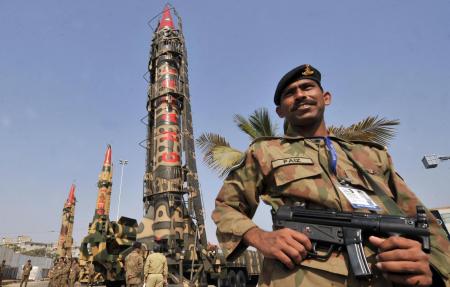
Analysis: Why Pakistan wants to expand its nuclear arsenal
Rob Crilly, The Daily Telegraph
Pakistan is desperate to increase the size of its nuclear arsenal as it eyes India’s rapidly growing economy and population.
Although the numbers of weapons held by either country are small in comparison, the result of the nuclear competition between the two countries is reminiscent of the Cold War arms race between the U.S. and USSR.
In India’s case, the perceived threat is China. For Pakistan, the presumed enemy is India. Paranoia is driving the acceleration of Pakistan’s nuclear arsenal. Read more…
Himalayan glaciers not melting because of climate change, report find
Himalayan glaciers are actually advancing rather than retreating, claims the first major study since a controversial UN report said they would be melted within quarter of a century.

Researchers have discovered that contrary to popular belief half of the ice flows in the Karakoram range of the mountains are actually growing rather than shrinking.
The discovery adds a new twist to the row over whether global warming is causing the world’s highest mountain range to lose its ice cover.
It further challenges claims made in a 2007 report by the UN’s Intergovernmental Panel on Climate Change that the glaciers would be gone by 2035.
Although the head of the panel Dr Rajendra Pachauri later admitted the claim was an error gleaned from unchecked research, he maintained that global warming was melting the glaciers at “a rapid rate”, threatening floods throughout north India.
The new study by scientists at the Universities of California and Potsdam has found that Read more…
Rise of Antibiotic-Resistant Bacteria – “Arms Race” Between Nature and Tech?
 NDM-1 was first detected in Klebsiella pneumoniae (pictured here) but has since been found in other strains including E. coli.
A recent spike of infections in the United Kingdom involving bacteria armed with an enzyme that makes them resistant to virtually all antibiotics has many health experts concerned. The enzyme, called NDM-1, was first identified in 2009 in a patient in New Delhi, India infected with Klebsiella pneumoniae (NDM-1 stands for New Delhi metallo-beta-lactamase). Since then, the gene that produces NDM-1 has been found in many different strains of bacteria, including E. coli, and infections involving these “superbugs” has become an ongoing health problem in many parts of India and Pakistan. Now, a recent publication in the journal Lancet Infectious Diseases describing the discovery of NDM-1 in 37 patients in the UK (many of which had travelled to India or Pakistan) has clearly demonstrated the potential for this to become a global crisis. Bacteria harboring NDM-1 have now been found in the United States, Japan, and Canada.
Despite the dire warnings of health experts, NDM-1 Read more…


![[Most Recent Quotes from www.kitco.com]](https://i0.wp.com/www.kitconet.com/charts/metals/gold/t24_au_en_usoz_2.gif)
![[Most Recent Quotes from www.kitco.com]](https://i0.wp.com/www.kitconet.com/charts/metals/silver/t24_ag_en_usoz_2.gif)

 crisisboom
 CRISISBOOM
You must be logged in to post a comment.