Archive
China’s Inflation Problem Looms Large
Peter Schiff
 |
The global economy has become so unbalanced that even government ministers who would normally have trouble explaining supply or demand clearly recognize that something has to give. To a very large extent the distortions are caused by China’s long-standing policy of pegging its currency, the yuan, to the U.S. dollar. But as China’s economy gains strength, and the American economy weakens, the cost and difficulty of maintaining the peg become ever greater, and eventually outweigh the benefits that the policy supposedly delivers to China. In the first few weeks of 2011 fresh evidence has arisen that shows just how difficult it has become for Beijing.
Twenty years ago, China’s leaders decided to ditch the disaster of economic communism in favor of privatized, export-focused, industry. The plan largely worked. Over that time, China has arguably moved more people out of poverty in the shortest amount of time in the history of the planet. But somewhere along the way, China’s leaders became addicted to a game plan that outlived its usefulness.
In order to maintain the peg, China must continually buy dollars on the open market. But the weaker the dollar gets, the more dollars China must buy. And with the U.S. Federal Reserve pulling out all the stops to create inflation and push down the dollar, Beijing’s task becomes nearly impossible. Last week, it was announced that China’s foreign exchange reserves, the amount of foreign currency held at its central bank (mostly in U.S. dollars), increased by a record $199 billion in 4th quarter 2010, to reach $2.85 trillion. These reserves currently account for a staggering 49% of China’s annual GDP (if the same proportional amount were held by the U.S., our measly $46 billion in reserves would have to increase 163 times to $7.5 trillion).
In order to buy these dollars, the Chinese central bank must print its own currency. In essence, China is adopting the Fed’s expansionary monetary policy. In the U.S. the inflationary impact of such a strategy is mitigated by our ability to export paper dollars in exchange for inexpensive Chinese imports. Although prices are rising here, they are not rising nearly as much as they would if we had to spend all this newly printed money on domestically produced goods. The big problem for China is that, unlike the U.S., the newly printed yuan are not exported, but remain in China bidding up consumer prices. As a result, inflation is becoming China’s dominant political issue.
It was recently announced that in November China’s consumer price index rose 5.1% from the same time a year earlier, with food prices rising more than 10%. As unrest builds, the Chinese government has unleashed a series of policies to address the symptoms of the disease while ignoring its root cause.
China buys gold and the world follows
 “We are entering a period of strong seasonal growth in gold demand and Chinese New Year is a big part of that,” said Brien Lundin, editor of Gold Newsletter. “Physical demand has been supporting the gold prices on the downside even during the typical slack periods, and I expect that upcoming increase in demand will also support the price, but at higher levels.”
The Chinese New Year, also known as Lunar New Year, begins on Feb. 3 this year and ends with the Lantern Festival 15 days later.
“Chinese gold and silver demand has been phenomenal ahead of the New Year holiday,” said Adrian Ash, head of research at BullionVault.com, a leading online service for gold bullion trading and ownership, citing comments from dealers among others.
Shipments have been “heavy” and they began very early, in mid-December, he said. Read more…
Spike in world food prices: It’s more than bad weather
A global index for food prices, as measured by the UN, reached a record high last month. This on the heels of a food crisis in 2007-08. The weather isn’t the only culprit — or solution.
 Of all the world headlines that Sen. Richard Lugar could have highlighted this week – the visit of China’s president in Washington, for instance, or the revolt in Arab Tunisia – the most burning issue for him was … alfalfa.
The plant, used for animal feed, was the surprising topic of the senator’s opening remarks at a Monitor breakfast with reporters Jan. 18. Alfalfa holds a special interest for this active Indiana farmer who is also the ranking Republican on the Senate Foreign Relations Committee. Alfalfa, he notes, is one example of why world food prices have risen so sharply – the second such rise in just over two years.
Last month the global food price index reached a record high, according to the Food and Agricultural Organization, a United Nations body. It surpassed the levels of the last food crisis in 2007-2008, when rising prices caused riots in more than 30 countries.
The human misery from unaffordable – or unavailable – food isn’t as widespread this time, because the price of rice – a staple for more than 3 billion people – is relatively stable. Also, Africa and Asia have seen some good harvests, helping feed local populations. Read more…
QE2 Reality Check
The Federal Open Market Committee (FOMC) announced on November 3, 2010 that it would purchase longer-term Treasury securities at a pace of $75 billion dollars per month through the Federal Reserve’s Permanent Open Market Operations (POMO) facility by the end of the second quarter 2011 and potentially beyond. The Quantitative Easing Two (“QE2”) program, championed by Ben Bernanke, chairman of the U.S. Federal Reserve, is expected to total at least $600 billion — and may well total more, if Bernanke and the FOMC deem it to be necessary.
Currently, QE2 is expected to continue until the end of 2011, i.e. up to $1.2 trillion, although there is ongoing policy debate within the Federal Reserve amidst growing fears that the policy may backfire.

Chart courtesy of Shadow Government Statistics |
Why Are Commodity Prices Rising? Let Me Count the Ways
 Our overview of 2011 ‘What Ifs’ concentrated on the concepts of bifurcation and biflation. Those themes are already playing out just a couple of weeks into the New Year. Inflation in all types of commodities has ramped up even further, leaving countries like China, India, Brazil, Thailand and South Korea to deal with more than their fair share of these inflationary forces. Meanwhile, easy monetary policy in the U.S. and Europe just adds fuel to the inflation fire.
The United Nations food agency (FAO) kicked off 2011 by announcing that December of 2010 saw food prices eclipse the record levels hit during the 2008 food crisis, which triggered riots in Egypt, Cameroon, and Haiti at the time. The current spike in food prices has already caused violent food riots in Algeria, Tunisia, Morocco, Yemen, and Jordan.
Food Inflation by the Numbers
Food inflation has already hit double digits in China, India and Brazil. It’s not hard to see why when you look at how some of the major soft commodities have performed over the last 12 months:
- Corn: + 69%
- Wheat: + 47%
- Soy Beans: + 44%
- Sugar: + 15%
- Coffee: + 65%
- Cotton: + 105%
(Trailing 12-month price moves as of January 12, 2011)
While these price spikes are causing food and clothing prices to rise, those effects will undoubtedly be exacerbated by the simultaneous rise in energy and raw materials we have seen:
- Oil: + 15% over 12 months and + 30% since the August, 2010 low
- Copper: + 30%
Overall, you can see the rise in commodity prices in the CRB Index, up about 30% since August of 2010, but well off the parabolic peak of 2008: Read more…
The Future of Food Riots

This is a map of the countries in which there have been food riots
If all the food in the world were shared out evenly, there would be enough to go around.
That has been true for centuries now: if food was scarce, the problem was that it wasn’t in the right place, but there was no global shortage. However, that will not be true much longer.
The food riots began in Algeria more than a week ago, and they are going to spread. During the last global food shortage in 2008, there was serious rioting in Mexico, Indonesia, and Egypt. We may expect to see that again this time, only bigger and more widespread.
Most people in these countries live in a cash economy, and a large proportion live in cities. They buy their food, they don’t grow it.
That makes them very vulnerable, because they have to eat almost as much as people in rich countries do, but their incomes are much lower.
The poor, urban multitudes in these countries (including China and India) spend up to half of their income on food, compared to only about 10 percent in the rich countries. When food prices soar, these people quickly find that they simply lack the money to go on feeding themselves and their children properly—and food prices now are at an all-time high.
“We are entering a danger territory,” said Abdolreza Abbassian, chief economist at the Food and Agriculture Organization, on January 5.
The price of a basket of cereals, oils, dairy, meat, and sugar that reflects global consumption patterns has risen steadily for six months. It has just broken through the previous record, set during the last food panic in June 2008.
“There is still room for prices to go up much higher,” Abbassian added, “if, for example, the dry conditions in Read more…
USDA begins surveying damage to citrus crop
 Florida’s freezes wiped out thousands of acres worth of agriculture and millions of cases of food.
Bruce Rottman is picking fruit to get a picture of how bad Florida’s freezes were on citrus.
Rottman works with the USDA, surveying crops to assess damage.
“There’s one right here that’s on the border line,” Rottman said. “It’s got some damage right here where you can see the wavy segment wall there. The fruit is dry right here.”
Nick Faryna, a third generation citrus grower, owns these groves.
He faired surprisingly well, but said the citrus industry will definitely feel the one-two punch from the freezes over the last month.
“Normally we catch the brunt of every system that comes through,” Faryna said. “In this particular event, the air came in so strongly for two days, the air worked its way all the way to South Florida. It was kind of a democratic event. Everyone caught a little bit of it this time.”
Some got hit a lot worse than others.
“There are some areas in Lake County where I have seen some pretty good damage,” Rottman said.
At a grove in Howey-in-the-Hills, most of the leaves are gone and the trees look weathered by winter.
Rottman said this is how it looked after the notorious freezes in the 1980s that wiped out much of the citrus industry here.
“Growers that were in the lower grounds, the sheltered and protected areas really caught the brunt of it this time. And it’s pretty much industry-wide this time,” Faryna said.
Overall, Faryna said about 25 percent of the fruit in his groves suffered some sort of damage from the freezes.
Now, there’s a rush among citrus growers across the state to get that fruit into the orange juice factories before more of it hits the ground.
“It could have been worse,” Faryna said.
Every time there’s a freeze and damage to Florida agriculture, big money is lost here in the state.
Could the U.S. central bank go broke?
Reuters
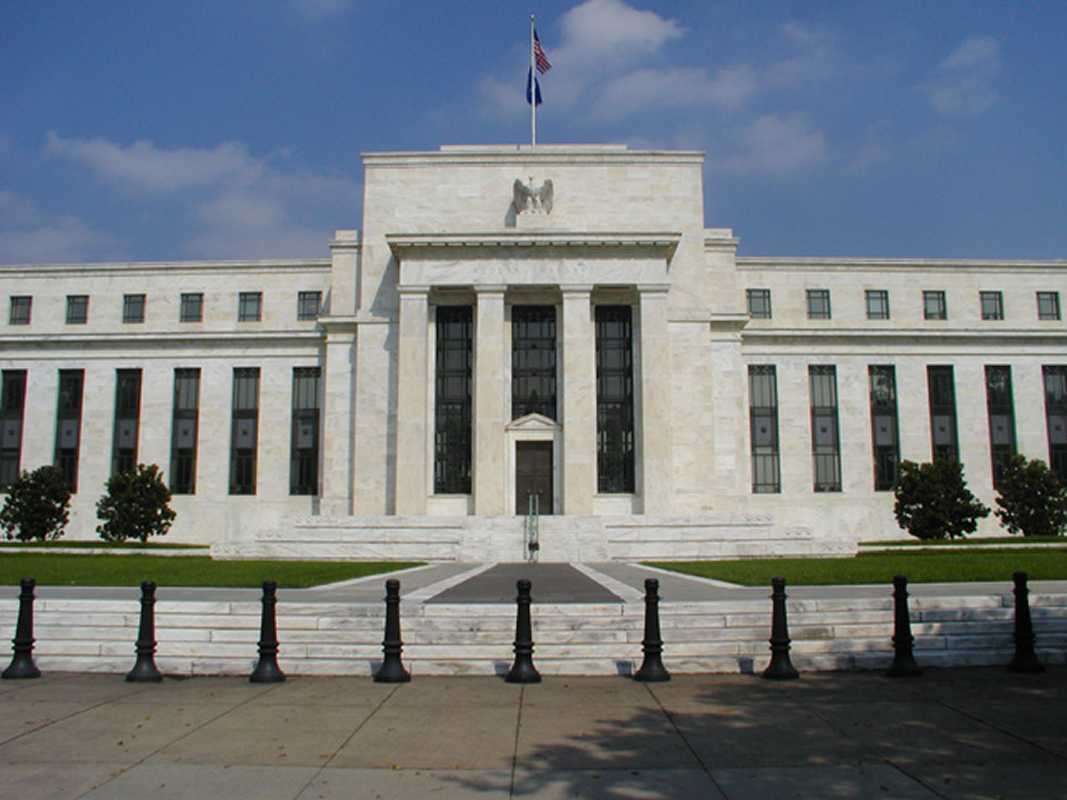 The U.S. Federal Reserve’s journey to the outer limits of monetary policy is raising concerns about how hard it will be to withdraw trillions of dollars in stimulus from the banking system when the time is right.
While that day seems distant now, some economists and market analysts have even begun pondering the unthinkable: could the vaunted Fed, the world’s most powerful central bank, become insolvent?
Almost by definition, the answer is no.
As the monetary authority, the central bank is the master of the printing press. It can literally conjure up money at will, and arguably did exactly that when it bought about $2 trillion of mortgage-backed securities and U.S. Treasuries to push down borrowing costs and boost the economy.
The Fed’s unorthodox steps helped it generate record profits in 2010, allowing it to send $78.4 billion to the U.S. Treasury Department. But its swollen balance sheet leaves the central bank unusually exposed to possible credit losses that could create a major headache at a time of increasing political encroachment on the Fed’s independence. Read more…
IN THE STOCK MARKET, IT’S 1937 ALL OVER AGAIN
One of the most worrisome problems in the stock market right now is that we are basically repeating the exact same situation that occurred from 1937 to 1942.
Most Americans think we’ve had this amazing stock market recovery since the financial crisis of 2008… and we have to a certain extent.
But we are by no means out of the woods.
In fact, during America’s last real economic collapse, in the 1930s and 1940s, we saw a similar drop and recovery… before the markets crashed all over again.
In fact, the situation is eerily similar.
 Look at this chart… it’s one of the scariest I’ve seen in a long time. It shows an overlay of what happened in the stock market in 1937 compared to 2008. In both situations, we saw big crashes, of about the exact same magnitude… then a big recovery, again of about the same size.
But what will happen next?
Well, if history is any guide, we could well have another big leg down in the stock market. That’s exactly what happened 70 years ago.
And with all of the problems left unresolved in our economy today, it could certainly happen again, especially if the U.S. dollar loses its reserve status.
http://www.stansberryresearch.com/pro/1011PSIENDVD/PPSILC42/PR
Federal Reserve Banking System Explained
Federal Reserve Banking System Explained


![[Most Recent Quotes from www.kitco.com]](https://i0.wp.com/www.kitconet.com/charts/metals/gold/t24_au_en_usoz_2.gif)
![[Most Recent Quotes from www.kitco.com]](https://i0.wp.com/www.kitconet.com/charts/metals/silver/t24_ag_en_usoz_2.gif)

 crisisboom
 CRISISBOOM
You must be logged in to post a comment.