Archive
BRICS demand global monetary shake-up, greater influence

(L-R) India's Prime Minister Manmohan Singh, Russia's President Dmitry Medvedev, China's President Hu Jintao, Brazil's President Dilma Rousseff and South African President Jacob Zuma attend a joint news conference at the BRICS Leaders Meeting in Sanya, Hainan province April 14, 2011. The development banks of the five BRICS nations agreed in principle on Thursday to establish mutual credit lines denominated in their local currencies, not in dollars. REUTERS/How Hwee Young/Pool
SANYA, China (Reuters) – The BRICS group of emerging-market powers kept up the pressure on Thursday for a revamped global monetary system that relies less on the dollar and for a louder voice in international financial institutions.
The leaders of Brazil, Russia, India, China and South Africa also called for stronger regulation of commodity derivatives to dampen excessive volatility in food and energy prices, which they said posed new risks for the recovery of the world economy.
Meeting on the southern Chinese island of Hainan, they said the recent financial crisis had exposed the inadequacies of the current monetary order, which has the dollar as its linchpin.
What was needed, they said in a statement, was “a broad-based international reserve currency system providing stability and certainty” — thinly veiled criticism of what the BRICS see as Washington’s neglect of its global monetary responsibilities.
The BRICS are worried that America’s large trade and budget deficits will eventually debase the dollar. They also begrudge the financial and political privileges that come with being the leading reserve currency.
“The world economy is undergoing profound and complex changes,” Chinese President Hu Jintao said. “The era demands that the BRICS countries strengthen dialogue and cooperation.”
In another dig at the dollar, the development banks of the five BRICS nations agreed to establish mutual credit lines denominated in their local currencies, not the U.S. currency.
The head of China Development Bank (CDB), Chen Yuan, said he was prepared to lend up to 10 billion yuan to fellow BRICS, and his Russian counterpart said he was looking to borrow the yuan equivalent of at least $500 million via CDB.
“We think this will undoubtedly broaden the opportunities for Russian companies to diversify their loans,” Vladimir Dmitriev, the chairman of VEB, Read more…
China-Russia relations and the United States: At a turning point?
 By Dr. Richard Weitz
Since the end of the Cold War, the improved political and economic relationship between Beijing and Moscow has affected a range of international security issues. China and Russia have expanded their bilateral economic and security cooperation. In addition, they have pursued distinct, yet parallel, policies regarding many global and regional issues.
Yet, Chinese and Russian approaches to a range of significant subjects are still largely uncoordinated and at times in conflict. Economic exchanges between China and Russia remain minimal compared to those found between most friendly countries, let alone allies.
Although stronger Chinese-Russian ties could present greater challenges to other countries (e.g., the establishment of a Moscow-Beijing condominium over Central Asia), several factors make it unlikely that the two countries will form such a bloc.
The relationship between the Chinese and Russian governments is perhaps the best it has ever been. The leaders of both countries engage in numerous high-level exchanges, make many mutually supportive statements, and manifest other displays of Russian-Chinese cooperation in what both governments refer to as their developing strategic partnership.
The current benign situation is due less to common values and shared interests than to the fact that Chinese and Russian security concerns are Read more…
Global planetary tremor sends seismometers into the black
 April 12, 2011- JAPAN – Following the 6.2 quake that hit eastern Japan, telemetry data from seismographs across the planet registered very dense bands of seismic disturbances- indicating there were massive movements along tectonic plate boundaries. These events are happening now every 72 to 96 hours on average and have been increasing their frequency cycle of occurrence every since the massive 9.0 earthquake struck off the eastern coast of Japan on March 11, 2011. It is therefore reasonable to conclude that the planet is becoming more unstable after the mega-thrust quake ruptured the sea-floor off the coast of Japan and is now more sensitive to tectonic plate movements after the earthquake afflicted the planet. Below are recent readings from seismographs highlighting areas across the globe which registered strong disturbances. –The Extinction Protocol


(left) Dense bands of activity under China and Japan (right)


(left) Troubling patterns seen in Dominican Republic (Caribbean) and (right) Johnston Island in the Pacific
China blocks coastal waters, enlarges military
Pacific’s chief calls shadowy move ‘troubling’

**file photo **Chinese paramilitary police patrol in Urumqi, western China’s Xinjiang province. (AP Photo/Eugene Hoshiko)
NavyAdm. Robert F. Willard said during a hearing of the Senate Armed Services Committee that China’s intentions behind its decades-long buildup remain hidden and are undermining stability in the Asia-Pacific region.
The four-star admiral said the arms buildup is understandable because of China’s economic rise, but “the scope and pace of its modernization without clarity on China’s ultimate goals remains troubling.”
“For example, China continues to accelerate its offensive air and missile developments without corresponding public clarification about how these forces will be utilized,” he said.
Chinese officials, in meetings with their U.S. counterparts, have refused to explain the pace or goal of the arms buildup, defense Read more…
Japan may raise severity of nuclear crisis to top level: report
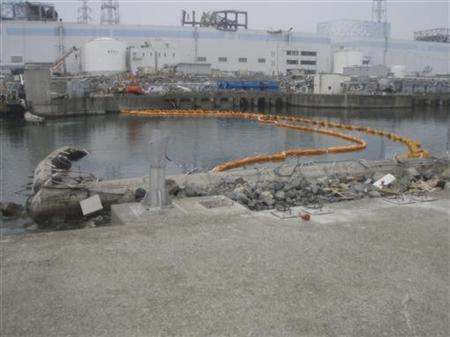 (Reuters) – Japan is weighing raising the severity level of its nuclear crisis at the Fukushima Daiichi nuclear power plant to a level 7 from level 5, putting it at par with the accident at the Chernobyl reactor in 1986, Kyodo news agency reported on Tuesday.
Kyodo said the government’s Nuclear Safety Commission has estimated the amount of radioactive material released from the reactors in Fukushima, northern Japan, reached a maximum of 10,000 terabequerels per hour at one point for several hours, which would classify the incident as a major accident according to the INES scale.
The scale, short for International Nuclear and Radiological Event Scale, is published by the International Atomic Energy Agency and ranks nuclear and radiological accidents and incidents by their severity from 1 to a maximum of 7.
Japan had previously assessed the accident at reactors operated by Tokyo Electric Power Co, which engineers are still trying to bring under control, at level 5, the same level as the Three Mile Island accident in 1979.
On March 11 a 9.0 magnitude earthquake and a massive tsunami triggered the nuclear disaster where reactors at the Fukushima Daiichi complex were crippled due to a loss of power which disabled cooling functions.
A spokesman for the Nuclear and Industrial Safety Agency, Japan’s nuclear safety watchdog, said on Tuesday that the level of the Fukushima incident was still a 5 and that he was unaware of any move by the government to raise the level.
Strain from Japan earthquake may lead to more seismic trouble, scientists say
Japan won’t stop shaking. One month after the March 11 earthquake and tsunami, the nation rode out yet another powerful aftershock Monday, the second in four days. This one rattled buildings in Tokyo and briefly cut power to the damaged nuclear plant in Fukushima.
With soldiers still looking for the bodies of thousands of people who vanished in the killer wave a month ago, Japan is coping with the painful reality that it sits in a seismic bull’s-eye.
A new calculation by American and Japanese scientists has concluded that the March 11 event may have heightened the stress on faults bracketing the ruptured segment of the Japan Trench.
“There’s quite a bit of real estate on which stress has increased, by our calculations,” said U.S. Geological Survey geophysicist Ross Stein. “The possibility of getting large, Read more…
Over 50,000 TONS Of Deadly Radioactive Fukushima Water
Work to dispose of highly radioactive water at the crippled Fukushima Daiichi nuclear power plant is not proceeding smoothly as more time is needed for preparations. Read more…
Look Out Above for Gold and Silver Prices
 By Greg Hunter’s
Gold hit another all-time high yesterday, closing well over $1,450 per ounce. Silver’s closing price of more than $39 per ounce is the highest it has been in 31 years. Why the big jump in gold and silver prices? The answer is pretty scary because there are many reasons precious metals are heading higher. Let’s start with the most obvious —inflation. Kitco.com reported yesterday, “The precious yellow metal got a fresh influx of investment buying based upon heightened inflationary expectations, safe-haven demand and a weakening U.S. dollar index.” (Click here for the complete Kitco.com story.) You can give the same reasons for rising silver prices.
In the case of silver, many experts say it is way undervalued and will outperform gold as Read more…
South Korea shuts schools amid Japan radiation fears

Ahn Young-joon / AP
TOKYO — Dozens of schools in South Korea closed Thursday amid concerns about radioactive fallout from Japan’s nuclear disaster.
Classes were canceled or shortened at more than 150 schools as rain fell across the country.
Authorities said radiation levels in the rain posed no health threat.
However, school boards across the country — Japan’s closest neighbor — advised Read more…
MAJOR EARTHQUAKE HITS JAPAN, BLACKOUTS IN SENDAI AND FUKUSHIMA
Could there be a connection with the Solar Storm from yesterday? Definitely.
 A major earthquake between 7.1 and 7.4 magnitude hit northeastern Japan at 11:32 Tokyo time. It was focused 60 kilometers below the seabed off Miyagi Prefecture, which also got slammed last time.
The quake has caused scattered gas leaks and fires. A few dozen injuries have been reported.
U.S. markets turned down on the news and Nikkei futures have plunged.
Tsunami warnings were issued, but then lifted an hour after the quake.
Power is out around Sendai and in parts of Fukushima and Yamagata. Even as two of the three local plants are blacked out, however, cooling activities will continue at Fukushima nuclear plant. No new damage is reported at the Fukushima nuclear plant or others. Workers at the Fukushima plant were briefly evacuated.
NHK reports Rokkasho plutonium reprocessing plant has lost off site power and is on emergency backup.
Bullet trains have started running again less than an hour after the quake. All highways are shut in Miyagi, local police tell Kyodo.
12:16 ET: Japanese officials say there is still a high risk of mud slides and collapsing buildings.
Here’s a video of the tremor in Sendai: What could that strange blue light be??? Read more…


![[Most Recent Quotes from www.kitco.com]](https://i0.wp.com/www.kitconet.com/charts/metals/gold/t24_au_en_usoz_2.gif)
![[Most Recent Quotes from www.kitco.com]](https://i0.wp.com/www.kitconet.com/charts/metals/silver/t24_ag_en_usoz_2.gif)

 crisisboom
 CRISISBOOM
You must be logged in to post a comment.