Archive
NASA Satellite Falling: Will It Hit You?
 A NASA satellite is expected to make a crash landing on Earth in late September or early October. No one knows where it will land, not even NASA. It could even land on you — but luckily, you have a better chance of winning the lottery than of having a piece of the satellite fall on your head.
According to Nicholas Johnson, NASA’s chief scientist for orbital debris (yes, there is such a job), the odds of any specific person getting hit are about 1 in 21 trillion, MSNBC reported. That’s a chance of about 0.0000000001 percent. For perspective, the odds of any given person winning the lottery are 1 in hundreds of billions, depending on the lottery design — but nowhere near the trillions.
There is a much greater, but still minimal, chance that a piece of the satellite will hit someone on Earth: 1 in Read more…
Near-Earth Threats, NASA and Elenin – a Civilized Analysis
 Recently, there has been quite a bit of talk about a comet or celestial body named Elenin (or C/2010x) that has entered our solar system and will be making a close pass of the Earth soon. At first, I assumed it was simply the talk of fanciful amateur astronomers and that, at most, it might offer an interesting night-sight for Earth’s inhabitants, much like Haley’s Comet and many others.
But as I continued hearing more and more about this “Elenin object,” I started to realize this was no mere comet. And perhaps, just maybe, it could have something to do with the famed Planet-X first reported about back in 1983 by the Washington Post. Unfortunately, it seemed as though most of what I could find was wild speculation and fanatical rantings about the end of the world. I had discovered only a handful of articles that Read more…
Major NASA Solar Flare News Conference: New Observations On Solar Storm Impact On Earth
nanopatentsandinnovations.blogspot

Credit: SOHO/NASA
JPL: Brown Dwarfs Closer Than First Thought
 Artist’s rendering of size comparisons.
Astronomers have hunted the skies for Y dwarfs, the coldest members of the brown dwarf family, without success until data from NASA’s Wide-field Infrared Survey Explorer revealed the faint glow of six such orbs within a distance of 40 light years from our sun. Unlike stars that burn steadily for billions of years, Y dwarfs fade and cool due to their low mass and inability to fuse atoms at their cores. These dwarfs hold a temperature about the same as a human body.
Astronomers study brown dwarfs in order to Read more…
Extreme 2010 Russian fires and Pakistan floods linked meteorologically
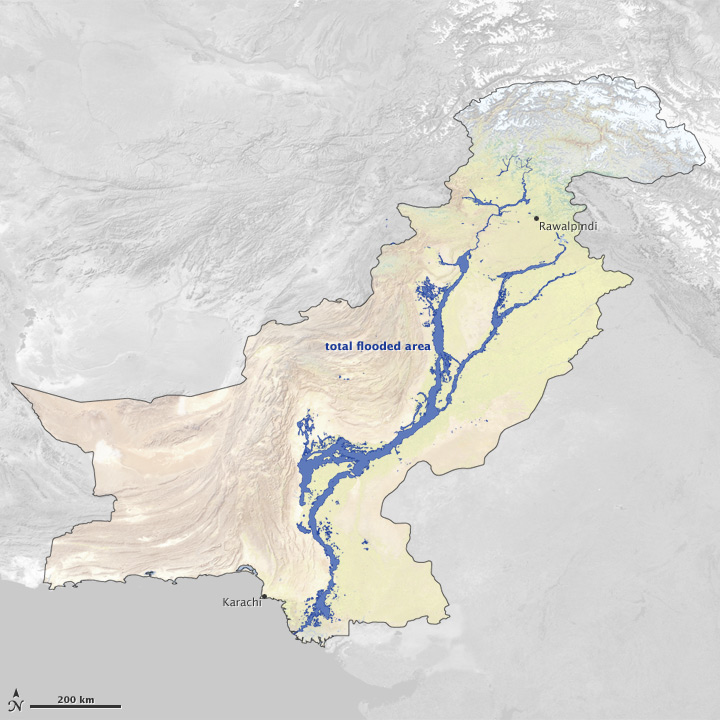 Floods covered at least 14,390 square miles (37,280 square km) of Pakistan between July 28 and September 16, 2010. For more information about this image, please visit this NASA Earth Observatory page Credit: NASA/Earth Observatory GREENBELT, Md. — Two of the most destructive natural disasters of 2010 were closely linked by a single meteorological event, even though they occurred 1,500 miles (2,414 km) apart and were of completely different natures, a new NASA study suggests.
The research finds that the same large-scale meteorological event — an abnormal Rossby wave — sparked extreme heat and persistent wildfires in Russia as well as unusual downstream wind patterns that shifted rainfall in the Indian monsoon region and fueled heavy flooding in Pakistan. Although the heat wave started before the floods, both events attained maximum strength at approximately the same time, the researchers found Read more…
VATICAN JOINS NASA and GOVT FOR THE BIG EVENT SOON TO BE ANNOUNCED to the WORLD!
Solar Storms Building Toward Peak in 2013, NASA Predicts
 |
| This image from the Solar Dynamics Observatory shows the X6.9 solar flare of Aug. 9, 2011 near the western limb (right edge) of the sun. CREDIT: NASA/SDO/Weather.com |
Solar flares like the huge one that erupted on the sun early today (Aug. 9) will only become more common as our sun nears its maximum level of activity in 2013, scientists say.
Tuesday’s flare was the most powerful sun storm since 2006, and was rated an X6.9 on the three-class scale for solar storms (X-Class is strongest, with M-Class in the middle and C-Class being the weakest).
Flares such as this one could become the norm soon, though, as our sun’s 11-year cycle of magnetic Read more…
Roll to observe Elenin – STEREO BEHIND looks at a hot topic
Story submitted by Robert Bateman

In just a few hours from now, NASA rolls the STEREO BEHIND solar satellite to have a look at Comet Elenin (P/2010 X1), and if you haven’t been paying attention, it is one red hot topic topped with wilder imaginations, dooms, hypotheticals and omens than previously imagined.
From being on a par with/substitute for Read more…
NASA warns of global catastrophe post upcoming ‘huge space storm’
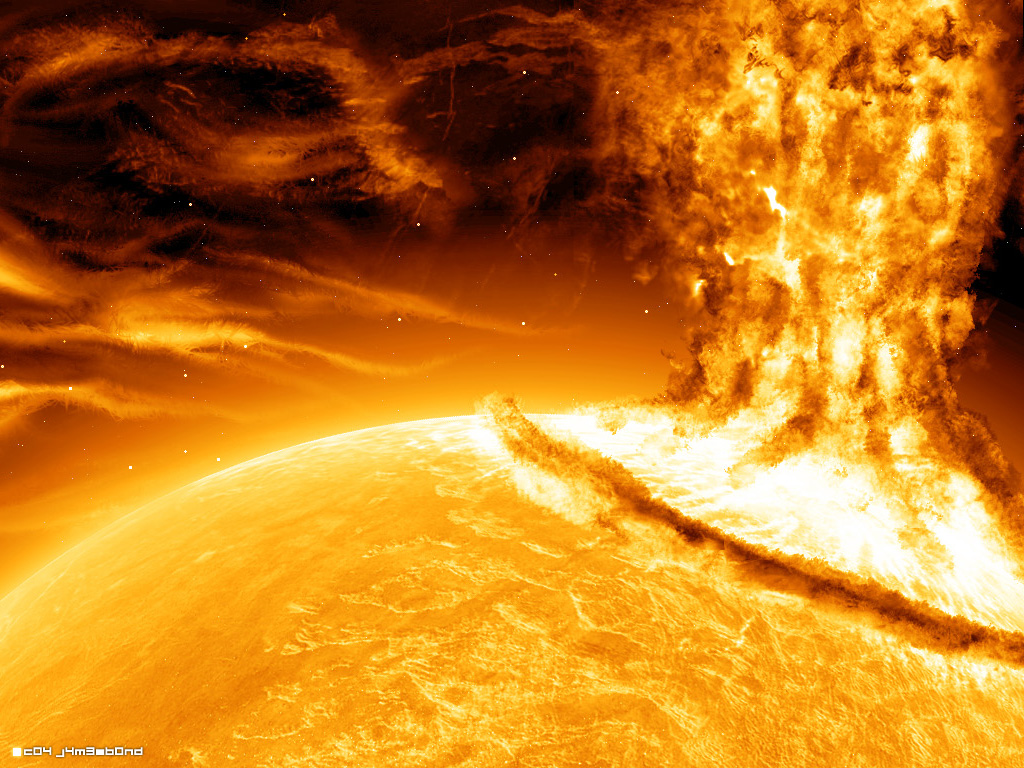 NASA has warned of a once-in-a-lifetime ‘space storm’ after the sun wakes ‘from a deep slumber’ sometime around 2013, causing ‘20 times more economic damage than Hurricane Katrina’.
Senior space agency scientists believe that the super storm would hit like ‘a bolt of lightning’ and damage everything from emergency services’ systems, hospital equipment, banking systems and air traffic control devices, through to “everyday” items such as home computers, iPods and Sat Navs.
And unless precautions are taken, it could cause catastrophic consequences for the world’s health, emergency services and national security.
“We know it is coming but we don’t know how bad it is going to be,” Dr Richard Fisher, the director of NASA’s Heliophysics division, said in an interview with The Daily Telegraph.
He, however, said that preparations were similar to those in a hurricane season, where authorities knew a problem was imminent but did not know how serious it would be.
“I think the issue is now that modern society is so dependant on Read more…
New NASA Data Blow Gaping Hole In Global Warming Alarmism
 Image by AFP/Getty Images via @daylife
NASA satellite data from the years 2000 through 2011 show the Earth’s atmosphere is allowing far more heat to be released into space than alarmist computer models have predicted, reports a new study in the peer-reviewed science journal Remote Sensing. The study indicates far less future global warming will occur than United Nations computer models have predicted, and supports prior studies indicating increases in atmospheric carbon dioxide trap far less heat than alarmists have claimed.
Study co-author Dr. Roy Spencer, a principal research scientist at the University of Alabama in Huntsville and U.S. Science Team Leader for the Advanced Microwave Scanning Radiometer flying on NASA’s Aqua satellite, reports that real-world data from NASA’s Terra satellite contradict Read more…


![[Most Recent Quotes from www.kitco.com]](https://i0.wp.com/www.kitconet.com/charts/metals/gold/t24_au_en_usoz_2.gif)
![[Most Recent Quotes from www.kitco.com]](https://i0.wp.com/www.kitconet.com/charts/metals/silver/t24_ag_en_usoz_2.gif)

 crisisboom
 CRISISBOOM
You must be logged in to post a comment.