Archive
Lindsey Williams: Arab Monarchies To Be Overthrown (Video
UPDATE 2-Oil could hit $200-$300 on Saudi unrest-Yamani
LONDON, April 5 (Reuters) – Oil prices could rocket to $200- $300 a barrel if the world’s top crude exporter Saudi Arabia is hit by serious political unrest, former Saudi oil minister Sheikh Zaki Yamani told Reuters on Tuesday.
Yamani said he saw no immediate sign of further trouble following protests last month calling for political reforms but said that underlying discontent remained unresolved.
“If something happens in Saudi Arabia it will go to $200 to $300. I don’t expect this for the time being, but who would have expected Tunisia?” Yamani told Reuters on the sidelines of a conference of the Centre for Global Energy Studies (CGES) which he chairs.
“The political events that took place are there and we don’t expect them to finish. I think there are some surprises on the horizon,” he said in a speech.
Saudi King Abdullah offered $93 billion in handouts in March in an effort to stave off unrest rocking the Arab world.
So far, demonstrations in the Kingdom have been small in scale and police were able to easily disperse a Shi’ite protest in the oil-producing eastern province last month.
But Yamani said that the reluctance of people to participate in popular protests was merely concealing underlying discontent.
“Some people relax about the situation in Saudi Arabia because the Saudi Islamic brand prohibits people to go to the street and to talk,” he said in a speech.
SAUDI TIME BOMB
Oil traded at two-and-a-half-year highs above $121 a barrel LCOc1 on Tuesday. Libya’s rebellion has shut its oil exports, stoking fears of disruptions in other major producers.
Can You Anticipate Gold To Hit $1,500 & Silver $50 Quite Soon, Probably As Early As Summertime?
 Yes, I believe that you can anticipate gold to hit $1,500 and silver to hit $50 extremely quickly, perhaps as early as this summertime. Now would be an excellent time for you for making investments in gold and silver. Buy precious metals now.
FOR IMMEDIATE RELEASE
Governments have in turn cherished it, hated it and now are beginning to adore it again. It’s what it is purported to signify that leads to all the fuss. Just take a look at the factors put forward by some regarding why it’s rising in price and Read more…
Warning of Recurring Food Crises
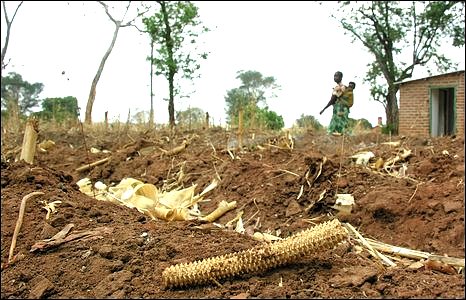 Soaring and volatile food prices have experts warning of recurring food crises, putting poor people – especially women and children – at risk.
Similar conditions existed during the 2007/2008 food crisis, when high prices and shortages ignited unrest in many countries around the world.
IFPRI, the International Food Policy Research Institute, is calling for urgent action to prevent a repeat of the crisis. Director-General Shenggen Fen says, “Many food items have become more expensive…since last May or June. Wheat prices have almost doubled. The maize price has also increased substantially. Many meat products, dairy products have also increased substantially.”
While the situation is not as serious as the food crisis three years ago, Fen says, “If we don’t take urgent actions, food prices will continue to rise and the poor people will suffer.”
What’s triggering the price hikes? Read more…
Wow That Was Fast! Libyan Rebels Have Already Established A New Central Bank Of Libya
 The rebels in Libya are in the middle of a life or death civil war and Moammar Gadhafi is still in power and yet somehow the Libyan rebels have had enough time to establish a new Central Bank of Libya and form a new national oil company. Perhaps when this conflict is over those rebels can become time management consultants. They sure do get a lot done. What a skilled bunch of rebels – they can fight a war during the day and draw up a new central bank and a new national oil company at night without any outside help whatsoever. If only the rest of us were so versatile! But isn’t forming a central bank something that could be done after the civil war is over?
According to Bloomberg, the Transitional National Council has “designated the Central Bank of Benghazi as a monetary authority competent in monetary policies in Libya and the appointment of a governor to the Central Bank of Libya, with a temporary headquarters in Benghazi.” Apparently someone felt that it was very important to get pesky matters such as control of the banks and control of the money supply out of the way even before a new government is formed.
Of course it is probably safe to assume that the new Central Bank of Libya will be 100% owned and 100% controlled by the newly liberated people of Libya, isn’t it?
Most people don’t realize that the previous Central Bank of Libya was 100% state owned. The Read more…
US NATO Commander Admits Al-Qaeda Linked To Libyan Rebels
Steve Watson
Infowars.com
March 29, 2011
A top ranking NATO Commander has admitted that intelligence has uncovered elements of “al qaeda” amongst Libyan rebel fighters currently receiving tactical military support from US and European led operations inside the country.
The admission serves as yet more confirmation that radical Islamic fundamentalists are part of the opposition groups attempting to oust the nationalist dictatorship of Muammar Gaddafi, with the help of the US and its NATO allies.
“We are examining very closely the content, composition, the personalities, who are the leaders of these opposition forces,” Admiral James Stavridis, NATO’s Supreme Allied Commander, Europe, and also the commander of U.S. European Command, said during testimony at the U.S. Senate.
“…we have seen flickers in the intelligence of potential al Qaeda, Hezbollah, we’ve seen different things.” Stavridis said, while adding that the rebels leadership appeared to be comprised also of “responsible men and women”.
High Gas Prices May Turn Suburbs Into Slums

Americans rarely think much about zoning, but it governs almost every facet of how we live our lives. And unintended consequences of 50-year-old zoning codes may be about to turn some of our loveliest and quietest suburbs into the next slums.
Why? Simply because they’ve been built too far away from everything else, and we won’t be able to afford the gasoline it takes to go to and fro.
Suburbs: slums of the future?
At least, that’s the provocative conclusion of Peter Newman, one of the authors of a study released by the Planning Institute of Australia late last year.
The study looks at the future of suburban Australia, which has evolved in patterns very much like suburban America: sprawling, low-density, auto-dependent residential enclaves miles away from commercial areas and office parks.
“Urban sprawl is finished,” Newman told The Age. “If we continue to roll out new land releases and suburbs that are car-dependent, they will become the slums of the future.”
Following World War II, with the rise of affordable automobiles, cheap fuel and an increasingly Read more…
Worldwide Silver Shortage?

FutureMoneyTrends.com has recently received several reports, published and non published reports about possible silver shortages. Is their a very limited supply of silver, yes, is there a worldwide shortage happening right now, well not exactly. Under the agreement that we wouldn’t reveal their name, a major bullion dealer who we are friends with, told us that their traders are not having any issues buying physical silver, and that their warehouse had a significant amount of physical silver. Now, will there one day be a shortage of silver, in our opinion at these prices, yes, the price for silver will have to move up considerably in order to come in line with the above ground available supply and ever increasing demand. Sorry to disappoint you, Read more…
Silver, gold gain on fast-changing global events
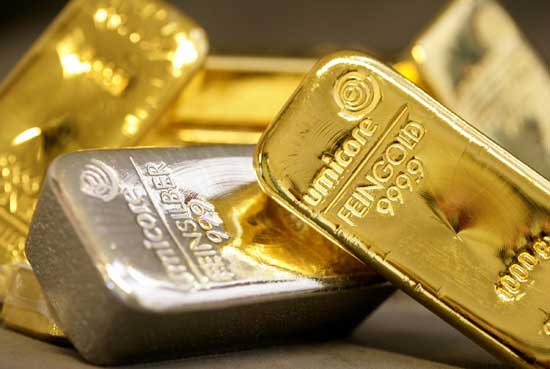 Silver and gold prices are climbing as developing crises from Portugal’s financial problems to uprisings in the Middle East are prompting investors to buy more stable assets.
Silver for May delivery rose 2.6 percent Wednesday to settle at $37.198 an ounce. Gold settled up $10.40 at $1,438 an ounce.
Investors are nervous as they monitor fast-changing global events.
In Portugal, lawmakers are poised to vote against more austerity measures for the debt-stressed country. Meanwhile violence in the Middle East and North Africa is raising concern about oil supplies.
The uncertainty of how those events will play out is supporting both precious metals, which have the reputation of being safer assets to hold during turbulent economic times.
Energy prices were mainly higher. Bean and grain prices fell.
A global energy war looms
Here’s an alarming chart to ponder. HSBC has calculated what would happen to energy consumption by 2050 given plausible forecasts for economic growth and assuming no constraint on resources, or that humans carry on using energy in the “taken for granted” way they do at the moment.
As you can see, demand in China, India and other emerging markets soars, but there is also quite considerable growth from advanced economies too. The big picture is that with an additional one billion cars on the road, demand for oil would grow 110pc to more than 190 million barrels per day. Total demand for energy would rise by a similar order of magnitude, doubling the Read more…


![[Most Recent Quotes from www.kitco.com]](https://i0.wp.com/www.kitconet.com/charts/metals/gold/t24_au_en_usoz_2.gif)
![[Most Recent Quotes from www.kitco.com]](https://i0.wp.com/www.kitconet.com/charts/metals/silver/t24_ag_en_usoz_2.gif)

 crisisboom
 CRISISBOOM
You must be logged in to post a comment.