Archive
Future TSA: Track All ‘Daily Travels To Work, Grocery Stores & Social Events’
While the TSA can’t explain why invasive patdowns without probable cause are legal, that isn’t stopping TSA from future plans to track all your daily travels, anywhere you go, from work, to stores, or even when you go out to play.
By Ms. Smith
When the TSA was asked to provide legal reasons that definitely spelled out why physically invasive patdowns are legal, without any probable cause, not one TSA person had an answer. There was no legal documentation for enhanced patdowns other than it serves “the essential administrative purpose.”
Peep show, police state or privacy invasion, patdowns and body scans are not just in airports. EPIC said DHS is refusing to disclose details of mobile body scanner technology. In fact, in answer to EPIC’s FOIA request, DHS handed over “several papers that were completely redacted.”
Meanwhile at airports, the TSA is rolling out “less-invasive gingerbread man” body scanners to a tune of $2.7 million for 240 machines. At this point, I don’t think skinnier versions of the Pillsbury Doughboy via kinder and gentler naked body scans are going to placate people who are secretly Read more…
New data spill shows risk of online health records
Until recently, medical files belonging to nearly 300,000 Californians sat unsecured on the Internet for the entire world to see.
 There were insurance forms, Social Security numbers and doctors’ notes. Among the files were summaries that spelled out, in painstaking detail, a trucker’s crushed fingers, a maintenance worker’s broken ribs and one man’s bout with sexual dysfunction.
At a time of mounting computer hacking threats, the incident offers an alarming glimpse at privacy risks as the nation moves steadily into an era in which every American’s sensitive medical information will be digitized.
Electronic records can lower costs, cut bureaucracy and ultimately save lives. The government is offering bonuses to early adopters and threatening penalties and cuts in Read more…
Biometric recognition and privacy concerns
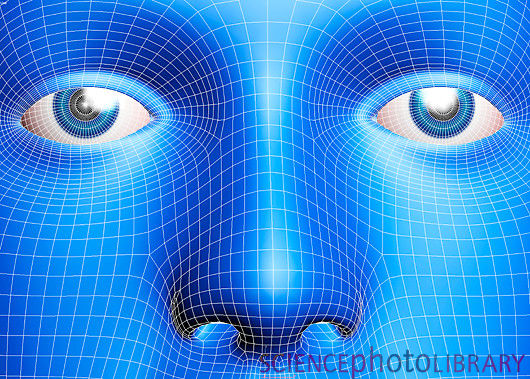 Face recognition software of the kind incorporated into biometric identification tools, photo-gallery applications and social media websites can be very useful but the technology raises privacy concerns, given the seeming ease with which faces in photos can now be tied to an individual. Researchers in Russia and Poland hope to take face recognition technology an important step forward with the even more powerful software they have developed.
Writing in the International Journal of Biometrics, Georgy Kukharev of Saint Petersburg Electrotechnical University in Russia, and colleagues Paweł Forczmański and Andrzej Tujaka of the West Pomeranian University of Technology, Szczecin, Poland, explain how Read more…
In Secret, Senate Panel May Re-Up Vast Surveillance Dragnet
 Most of Congress is busy debating whether to raise the debt ceiling. But starting Thursday, Danger Room is hearing, a group of Senators meeting behind closed doors may consider renewing a controversial law permitting widespread government surveillance of Americans’ communications.
That law would be the FISA Amendments Act of 2008, which gave the cover of law to President George W. Bush’s warrantless surveillance program. Beloved by the Obama administration, the law is set to expire — not this year, but in 2012.
But the Senate Select Committee on Intelligence may not be so keen on waiting, Congressional sources say. When the committee meets to finalize the fiscal 2012 intelligence authorization bill to the full Senate floor — the bill that approves the activities of the 16 U.S. spy agencies – some senators will push to include a measure re-authorizing the surveillance act.
The so-called “mark-up” process begins on Read more…
Police Use of iPhone Iris Scanners Raise Privacy Concerns
 The so-called “biometric” technology, which seems to take a page from TV shows like “MI-5″ or “CSI,” could improve speed and accuracy in some routine police work in the field. Dozens of police departments nationwide are gearing up to use a tech company’s already controversial iris- and facial-scanning device that slides over an iPhone and helps identify a person or track criminal suspects.
But its use has set off alarms with some people who are more concerned about possible civil liberties and privacy issues. Constitutional rights advocates are concerned, in part because the device can accurately scan an individual’s face from up to four feet away, potentially without a person’s being aware of it.
“This is (the technology) stepping out of the cruiser and riding on the officer’s belt, along with his flashlight, his handcuffs, his sidearm or the other myriad tools,” said John Birtwell, spokesman for the Plymouth County Sheriff’s Department in southeastern Massachusetts, one of the first departments to use the devices.
“What we don’t want is for them to become a general surveillance tool, where the Read more…
Government Increases Hysteria Over Cyber Attacks in Push to Crack Down on Internet
 Last week Republican senator John McCain called for the government to establish a special panel to come up with legislation to address supposed cybersecurity threats facing the United States.
“The only way to move comprehensive cyber security legislation forward swiftly is to have committee chairmen and ranking members step away from preserving their own committees’ jurisdiction … (and) develop a bill that serves the national security needs of all Americans,” McCain said.
As if on cue, the Pentagon announced two previously unpublicized attacks following McCain’s call for a bipartisan action.
On Thursday, out-going deputy secretary of defense Bill Lynn said a foreign intelligence service had stolen 24,000 files on a sensitive weapons system from a defense contractor’s network.
Lynn said the Defense Industrial Base Cyber Pilot was established to work with the private sector in the battle against cyber foes.
“Our success in cyberspace depends on a robust public Read more…
Biometric Identity: The Great Divider
 The use of Biometrics in national identity cards has spliced the globe into two with people in developed nations looking at it as infringement of their privacy and civil liberties, reports Team Inclusion
A debate has been raging in India since Manmohan Singh government broadened the sphere of MNIC (Multi-purpose National Identity Cards) to National Population Register (NPR) appending into it a biometrics-based Unique Identification (UID) number. The opponents of the scheme have accused the central government of snooping into privacy of residents. They fear that the project would prove to be the death of right to privacy implicit in Article 21, which guarantees protection of life and personal liberty. They apprehend that the governmental Read more…
EU cloud data can be secretly accessed by US authorities
US-owned companies bound by Patriot Act, says Microsoft
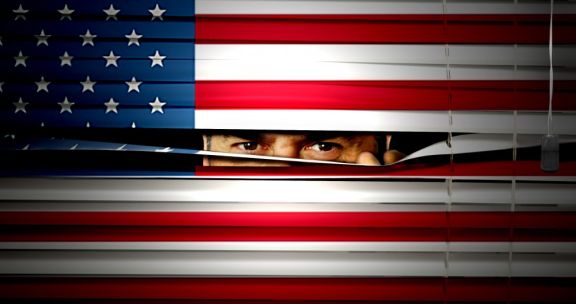 Personal information belonging to EU users of US-owned cloud-based services could be shared with US law enforcers without the user being informed, Microsoft has said.
The software giant said it could not guarantee that it would not have to hand over EU customers’ data on a new cloud service it has developed whilst keeping details of the data transfer secret.
Cloud services allow internet users to store data online instead of locally.
EU data protection laws state that organizations must tell people when they are asked to disclose their personal information.
These EU provisions might conflict with obligations US-based firms, such as Microsoft, face under US law.
The USA Patriot Act gives law enforcement authorities the right to access Read more…
Protect Your Computer and Phone from Illegal Police Searches
EFF Releases ‘Know Your Digital Rights’ Guide to Your Constitutional Liberties
San Francisco – Your computer, your phone, and your other digital devices hold vast amounts of personal information about you and your family. Can police officers enter your home to search your laptop? Do you have to give law enforcement officials your encryption keys or passwords? If you are pulled over when driving, can the officer search your cell phone?
The Electronic Frontier Foundation (EFF) has answers to these questions in our new “Know Your Digital Rights” guide, including easy-to-understand tips on interacting with police officers and other law enforcement officials.
“With smart phones, tablet computers, and laptops, we carry around with us an unprecedented amount of sensitive personal information,” said EFF Staff Attorney Hanni Fakhoury. “That smart phone in your pocket right now could contain email from your doctor or your kid’s teacher, not to mention detailed contact information for all of your friends and family members. Your laptop probably holds even more data — your Internet browsing history, family photo albums, and maybe even things like an electronic copy of your taxes or your employment agreement. This is Read more…
Charges dismissed against woman arrested while videotaping traffic stop from her front yard

The case against a 28-year-old woman charged with obstructing governmental administration after refusing a police officer’s order to leave her front yard while she was videotaping a traffic stop has been dismissed.
WHEC reported a judge dismissed the case against Emily Good of Rochester, New York on Monday because there was insufficient evidence of a crime.
Good was arrested while she filmed police officers conducting a traffic stop in front of her home. Good’s recording shows the officers saying that they feel threatened by her standing behind them because she seemed “very anti-police.”
The arrest added to the already heated debate over videotaping police officers.
In a joint statement, Mayor Tom Richards, City Council President Lovely Warren and Rochester Police Chief James Sheppard said they agreed that the case should be dismissed.
“We believe that the incident that led to Ms. Good’s arrest and the subsequent ticketing for parking violations of vehicles belonging to members of an organization associated with Ms. Good raise issues with Read more…


![[Most Recent Quotes from www.kitco.com]](https://i0.wp.com/www.kitconet.com/charts/metals/gold/t24_au_en_usoz_2.gif)
![[Most Recent Quotes from www.kitco.com]](https://i0.wp.com/www.kitconet.com/charts/metals/silver/t24_ag_en_usoz_2.gif)

 crisisboom
 CRISISBOOM
You must be logged in to post a comment.