Archive

Posts Tagged ‘Syria’

Global Press Freedom at Lowest Level in More Than Decade

May 3, 2011 Comments off

voanews

Photo: Reuters
Journalists and activists participate in a rally calling for press freedom in central Ankara, Turkey, March 19, 2011 (file photo)

Freedom House, a U.S.-based group that monitors human rights around the world says the number of people with access to free and independent media has declined to its lowest level in more than a decade.  In its newly released annual survey, the group says several key countries saw significant declines last year and that only one-in-six people live in countries with a press designated as free.

In this year’s annual index of global media freedom of 196 countries and territories, Freedom House says it rated 68 as “free” and the remaining two thirds as “partly free” or “not free.”

Freedom House Senior Editor Karin Karlekar says this is roughly an even breakdown, but a closer look reveals a different picture. “If you look at the population statistics, they are much bleaker, only Read more…

U.S. Worried by Potential Chinese CW Tech Sales to Iran

April 22, 2011 Comments off

globalsecuritynewswire
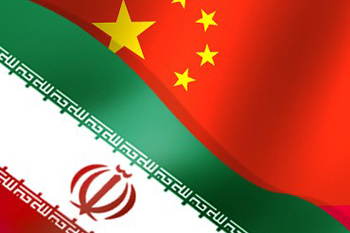
A leaked diplomatic cable indicates that the U.S. State Department believed in 2009 that a Chinese firm was providing Iran with equipment that could be used in producing chemical weapons agents, Haaretz reported on Thursday (see GSN, Feb. 3).

“We have new information indicating that Zibo Chemet transferred technology for the production of glass-lined reactor equipment to Iranian customers, significantly enhancing Iran’s ability to produce indigenously chemical equipment suitable for a chemical warfare program,” Secretary of State Hillary Clinton stated in a message to the U.S. Embassy in Beijing.

The Obama administration’s top diplomat requested that the embassy inform the Chinese government of the situation and press Beijing to put an end to the exports, according to the July 24, 2009, dispatch obtained by the transparency group WikiLeaks.

Zibo Chemet is suspected of providing sensitive technology to Iran, North Korea and Syria, and was sanctioned by Washington in 2007, according to the cable. Beijing subsequently took unspecified “limited punitive action” against the firm, it states.

Nonetheless, Zibo Chemet “recently transferred Australia Group-controlled technology to manufacture glass-lined chemical reactor vessels to the Iranian entity Shimi Azarjaam. This glass-lining plant is located in Shokoohieh Industrial Park, Qum,” Clinton stated.

Such reactor vessels are produced to withstand chemicals they hold, which can include precursors for nerve agents, according to Haaretz.

China is not a member of the Australia Group, a multinational organization that seeks to prevent exports of materials intended for use in biological or chemical weapons programs.

The United States and other nations have accused Tehran of developing chemical-warfare capabilities. Iran, whose troops and citizens were subjected to chemical weapons attacks during the nation’s 1980s war with Iraq, denies operating such a program (Yossi Melman, Haaretz, April 21).

Disease hits wheat crops in Africa, Mideast

April 22, 2011 Comments off

AFP

PARIS — Aggressive new strains of wheat rust disease have decimated up to 40 percent of harvests in some regions of north Africa, the Middle East, Central Asia and the Caucasus, researchers said Wednesday.

The countries most affected are Syria and Uzbekistan, with Egypt, Yemen, Turkey, Iran, Morocco, Ethiopia and Kenya also hit hard, they reported at a scientific conference in Aleppo, Syria.

“These epidemics increase the price of food and pose a real threat to rural livelihoods and regional food security,” Mahmoud Solh, director general of the International Center for Agricultural Research in the Dry Areas (ICARDA), said in a statement.

In some nations hit by the blight, wheat accounts for 50 percent of calorie intake, and 20 percent of protein nutrition.

“Wheat is the cornerstone for food security in many of these countries,” said Hans Braun, director of the International Maize and Wheat Improvement Center (CIMMYT), near Mexico City, singling out Syria.

“Looking at the political and social situation, what they don’t need is a food crisis,” he told AFP by phone.

Wheat rust is a fungal disease that attacks the stems, grains and especially the Read more…

Authorities gun down protesters in Syria and Yemen

April 18, 2011 Comments off

http://www.dw-world

Thousands of mourners at a funeral in SyriaThousands of Syrians called for the ouster of President Assad, while Yemenis demanded their leader step down. In both countries, protesters were shot by security forces.

Thousands of Syrian mourners chanted slogans calling for the overthrow of President Bashar al-Assad at the funeral of a soldier killed during a recent clash between demonstrators and government troops.

Eyewitnesses and activists said at least two people were shot dead during an anti-government protest in central Syria. The actions could not be independently confirmed, but witnesses said gunmen wearing black clothes opened fire on hundreds of people gathered in the town of Talbiseh, north of Read more…

Pastor Lindsey Williams: Nwo to Target ‘Yemen’ Next!

April 15, 2011 Comments off

Lindsey Williams announced on the Alex Jones Show that the New World Order will be targeting the fall of Yemen next.  Saudi Arabia will be last to fall in the Middle East thus causing oil prices to escalate from $150 to $200 per barrel.  He also touches on the current devaluation of the US Dollar and the current gold and silver explosion in commodities.  If you are able to… listen to this interview and research it for yourself.

Read more…

Syria bars medical access for protesters: HRW

April 12, 2011 Comments off

reuters.com

(Reuters) – Syrian security forces prevented wounded protesters reaching hospitals and stopped medical teams from treating them in two towns during last Friday’s demonstrations, Human Rights Watch said on Tuesday.

Pro-democracy protests against President Bashar al-Assad’s 11-year rule have been shaking the country, known for its heavy-handed security apparatus, for more than three weeks.

Protests after mass Friday prayers have generally been the largest because emergency law, in force since the Baath Party took power in 1963, bans any gatherings and demonstrations not sponsored by the state.

Human Rights Watch (HRW) said 27 people were killed in the southern city of Deraa and one other in the Damascus suburb of Douma on Friday.

“To deprive wounded people of critical and perhaps life-saving medical treatment is both inhumane and illegal,” said Sarah Leah Witson, HRW’s Middle East director.

“Syria’s leaders talk about political reform, but they meet their people’s legitimate demands for reform with bullets.”

Based on witness accounts, HRW said security forces set up a roadblock near a bridge in Deraa to prevent protesters crossing to the other part of town.

One witness said about 50 soldiers were in front, surrounded by several thousand uniformed and civilian-clothed members of security services as well as snipers.

When protesters ignored the army’s warnings to stop, security forces fired with Kalashnikovs and snipers opened fire at the same time. Read more…

Iraq Grapples With Water Shortages, Pollution

April 12, 2011 Comments off

www.rferl.org

“And the sixth angel poured out his vial upon the great river Euphrates; and the water thereof was dried up, that the way of the kings of the east might be prepared.” Revelation 16:12

The low level of water in the Euphrates river is cause for concern.


United Nations officials say an inadequate supply of water and pollution in Iraq have led to severe health problems, RFE/RL’s Radio Free Iraq (RFI) reports. 

Salam Abdel Munim, the spokesman for UNICEF in Iraq, told RFI on March 22 that as a consequence of the water shortage “some 500,000 Iraqi children access their water from a river or stream, and another 500,000 access their water from open wells.” Read more…

Leading Israelis push for two-state solution with new peace initiative

April 6, 2011 Comments off

guardian

Gaza funeral

A father weeps at the funeral of his 21-year-old son, killed on Tuesday by Israeli fire in northern Gaza. Photograph: Mohammed Abed/AFP/Getty Images

A group of prominent Israelis, including heads of the army and security services, hope to revive the peace initiative by announcing details of possible treaties with the Palestinians, Syria and Lebanon.

The Israeli Peace Initiative, a two-page document, states that Israel will withdraw from the land it occupied in 1967 in both the West Bank and the Golan Heights, and pay compensation to refugees. The document has been given to Binyamin Netanyahu, the prime minister, who has said he will read it with interest.

The authors of the document, which will be launched at a press conference in Tel Aviv on Wednesday, say that it is partly inspired by the revolutions that have taken place in the Middle East. It presents an opportunity for Israelis to participate in the “winds of change” blowing through the Middle East, they say.

“We looked around at what was happening in neighbouring countries and we said to ourselves, ‘It is about time that the Israeli public Read more…

Syrian-bound Iranian plane forced to land in Turkey

March 22, 2011 Comments off

(AFP)

DIYARBAKIR, Turkey — An Iranian cargo plane en route to Syria has been forced to land in Turkey’s southeastern Diyarbakir airport for an inspection, security forces said on Sunday.

The plane, a civilian Ilyushin, landed on Saturday night on the orders of the Turkish authorities. Military fighter planes were on standby in case the plane refused to comply.

An inspection of the plane is on-going to check whether the aircraft has any illicit or military material on board, security sources added.

Turkish authorities forced another Syrian-bound Iranian plane to land in Diyarbakir on Wednesday last week.

After a search lasting several hours, the plane was found to be Read more…

Middle East Unrest Could Harm WMD-Free Zone Talks

March 9, 2011 Comments off

globalsecuritynewswire

Protesters chant slogans on Saturday during a demonstration outside an Egyptian state security building in the outskirts of Cairo. Recent political instability throughout the Middle East could complicate efforts to establish a regional weapons of mass destruction-free zone, current and former officials said (Wissam Nassar/Getty Images).

The unrest and revolutions sweeping through the Middle East have raised doubts over the potential for regional nations to hold previously planned talks focused on forming a weapons of mass destruction-free zone, Arms Control Today reported in its March issue (see GSN, March 1).

At the 2010 Nuclear Nonproliferation Treaty review conference in New York, member nations agreed to hold a 2012 meeting on “the establishment of a Middle East zone free of nuclear weapons and all other weapons of mass destruction.”

“We are absolutely committed” to the WMD-free zone meeting, White House WMD point man Gary Samore said in an interview last month. “But there’s a lot of uncertainty because of the unrest in the Middle East.”

In the last two months, longstanding regimes in Tunisia and Egypt have fallen, and protests in Libya have escalated into full-scale fighting between militants and forces loyal to Col. Muammar Qadhafi. Protests have also erupted in Bahrain, Jordan, Oman and Read more…