Archive
China and US gang up on N Korea
 THE strategic rivals China and the US have been secretly sharing intelligence about North Korea.
Leaked records of highly sensitive US-China defence consultations reveal that despite Chinese complaints about US arms sales to Taiwan, and American concerns about a growing Chinese espionage threat, the CIA, the Office of the Director of National Intelligence and the US Defence Department have held secret talks on North Korea with Chinese military intelligence.
According to US diplomatic cables obtained by WikiLeaks and provided exclusively to the Herald, US-Chinese defence talks held in Beijing in July 2009 included long exchanges about North Korea between the US Under Secretary of Defence for Policy, Michele Flournoy, and top Chinese generals.
Speech By Comrade Chi Haotian Vice-Chairman Of China’s Military Commission
Revelation 9:13-16 comes to mind when I heard this
The following is the actual text of a speech delivered in December, 2005 by Comrade Chi Haotian the Vice-Chairman of China’s Military Commission to top officers and generals. Keep in mind that China has for many years advocated deceitful and covert warfare against its enemies. This is their Modus Operandi.

While 99% of Prudent Places USA uses data from scientific and government sources, we would be remiss not to mention one other piece of information. Numerous visionaries and "prophets" have seen troops invading America from China and Russia. Dumitru Duduman and Henry Gruver also predicted attacks along the East and Southeast coasts of America. Since September 11, 2001, nearly anything seems possible. Didn't we mistakenly think prior to 9-11 we were invincible? Impenetrable? Now we have to consider the unthinkable. The map below shows the "seen" routes of invasion.
Following Is Text From Speech:
“Comrades, I’m very excited today, because the large-scale online survey sina.com that was done for us showed that our next generation is quite promising and our Party’s cause will be carried on. In answering the question, “Will you shoot at women, children and prisoners of war,” more than 80 per cent of the respondents answered in the affirmative, exceeding by far our expectations. Today I’d like to focus on why we asked sina.com to conduct this online survey among our people. My speech today is a sequel to my speech last time, during which I started with a discussion of the issue of the three islands [Taiwan, Diaoyu Islands and the Spratley Islands — Ott] and mentioned that 20 years of the idyllic theme of ‘peace and development’ had come to an end, and concluded that modernization under the saber is the only option for China’s next phase. I also mentioned we have a vital stake overseas. The central issue of this survey appears to be whether one should shoot at women, children and prisoners of war, but its real significance goes far beyond that. Ostensibly, our intention is mainly to figure out what the Chinese people’s attitude towards war is: If these future soldiers do not hesitate to kill even noncombatants, they’ll naturally be doubly ready and ruthless in killing combatants. Therefore, the responses to the survey questions may reflect the general attitude people have towards war..We wanted to know: If China’s global development will necessitate massive deaths in enemy countries; will our people endorse that scenario? Will they be for or against it? The fact is, our ‘development’ refers to the great revitalization of the Chinese nation, which, of course, is not limited to the land we have now but also includes the whole world. As everybody Read more…
Mongolia Might Store Foreign Spent Nuclear Fuel, Senior U.S. Official Says
WASHINGTON — The Obama administration has held informal talks with Mongolia about the possibility that the Central Asian nation might host an international repository for its region’s spent nuclear fuel, a senior U.S. diplomat said yesterday (see GSN, March 9, 2010).

(Mar. 30) - A herder last year guides cattle through a frozen area in Mongolia's Tuv province. The United States and Mongolia have informally discussed the possibility of the Asian nation hosting a spent nuclear-fuel repository for the region, a high-level U.S. diplomat said yesterday (Paula Bronstein/Getty Images).
U.S. Energy Department officials and their counterparts in Ulaanbaatar, the Mongolian capital, are in the early stages of discussion and there has been no determination yet about whether to proceed with the idea, according to Richard Stratford, who directs the State Department’s Nuclear Energy, Safety and Security Office.
Speaking at the biennial Carnegie International Nuclear Policy Conference, Stratford said a spent-fuel depot in the region could be of particular value to Taiwan and South Korea, which use nuclear power but have few options when it comes to disposing of atomic waste.
“If Mongolia were to do that, I think that would be a very positive step forward in terms of internationalizing spent-fuel storage,” he said during a panel discussion on nuclear cooperation agreements. “My Taiwan and South Korean colleagues have a really difficult time with spent fuel. And if there really was an international storage depot, which I have always supported, then that would help to solve their problem.”
Stratford is Washington’s lead envoy for nuclear trade pacts, which are sometimes called “123 agreements” after the section of the Atomic Energy Act that governs them.
The United States provides fresh uranium rods to selected trade partners in Asia, including South Korea and Read more…
E. Asia, S. America under tsunami warning after Japan quake
03/11/2011 10:45
Biggest earthquake to hit Japan in 140 years triggers 10-meter tsunami, kills at least 6 people; 4 million homes without power; hotel collapses in city of Sendai, people feared buried in rubble; UN rescue teams on standby.
SINGAPORE – A tsunami warning has been issued for areas across East Asia and the western coast of South America following a huge earthquake that hit Japan on Friday, the Pacific Tsunami Warning Center said.
Among the countries for which a tsunami warning is in effect are: Read more…
Cables show China used debt holdings to press US
 |
| © AFP/File |
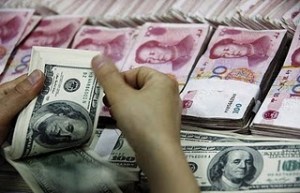
WASHINGTON (AFP) – Leaked diplomatic cables vividly show China’s willingness to translate its massive holdings of US debt into political influence on issues ranging from Taiwan’s sovereignty to Washington’s financial policy.
China’s clout — gleaned from its nearly $900 billion stack of US debt — has been widely commented on in the United States, but sensitive cables show just how much influence Beijing has and how keen Washington is to address its rival’s concerns.
An October 2008 cable, released by WikiLeaks, showed a senior Chinese official linking questions about much-needed Chinese investment to sensitive Read more…
WikiLeaks: China Hiding Military Build Up
 AUSTRALIA’S intelligence agencies believe China is hiding the extent of a huge military build-up that goes beyond national defence and poses a serious threat to regional stability.
A strategic assessment by the agencies found China’s military spending for 2006 was $90 billion – double the $45 billion announced publicly by Beijing.
Australia’s peak intelligence agency, the Office of National Assessments, as well as the Defence Intelligence Organisation and the Defence and Foreign Affairs departments concluded that China was building a military capability well beyond its priorities of self-defence and preventing Taiwan’s independence.
”China’s longer-term agenda is to develop ‘comprehensive national power’, including a strong military, that is in keeping with its view of itself as a great power,” says a copy of the secret assessment provided by Foreign Affairs officials to the US embassy in Canberra.
”We agree that the trend of China’s military modernisation is beyond the scope of what would be required for a conflict over Taiwan. Arguably China already poses a credible threat to modern militaries operating in the region and will present an even more formidable challenge as its modernisation continues.”
Details of the 2006 intelligence assessment are contained in a US embassy cable obtained by WikiLeaks and provided exclusively to the Herald.
The Australian document goes on to warn that the pace of China’s military build-up and ”the opacity of Beijing’s intentions and programs” was ”already altering the balance of power in Asia and could be a destabilising influence”.
”There is the potential for possible misconceptions which could lead to a serious miscalculation or crisis,” it says.
The Australian intelligence agencies suggest China could overestimate its own capabilities with a significant risk of strategic miscalculation and instability.
”The nature of the [People’s Liberation Army] and the regime means that transparency will continue to be viewed as a potential vulnerability. This contributes to the likelihood of strategic misperceptions,” the document says.
”The rapid improvements in PLA capabilities, coupled with a lack of operational experience and faith in asymmetric strategies, could lead to China overestimating its military capability. These factors, coupled with rising nationalism, heightened expectations of China’s status, China’s historical predilection for strategic deception, difficulties with Japan, and the Taiwan issue mean that miscalculations and minor events could quickly escalate.”
Although successive Australian governments have called on China to be more transparent about its military spending, ministers and diplomats have studiously avoided public reference to the scale of the discrepancy between Beijing’s published figures and the likely reality behind the scenes.
The Australian estimate of a 2006 military budget of $US70 billion ($90 billion at the September 2006 exchange rate), has not been revealed previously – though it is consistent with academic and published US government estimates of China’s growing military spending.
The secret Australian assessment is also much sharper than the language later employed in the Rudd government’s 2009 Defence white paper, which said China was on the way to becoming Asia’s strongest military power ”by a considerable margin” and warned that the pace and scope of its growth could give its neighbours cause for concern if not properly explained.
The Rudd government publicly played down reports of a hostile Chinese reaction to the white paper when it was published, but secretly briefed the US that Beijing had threatened that Australia would ”suffer the consequences” if references to China’s growing military capabilities were not watered down.
The Defence Chief, Air Chief Marshal Angus Houston, and the then defence minister, Joel Fitzgibbon, insisted that China had no problem with the white paper. But other leaked US embassy cables report that the then deputy secretary for Defence, Mike Pezzullo, briefed US diplomats that he had been ”dressed down” by Chinese officials who had a ”look of cold fury” at the references to China in the white paper.
In the September 2006 briefing of the US embassy, Foreign Affairs officials advised that Australia hoped to use its defence relationship with China to promote increased transparency in that country’s military development plans.
”We remain focused on deepening the Australia-China defence relationship in areas such as peacekeeping, counter-terrorism and junior leadership exchanges, while remaining cautious to avoid practical co-operation that might help the PLA to fill capability gaps,” the Australian paper presented to the embassy concluded.
The Royal Australian Navy and the Chinese navy held their first joint exercise involving firing of live ammunition in September last year.
Last month the Defence Department secretary, Ian Watt, and Air Chief Marshal Houston attended the 13th annual Australia-China Defence Strategic Dialogue, which was hosted in China by General Chen Bingde, the chief of the PLA General Staff.
Dr Watt said that the dialogue was ”an integral component of Australia’s defence engagement with China, and provided the opportunity to have frank and open conversations and to exchange views on areas of common interest”.
Dr Watt and Air Chief Marshal Houston also met the vice-president and deputy chairman of China’s Central Military Commission, Xi Jinping.
Air Chief Marshal Houston said: ”We committed to continuing to develop our military relationship and practical cooperation together.”


![[Most Recent Quotes from www.kitco.com]](https://i0.wp.com/www.kitconet.com/charts/metals/gold/t24_au_en_usoz_2.gif)
![[Most Recent Quotes from www.kitco.com]](https://i0.wp.com/www.kitconet.com/charts/metals/silver/t24_ag_en_usoz_2.gif)

 crisisboom
 CRISISBOOM
You must be logged in to post a comment.