Archive
Report warns flu pandemic could kill 200,000 in Britain
 50 percent of the British population could develop symptoms of the flu pandemic and may cost the British economy $42 million (GBP 28 billion).
A report released Tuesday identifies the outbreak of a new influenza pandemic as one of the greatest threats facing Britain. The U.K. Influenza Pandemic Preparedness Strategy 2011 estimates the number of potential deaths because of a new flu pandemic could be as high as 200,000.

Aside from the anticipated deaths, the report by the Department of Health said 50 percent of the British population could develop symptoms of the flu pandemic and may cost the British economy Read more…
Secret Iran Gold Holdings Leaked: Tehran Holds Same Amount Of Gold As United Kingdom, And Is Buying More
 While it will not come as a major surprise to most, according to senior BOE individuals and Wikileaks, Iran, as well as Qatar and Jordan have been actively purchasing gold well over the amount reported to and by the IMF, in an accelerated attempt to diversify their holdings away from the US dollar. “Iran has bought large amounts of gold in the international market, according to a senior Bank of England official, in a sign of how growing political pressure has driven Tehran to reduce its exposure to the US dollar. Andrew Bailey, head of banking at the Bank of England, told an American official that the central bank had observed “significant moves by Iran to purchase gold”, according to a US diplomatic cable obtained by WikiLeaks and seen by the Financial Times.” The reason for Tehran’s scramble into gold: “an attempt by Iran to protect its reserves from risk of seizure”. The misrepresentation of Iran’s holdings could be so vast that Iran could possibly be one of the largest holders of goldin the world. “Market observers believe Tehran has been one of the biggest buyers of bullion over the past decade after China, Russia and India, and is among the Read more…
At least 110 Tomahawk missiles fired at Libya:US
Editor’s Note: Each Tomahawk missile costs $569,000. So $62,590,000 has been spent to kill people without the consent of Congress.
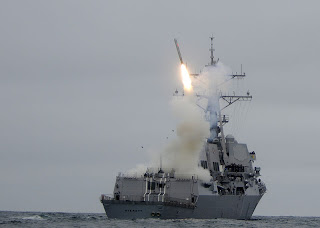 |
| Navy Ship launching Tomahawk missile/Wiki Common |
WASHINGTON (AFP) – US and British forces have fired at least 110 Tomahawk cruise missiles into Libya against Moamer Kadhafi’s air defense sites, a top US military officer said Saturday.
Vice Admiral William Gortney told reporters that “earlier this afternoon over 110 Tomahawk cruise missiles fired from both US and British ships and submarines struck more than 20 integrated air defense systems and other air defense facilities ashore.”
The first missile struck at 1900 GMT following air strikes carried out earlier by French warplanes, said Gortney, director of the US joint staff.
“It’s a first phase of a multi-phase operation,” he said.
One British submarine joined with other US warships in the missile attack, he added.
“Because it is night over there, it will be some time before we have a complete picture of the success of these strikes,” the admiral said
Recent droughts and floods have contributed to increases in food prices
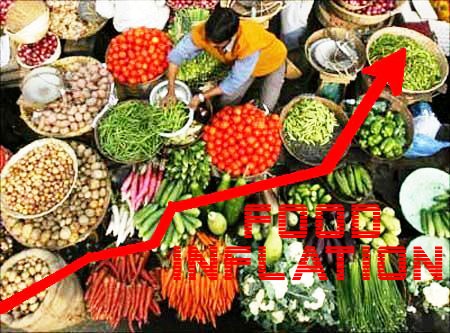 These are pushing millions more people into poverty and hunger, and are contributing to political instability and civil unrest. Climate change is predicted to increase these threats to food security and stability. Responding to this, the world’s largest agriculture research consortium today announced the creation of a new Commission on Sustainable Agriculture and Climate Change.
Chaired by the United Kingdom’s Chief Scientific Adviser, Professor Sir John Beddington, the Commission will in the next ten months seek to build international consensus on a clear set of policy actions to help global agriculture adapt to climate change, achieve food security and reduce poverty and greenhouse gas emissions.
There is a rich body of scientific evidence for sustainable agriculture approaches that can increase production of food, fiber and fuel, help decrease poverty and benefit the environment, but agreement is needed on how best to put these approaches into action at scale. Evidence also shows Read more…
Middle East Unrest Could Harm WMD-Free Zone Talks

Protesters chant slogans on Saturday during a demonstration outside an Egyptian state security building in the outskirts of Cairo. Recent political instability throughout the Middle East could complicate efforts to establish a regional weapons of mass destruction-free zone, current and former officials said (Wissam Nassar/Getty Images).
The unrest and revolutions sweeping through the Middle East have raised doubts over the potential for regional nations to hold previously planned talks focused on forming a weapons of mass destruction-free zone, Arms Control Today reported in its March issue (see GSN, March 1).
At the 2010 Nuclear Nonproliferation Treaty review conference in New York, member nations agreed to hold a 2012 meeting on “the establishment of a Middle East zone free of nuclear weapons and all other weapons of mass destruction.”
“We are absolutely committed” to the WMD-free zone meeting, White House WMD point man Gary Samore said in an interview last month. “But there’s a lot of uncertainty because of the unrest in the Middle East.”
In the last two months, longstanding regimes in Tunisia and Egypt have fallen, and protests in Libya have escalated into full-scale fighting between militants and forces loyal to Col. Muammar Qadhafi. Protests have also erupted in Bahrain, Jordan, Oman and Read more…
Need Versus Greed

NEW YORK – India’s great moral leader Mohandas Gandhi famously said that there is enough on Earth for everybody’s need, but not enough for everybody’s greed. Today, Gandhi’s insight is being put to the test as never before.
The world is hitting global limits in its use of resources. We are feeling the shocks each day in catastrophic floods, droughts, and storms – and in the resulting surge in prices in the marketplace. Our fate now depends on whether we cooperate or fall victim to self-defeating greed.
The limits to the global economy are new, resulting from the unprecedented size of the world’s population and the unprecedented spread of economic growth to nearly the entire world. There are now seven billion people on the planet, compared to just three billion a half-century ago. Today, average per capita income is $10,000, with the rich world averaging around $40,000 and the developing world around $4,000. That means that the world economy is now producing around $70 trillion in total annual output, compared to around $10 trillion in 1960.
China’s economy is growing at around 10% annually. India’s is growing at Read more…
Limited Nuclear War Could Deplete Ozone Layer, Increasing Radiation
By Chris Schneidmiller
 WASHINGTON — A nuclear conflict involving as few as 100 weapons could produce long-term damage to the ozone layer, enabling higher than “extreme” levels of ultraviolet radiation to reach the Earth’s surface, new research indicates (see GSN, March 16, 2010).
(Feb. 24) – A 1971 French nuclear test at Mururoa Atoll. The ozone layer could sustain lasting harm from a nuclear exchange involving as few as 100 weapons, allowing increased levels of ultraviolet radiation to reach the Earth’s surface, according to new research (Getty Images).
Increased levels of UV radiation from the sun could persist for years, possibly with a drastic impact on humans and the environment, even thousands of miles from the area of the nuclear conflict.
“A regional nuclear exchange of 100 15-kiloton weapons … would produce unprecedented low-ozone columns over populated areas in conjunction with the coldest surface temperatures experienced in the last 1,000 years, and would likely result in a global nuclear famine,” according to a presentation delivered on Friday at a major science conference in Washington.
Today, there are five recognized nuclear powers — China, France, Russia, the United Kingdom and the United States. India, Israel and Pakistan are all known or widely assumed to hold nuclear weapons, while North Korea has a Read more…
Russia, Iran to Ink Medical Isotope Export Deal
An agreement is being finalized for Russia to export medical isotopes to Iran, the Russian state-owned nuclear firm Rosatom announced yesterday (see GSN, Feb. 22).

Israeli President Shimon Peres delivers a speech in Madrid today. Peres said the passage of two Iranian navy ships through the Suez Canal to the Mediterranean Sea showcased the potential threat of a nuclear-armed Iran (Javier Soriano/Getty Images).
A spokesman for the organization did not elaborate on the timing of the anticipated signing, RIA Novosti reported. Tehran’s need for molybdenum 99 and iodine 131 was addressed in talks between Iranian officials and Rosatom head Sergei Kiriyenko (RIA Novosti, Feb. 22).
The deal would involve transfers of each isotope from Russia to Iran every week, Interfax reported.
Under a 2009 bid put forward by the International Atomic Energy Agency, Iran would have exchanged 1,200 kilograms of low-enriched uranium for material to fuel a medical isotope production reactor in Tehran. The Middle Eastern state ultimately rejected the plan worked out with France, Russia and the United States, which was aimed in part at deferring Iran’s ability to produce sufficient weapon material for a bomb long enough to more fully address U.S. and European concerns about Iranian enrichment activities. Tehran has insisted its atomic ambitions are strictly peaceful.
Iran since December has two rounds of talks with Germany and permanent U.N. Security Council member states Read more…
Britain’s coming crunch with Europe
 It did not take David Cameron long to realize that there were three parties in his coalition. A few months into government, the Prime Minister worked out that only half of the policies he was enacting came from the shared agenda drawn up when the Tories and LibDems got together. The other half comes from the EU. Or, more specifically, the Civil Service machine, which is busy implementing various EU Directives, often passed many years ago. Cameron is trying to put the brakes on this process.
As I say in my News of the World column, this has led to much frustration in Whitehall. And dismay: the Civil Service remembers how easily Labour waved through EU regulation and the piles of fat that Whitehall likes to pile on top of the EU regulation. Labour would claim that the EU rules were actually its idea, so as not to lose face. Only in government is it clear how far power has slipped; Cameron wants to claw it back.
Oliver Letwin has been tasked with stopping Whitehall from being a breeding ground for new regulations. Cameron jokingly refers to Letwin as a ‘contraceptive’, because it’s his job to stop these regulations being conceived – usually after a little European foreplay. It’s a huge task. The problem is that Read more…
South African Charged With Making Bioterrorism Threat
 A South African man was arrested this weekend on suspicion of threatening to attack the United Kingdom and the United States with foot and mouth disease, the Associated Press reported today (see GSN, June 30, 2010).
Brian Roach, the owner of a Johannesburg-area engineering company, was apprehended on Saturday and brought into court today. The 64-year-old man allegedly warned the British government through e-mail and written communication that he planned to release the biological agent in the United Kingdom and the United States if he was not paid $4 million.
“We have the expertise and resources to do this very effectively and will be able to devastate the industry in the U.K. which will cost billions to the economy,” Roach said in an e-mail message sent to the British government. “We will devastate your farms and then we will then take the problem to Read more…


![[Most Recent Quotes from www.kitco.com]](https://i0.wp.com/www.kitconet.com/charts/metals/gold/t24_au_en_usoz_2.gif)
![[Most Recent Quotes from www.kitco.com]](https://i0.wp.com/www.kitconet.com/charts/metals/silver/t24_ag_en_usoz_2.gif)

 crisisboom
 CRISISBOOM

You must be logged in to post a comment.