Archive
Middle East Meltdown Could Mean Oil at $300 a Barrel, Pump Prices of $9.57 a Gallon
moneymorning.com [Editor’s Note: U.S. oil prices yesterday (Tuesday) hit their highest levels since September 2008 as investors reacted to fears that Middle East tumult would spread from Libya to such key Organization of Petroleum Exporting Countries (OPEC) as Iran and Saudi Arabia. But never fear: Even if the Middle East melts down and oil prices soar, there are moves you can make to hedge away your risk. We have two suggestions for you here.] By Martin Hutchinson, Contributing Editor, Money Morning The unrest in the Middle East oil patch is roiling the global oil markets on an almost daily basis.  The events in Egypt, Libya, Saudi Arabia, Oman and other countries are also forcing us to ask that long-dreaded question: What happens if the countries throughout the Middle East region fall to radical governments? The answer is both stunning and surprising. In an absolute worst-case scenario – if the entire Middle East falls under radical control – we could be looking at $300-a-barrel oil and pump prices of $9.57 a gallon. Definitely a stunner. Here’s the surprise: Even such a worst-case outcome would Read more…
Lindsey Williams: MI6 Funded Muslim Brotherhood and Their “Day of Rage” Coming!
Mar 1, 2011 | Alex welcomes back to the show Lindsey Williams, the pastor with an inside track to the elite who correctly predicted a significant rise in global oil prices and the collapse of the american currency.
Dollar Declines to Lowest Since November on Wagers Fed Will Lag Behind ECB
 The dollar fell to its lowest level since November against the currencies of six U.S. trade partners on bets the European Central Bank will be more aggressive than the Federal Reserve about controlling inflation.
The euro rose against the dollar on speculation ECB President Jean-Claude Trichet may indicate this week a readiness to increase borrowing costs while Fed Chairman Ben S. Bernanke may signal economic stimulus will continue. Sweden’s krona climbed to a 30-month high after Riksbank Governor Stefan Ingves said interest rates may be raised at every meeting this year.
“The big driver for the euro has been short-term interest- rate differentials, which had moved against the dollar,” said Paresh Upadhyaya, head of Americas G-10 currency strategy at Bank of America Corp. in New York. “Since the beginning of the year it’s been pretty much a one-way trend.”
IntercontinentalExchange Inc.’s Dollar Index, which tracks the greenback against six currencies, decreased as much as 0.7 percent to 76.756, the lowest level since Nov. 9, before trading at 76.893 at 5 p.m. in New York, down 0.5 percent. The gauge, which is weighted 57.6 percent on euro movements, fell 1.1 percent in February. Read more…
IMF says weaker dollar would help global growth

AFP – The International Monetary Fund called for a weaker dollar to help the United States reduce its deficits with the rest of the world and rebalance the global economy, in a report released Wednesday.
In the report prepared for a Group of 20 finance chiefs meeting last week, the IMF said that its calculations showed the dollar remains “on the strong side” of medium-term fundamentals, while the euro and the Japanese yen were “broadly in line” and several Asian currencies, including China, were undervalued.
To address global imbalances, the G20 should allow the dollar to Read more…
Dollar on the Edge of the Abyss
By Toby Connor
The dollar is now poised on the edge of the abyss.
The current intermediate cycle has rolled over and is making lower lows and lower highs. The current daily cycle has formed a swing high and is in jeopardy of rolling over into a left translated cycle. If the dollar breaks below the November intermediate bottom of 75.63 it will be an incredibly bearish sign as not only will the current intermediate cycle have topped in only 4 weeks but the larger yearly cycle will also have topped in only 4 weeks.
If that happens there is little chance the dollar will be able to hold above the March`08 lows as the crash down into the three year cycle low begins in earnest.

Global systemic crisis / World geopolitical breakup – End of 2011: Fall of the “Petro-dollar wall”
– Public announcement GEAB N°52 (February 16, 2011) –

The Fed is Wrong About Commodity Prices
Author: David Weinstein
I imagine he has to say it, but Bernanke is wrong when he says US monetary policy has nothing to do with international commodity prices. At the height of the Egyptian crisis, which was partly driven by rising food prices, Bernanke couldn’t say, “Oh yea, US policy economic policy is part of the problem in Egypt.” This attitude, however, is both prevalent and respected, and it’s largely wrong.
First of all, commodities as a group are not commoditized – they are not all the same. For instance, the amount of gold in the world is largely fixed relative to annual gold production. Along with its historical position as a store a value, Gold’s consistent volume about ground is a primary reason for its currency-like quality; i.e. almost entirely driven by overall liquidity. Corn production, on the other hand can vary greatly from year to year given the amount of land devoted to it and the weather. Oil is somewhere in the middle because production can vary, but the worlds known reserves are relatively fixed. The resulting differences in price volatility have been studied ad nauseam and are most simply articulated by the so-called ‘cob-web model’ (see chart below).
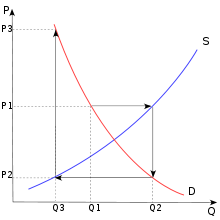
Very simply put: Read more…
CIA Spy Captured Giving Nuclear Bomb To Terrorists
While all eyes in the West are currently trained on the ongoing revolution taking place in Egypt, Russia’s Foreign Intelligence Service (SVR) is warning that the situation on the sub-continent has turned “grave” as it appears open warfare is about to break out between Pakistan and the United States.
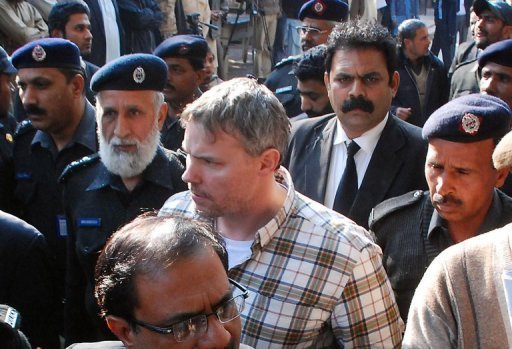
Fueling this crisis, that the SVR warns in their report has the potential to ignite a total Global War, was the apprehension by Pakistan of a 36-year-old American named Raymond Allen Davis (photo), whom the US claims is one of their diplomats, but Pakistani Intelligence Services (ISI) claim is a spy for the Central Intelligence Agency (CIA).
Davis was captured by Pakistani police after he shot and killed two men in the eastern city of Lahore on January 27th that the US claims were trying to rob him.
Pakistan, however, says that the two men Davis killed were ISI agents sent to follow him after it was discovered he had been making contact with al Qaeda after his cell phone was tracked to the Waziristan tribal area bordering Afghanistan where the Pakistani Taliban and a dozen other militant groups have forged a Read more…


![[Most Recent Quotes from www.kitco.com]](https://i0.wp.com/www.kitconet.com/charts/metals/gold/t24_au_en_usoz_2.gif)
![[Most Recent Quotes from www.kitco.com]](https://i0.wp.com/www.kitconet.com/charts/metals/silver/t24_ag_en_usoz_2.gif)

 crisisboom
 CRISISBOOM
You must be logged in to post a comment.