Archive

Posts Tagged ‘wars and rumors of wars’

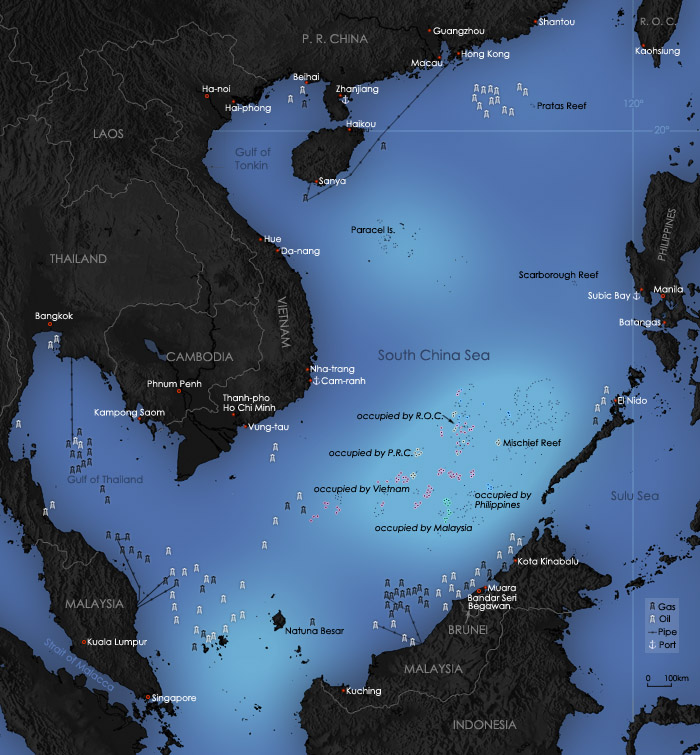
American geopolitical expert sees South China Sea conflict

October 3, 2011 Comments off

philstar

Wikipedia

In his September-October 2011 Foreign Policy article (“The South China Sea is the future of conflict”) Robert D. Kaplan clearly outlined the importance of the South China Sea, which will make it the convergent point of conflict between the US and China.

A national security and geopolitics expert, Kaplan is the author of many books on these topics and is a member of the Defense Policy Board of the US Defense Department. The US Army’s Special Forces, the United States Marines, and the United States Air Force have tapped Kaplan as their consultant. Per Wikipedia, he also “lectured at the military war colleges, the FBI, the National Security Agency, the Pentagon’s Joint Chiefs of Staff, major universities, the CIA, and business forums, and has appeared on PBS, NPR, C-Span, and Fox News. He is a senior fellow at the Foreign Policy Research Institute.

Kaplan explains: “Europe is a landscape; East Asia a Read more…

Poland warns of war ‘in 10 years’ as EU leaders scramble to contain panic

September 16, 2011 1 comment

euobserver

Germany, France and the European Commission are scrambling to contain panic and “quash rumours” about a eurozone break-up amid repeated off-piste messages from other senior EU politicians.

But even amid their desperate efforts, the finance minister of Poland, the country that currently represents the EU to the world as holder of the bloc’s rotating presidency, warned of war on the continent within 10 years if the eurozone collapses.

Speaking to MEPs in Strasbourg on Wednesday morning (14 September) he warned of the need to act rapidly to prevent grave danger for the EU. Making reference to a recent report entitled ‘Euro Break Up – The Consequences’ by Swiss financial giant UBS, he declared: “There is no doubt we are in danger. Europe is Read more…

Former head of Israel’s National Security Council (NSC): “Israel Prepares for War with Egypt in Sinai Desert”

August 22, 2011 2 comments

globalresearch

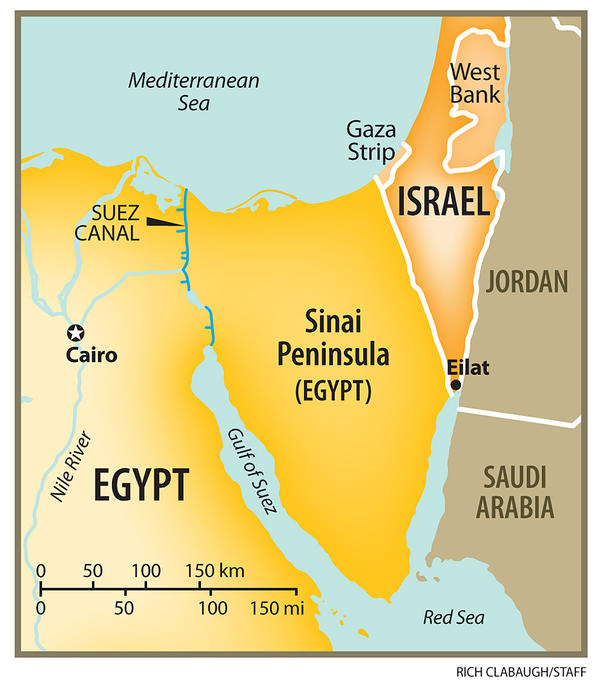
The former head of Israel’s National Security Council (NSC) urges military action by the regime in the Sinai Peninsula, following growing tensions with Egypt.

Uzi Dayan told Israel’s Channel 7 on Friday that Israeli military and security forces should prepare for a period different from the past in dealing with the new Egyptian government.

He claimed that the military effort would aim to target those that represent a threat to the Israeli regime.

“This is the time for the Israeli army to prevail its control inside Sinai,” Dayan went on to say.

Israeli troops are banned from entering the Sinai Peninsula under a 1979 peace treaty with Egypt.

Tensions have escalated between Cairo and the Tel Aviv regime after Israeli soldiers killed several Egyptian military and security personnel on Thursday.

Dayan also revealed that a meeting was held in the presence of Read more…

Climate factor involved in wars, crises

July 11, 2011 Comments off

presstv.com

Christian Parenti is a contributing editor at the Nation and a visiting scholar at the Center for Place, Culture and Politics, at the Cuny university of New York’s Grand Center.

He has reported extensively on Afghanistan, Iraq, and various parts of Africa, Asia, and Latin America. His work has been published among others at the Fortune, the Washington Post, the New York Times, and Mother Jones. He holds a PHD in Sociology from the London School of Economics.

Press TV has interviewed Parenti on his latest book, Tropic of Chaos: Climate Change and the New Geography of Violence.

The following is a rough transcription of the interview.

Press TV: Christian Parenti, thank you so much for joining us on the Autograph. While we often address the issue of climate change solely as an environmental challenge, in Read more…

Yemen slides into civil war

June 1, 2011 Comments off

csmonitor

Antigovernment protesters react as they block the road with rocks and burning tires during clashes with Yemeni security forces in Taiz, Yemen, on Wednesday, June 1.

After months of trying to tamp down unrest, Yemen‘s embattled President Ali Abdullah Saleh and his security forces have become embroiled in a conflict that meets all the classic definitions of a civil war.

He and his security forces are now fighting on three main fronts: In the capital of Sanaa, Saleh loyalists are engaged in a pitched battle with tribesmen under the direction of Sheikh Sadiq al-Ahmar, leader of the powerful Hashid tribal confederation; Islamist militants have taken control of the southern province of Abyan; and in the southern city of Taiz, Saleh’s Republican Guard violently dispersed protesters. Yemeni government forces have reportedly killed more than 50 people since Sunday.

Saleh has Read more…

North Korea’s new weapon: the hovercraft

May 31, 2011 Comments off

guardian

Marines Land In Kuwait

North Korea plans a fleet of 60 attack hovercraft

Think of the great machines of war, and the hovercraft is perhaps not the first that springs to mind. But Kim Jong-il has clearly done his homework on military history, because North Korea is in the process of building a naval hovercraft base 30 miles off the South Korean coast. The hangar-shaped buildings spotted across the international waters will house 60 “attack hovercraft”, to be used for “infiltration attacks and landing”.

While the first air-cushion vehicle was built in 1915, the modern hovercraft was the work of Sir Christopher Cockerell, who had the idea that boats could be made to float on a cushion of air, reducing water drag. He built several prototypes in the 1950s, but no branch of the military was interested. He eventually received funding and in 1958 produced the SR.N1, the world’s first passenger hovercraft. Military hovercraft went Read more…

China Seen Deploying New Ballistic Missile Unit Close to Taiwan

May 27, 2011 Comments off

globalsecuritynewswire

Here is another article of interest published in April.

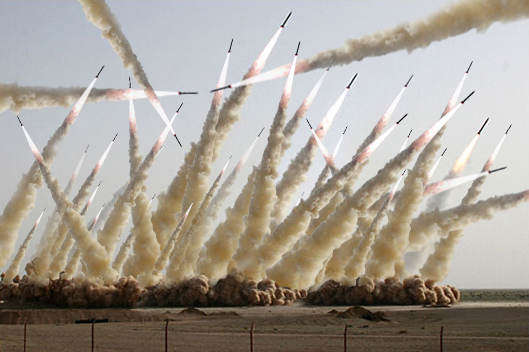
Taiwan’s intelligence head on Thursday asserted China had fielded an additional ballistic missile unit not far from the self-governing island, Agence France-Presse reported (see GSN, April 6).

“The unit, carrying the code number 96166 and based in Guangdong province [in southern China], is indeed a new unit, probably a new ballistic missile brigade,” National Security Bureau chief Tsai Teh-sheng said, without offering further specifics.

“Over the past few years, the People’s Liberation Army has kept increasing its deployment of ballistic missile units in both quantity and quality opposite Taiwan,” Tsai said in remarks passed along by lawmaker Lin Yu-fang.

Taiwanese analysts project that Beijing at present has in excess of 1,600 missiles targeting the island that it claims as Chinese territory. The majority of those weapons are thought to be fielded in Jiangxi and Fuijan provinces in the southeastern part of the country. Experts predict that as many as 1,800 missiles could be aimed at Taiwan in 2012, AFP reported.

China’s robust rail system has allowed it to rapidly transport missiles to coastal regions when required. Some missiles can even be fired from railway trains, according to Lin, who is also a military affairs professor.

China’s top military official last week seemingly denied that any missiles were aimed at Taiwan. Beijing, though, has said it could take military action should Taipei seek full autonomy (see GSN, May 19; Agence France-Presse/Yahoo!News, May 26).

WikiLeaks: tension in the Middle East and Asia has ‘direct potential’ to lead to nuclear war

February 3, 2011 1 comment

Tension in the Middle East and Asia has given rise to an escalating atomic arms and missiles race which has “the direct potential to lead to nuclear war,” leaked diplomatic documents disclose.

By Heidi BlakeRogue states are also increasing their efforts to secure chemical and biological weapons, and the means to deploy them, leaving billions in the world’s most densely populated area at risk of a devastating strike, the documents show.

States such as North Korea, Syria and Iran are developing long-range missiles capable of hitting targets outside the region, records of top-level security briefings obtained by WikiLeaks show.

Long-running hostilities between India and Pakistan – which both have nuclear weapons capabilities – are at the root of fears of a nuclear conflict in the region. A classified Pentagon study estimated in 2002 that a nuclear war between the two countries could result in 12 million deaths.

Secret records of a US security briefing at an international non-proliferation summit in 2008 stated that “a nuclear and missile arms race [in South Asia] has the Read more…