Archive

Archive for April, 2011

Libya’s rebels: NATO isn’t doing enough for us

April 6, 2011 Comments off

csmonitor

It’s just a matter of time before foreign ground troops arrive…

  • Libyan rebels prepare to tow a vehicle, belonging to pro-Qaddafi forces, that rebels claim were targeted by a NATO strike along the front line near Brega, Libya, on Tuesday, April 5. Libya's rebel forces are looking more effective on the front and even scrapping back some of the territory lost to Muammar Qaddafi's army, but the rag tag fighters are still a long way from being able to march to Tripoli. Altaf Qadri/AP

Libyan rebels retreating from their positions outside the oil town of Brega and facing heavy fighting elsewhere in the country have accused NATO forces of not providing enough air support and failing to protect civilians.

The complaint comes as international players involved in Libya increase their efforts to resolve the situation through diplomatic means. Many rebels say the coalition’s shift to negotiations has led to a decline in NATO’s military campaign, a move that rebels say is costing lives.

Gen. Abdul Fattah Younis, Libya’s rebel commander and Col. Muammar Qaddafi’s former interior minister, said NATO forces were “not doing anything.” He complained that an overly bureaucratic process has created a system that keeps NATO jets from responding to developing situations for hours. He also faulted NATO for limited actions in Misratah, the only large city in western Libya still under the control of antigovernment forces, which he said were at risk for “extermination.”

“If NATO should wait another week, there will be no more Misratah,” said General Younis in an article by BBC. “You will not find anyone.”

Younis’s sentiments run deep amid the rank and file of the Libyan rebels. After suffering their first major territorial loss to government forces in almost a week, many rebels say they felt let down by NATO, reports The Wall Street Journal. Rebels had held Read more…

US gov’t may raise radiation exposure levels in food, drink, soil

April 6, 2011 1 comment

digitaljournal

This is truly insane!!!


Washington – The Environmental Protection Agency (EPA) is considering approval of a plan designed to dramatically increase permissible radiation contamination levels in food, water and soil after radiation events, including spills and dirty bomb attacks.

The Office of Radiation and Indoor Air (ORIA), the radiation extension of the EPA, has prepared a revision to the 1992 “Protective Action Guides” (PAG) that governs radiation protection conclusions on short-term and long-term cleanup levels, Public Employees for Environmental Responsibility (PEER) reports.

Vigorously opposed by some agency experts, the plan is being discussed behind closed doors, notes PEER. “This critical debate is taking place entirely behind closed doors because this plan is ‘guidance’ and does not require public notice as a regulation would,” said PEER attorney Christine Erickson in a news release.

“We all deserve to know why some in the agency want to legitimize exposing the public to radiation at levels vastly higher than what EPA officially considers dangerous,” Erickson added.

Internal documents obtained by PEER under a Freedom of Information Act (FOIA) lawsuit last autumn show that, under the updated PAG, a single glass of water could give the equivalent of a lifetime’s permissible exposure. According to PEER, the

new limits would cause a cancer in as much as every fourth person exposed. Read more…

Gold & Silver – When To Sell? – Real Estate – When To Buy? – Mike Maloney

April 6, 2011 Comments off

Topics covered include the following:

  • when to sell your gold and silver
  • when to buy real estate
  • when to buy high dividend yielding stocks
  • what are some of the measurements GoldSilver uses to evaluate where we are in this great gold and silver bull market of the 21st century

Gold Climbs to Record for Second Day on Inflation; Silver at 31-Year Peak

April 6, 2011 Comments off

bloomberg

Gold gained to a record for a second day in New York and London as rising inflation spurred demand for an investment haven and the dollar slumped against the euro. Silver advanced to a 31-year high.

China raised interest rates yesterday for the fourth time since mid-October ahead of a report that may show consumer prices climbed last month at the fastest pace since 2008. The euro rallied to a more-than 14-month high versus the greenback before the European Central Bank meets tomorrow to decide on interest rates.

“The reality of accelerating inflation in China is indeed positive for gold,” UBS AG analyst Edel Tully said in a report. Some investors buy gold as a hedge against rising prices.

Gold for June delivery rose $6.90, or 0.5 percent, to $1,459.40 an ounce at 8 a.m. in New York after reaching a record $1,462.10 earlier today. Gold for immediate-delivery rose as much as 0.4 percent to an all-time high of $1,460.92 an ounce, and was up 0.2 percent at $1,458.78 in London.

Gold gained to $1,457 an ounce in the morning “fixing” in London, used by some mining companies to sell output, from $1,433.50 at Read more…

Ozone layer damaged by unusually harsh winter

April 6, 2011 1 comment

independent

An image of total ozone column profile around the North Pole on March 30, 2011, developed by the Finnish Meteorological Institute using satellite and ground-based data, is seen in this handout, April 5, 2011. Satellite measurement of total ozone from OMI (Ozone Monitoring Instrument) shows a region of low ozone (blue region) above the Arctic regions. As of late March the ozone-poor region is shifted away from the pole and covers Greenland and Scandinavia. — WMO via Reuters

The stratospheric ozone layer, which shields the Earth from the Sun’s harmful ultraviolet rays, has been damaged to its greatest-ever extent over the Arctic this winter.

The protective layer of gas, which can be destroyed by reactions with industrial chemicals, has suffered a loss of about 40 per cent from the start of winter until late March, exceeding the previous seasonal loss of about 30 per cent, according to the World Meteorological Organisation (WMO).

The phenomenon is annual in the Antarctic, where after its discovery in the 1980s it came to be known as the “ozone hole“. Although CFC levels are now dropping, they remain in the atmosphere for so long that they will still be causing ozone depletion for decades in certain conditions, particularly the intense cold of the stratosphere.

Arctic ozone conditions vary more and the temperatures are always warmer than over Antarctica, where the ozone hole forms high in the stratosphere near the South Pole each winter and spring. Because of changing weather and temperatures, some Arctic winters experience almost no ozone loss – but others with exceptionally cold stratospheric conditions can occasionally lead to substantial ozone depletion.

This is what has happened over the Arctic this winter; for while at ground level the Arctic region was unusually warm, temperatures 15-20km above the Earth’s surface plummeted. WMO officials say the latest losses, which are unprecedented, were detected in Read more…

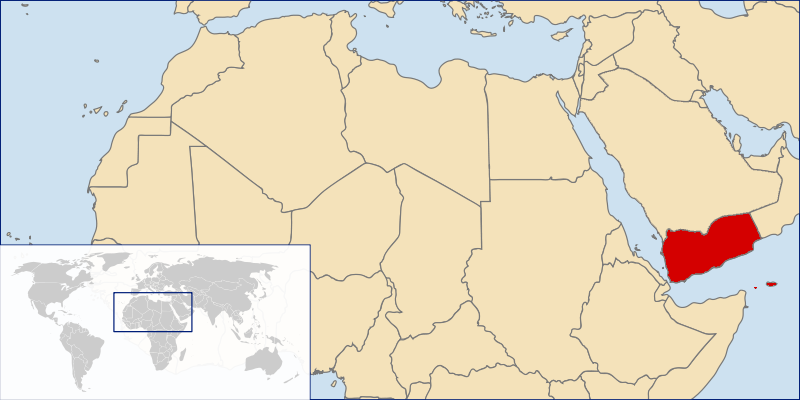
Moment of truth for Yemen

April 6, 2011 Comments off

reliefweb


“The shooting started from different buildings around the same time and continued for more than 30 minutes.”

An eyewitness describing to Amnesty International an attack on a protest camp in Sana’a on 18 March 2011 which reportedly left 52 people dead.

The first few months of 2011 have seen a rapid deterioration in the human rights situation in Yemen. The most shocking manifestation of this has been the brutal repression of protests calling for reform, and increasingly for President Ali Abdullah Saleh to stand down, fuelled by frustration at corruption, unemployment and repression of freedoms in the country and partly inspired by events in Tunisia and Egypt. Scores of protesters have been killed and hundreds injured after security forces have repeatedly used live ammunition to break up demonstrations.

The response of the authorities has been woefully inadequate. While investigations have been announced into some of the killings, they inspire little confidence. In some cases, almost no details have been made public about the nature and scope of the investigation. In others, information revealed about the nature of the investigating body raises serious questions about its ability to conduct thorough, independent and impartial investigations. As far as Amnesty International is aware, the judicial authorities have launched only one investigation – into the killings of protesters on 18 March. No judicial proceedings against members of the security forces are known to have been opened.

The track record of the authorities in investigating allegations of serious human rights violations by the security forces is very poor. Crucially, they have failed to adequately investigate reports of massive violations committed in the context of the unrest in the south Read more…

Manipulating morals: scientists target drugs that improve behaviour

April 6, 2011 2 comments

guardian

Prozac 

Existing drugs such as Prozac are already known to affect moral behaviour, but scientists predict that advances may allow more sophisticated manipulations. Photograph: Scott Camazine/Alamy

A pill to enhance moral behavior, a treatment for racist thoughts, a therapy to increase your empathy for people in other countries – these may sound like the stuff of science fiction but with medicine getting closer to altering our moral state, society should be preparing for the consequences, according to a book that reviews scientific developments in the field.

Drugs such as Prozac that alter a patient’s mental state already have an impact on moral behaviour, but scientists predict that future medical advances may allow much more sophisticated manipulations.

The field is in its infancy, but “it’s very far from being science fiction”, said Dr Guy Kahane, deputy director of the Oxford Centre for Neuroethics and a Wellcome Trust biomedical ethics award winner.

“Science has ignored the question of moral improvement so far, but it is now becoming a big debate,” he said. “There is already a Read more…

StunRay disables your brain with inverse blindness

April 6, 2011 Comments off

dvice.com

Until we figure out how to make a phaser that can be set to stun, we’ve been stuck with non less-lethal options like tasers (which can kill) and laser dazzlers (which can cause eye damage). StunRay is basically just a big flashlight, except with the ability to disable you by causing “inverse blindness.”

If you’re wondering what inverse blindness looks like, it’s easy to do to yourself: just stare at a bright light for a minute or two and then look around. It’s not dark, really, but you can’t see anything very well, and it’s because the exposure to bright light has overloaded the neurons that connect your retinas to your brain, and mostly all you can see is a featureless white expanse. The technical term for this is “loss of contrast sensitivity,” and it’s an effective way of disabling someone.

A company called Genesis Illumination is working what’s basically a giant fancy flashlight called StunRay that can inflict this loss of contrast sensitivity or inverse blindness or neural overload or whatever you want to call it on people at long range in a split second. Each burst of super bright light incapacitates subjects for five seconds or so without causing any pain, and subjects fully recover in about five minutes. The “fully recover” bit is key, since StunRay won’t roast your eyeballs like a laser dazzler can.

StunRay uses a 75 watt bulb, which doesn’t seem like much, but with some fancy optics, the device is able to focus its light beam to be ten times brighter than an aircraft landing light, even up to 150 feet away. And in case you were wondering, and I’m sure you were, this is bright enough to read a newspaper from a mile away.

Genesis Illumination just received a patent for StunRay, so in the near future, we’ll be able to rely on one single device for both our disabling and long distance newspaper-reading needs.

Leading Israelis push for two-state solution with new peace initiative

April 6, 2011 Comments off

guardian

Gaza funeral

A father weeps at the funeral of his 21-year-old son, killed on Tuesday by Israeli fire in northern Gaza. Photograph: Mohammed Abed/AFP/Getty Images

A group of prominent Israelis, including heads of the army and security services, hope to revive the peace initiative by announcing details of possible treaties with the Palestinians, Syria and Lebanon.

The Israeli Peace Initiative, a two-page document, states that Israel will withdraw from the land it occupied in 1967 in both the West Bank and the Golan Heights, and pay compensation to refugees. The document has been given to Binyamin Netanyahu, the prime minister, who has said he will read it with interest.

The authors of the document, which will be launched at a press conference in Tel Aviv on Wednesday, say that it is partly inspired by the revolutions that have taken place in the Middle East. It presents an opportunity for Israelis to participate in the “winds of change” blowing through the Middle East, they say.

“We looked around at what was happening in neighbouring countries and we said to ourselves, ‘It is about time that the Israeli public Read more…

Arctic meltwater could lower temperatures at home, study warns

April 6, 2011 Comments off

www.telegraph

Arctic meltwater could lower temperatures at home, study warns

A pool of melted ice water could move south towards Britain Photo: REX FEATURES

The pool, which has grown by more than a fifth over the last decade, could interrupt the flow of the Gulf Stream which brings warm water from the tropics, raising average European temperatures by between five and ten degrees Celsius.

Scientists are monitoring the large area of cold water amid fears that changing wind patterns could move it south towards the North Atlantic.

A study by 17 institutes from ten European countries warned that the effects of the melted ice could be abrupt in altering the balance of the Thermohaline Circulation, which keeps warmer waters flowing across the Atlantic.

One theory is that the circulation could slow down dramatically within two decades sending average temperatures plummeting.

The possibility echoes the plot of the 2004 disaster movie The Day After Tomorrow, which depicted the catastrophic effects on world climates when the delicate balance maintained by ocean circulation is suddenly lost.

Scientists have also expressed concern on the environment should the pool of largely fresh water enter the Atlantic altering its salinity levels.

Laura de Steur, an oceanographer at the Royal Netherlands Institute for Sea Research, who helped lead the study told The Times: “Large regional changes could be in store if the ocean circulation changes.”

But researchers have been unable to accurately predict if or when the pool with move southwards.