Archive
What You Need to Know About the International Monetary Fund
 The International Monetary Fund is in the news again for scandals of a more personal and dubious type—the arrest of fund chief Dominique Strauss-Kahn over allegations of sexual assault. This comes at a time when the IMF can least afford to be embroiled in political scandals—the global recovery is tenable at best, and the combination of rising prices, declining credit, and falling faith in fiat currencies is becoming a cocktail for disaster. But this does give us a great opportunity to help people understand what the IMF does, who pays for it, and how it works.
What the Heck is it?
Most people in the world couldn’t describe what the IMF does; yet if your country is one of the 187 member countries, you have paid for it. ABC World News says this:
And what do they do with all that fiat currency? To answer that, we need a little history lesson.
The IMF was founded after World War II during the beginning of the Bretton Woods system. In the Bretton Woods system, exchange rates were Read more…
Fukushima Reactor 1 melted down, 2 and 3 may have too

Yesterday, TEPCO, the company responsible for running the Fukushima nuclear reactors, released a provisional analysis of the events that occurred in Unit 1, one of the reactors that was active when the tsunami struck. In five stark pages, the report lays out the impact of the tsunami on the facility: water levels that plunged below the bottom of the fuel, a complete meltdown of the nuclear fuel, and extensive damage to the reactor vessel.
The new analysis was enabled by the recent installation of air purifiers that let personnel reenter the reactor control room for the first time. Once inside, they were able to recalibrate some of the instruments that have been monitoring the reactor core; Read more…
Netanyahu: Israel willing to ‘cede parts of our homeland’ for true peace
Prime Minister Benjamin Netanyahu said Monday that Israel would be prepared to compromise and “cede parts of our homeland” for true peace with the Palestinians, but added that he did not believe the latter was ready to be a true partner for peace.
A Palestinian government that comprises representatives of Hamas, a movement that refuses to recognize Israel’s right to exist, is not a government with which it would be possible to make peace, said Netanyahu.
 |
Prime Minister Benjamin Netanyahu addresses Knesset, on May 16, 2011. |
| Photo by: Emil Salman |
Addressing the Knesset a day after an unprecedented wave of demonstrations marking Nakba Day, on which Palestinians annually protest the creation of the state of Israel, Netanyahu said Israel must stop blaming itself for the conflict and start looking at the “reality” of the situation with “open eyes”.
The root of conflict was not the absence of a Palestinian state, said Netanyahu, but Palestinian opposition to the creation of the State of Israel.
“This is not a conflict about 1967 but about 1948, when the state of Israel was established,” said Netanyahu. “The Palestinians call this a day of catastrophe, but their catastrophe is that their leadership has not succeeded in reaching a compromise. Still today, they don’t have a leadership Read more…
Pakistan’s Gilani visits ally Beijing amid US rift
 BEIJING (AP) — Pakistani Prime Minister Yousuf Raza Gilani begins a visit to Beijing on Tuesday with old ally China looking more attractive after the U.S. killing of Osama bin Laden further strained Islamabad’s ties with Washington.
The sentiment is mutual, with China now in the process of shoring up its relations with Islamabad, Afghanistan and several other Central Asia states in step with an expected diminished U.S. presence as it winds down military operations in Afghanistan.
For Pakistan, Beijing represents an uncritical friend ready to provide aid, investment and military assistance. To the leaders in Beijing, ties with Pakistan and other countries in its neighborhood offer a bigger diplomatic footprint, better access to resources and a larger stable of allies to challenge U.S. supremacy.
Although Gilani’s four-day visit starting Tuesday was planned well in advance, it comes at a critical time for his country’s relations with the U.S., which have been thrown into crisis over the American raid that killed bin Laden in the northern Pakistani city of Abbottabad on May 2. Pakistan has called it a violation of its sovereignty and threatened to retaliate if there are any similar operations in future.
While American politicians served up withering criticisms over Pakistan’s failure to find bin Laden’s hide-out – or the possibility that officials were protecting him – China offered welcome Read more…
Chinese space plans cause military jitters
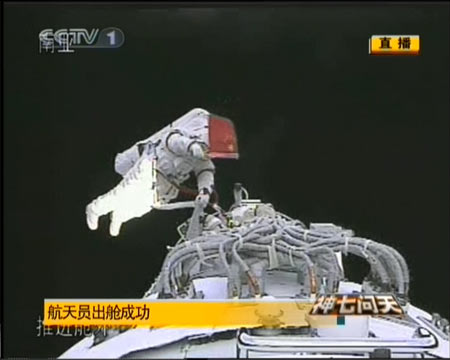 China has announced plans to put its own space station in orbit by 2020. The 60-tonne construction will be one-seventh the weight of the ISS and will focus on scientific experiments. However, military involvement with the project is causing concern.
Beijing’s Space City research center is opening its doors to the media, as China has announced its intention to build a rival to the International Space Station.
While some see Chinese advances in space travel as a potential threat, the country’s officials are keen to stress the spirit of co-operation, which they say is behind China’s space program.
“We are looking forward to co-operating with other countries in the field of space exploration,” said Yang Liwei, Vice Director of Manned Space Engineering Bureau. “We are also looking forward to having more countries join this club, so we can promote the common goals of mankind.”
For the moment though, the Chinese space program is doing very well on its own.
Since becoming only the third country in the world to send a person in to space, in 2003, the Chinese also carried out a space walk in 2008 and the Read more…
Iran, North Korea Partnering on Ballistic Missiles, U.N. Says

(May. 16) - An Iranian Shahab 3 ballistic missile lifts off in a 2009 test. The Shahab 3's warhead appears comparable in design to a North Korean warhead unveiled last year, according to a U.N. report that says the countries seem to have exchanged ballistic missile technology (Shaiegan/Getty Images). Iran and North Korea seem to routinely be swapping ballistic missile equipment in breach of U.N. Security Council directives, a classified expert report to the international body stated on Friday (see GSN, Dec. 1, 2010).
Illegal trades of missile technology had “transshipment through a neighboring third country,” the report states. Multiple envoys told Reuters the nation in question is China.
The report by the Panel of Experts assigned to oversee adherence to U.N. sanctions levied against North Korea was sent to the Security Council on Friday and viewed by Reuters on Saturday.
The document is expected to increase apprehension over Pyongyang’s collaboration with Tehran and to bolster worries about Beijing’s willingness to implement sanctions targeting North Korea and Iran’s nuclear activities, diplomats said.
The Security Council sanctions forbid commerce in atomic and missile systems with the North.
“Prohibited ballistic missile-related items are suspected to have been transferred between the Democratic People’s Republic of Korea and the Islamic Republic of Iran on regular scheduled flights of Air Koryo and Iran Air,” the experts stated.
“For the shipment of cargo, like arms and related materiel, whose illicit nature would become apparent on any cursory physical inspection, (North) Korea seems to prefer chartered cargo flights,” the document says.
Chartered cargo flights typically travel “from or to air cargo hubs which lack the kind of monitoring and security to which passenger terminals and flights are now subject,” according to the report.
A number of envoys to the Security Council said Beijing was not pleased with Read more…
EU Ministers OK $110.8 Billion Portugal Rescue
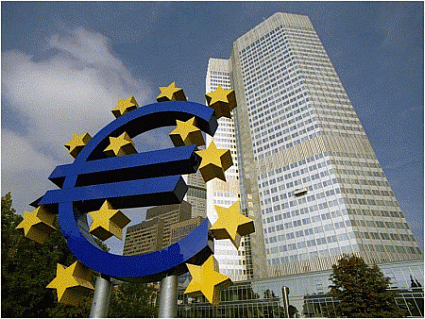 European Union finance ministers cleared the way for Portugal to receive 78 billion euros ($110.8 billion) in aid, making it the third euro-area country to fall back on official loans.
The EU’s two bailout funds, the European Financial Stability Facility and European Financial Stabilization Mechanism, will each provide one-third of the assistance, while the International Monetary Fund will contribute the rest, the EU said in a statement after a unanimous vote in Brussels today.
Finance ministers called Portugal’s planned budget cuts “ambitious but credible,” according to the statement. The aid program will run for three years.
Portugal follows Greece and Ireland in requesting a bailout from the EU and International Monetary Fund. Politicians are struggling to convince investors that 256 billion euros in aid to the three countries will be enough to stamp out Europe’s debt crisis and prevent the euro region’s first restructuring.
Portuguese Finance Minister Fernando Teixeira dos Santos said before the meeting he was confident of approval because “all the issues that we had to clarify were clarified.” German Finance Minister Wolfgang Schaeuble had also been upbeat about Portugal’s aid request.
The meeting was clouded by the May 14 arrest of IMF Managing Director Dominique Strauss-Kahn on Read more…
Signals Spain may seek bailout spelling disaster for eurozone
Violent protests against austerity cuts have broken out in Spain, as the country struggles to deal with record-high unemployment signaling that Madrid could possibly be next in line for an EU bailout.
Across the border, Portugal’s crumbling economy is desperate for a €78 billion rescue package. Read more…
Gold demand strong; predicted prices around $2000
 Gold temporarily succeeded to recover some of the losses from the sizeable sell-off in early May, but fell back late Friday to end the week unchanged.
Bearish sentiment constrained gold to a weekly low of around $1479 on Thursday. However, the metal found good support at its 15-week uptrend line and rebounded, temporarily at least, back above $1500.
Physical demand for gold has raised in the Far East and Asia. Despite the 5% correction seen at the start of the month analysts continue to predict prices around the $2000 level at least by next year.
“Since the start of May, physical gold demand has been strong,” said Walter de Wet, an analyst at Standard Bank Plc in London.“While consistent physical buying interest has come from India specifically, we are witnessing a broader interest from Asia in general.”
Central banks are worth another mention as more of them look to purchase gold, with the surplus earning countries leading the way. Figures issued by the World Gold Council (WGC) show there were no transactions of gold bullion by central banks in February and March. The WGC‘s data confirm gold bullion purchases by Mexico, Thailand and Russia.


![[Most Recent Quotes from www.kitco.com]](https://i0.wp.com/www.kitconet.com/charts/metals/gold/t24_au_en_usoz_2.gif)
![[Most Recent Quotes from www.kitco.com]](https://i0.wp.com/www.kitconet.com/charts/metals/silver/t24_ag_en_usoz_2.gif)

 crisisboom
 CRISISBOOM
You must be logged in to post a comment.