Archive
Giant ‘balloon of magma’ inflating under Greek island could cause first eruption in over 60 years
A giant ‘balloon of magma’ is inflating under the volcanic Greek island of Santorini, warns a new study.
The balloon is so big it has forced the island upwards by 14cm between January 2011 and April this year.
It has also triggered a series of small earthquakes, the first seismic activity in 25 years – raising fears that the volcano could erupt for the first time since 1950.
 Volcanic crater on Nea Kameni, Santorini, Greece. The chamber of molten rock beneath Santorini’s volcano expanded 10 to 20 million cubic metres
The chamber of molten rock beneath the volcano has expanded 10 to 20 million cubic metres – up to 15 times the size of London’s Olympic Stadium – between the time – according to a survey conducted by a team led by Oxford University scientists.
The results come from Read more…
Recognition software will scan Facebook for incriminating markings
dailymailPolice may soon be able to catch criminals by the ink they are sporting.
Computer scientists are developing a new program that will be able to identify suspects by their tattoos and match them to photos in police databases or on social media.
Automatic identification through recognition of body art could provide a much needed breakthrough in detective work, often thwarted by grainy footage from surveillance videos that make it difficult to see a criminal’s face to use facial recognition.
 Tattoo recognition: Computer scientists are developing a computer program that will be able to identify suspects by their tattoos and match them to photos in police databases (file photo)
‘Those photos are often so bad that face recognition wouldn’t come even close’ to finding a match in a database, Terrance Boult, a computer science professor at the University of Colorado, explained to Live Science.
To rectify this problem, Boult worked with a team of researchers to develop a computer program that Read more…
Close Approach of PHA Asteroid 2012 QG42
 On September 14th, at 05:12 GMT (09:12 Moscow time) asteroid 2012 QG42 will fly at the distance of 0.019 AU – which is 2.84 million kilometers, or about 7.4 average distances from planet Earth to the Moon.
In the future, this asteroid will fly even closer to Earth. On September 15, 2039 it will fly at the distance of 0.014 AU (5.6 distance to the Moon), and on February 15, 2013 at 23:25 MSK -at the distance of 26.9 thousand kilometers far from our planet. This distance is shorter than the height of the geostationary satellites.
Yangtze river turns red in China
 Chongqing, Sep 8 (TruthDive): Third world’s longest river Yangtze River has turned its color to reddish-orange in China. Officials are examining the river’s change, as they have no idea what caused the change.
The residents staying along the shores on the Yangtze River which is the largest river in China, called as Golden Watercourse, noticed the change this week as the water was not its normal hue as the water had changed to red.
The river is called “golden” as it receives heavy rain throughout the year and runs through China’s largest commercial and industrial center Chongqing.
Chongqing is called as mountain city as its many factories and buildings stand upon the hills. The officials have not yet determined the cause, Read more…
Tornado touches down in Queens and Brooklyn
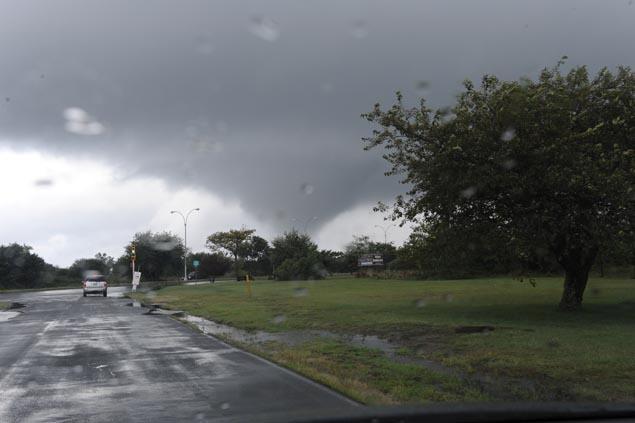 A terrifying tornado touched down briefly in Queens and Brooklyn Saturday morning, destroying property, disrupting plans and terrifying residents all over the city.
A black tunnel cloud accompanied by howling winds screamed into south Brooklyn and Queens at around 11 a.m., with reports of the potent storm hitting the ground on the Rockaway Peninsula and Carnarsie.
“I saw a big gray cloud coming and ran to my basement with my son,” said Diane Tye, 36, an office manager from Breezy Point who scooped up her son Dylan, 2, and ran to her house when she saw the tunnel cloud approach.
“It was very Read more…
Remote-Control Cyborg Cockroaches
 A Madagascar hissing cockroach sports a wireless electronic microcontroller that allows it to be steered by joystick.
North Carolina State University
Building robots is hard. Making them tiny, maneuverable, durable, and smart enough to find their way around in an unmapped environment—for instance, to find survivors trapped in a building after an earthquake—is harder still. So a team of scientists at North Carolina State has turned to the obvious alternative: remote-controlled bionic cockroaches.
By outfitting Madagascar hissing cockroaches with wireless electronic backpacks and hooking electrodes to their antennae and cerci, the researchers found they could Read more…
Hantavirus, Plague & West Nile: Are Animal-Borne Diseases on the Rise?
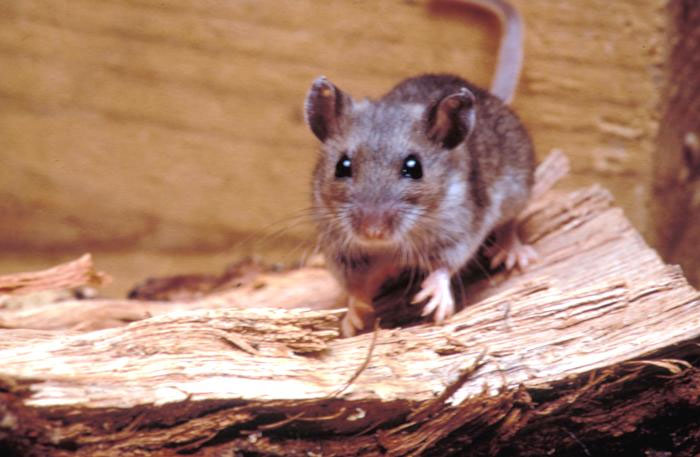 A string of recent reports of people falling ill and dying of diseases that spread to people from animals might have you wondering: Are animal-borne diseases on the rise?
This summer, three people died and eight were infected with hantavirus — a disease carried by rodents — after visiting Yosemite National Park; a Colorado girl reportedly contracted the plague from flea bites she received while camping; researchers reported the cases of two Missouri men infected with a never-before-seen virus carried by ticks; and nearly 2,000 people across the United States fell ill with West Nile virus, which is carried by mosquitoes.
Experts say the number of new diseases crossing from animals to people has indeed increased in recent years, from fewer than 20 in the 1940s to about 50 in the 1980s, according to a 2008 study published in the journal Nature. Between 1990 and 2000, more than half of newly identified infectious diseases originated in Read more…
FBI launches $1 billion nationwide facial recognition system

The US Federal Bureau of Investigation has begun rolling out its new $1 billion biometric Next Generation Identification (NGI) system. In essence, NGI is a nationwide database of mugshots, iris scans, DNA records, voice samples, and other biometrics, that will help the FBI identify and catch criminals — but it is how this biometric data is captured, through a nationwide network of cameras and photo databases, that is raising the eyebrows of privacy advocates.
Until now, the FBI relied on IAFIS, a national fingerprint database that has long been due an overhaul. Over the last few months, the FBI has been pilot testing a facial recognition system — and soon, detectives will also be able to search the system for other biometrics such as DNA records and iris scans. In theory, this should result in much faster positive identifications of criminals and fewer unsolved cases.
According to New Scientist, facial recognition systems have reached the point where they can Read more…
Widespread human tracking chips inevitable?
by Mark Lockie
 It may seem like an improbable scenario – and probably is – but new research has revealed growing social unease over electronic tracking technology that monitors workers’ activity, and which may evolve into implants placed directly under human skin.
Professors Nada and Andrew Kakabadse have examined developments in tracking technology already linked to company vehicles and mobile communication devices, alongside employee attitudes towards the prospect of ‘social tagging’ through Radio Frequency Identification (RFID) chips.
Nada Kakabadse commented: “In 2004, the US Food and Drug Administration approved an RFID implant called VeriChip, about the size of a grain of rice, for medical purposes. Nightclubs in Rotterdam and Barcelona already offer implants to customers for entry and payment purposes. Some claim the ‘Obamacare Health Act’ makes under-the-skin (subdermal) RFID implants mandatory for all US citizens.”
Perhaps irrationally (at least in Planet Biometrics’ point of view) study participants thought the Read more…


![[Most Recent Quotes from www.kitco.com]](https://i0.wp.com/www.kitconet.com/charts/metals/gold/t24_au_en_usoz_2.gif)
![[Most Recent Quotes from www.kitco.com]](https://i0.wp.com/www.kitconet.com/charts/metals/silver/t24_ag_en_usoz_2.gif)

 crisisboom
 CRISISBOOM
You must be logged in to post a comment.