Archive
5 Unexpected Places You Can Be Tracked With Facial Recognition Technology

Once people realized that Facebook was basically harvesting biometric data, the usual uproar over the site’s relentless corrosion of privacy ensued. Germany even threatened to sue Facebook for violating German and EU data protection laws and a few other countries are investigating. But facial recognition technology is hardly confined to Facebook — and unlike the social networking site, there’s no “opt-out” of leaving your house.
Post-9/11, many airports and Read more…
Germany introduces biometric cards for foreigners

In a bid to prevent identity fraud, Germany is digitalizing its residence permits for non-EU citizens. Instead of a paper document, they’ll be given a new biometric chip card – shaped like a credit card.
The new cards are based on German identity cards
From Thursday, September 1, non-EU citizens living in Germany will be given electronic chip cards in place of their existing paper residence permits.
The cards will contain a biometric photo and two fingerprints. Cardholders will also be given an individual PIN code. The Federal Office for Migration and Refugees claims storing such biometric data will help prevent identity theft.
But, at a cost of 110 euros ($159) each, the new cards won’t come cheap. The special chip containing the data is manufactured at the Berlin-based Federal Printing Office. The cards – like Read more…
Expert warns facial biometrics could compromise privacy
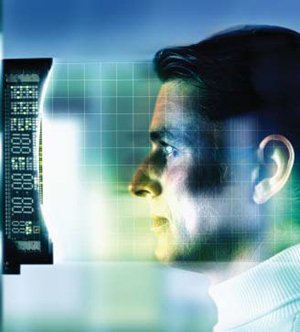 As facial biometric technology becomes increasingly ubiquitous, IT experts warn that these systems can easily be abused and therefore require stringent privacy policies and data encryption
As facial biometric technology becomes increasingly ubiquitous, IT experts warn that these systems can easily be abused and therefore require stringent privacy policies and data encryption.
In an interview with Information Security Media Group, Beth Givens, the founder and director of the Privacy Rights Clearinghouse, cautioned that organizations using biometric facial solutions should encrypt their data.
“If they back up those applications with good, solid privacy policies and practices, they’ll be in good shape,” she said.
Givens explained that a major problem with facial recognition technology is the chance that Read more…
ID breakthrough at UC
 Emdad Hossain is working on ground-breaking technology which identifies people by analysing their gait and stride. Photo: KATE LEITH
PINPOINTING a criminal by the way they walk is now within grasp, thanks to technology from University of Canberra student Emdad Hossain.
Biometrics, which uses one or more physical or behavioral trait to identify an individual, is being deployed across the world to increase safety and security at sensitive locations and to verify the identity of people tracked by surveillance technology.
Mr Hossain, a PhD candidate who came to Canberra from Bangladesh at the start of the year, has devised a system that fuses facial recognition technology and analysis of gait and stride – and it’s attracting attention around the world.
Just nine months into his studies, the 27-year-old has been Read more…
St. Joseph takes lunchtime high tech
Drake Aymond reaches out to use a palm scanner that relays information to the cafeteria computer at St. Joseph Catholic School. The new system provides a secure way to keep track of lunch balances, decreases the amount of time in lunch lines and provides security for each student’s account. / Jim Hudelson/The Times
Students at St. Joseph Catholic School are moving through the lunch line faster than ever thanks to biometric hand scanners.
The school, which houses more than 500 prekindergarten through eighth-grade students, this week began using new palm scanners in its cafeteria as a means for students to purchase lunch. The scanner creates an image of the student’s palm and relays that information to a database where the student’s account information is stored.
With the scan of a palm, the scanner is able to show medical and allergy information, as well as keep a running account balance that can notify parents when it becomes low.
Previously, the school used lunch identification numbers for students, but Principal Susan Belanger said the new technology makes lunchtime seamless.
“This technology not only expedites Read more…
Uppity Computers To Judge Social Traits From A Person’s Face
nanopatentsandinnovations.blogspot
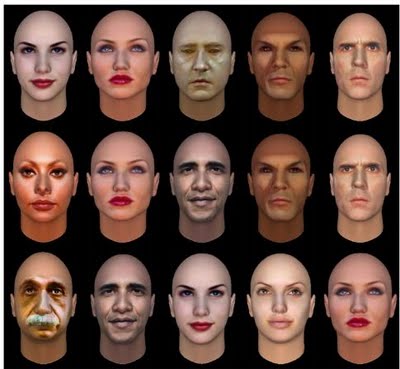
Researchers have developed new computational tools that help computers determine whether faces fall into categories like attractive or threatening, according to a recent paper published in the journal PLoS ONE.
Biometric recognition and privacy concerns
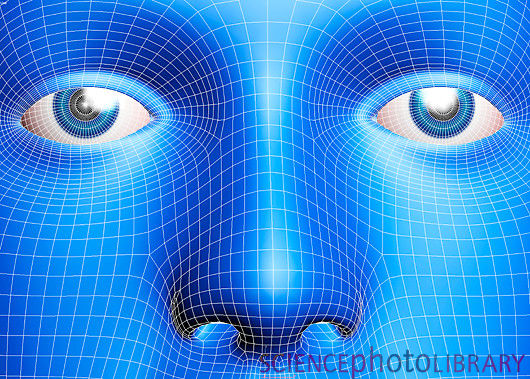 Face recognition software of the kind incorporated into biometric identification tools, photo-gallery applications and social media websites can be very useful but the technology raises privacy concerns, given the seeming ease with which faces in photos can now be tied to an individual. Researchers in Russia and Poland hope to take face recognition technology an important step forward with the even more powerful software they have developed.
Writing in the International Journal of Biometrics, Georgy Kukharev of Saint Petersburg Electrotechnical University in Russia, and colleagues Paweł Forczmański and Andrzej Tujaka of the West Pomeranian University of Technology, Szczecin, Poland, explain how Read more…
Facial recognition in use after riots
 LONDON (AP) — Facial recognition technology being considered for London’s 2012 Games is getting a workout in the wake of Britain’s riots, a law enforcement official told The Associated Press on Thursday, with officers feeding photographs of suspects through Scotland Yard’s newly updated face-matching program.
The official said that the Metropolitan Police’s sophisticated software was being used to help find those suspected of being involved in the worst unrest the force has faced in a generation, although he cautioned that police had a host of other strategies at their disposal.
“A lot of tools are being used to hunt down these criminals, and that’s just one of them,” the official said on condition of anonymity because he was not authorized to speak about an ongoing investigation. “The issue is that you have to have a good picture of a suspect and it is only useful if you have something to match it against. In other words, the Read more…
Mobile biometrics to hit US streets
 |
| With new mobile gadgetry, suspects will no longer have to be taken to police stations for their fingerprints and irises to be scanned and recorded [GALLO/GETTY] |
We’re fast approaching a time when law enforcement will no longer need to ask you for your identification – your physical self, and the biometric data therein, are all that will be required to identify you.
A gadget attached to a mobile phone can photograph and plot key points and features on your face (breaking the numbers down into biometric data), scan your iris and take your fingerprints on the spot.
This gizmo doesn’t exist in a futuristic world – it’s already been prototyped and tested. By autumn, the Mobile Offender Recognition and Information System (MORIS), which will allow 40 law enforcement agencies across the US to carry out such biometric diagnostics, will be rolled out. So far, the 1,000 units on order – at $3,000 and 12.5 oz per device – will be going to sheriff and police departments.
Proponents of the technology figure the Read more…
FBI approves Neurotechnology’s latest biometric algorithms
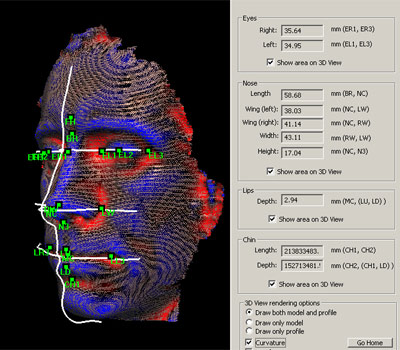 Last week Neurotechnology, a developer of sophisticated biometric identification solutions, announced that two of its newest fingerprint compression algorithms received WSQ Certification; the certification means that the FBI has verified that these two algorithms meet the accuracy requirements in its latest standard for exchange of fingerprint images within the biometrics and law enforcement community
Last week Neurotechnology, a developer of sophisticated biometric identification solutions, announced that two of its newest fingerprint compression algorithms received WSQ Certification.
The certification means that the FBI has verified that these two algorithms meet the accuracy requirements in the Wavelet Scalar Quantization (WSQ) Gray-Scale Fingerprint Image Compression Specification, Version 3.1, the latest standard for exchange of fingerprint images within the biometrics and law enforcement community.
Neurotechnology’s VeriFinger SDK fingerprint compression algorithms are Read more…


![[Most Recent Quotes from www.kitco.com]](https://i0.wp.com/www.kitconet.com/charts/metals/gold/t24_au_en_usoz_2.gif)
![[Most Recent Quotes from www.kitco.com]](https://i0.wp.com/www.kitconet.com/charts/metals/silver/t24_ag_en_usoz_2.gif)

 crisisboom
 CRISISBOOM
You must be logged in to post a comment.