Archive

Archive for the ‘China’ Category

Beijing warned on dollar holdings

June 7, 2011 Comments off

ft.com

U.S. dollar notes are seen in this picture illustration taken at the Bank of Taiwan in Taipei November 11, 2010. REUTERS/Nicky Loh

China is running a major risk in holding so many dollars because the US may deliberately devalue its currency, a senior Chinese official has warned.

The comments by Guan Tao, head of the international payments department in the State Administration of Foreign Exchange, knocked the dollar on Tuesday, adding to fears about the struggling US economy. The dollar fell to a one-month low against a basket of six leading currencies.

Pressure on the dollar has intensified amid heightened concerns that the soft patch in the US economy will ensure that the Federal Reserve sticks to its ultra-loose monetary policy in the near future.

Despite Mr Guan’s concerns, which are often voiced in Beijing, analysts said that China had little choice but to recycle its vast foreign currency reserves into dollar-denominated assets. “The United States has adopted expansionary fiscal and monetary policy to stimulate economic growth,” Mr Guan said in an article that was published on the website of China Finance 40 Forum, a Beijing economic think tank.

“The United States may find it hard to Read more…

China defends naval actions

June 6, 2011 1 comment

General Liang Guanglie, China’s defence minister, has rejected criticism that his country was acting belligerently in the South China Sea, saying China was pursuing a “peaceful rise”.

“You say our actions do not match our words. I certainly do not agree,” Gen Liang replied to critics at the Shangri-La Dialogue, a high-profile Asia defence forum in Singapore.

Speaking days after Vietnam and the Philippines accused China of aggressive behaviour in the South China Sea, Gen Liang denied that China was threatening security in the strategically important and energy-rich disputed waters, saying “freedom of navigation has never been impeded”.

He was the first Chinese defence minister to participate in the forum, which was attended by Robert Gates, US defence secretary, and other Asian defence ministers. It was Gen Liang’s first big international speech.

Mr Gates expressed “increasing concerns” about China’s recent maritime behaviour. But when asked if Beijing was undermining its “peaceful rise” claim, he replied: Read more…

China denies Gmail hacking accusations

June 2, 2011 Comments off

guardian

Google China's former headquarters in Beijing

Gmail account passwords were stolen by hackers suspected to be based in Jinan, capital of Shandong province. Photograph: Jason Lee/Reuters

China has rejected Google’s accusations that it is behind a wave of high-level hacking attacks and said its critics had “ulterior motives” in trying to blame the government in Beijing.

The rebuttal follows revelations that Chinese hackers have stolen the Gmail login details of hundreds of senior US and South Korean government officials as well as Chinese political activists.

Google has warned the victims of the “phishing” scam and made a public statement about the threat. The US company said it could not say for sure who was responsible, but it traced many of the attacks to Jinan, the capital of Read more…

Some areas in China under martial law after protests

May 30, 2011 Comments off

cnn

More of this story was published last week.

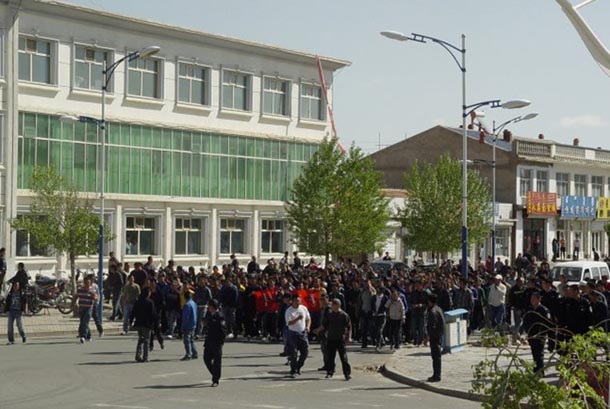
Anti-riot police line up as a crowd gathers in northeastern China/southern Mongolia on Monday, May 23.

Anti-riot police line up as a crowd gathers in northeastern China/southern Mongolia on Monday, May 23.

(CNN) — In an apparent response to days of protests, Chinese authorities have declared martial law in parts of the northeast’s inner Mongolia autonomous region, according to Amnesty International.

The region has long been the scene of ethnic tension between Mongolians, who have lived in the area for centuries, and the Han people, who arrived in larger numbers after the founding of the People’s Republic of China in 1949. Han people are the majority ethnic group in China.

In the report released Friday, Amnesty International detailed protests in and around the city of Xilinhot.

CNN contacted officials in the affected areas, but they declined to comment.

According to the human rights organization, 2,000 Mongolian students took to the streets Wednesday in Xilinhot, in a show of solidarity with an ethnic Read more…

China Seen Deploying New Ballistic Missile Unit Close to Taiwan

May 27, 2011 Comments off

globalsecuritynewswire

Here is another article of interest published in April.

Taiwan’s intelligence head on Thursday asserted China had fielded an additional ballistic missile unit not far from the self-governing island, Agence France-Presse reported (see GSN, April 6).

“The unit, carrying the code number 96166 and based in Guangdong province [in southern China], is indeed a new unit, probably a new ballistic missile brigade,” National Security Bureau chief Tsai Teh-sheng said, without offering further specifics.

“Over the past few years, the People’s Liberation Army has kept increasing its deployment of ballistic missile units in both quantity and quality opposite Taiwan,” Tsai said in remarks passed along by lawmaker Lin Yu-fang.

Taiwanese analysts project that Beijing at present has in excess of 1,600 missiles targeting the island that it claims as Chinese territory. The majority of those weapons are thought to be fielded in Jiangxi and Fuijan provinces in the southeastern part of the country. Experts predict that as many as 1,800 missiles could be aimed at Taiwan in 2012, AFP reported.

China’s robust rail system has allowed it to rapidly transport missiles to coastal regions when required. Some missiles can even be fired from railway trains, according to Lin, who is also a military affairs professor.

China’s top military official last week seemingly denied that any missiles were aimed at Taiwan. Beijing, though, has said it could take military action should Taipei seek full autonomy (see GSN, May 19; Agence France-Presse/Yahoo!News, May 26).

China drought ignites global grain supply concerns

May 26, 2011 Comments off

reuters

A prolonged drought in China could hit grains output in key growing regions, further squeezing global supplies and putting upward pressure on prices, but plentiful domestic wheat stocks will act as a cushion and keep import volumes low.

Analysts are closely watching the weather in China, warning any further supply shocks in the grain markets would fuel a further rally in U.S. corn and wheat futures, already stoked by harsh crop weather in the United States and Europe.

“Parts of China have been too dry and if we did see crop failures in that part of the world they are going to look to the global market for supplies,” said Luke Mathews, a commodity strategist with Commonwealth Bank of Australia in Sydney.

“They are going to be looking to North America and Europe and there is significant amount of concern whether those particular countries will be able to satisfy those needs.”

Chicago Board of Trade corn has climbed 80 percent since the start of May last year, while wheat has risen around 50 percent. Last week alone corn and wheat jumped more than 10 percent on expectations of a global squeeze in supplies.

CROP CONCERNS & TIGHT GLOBAL SUPPLIES

Timely corn seeding is crucial for optimal yields needed to replenish U.S. supplies that are projected at the lowest level in 15 years amid strong demand from livestock feeders, ethanol makers and exporters.

About 80 percent of the U.S. corn crop has been planted, according to the U.S. Agriculture Department, but showers this week are expected to bring the final corn seedings to Read more…

Thousands of Mongolians Protest to Against China For Equal Rights

May 26, 2011 2 comments

thetibetpost

Huveet_Shar_10Dharamshala: Wednesday May 25, more than 2000 ethnic Mongolian protesters marched to the Chinese government building in the North-western city of Xilinhot, in Inner Mongolia Autonomous Region (IMAR).The protest was spurred by the killing of a Mongolian herder by a Chinese truck-driver following disputes over access to pastures which are being used as road-ways for trucks transporting coal for the growing coal-industry in Inner Mongolia.Three herders and one student were reportedly beaten severely during the protests and their whereabouts are presently unknown.

The protesters, who were mainly students, demanded they be treated equal to the growing number of ethnic Han Chinese who now make up the majority of the population in the region, with only an estimated 17 percent of Inner Mongolia’s 23 million people being of Mongolian ethnicity.

Southern Mongolian Human Rights Information Center (SMHRIC) write on their website that after the Chinese government announced IMAR to be the “energy base of China”, hundreds of coal mines have been opened in the Southern Mongolian grasslands, and as a result more than 250.000 Mongolian nomads have been displaced. Read more…

Categories: China, Mongolia Tags: , ,

Chinese Citizens Turn to Gold in One of Greatest Booms in Metal’s History

May 25, 2011 1 comment

mineweb

The World Gold Council (WGC) released its quarterly “Gold Demand Trends” report last week and, as always, it was filled with fascinating data on the strength of the global gold market. Gold demand grew 11 percent to 981.3 tons during the first quarter of 2011, worth $43.7 billion at quarter-end’s price levels.
The increase was driven by a significant rise in demand for gold as an investment, up 26 percent from a year ago, as emerging markets look to protect their assets from rising inflation. Demand for gold bars and coins was up 62 percent and 42 percent, respectively.
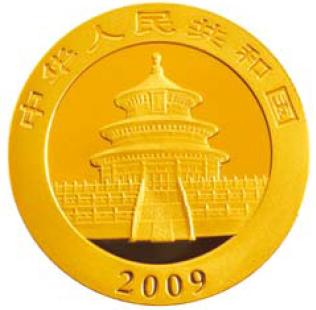
A slight pullback in prices during the middle of the quarter and “persistent high inflation levels” pushed China into the position as the world’s largest market for gold investment. Chinese citizens devoured nearly 91 tons of gold bars and coins, more than double the amount of a year ago.
This isn’t exactly a new phenomenon in China. From 2007 to 2010, investment demand grew Read more…

China aims to surpass US in physical gold reserves

May 24, 2011 Comments off

ibtimes

The solid demand for gold is not supported just by private individuals and panicky investors, but countries like China, India and Russia are ramping up investment in the yellow metal.

“… that the world’s biggest and fastest growing national economies are in the midst of an historic push to build up their stores of the precious metal,” according to Wealth Daily’s Luke Burgess.

“Today, the biggest buyers of gold aren’t private citizens or hedge-funds. Instead, nations like China, India, and Russia have moved forward to grab up every loose ounce of the metal…,” Burgess says.

There have been reports that the Chinese are buying gold assets to cover against rising inflation risk and global macroeconomic uncertainties. Beijing has long complained that the U.S. Federal Read more…

China Prepares To Launch Gold ETFs As Utah Becomes First State To Make Gold And Silver Legal Tender

May 23, 2011 Comments off

zerohedge

Following Friday’s news that China has now surpassed India as the world’s largest buyer of gold, it is becoming increasingly obvious that the country is trying to capitalize on the popular interest in the precious metal by transferring the trading infrastructure away from US to domestic capital markets. First, it recently launched a 1 kilo gold futures contract on the HK Merc in an obvious attempt to undermine the Comex monopoly in the space, and next it seems that China has the GLD plain in its sights, as it plans to start exchange-traded funds, tapping rising demand in China, the world’s biggest investment market for the precious metal. Often blamed for the recent volatility in the price of gold, precious metal ETFs have been primarily an instrument available to those with access to the US market. That appears to be ending, and with an entire nation suffering from gold fever (as inflation continues to be goalseeked by the China politburo above expectations in what appears to be a programmed attempt by the Chinese central planners to push its population into gold hoarding) and about to be offered a simple way of investing in (paper) gold, it is likely that the price of gold (and soon thereafter all other commodities) will see unprecedented spikes in price in either direction as millions more are given direct exposure to trading the non-dilutable currency equivalent.

From Bloomberg:

“There are some complexities, as the central bank is in charge of gold management, while we still need to go through the procedures for launching new exchange products,” Wang Zhe, chairman of the bourse, said at a Shanghai forum. There is no timetable and the exchange is working with regulators on the plan, Wang said. China is the world’s largest gold producer and second-largest in overall consumption.

China doesn’t have gold ETFs and investors usually choose to buy physical gold, or invest through contracts traded on the Shanghai Gold Exchange, the Read more…