Archive
Why the World Must Watch Europe
Beyond the EU Debt Crisis
The continent’s financial crisis gave rise to bailouts, infighting and demands for sweeping financial reform. Could there still be a bright future over the horizon for the European Union?

Amid the shift in global superpowers, two names come up as heavyweight world championship opponents: China and the United States.
The constant media exposure and speculation could be likened to a pay-per-view boxing matchup.
In one corner: the world’s largest energy consumer—with a 1.3-billion-strong population—endlessly stockpiling natural resources—and holding nearly $900 billion in United States’ debt.
In the other: longtime democratic world champion—largest economy—and leader in manufacturing.
China is the clear favorite, but the U.S. is still in the running. On its way down from unmatched superpower, it is still a formidable opponent, with its manufacturing sector out-producing China by 40 percent.
Yet America is weighed down by a $14 trillion federal debt and rampant Read more…
U.S., NATO worry about European defense cuts
 BERLIN — First, Germany announced that it would suspend its draft, ending one of the touchstones of its post-World War II society. Then Britain and France, frequent rivals since at least the Norman Conquest, announced plans to share military equipment and research. And smaller countries across Europe are cutting defense budgets and shrinking militaries that were never large to begin with.
European policymakers say that the cuts are necessary given their financial straits, and that training, not sheer numbers, is what matters in a post-Cold War world.
But some top officials, including the U.S. defense secretary and the NATO secretary general, worry that the changes could burden the United States by reducing the number of European troops available for NATO missions and other military efforts around the world. NATO’s ability to function as a collective defense pact may be Read more…
Britain’s coming crunch with Europe
 It did not take David Cameron long to realize that there were three parties in his coalition. A few months into government, the Prime Minister worked out that only half of the policies he was enacting came from the shared agenda drawn up when the Tories and LibDems got together. The other half comes from the EU. Or, more specifically, the Civil Service machine, which is busy implementing various EU Directives, often passed many years ago. Cameron is trying to put the brakes on this process.
As I say in my News of the World column, this has led to much frustration in Whitehall. And dismay: the Civil Service remembers how easily Labour waved through EU regulation and the piles of fat that Whitehall likes to pile on top of the EU regulation. Labour would claim that the EU rules were actually its idea, so as not to lose face. Only in government is it clear how far power has slipped; Cameron wants to claw it back.
Oliver Letwin has been tasked with stopping Whitehall from being a breeding ground for new regulations. Cameron jokingly refers to Letwin as a ‘contraceptive’, because it’s his job to stop these regulations being conceived – usually after a little European foreplay. It’s a huge task. The problem is that Read more…
Spacecraft to be controlled by artificial intelligence
 It is a concept that had fatal consequences for the astronauts in the science fiction movie 2001: A Space Odyssey after their spaceship’s artificially intelligent computer reasoned it had to kill them in order to continue the mission.
Yet despite this warning from Arthur C Clarke and director Stanley Kubrick, The European Space Agency now hopes to use real-life artificial intelligence to control future spacecraft.
British engineers, supported by ESA, are developing control systems that can be used in satellites, robotic exploration vehicles and spacecraft capable of controlling themselves.
The space vehicles will be able to learn, identify problems, adapt during missions, carry out repairs and take their own decisions about how best to carry out a task.
Details of the research have emerged as ESA prepares to launch the second of its Read more…
Global Effort To Outlaw Vitamins Now Underway
 (NaturalNews) The global effort to outlaw herbs, vitamins and supplements is well under way, and in just four months, hundreds of herbal products will be criminalized in the UK and across the EU. It’s all part of an EU directive passed in 2004 which erects “disproportionate” barriers against herbal remedies by requiring them to be “licensed” before they can be sold.
It’s called the Traditional Herbal Medicinal Products Directive (THMPD), Directive 2004/24/EC.
The licensing requirements, however, were intentionally designed to make sure that virtually no herbs could ever meet them. It costs from $125,000 to $180,000 to license a single herb with the EU, and since herbs cannot be patented and don’t have the monopolistic pricing found in pharmaceuticals, there’s simply not enough profit margin in most herbs to justify such huge expenditures from any one company.
But that’s sort of the point. Governments of the world have been conspiring with the pharmaceutical industry for decades to destroy the competition by outlawing nutritional supplements, herbal remedies and many other forms of natural medicine.
They really are coming for your natural medicine
Some people in the USA are still skeptical that Read more…
Oil Prices: Egypt’s Crisis Could Hurt Europe First
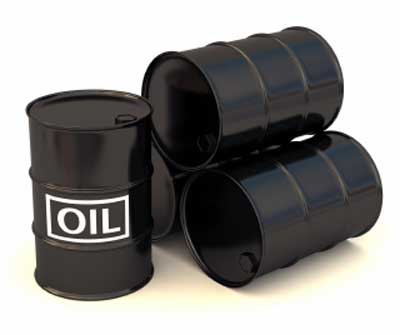 Some crude oil prices brushed $100 a barrel Monday as fears escalated that the violence in Egypt would spread to other parts of the oil-producing Middle East. But so far, no reports have surfaced that the disturbances in Egypt have disrupted oil deliveries.
Brent crude oil surged to $99.97 a barrel on London’s ICE futures exchange, up about 5% since the beginning of last week, when violence spread from Tunisia to Egypt. In U.S. trading, West Texas Intermediate shot up 1.7% on Monday, but was still about $10 a barrel cheaper than Brent crude, its European counterpart.
Julius Walker, a senior analyst at the International Energy Agency in Paris, says the organization has received no reports that oil shipments were being delayed, but the website of the agency that runs the Suez Canal has been shut down by the ban on Internet use in Egypt, so a precise reading isn’t available.
“Nothing has been affected. It’s just the worry of it,” Walker says.
A Chokepoint for Europe-Bound Oil
Egypt is a small oil producer, and its output is almost exactly equal to Read more…
Russia threatens NATO with nukes
Press TV
The Russian president has called on NATO to clarify Moscow’s role in a European missile system, warning if no agreement is reached, Russia will be forced to deploy “offensive” nuclear weapons.


“So this is not a joking matter. We expect from our NATO partners a direct and unambiguous answer,” Dmitry Medvedev said during a meeting with Russia’s NATO envoy Dmitry Rogozin.
“In either case, we are either together with NATO, or we separately find an adequate response to the existing problem,” he said.
Under former US President George W. Bush the United States proposed a plan to deploy a missile system in Poland and the Czech Republic — a plan which was fiercely opposed to by Russia. Moscow said it would deem such a deployment a threat to its sovereignty and would properly respond to it.
US President Barack Obama later scrapped the plan proposing Russia to join the missile system.
Russia and NATO agreed to cooperate on a joint missile system plan in Europe during a NATO-Russia Council meeting in Lisbon in November last year.
The parties agreed to formulate terms for cooperation on the missile system by June 2011.
“Either we agree to certain principles with NATO, or we fail to agree, and then in the future we are forced to adopt an entire series of unpleasant decisions concerning the deployment of an offensive nuclear missile group,” Medvedev was quoted by AFP as saying.
Which Of The Currencies Of The World Is Going To Crash First?
 Last year was an absolutely fascinating time for world currency markets. The yen, the dollar and the euro all took their turns in the spotlight. Each experienced wild swings at various times, but the overall theme that we saw was that faith in paper currencies is dying. The biggest reason for this is the horrific sovereign debt crisis that has swept the globe. The United States, Japan and a whole host of European nations are all drowning in debt. The U.S. and Japan are both steamrolling toward insolvency, and several European nations would have already defaulted on their debts if they had not been bailed out. So which of the major currencies of the world is going to crash first? Will one (or more) of the big currencies fall before the end of 2011? Once one major currency collapses will the rest start to fall like dominoes? The truth is that the world has never seen a sovereign debt crisis of this magnitude in all of human history. Almost the entire globe is drowning in a sea of red ink and it has brought us right to the brink of financial disaster.
So which of the currencies of the world is going to be the first to come crashing down? Well, let’s take a quick look at the yen, the euro and the dollar…. Read more…
EU Debt bought up by China
Published: January 6, 2011 07:46 ET in Asia

China has been increasing its holdings of European government debt, including that issued by Spain, amid the euro-zone crisis, Chinese Vice Commerce Minister Gao Hucheng was quoted as saying on Thursday.
The Spanish daily El Pais on Thursday cited Spanish government sources as saying China has committed to buy about 6 billion euros ($7.89 billion) worth of Spanish sovereign debt.
In a statement on the ministry’s website, Gao also said that China was confident in Spanish and European financial markets and confident that they would be able to overcome Europe’s debt crisis, the Wall Street Journal reported.
“We will continue to buy debt and work together with Spain,” said Gao, who is accompanying Chinese Vice Premier Li Keqiang on a visit to Spain and other European countries.
Both officials have expressed confidence that Spain will recover from its economic crisis despite market fears of an Irish-style bailout.
El Pais published an article written by Vice Premier Li, titled, “China and Spain: A brighter future through win-win cooperation.”
Political and corporate leaders increasingly see China as a source of capital. China’s foreign-exchange reserves are by far the world’s largest, totaling $2.648 trillion at the end of September.
In the meantime, the economic mood in Europe ended 2010 on a high note, a key indicator released Thursday showed.
The European Commission’s closely watched business and consumer survey for the members of the euro currency bloc rose from 105.2 in November to a more-than-forecast 106.2 last month. The consensus among economists was that the index would nudge up to 105.5.
Ben May, European economist with the research group Capital Economics, told Monstersandcritics.com the data suggested that, “the improving global economic outlook is offsetting the ongoing troubles in the periphery.”


![[Most Recent Quotes from www.kitco.com]](https://i0.wp.com/www.kitconet.com/charts/metals/gold/t24_au_en_usoz_2.gif)
![[Most Recent Quotes from www.kitco.com]](https://i0.wp.com/www.kitconet.com/charts/metals/silver/t24_ag_en_usoz_2.gif)

 crisisboom
 CRISISBOOM
You must be logged in to post a comment.