Archive

Archive for the ‘nuclear technology’ Category

North Korea poised for nuclear weapon test next year

August 15, 2011 Comments off

theaustralian

NORTH Korea will conduct another nuclear weapons test within 12 months, according to senior US sources with access to Washington’s intelligence assessments.

This will bring much closer the day when North Korean nuclear weapons could threaten Australia. And it could trigger explosive reactions in northeast Asia.

The senior US sources believe the test could come sooner rather than later, although next year is regarded as the most likely.

“2012 is an auspicious year from the North Korean point of view,” said one senior American.

“It’s an election year in the US and an election year in in South Korea. And the North Koreans have publicly declared their desire to be a fully functional nuclear weapons state by 2012.”

For most of the past decade, sources say, North Korea has been systematically involved in nuclear proliferation.

At a meeting in 2003, senior North Koreans told representatives of the Read more…

Iran, Russia to Discuss Plan for Resuming Atomic Dialogue

August 15, 2011 1 comment

gsn

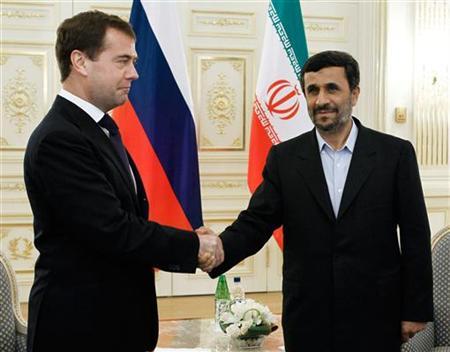
A senior Russian official is set on Monday to discuss with Iranian leaders a blueprint for rekindling multilateral dialogue over the Middle Eastern nation’s atomic activities, Reuters reported (see GSN, Aug. 12).

Presidential Security Council chief Nikolai Patrushev, who is expected to meet in Tehran with his Iranian equivalent as well as President Mahmoud Ahmadinejad, would discuss Moscow’s proposal for addressing U.S. and European concerns that the Persian Gulf nation’s atomic efforts are geared toward weapons development (see GSN, July 14). Iran, which has maintained its nuclear ambitions are purely nonmilitary in nature, most recently joined discussions with the five permanent U.N. Security Council members and Germany in January; the meeting yielded little progress on the atomic issue (see GSN, Jan. 24).

Iran might prove more open to a Read more…

China starts 14th nuclear reactor and Canadian Uranium Producers Optimistic

August 9, 2011 Comments off

nextbigfuture

1. The second unit at China’s Ling Ao II nuclear power plant entered commercial operation on 7 August, China Guangdong Nuclear Power Co (CGNPC) announced. The 1080 MWe Chinese-designed CPR-1000 pressurised water reactor (PWR) achieved first criticality on 25 February and was connected to the grid on 3 May. CGNPC said that the unit entered into commercial operation following 168 hours of successful test operation. It becomes China’s 14th operating nuclear power reactor.

17 other CPR-1000s already under construction. Work is planned to begin on at least five more during 2011.


2. Mid-year reports from two Canada-based uranium producers share an air of quiet optimism despite feeling the effects of events in Japan.

The first half of the year saw Denison produce 679,000 pounds U3O8 (261 tonnes U). Even before the events of 11 March, Denison had revised its uranium production forecast for 2011 downwards to 1.2 million pounds U3O8 (462 tU). This figure remains unchanged despite revisions to Denison’s ore processing plans for the remainder of the year subsequent to its acquisition of uranium exploration and development company White Canyon, including the Daneros mine in Utah.

Cameco’s first-half uranium production totalled Read more…

Revealed: how Israel offered to sell South Africa nuclear weapons

July 25, 2011 1 comment

guardian

The secret military agreement signed by Shimon Peres and P W Botha

The secret military agreement signed by Shimon Peres, now president of Israel, and P W Botha of South Africa. Photograph: Guardian

Secret South African documents reveal that Israel offered to sell nuclear warheads to the apartheid regime, providing the first official documentary evidence of the state’s possession of nuclear weapons.

The “top secret” minutes of meetings between senior officials from the two countries in 1975 show that South Africa‘s defence minister, PW Botha, asked for the warheads and Shimon Peres, then Israel’s defence minister and now its president, responded by offering them “in three sizes”. The two men also signed a broad-ranging agreement governing military ties between the two countries that included a clause declaring that “the very existence of this agreement” was to remain secret.

The documents, uncovered by an American academic, Sasha Polakow-Suransky, in research for Read more…
Japan should have nuclear weapons: Tokyo Governor

July 23, 2011 1 comment

todayonline

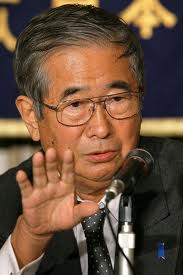
TOKYO – Tokyo Governor Shintaro Ishihara has criticised Japanese Prime Minister Naoto Kan’s vow to reduce dependency on atomic energy after the Fukushima disaster, saying instead the country should deepen its nuclear embrace to include weapons.

“Japan should absolutely possess nuclear weapons,” Mr Ishihara said in a July 15 interview at his office citing China and North Korea as potential threats.

“I don’t think we can easily do away with atomic power. Nuclear energy is inexpensive if managed well,” he also said.

Mr Ishihara has built a political career by taking on consensus views on everything from Japan’s pacifist constitution to economic ties with the United States, with a record of success with voters that’s withstood controversial remarks that have forced public apologies.

The 78-year-old Governor expressed regret in March after calling the earthquake and tsunami disaster “divine punishment” for the “egoism” of Japnese society. He was re-elected in April to a fourth four-year term governing Japan’s biggest and richest city. Bloomberg

Iran’s acceleration of its nuclear programme angers the west

July 20, 2011 Comments off

guardian

Iranian President Mahmoud Ahmadinejad inspecting the Natanz nuclear plant

The Iranian president, Mahmoud Ahmadinejad, inspects the Natanz nuclear plant in central Iran. Photograph: Iran’s Presidency Office Handout/EPA

Western capitals have reacted angrily to an announcement by Iran that it is installing more advanced centrifuges in a uranium enrichment plant with the aim of accelerating its nuclear programme.

“The installation of new centrifuges with better quality and speed is ongoing,” Ramin Mehmanparast, the Iranian foreign ministry spokesman, told reporters at his weekly press briefing.

“We have announced it and the agency [the International Atomic Energy Agency] has full supervision of them. They are fully aware that Iran’s peaceful nuclear activity continues to progress. This is another Read more…

Court Papers Suggest Pakistani Interest in Thermonuclear Weapon

July 19, 2011 Comments off

globalsecuritynewswire

The United States in federal court documents offered its first open suggestion that nuclear-armed Pakistan could be seeking to build a thermonuclear weapon, the Pittsburgh Tribune-Review reported on Sunday (see GSN, July 7).

The Justice Department has charged a Chinese woman living in the United States with illegally exporting high-tech paint coatings that could aid Pakistan’s nuclear weapons development. As the ex-managing director of a Chinese branch of PPG Industries, Xun Wang is accused of shipping the material five years ago in direct disobedience of the Pittsburgh-based company and nonproliferation guidelines issued by the U.S. Commerce Department.

Pakistan holds nuclear arms outside the Nuclear Nonproliferation Treaty and is a known past proliferator of sensitive technology and information through the black market operation once led by scientist Abdul Qadeer Khan. As such, the United States has placed a number of restrictions on the trade of sensitive goods with the South Asian nation.

The U.S. Justice Department questions in court filings whether the paint coating shipments could Read more…

N. Korea Purchased Pakistanis Nuclear Tech

July 8, 2011 Comments off

cbn

WASHINGTON — The founder of Pakistan’s nuclear weapons program claims that in the late 1990s North Korean officials paid kickbacks to senior Pakistani military figures in exchange for critical weapons technology.

Abdul Qadeer Khan has given a United States-based expert documents that appear to show North Korea’s government paid more than $3.5 million to two Pakistani military officials as part of the deal, the expert told The Associated Press Wednesday.

To back up his claim, Khan released what he said was a copy of a North Korean official’s 1998 letter to him, written in English, that purports to describe the secret deal.

Khan gave the documents to Simon Henderson of the Washington Institute for Near East Policy, an authority on Pakistan’s weapons program. He did so because he has been accused by his government of running a covert nuclear smuggling operation without official knowledge or consent.

“He gave it to me because he regarded it as showing that the story, the perception that he had Read more…

U.S. running out of critical gas to detect smuggled nuclear weapons materials, report finds

May 28, 2011 1 comment

nytimes

Agencies’ Lack of Coordination Hindered Supply of Crucial Gas, Report Says

By

WASHINGTON — The United States is running out of a rare gas that is crucial for detecting smuggled nuclear weapons materials because one arm of the Energy Department was selling the gas six times as fast as another arm could accumulate it, and the two sides failed to communicate for years, according to a new Congressional audit.

The gas, helium-3, is a byproduct of the nuclear weapons program, but as the number of nuclear weapons has declined, so has the supply of the gas. Yet, as the supply was shrinking, the government was investing more than $200 million to develop detection technology that required helium-3.

As a result, government scientists and contractors are now racing to find or develop a Read more…

Iran to build new nuclear research reactors-report

April 12, 2011 1 comment

reuters


TEHRAN, April 11 (Reuters) – Iran plans to build “four to five” nuclear research reactors and will continue to enrich uranium to provide their fuel, a nuclear official said on Monday despite Western pressure on Tehran to curb atomic work.

The head of Iran’s Atomic Energy Organisation, Fereydoon Abbasi, said Tehran would build the reactors “in the next few years” to produce medical radioisotopes, according to the students news agency ISNA.

“To provide the fuel for these (new) reactors, we need to continue with the 20 percent enrichment of uranium,” ISNA quoted him as saying.

Abbasi’s remarks are likely to deepen Western fears that Iran’s atomic work is aimed at Read more…