Archive

Archive for the ‘Technology’ Category

iPhone iPhone keeps record of everywhere you go

April 21, 2011 Comments off

guardian

Apple’s iPhone saves every detail of your movements to a file on the device. Photograph: Linda Nylind for the Guardian

Security researchers have discovered that Apple‘s iPhone keeps track of where you go – and saves every detail of it to a secret file on the device which is then copied to the owner’s computer when the two are synchronised.

The file contains the latitude and longitude of the phone’s recorded coordinates along with a timestamp, meaning that anyone who stole the phone or the computer could discover details about the owner’s movements using a simple program.

For some phones, there could be almost a year’s worth of data stored, as the recording of data seems to have started with Apple’s iOS 4 update to the phone’s operating system, released in June 2010.

“Apple has made it possible for almost anybody – a jealous spouse, a private detective – with access to your phone or Read more…

Cops Use Mobile Scanner To Steal Cellphone Data From Innocent Americans

April 20, 2011 1 comment

infowars.com

Americans are living in a predatory police state, then this story completely eviscerates it. Michigan state police have been using a handheld mobile forensics device to steal information from cell phones belonging to motorists stopped for minor traffic violations.

Read more…

Energy saving light bulbs ‘contain cancer causing chemicals’

April 20, 2011 1 comment

telegraph

Fears have been reignited about the safety of energy saving light bulbs after a group of scientists warned that they contain cancer causing chemicals.

Energy saving light bulbs

Scientists claim that several carcinogenic chemicals are released when energy saving light bulbs are switched on 


Their report advises that the bulbs should not be left on for extended periods, particularly near someone’s head, as they emit poisonous materials when switched on.

Peter Braun, who carried out the tests at the Berlin’s Alab Laboratory, said: “For such carcinogenic substances it is important they are kept as far away as possible from the human environment.”

The bulbs are already widely used in the UK following EU direction to phase out traditional incandescent lighting by the end of this year.

But the German scientists claimed that several carcinogenic chemicals and toxins were released when Read more…

Face Recognizing Glasses to be Used by Brazilian Cops

April 16, 2011 Comments off

telegraph

A small camera fitted to the glasses can capture 400 facial images per second and send them to a central computer database storing up to 13 million faces.

The system can compare biometric data at 46,000 points on a face and will immediately signal any matches to known criminals or people wanted by police.

If there is a match a red signal will appear on a small screen connected to the glasses, alerting the police officer of the need to take further action or make an arrest.

The devices will soon be tested at football matches and concerts and police in Brazil, South America’s biggest country, are already planning to use them Read more…

Thermal Cameras Look Inside Homes to Monitor Energy Efficiency

April 13, 2011 Comments off

Aaron Dykes
Infowars.com
April 11, 2011

The city of Boston has been taken to task by the ACLU over concerns about a roll-out of thermal imaging cameras being used to monitor energy efficiency inside homes. A pilot program to take aerial and street-level photos of heat loss in Boston was part of a scheme to encourage participation in home energy improvement programs, as well as to drive consumers towards green companies.

According to CBS, the project had been halted following public outcry about invasions of privacy, namely that “infrared cameras would reveal information about what’s going on inside the homes.” Further objections have been raised about potential violations of the Fourth Amendment (but what’s that anyway?). Officials reportedly “planned on sharing the photos and analysis with homeowners, and were hoping the findings would increase enrollment in efficiency programs and also create business opportunities.”

MIT, who helped develop the technology’s use for energy tracking, has already thermally-mapped the entire city of Cambridge, Massachusetts. Their press writers brag that automated cameras attached to vehicles would collect data “similar to the way Google Street View vehicles obtain visual imagery.” This 55 second video provides a glimpse at their system: Read more…

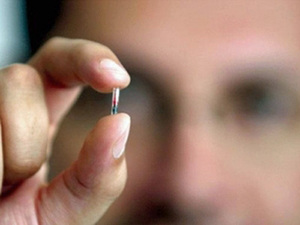
RFID Chips And Soul Catcher 2025

April 12, 2011 1 comment

consciousape

From RFID chips to Soul Catcher 2025 - technology to capture your soul and implant it in somebody else...

News that the British government is planning to tag prisoners with radio frequency identification (RFID) chips was met last year with instant opposition from probation officers and civil rights lawyers.

And rightly so. Government plans to implant the RFID chips without prisoners’ consent would in any circumstance be deemed an illegal act. It would also, of course, create a major moral dilemma.

“If the Home Office doesn’t understand why implanting a chip in someone is worse than an ankle bracelet,” said Shami Chakrabarti of the civil rights group, Liberty, “they don’t need a human-rights lawyer—they need a common-sense bypass.”

And Harry Fletcher, Assistant General Secretary of the National Association of Probation Officers, had this to say about the no-brainer scheme:

“Knowing where offenders like paedophiles are does not mean you know what they are doing. Treating people like pieces of meat does not seem to represent an improvement Read more…

Salt Lake City goes wallet-free with Isis

April 11, 2011 Comments off

theregister

Trial run for national rollout

Operator consortium Isis has selected Salt Lake City as its flagship deployment to show the rest of the USA what NFC can do for them.

The plan will see Salt Lake City’s public transport system accepting pay-by-wave from a mobile phone by the middle of next year. Retailers have also been encouraged to adopt Near Field Communications technology at the point of sale, as Salt Lake City strives to become The Place You Can Leave Your Wallet At Home.

Isis was set up less than six months ago: a consortium of US network operators including AT&T, T-Mobile and Verizon. The consortium is dedicated to ensuring that electronic payments based on NFC keep their secure element in the SIM – under the control of the network operator, not the handset manufacturer or bank-card supplier – by promoting the technology and business models associated with it.

In Salt Lake City, that involves working with the Utah Transit Authority to convert all the buses and trains to accept NFC payments, as well as flooding the area with NFC handsets and SIM chips.

“I would like to express our excitement that the Salt Lake City area has been chosen to lead the roll-out of Isis mobile payments,” said Mayor Ralph Becker’s canned statement, though looking a little closer it becomes obvious why Salt Lake was chosen to lead the US into contactless payments.

The Utah Transit Authority already uses proximity payment cards, deployed in 2009, so adding NFC functionality to public transport is a matter of software not hardware, and while the City might be the capital of Utah it has a population somewhat smaller than Northampton, so presents a nicely sized area for experimentation rather than a sprawling metropolis where deployment would be more challenging.

But the transition to electronic payments isn’t going to happen overnight, and it’s good to see Isis doing something practical, and with a reasonably aggressive timetable. It will be interesting to see how the locals take to paying by wave.

StunRay disables your brain with inverse blindness

April 6, 2011 Comments off

dvice.com

Until we figure out how to make a phaser that can be set to stun, we’ve been stuck with non less-lethal options like tasers (which can kill) and laser dazzlers (which can cause eye damage). StunRay is basically just a big flashlight, except with the ability to disable you by causing “inverse blindness.”

If you’re wondering what inverse blindness looks like, it’s easy to do to yourself: just stare at a bright light for a minute or two and then look around. It’s not dark, really, but you can’t see anything very well, and it’s because the exposure to bright light has overloaded the neurons that connect your retinas to your brain, and mostly all you can see is a featureless white expanse. The technical term for this is “loss of contrast sensitivity,” and it’s an effective way of disabling someone.

A company called Genesis Illumination is working what’s basically a giant fancy flashlight called StunRay that can inflict this loss of contrast sensitivity or inverse blindness or neural overload or whatever you want to call it on people at long range in a split second. Each burst of super bright light incapacitates subjects for five seconds or so without causing any pain, and subjects fully recover in about five minutes. The “fully recover” bit is key, since StunRay won’t roast your eyeballs like a laser dazzler can.

StunRay uses a 75 watt bulb, which doesn’t seem like much, but with some fancy optics, the device is able to focus its light beam to be ten times brighter than an aircraft landing light, even up to 150 feet away. And in case you were wondering, and I’m sure you were, this is bright enough to read a newspaper from a mile away.

Genesis Illumination just received a patent for StunRay, so in the near future, we’ll be able to rely on one single device for both our disabling and long distance newspaper-reading needs.

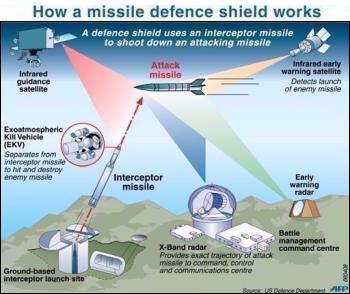
U.S. wants to use India in missile shield against Russia, China

April 5, 2011 Comments off

thehindu.com


The United States has been trying to rope in India for its plans to build a global missile defence system threatening Russia and China, the Komsomoloskaya Pravda, a popular Russian daily published from Moscow reported on Thursday.

In a story based on the WikiLeaks releases, the report said the U.S. has not only been planning to deploy a missile shield against Russia in Europe, but had also been negotiating with countries along Russia’s borders, such as Japan and India, to jointly build missile defences that would also target Russia.

“The noose [around Russia] is tightening,” the newspaper said. “Thanks to WikiLeaks, it has become known that Washington has been simultaneously conducting talks with countries in other parts of the world for building U.S. missile defences on their territories. Those are different countries, but they form a chain around Russia.”

A 2007 confidential cable from the U.S. embassy in New Delhi carried by the daily refuted media reports that India had abruptly turned its back on a 2005 agreement with the U.S. to cooperate on missile defences. The cable said the Indian media had misinterpreted remarks by External Affairs Minister Pranab Mukherjee after the Russia-India-China trilateral meeting in Harbin, China, on October 24, 2007. Mr. Mukherjee had dismissed as “groundless” the idea that India was going to join a U.S.-led missile defence system.

Misconstrued

“MEA contacts confirm this did not mean India was not interested in continuing to cooperate with the U.S. on missile defence technology and that there has been no change from the current level of bilateral missile defence cooperation,” the U.S. embassy cable said.

The “MEA contacts” explained that Mr. Mukherjee’s comments were “misconstrued” by the Indian press. When Mr. Mukherjee said that “India does not take part in such military arrangements,” the officials said, he had had in mind the U.S. plan to install a missile-detection system in Europe, which his Russian and Chinese counterparts referred to in the same press interaction. Read more…

Kinect could be initial step into gaming biometrics

April 4, 2011 Comments off

smartoffice.com


Microsoft’s X-Box 360 Kinect, a motion-sensing device for the gaming system that sold million units in its first two months, is being looked at by some as an introduction of biometric technology to gaming, according to a Smart Office article.

Kinect’s biometric capabilities come in the form of face recognition which it uses to login recognized players prior to playing a game.

Although seen as relatively novel new technology, Kinect’s face-recognition was called into question as it was reported to frequently have trouble in poor lighting conditions as well as having trouble logging in users with dark complexions.

Despite its issues in realistically connecting users to their real-life selves, some are wary of the introduction of biometrics into gaming, which has traditionally maintained a very anonymous environment for gamers.

Experts believe that such technology, however, could be a key step into increasing biometrics’ foot hold in U.S. markets where consumers have been apprehensive to trust the technology to handle its most sensitive and unable to be changed data.

As biometric modes such as face recognition make their way into casual gaming, social networking and even places such as online dating sites, it is thought that it could help face recognition and other biometrics gain popularity in handling more serious services Read more…