Archive
Doomsday fire: Millions of volcanoes are stirring beneath the world’s oceans
 In 1993, marine geophysicists aboard the research vessel Melville discovered 1,133 previously unmapped underwater volcanoes off the coast of Easter Island. Though some of the newly discovered volcanoes rose as much as one-and-a-half miles above the seafloor, their summits still remained half a mile below the water’s surface- all this in a comparatively small area of only 55,000 square miles, about the size of New York State. The geophysicists had increased the known supply of underwater volcanoes by more than ten percent just in a matter of months. That was 1993. Today, scientists estimate that there are more than three million underwater volcanoes. That’s a three followed by six zeroes! In 2007, oceanographers Hillier and Watts surveyed 201,055 submarine volcanoes. “From this they concluded an astounding total of 3,477,403 submarine volcanoes must reasonably exist worldwide,” said this article by John O’Sullivan. Hillier and Watts “based this finding on the earlier and well-respected observations of Earth and Planetary Sciences specialist, Batiza (1982) who found that at least 4 per cent of seamounts are active volcanoes.” According to Batiza’s survey, the Pacific mid-plate alone contains an incredible 22,000 to 55,000 underwater volcanoes, with at least 2,000 of them considered active. Thinking Read more…
Supervolcano plume sized up
 University of Utah
This image, based on variations in electrical conductivity of underground rock, shows the volcanic plume of partly molten rock that feeds the Yellowstone supervolcano. Yellow and red indicate higher conductivity,green and blue indicate lower conductivity.
By John Roach
The volcanic plume beneath Yellowstone is larger than previously thought, according to a new study that measured the electrical conductivity of the hot and partly molten rock.
The findings say nothing about the chances of another cataclysmic eruption at Yellowstone, but they give scientists another view of the vast and deep reservoir that feeds such eruptions.
“It’s a totally new and different way of imaging and looking at the volcanic roots of Yellowstone,” study co-author Robert Smith, an emeritus professor Read more…
Magma Proves Undersea Volcanoes Do Explode
Deep-sea volcanoes can explode instead of just oozing, scientists now confirm.
The new proof — higher-than-expected levels of carbon dioxide in the magma from a volcano off the coast of Oregon —suggests the volcanoes may play a greater role in global climate than thought.
Of all the volcanic activity on Earth, 75 to 80 percent of it takes place at deep-sea ridges in the middle of the oceans. Most of these volcanoes apparently spew out huge volumes of lava instead of erupting explosively, as many volcanoes on land do.
It is a high level of gas trapped in a volcano’s magma that normally fuels explosive volcanic bursts. This level has long been thought to be low at mid-ocean ridges; moreover, potential undersea explosions would be suppressed by the crushing pressure from the surrounding water.
However, based on volcanic ash found at certain sites, geologists have speculated over the last decade that explosive eruptions do take place in deep-sea volcanoes. Now researchers say they have proof.
 The Juan de Fuca ridge lies between the separating Pacific and Juan de Fuca tectonic plates. Credit: USGS
A team of scientists used ion beams to analyze the composition of materials recovered from ash deposits on Axial Volcano, on the Juan de Fuca Ridge off the coast of Oregon. Trapped within crystals from the deposits were droplets of magma containing very high levels of carbon dioxide. These droplets revealed that the magma was indeed rich in gas, at concentrations high enough to generate bubbles in the molten rock for explosive underwater eruptions.
“Direct evidence for high carbon dioxide concentrations in a mid-ocean-ridge volcano was unexpected and surprising,” researcher Christoph Helo, a volcanologist at McGill University in Montreal, told OurAmazingPlanet.
These findings suggest the amount of the global-warming gas carbon dioxide that is released from the deeper mantle into the Earth’s atmosphere at mid-ocean ridges falls within the higher end of past estimates, nearly 10 times more than the lowest end. That could have key implications for climate change.
Still, Helo said, volcanic carbon dioxide, unlike man-made emissions, “is not a variable that has undergone drastic changes within the past century.”
The scientists detailed their findings online March 13 in the journal Nature Geoscience.
High seismic activity will last 10 years – seismologist
 The magnitude-9.0 earthquake in Japan was one of the major events in the natural cycle of the planet’s seismic activity, Evgeny Rogozhin, deputy director of the Institute of Physics of the Earth of the Russian Academy of Sciences told RT.
RT: You have made some controversial predictions in terms of future earthquakes. What exactly are they and what are they based on?
Evgeny Rogozhin: I think that there is no direct connection between the earthquake in Japan and earthquakes that could happen on our territory. But this latest is one of the major events in the chain of earthquakes that recently happened on the planet. You all remember the earthquake on Sumatra in 2004. It was a major earthquake – magnitude 9.5. It was huge. Major loss of life, tsunami, etc. Then there were a number of other earthquakes – in India, where people also died, in China with the magnitude 8 and finally, in Chile last year – 8.8. And now this earthquake in Japan with a magnitude unheard of before in this country – 9.
As you can see the process is taking place in different places on Earth. What does our country look like in this respect? In the last 15 years or so we’ve had about 15 major earthquakes in Read more…
Shinmoedake volcano erupts in Japan
A volcano in southwestern Japan erupted Sunday after nearly two weeks of relative silence, sending ash and rocks up to four kilometres (two and a half miles) into the air, a local official says.
 It was not immediately clear if the eruption was a direct result of the massive 8.9-magnitude earthquake that rocked northern areas Friday, unleashing a fierce tsunami and sparking fears that more than 10,000 may have been killed.
The 1,421-metre (4,689-feet) Shinmoedake volcano in the Kirishima range saw its first major eruption for 52 years in January. There had not been any major activity at the site since March 1.
Authorities have maintained a volcano warning at a level of three out of five, restricting access to the entire mountain.
In April last year, the eruption of the Eyjafjoell volcano in Iceland dispersed a vast cloud of ash, triggering a huge shutdown of airspace that affected more than 100,000 flights and eight million passengers.
Mathematical Model shows Volcanoes Re-awaken in Mere Months
 |
Until now, it was thought that, once a volcano’s magma chamber had cooled down, it remained dormant for centuries before it could be remobilized by fresh magma. A theoretical model developed by Alain Burgisser of the Orléans Institute of Earth Sciences (Institut des Sciences de la Terre d’Orléans – CNRS/Universités d’Orléans et de Tours) together with a U.S. researcher, was tested on two major eruptions and completely overturned this hypothesis: the reawakening of a chamber could take place in just a few months. This research should lead to a reassessment of the dangerousness of some dormant volcanoes. It is published in the journal Nature dated March, 3 2011.
A magma chamber is a large reservoir of molten rock (magma) located several kilometers beneath a volcano, which it feeds with magma. But what happens to the magma chamber when the volcano is not erupting? According to volcanologists, it cools down to an extremely viscous mush until fresh magma from deep inside the Earth ‘reawakens’ it — in other words, fluidizes it by heating it through thermal contact. The large size of magma chambers (ranging from a few tenths to a few hundred cubic kilometers) explains why, according to this theory, it takes several hundred or even thousand years for the heat to spread to the whole reservoir, awakening the volcano from its dormant state.
However, according to the mathematical model developed by Burgisser and his U.S. colleague, George Bergantz, of the Earth and Space Science Department, Seattle, reheating takes place in three stages. When fresh hot Read more…
Iceland hit by 400 earthquakes in 24 hour, Krisuvik volcano show activity
After four days of continues earthquake activity it appears that Krísuvík volcano has stepped up it’s activity by a order of magnitude. Since midnight there have been over 400 earthquakes in Krísuvík volcano. The activity is continuing when this is written and does not show any signs of slowing down at this moment. Geologist in Iceland are expecting more earthquakes in this area over the next hours and even earthquakes that are larger then ML3.0 in size.
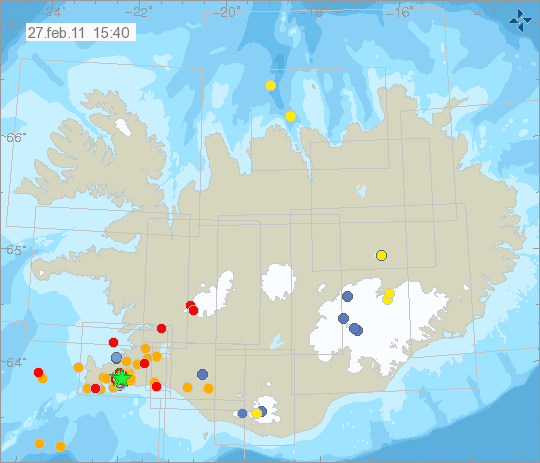 Earthquake location 27 Feb 15:40 GMT
The largest earthquakes where ML3.3 and ML3.7 in size. This is automatic size by the SIL system. The depth of the earthquakes was 4.7 km and 1.1 km according to the automatic SIL system. Due to high number of earthquakes the SIL system is putting earthquakes down all around the Reykjanes Peninsula. While there might be some earthquakes there, the number is not nearly as high as can be seen on the map. The earthquakes can be located by there low quality number.
Given the location and how this earthquake swarm is behaving by opinion of jonfr.com (Iceland volcano and earthquake blog) that this is due to a magma is pushing up the crust in this area. It remains a question of this is going to start a eruption or not. But the chances are growing for as long as this earthquake pattern holds up in Krísuvík volcano. If a eruption starts in Krísuvík volcano it is going to one of Hawaii type eruption, unless it is Read more…
Earthquakes and Volcanoes in Prophecy
DAVID C. PACK
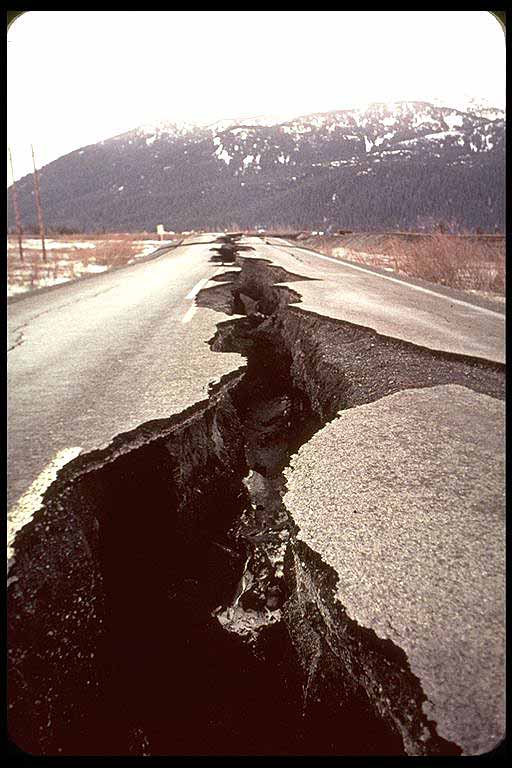 Earthquakes and volcanic activity have become regular in the news—and there is a reason. While most take Earth’s surface for granted, danger lies within its thin and fragile crust.
Throughout history, God has used earthquakes to serve His purpose. The Bible foretells that the greatest period of earthquake activity in history lies just ahead. In fact, earthquakes and volcanoes will soon affect the security and stability of the whole world—including your life.
God’s Word is plain. Yet most “prophecy watchers” speak little about this subject beyond the warning that “earthquakes are increasing” or “will increase.” You are about to learn things no one else is telling you about earthquakes and volcanoes!
Earthquakes in Recent History
In the past 500 years, earthquakes of every size have claimed many millions of lives. The danger is now greater than ever—since the population has dramatically increased during the last two centuries, and some of the world’s most earthquake-prone regions have become the most densely populated.
Before thoroughly examining what God reveals about earthquakes—and volcanoes!—past and present—here are some facts.
The Pacific Rim has long been the most volatile region in the world. It accounts for 90 percent of Read more…
Hundreds of villagers flee as Philippine volcano belches ash and smoke
 MANILA, Philippines – Hundreds of villagers fled to safety Monday after a restive volcano belched ash and smoke into the sky after a monthlong lull, officials said.
Despite Mount Bulusan’s ash explosion, its 13th since November, there were no signs of an imminent eruption involving magma pushing out of the cone, said government chief volcanologist Renato Solidum.
The huge plume of greyish smoke shot up to more than a mile (2 kilometres) toward the blue sky, with the ash drifting southwest toward four farming towns in Sorsogon province, where about 1,200 villagers fled to emergency shelters and houses of relatives, said Benito Ramos, who heads the government’s disaster-response agency.
Army trucks helped villagers move from communities hit by the ashfall and emergency teams handed out protective masks, Ramos said.
There have not been any government orders to evacuate communities near the mountain. While many scrambled to safety, residents streamed out of houses in Irosin town to gaze or take pictures of the mid-morning spectacle using their cellphones.
Still-hot debris at the peak of Bulusan, one of the country’s 23 active volcanoes, came into contact with water, sparking the explosion. Such steam-driven blasts have happened since November and could continue in coming weeks, Solidum said.
Bulusan lies about 240 miles (380 kilometres) southeast of Manila.
Underwater Volcanoes a Hotbed of Clues to Earth’s Movements
 Night view of the JOIDES Resolution, docked in Auckland, New Zealand, before its departure. Credit: D. Buchs, Australian National University.
Nearly half a mile of rock retrieved from beneath the seafloor is yielding new clues about how underwater volcanoes are created and whether the underlying hot spots of molten rock that lead to their formation have moved over time.
Geoscientists have just completed an expedition, part of the Integrated Ocean Drilling Program (IODP), to a string of underwater volcanoes, or seamounts, in the Pacific Ocean known as the Louisville Seamount Trail.
There they collected samples of ocean floor sediments, lava flows and other volcanic eruption materials to piece together the Read more…


![[Most Recent Quotes from www.kitco.com]](https://i0.wp.com/www.kitconet.com/charts/metals/gold/t24_au_en_usoz_2.gif)
![[Most Recent Quotes from www.kitco.com]](https://i0.wp.com/www.kitconet.com/charts/metals/silver/t24_ag_en_usoz_2.gif)

 crisisboom
 CRISISBOOM
You must be logged in to post a comment.