Doctor convicted of surgery to alter immigrant fingerprints
By Ros Krasny
 BOSTON, Feb 10 (Reuters) – A doctor from the Dominican Republic was convicted and sentenced in Boston on Thursday of offering to surgically alter the fingerprints of illegal aliens, the U.S. Department of Justice said.
The case is one of a number of attempts in recent years to subvert the federal government’s new biometric border security program, known as the Integrated Automated Fingerprint Identification System.
Jose Elias Zaiter-Pou, 62, pleaded guilty of conspiring to conceal illegal aliens from detection by law enforcement authorities, by surgically altering their fingerprints in exchange for payment.
He was sentenced to a year and a day in prison, followed by deportation and three years of supervised release.
Authorities said Zaiter-Pou met at a hotel in Woburn, Massachusetts, with a Read more…
NYC Faces $1 Billion in Budget Cuts
 NEW YORK—On Sunday, Rep. Anthony Weiner (D-N.Y.) published a report analyzing the proposed Republican budget plan, which will be voted on this week.
The congressman said that while there is a deficit that needs to be reduced, this plan is cutting the wrong corners.
“We have found that nearly a billion dollars worth of services that are provided by different government programs are getting cut. Yet programs like [those of] the Department of Defense are held almost entirely harmless,” Weiner said.
House Appropriations Committee Chairman Hal Rogers has stated that the total debt has run up to $14 trillion.
“This legislation includes the largest reduction in discretionary spending in the history of our nation, five times larger than any other discretionary cut package ever considered by the House,” Rogers said in a press release. “The CR contains over $100 billion in cuts compared to Read more…
Japan confirms China surpassed its economy in 2010
By TOMOKO A. HOSAKA
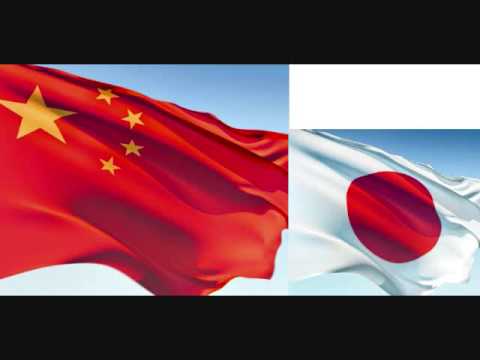 TOKYO — Japan confirmed Monday that China’s economy surpassed its own as the world’s second largest in 2010 and said a late-year downturn was Japan’s first quarterly contraction in more than a year.
Japan’s real GDP expanded 3.9 percent in the calendar year in the first annual growth in three years, but it wasn’t enough to hold off a surging China. Japan’s nominal GDP last year came to $5.4742 trillion, less than China’s total of $5.8786 trillion, the Cabinet Office said.
Gross domestic product shrunk at an annualized rate of 1.1 percent in the October-December quarter, a sharp reversal from a revised 3.3 percent expansion in the third quarter, the government said.
A slowdown in exports and weaker consumer demand at home led to the unsurprising downturn, which is expected to be temporary. The result was better than Kyodo news agency’s average market forecast of an annualized 2.2 percent decline.
China was acknowledged last year as having grown to the world’s second-largest economy, but the Japanese data confirming it were not available until Monday. The switch underscores the nations’ stark contrasts: China is growing rapidly and driving the global economy, while Japan is struggling with persistent deflation, an aging population and ballooning public debt.
Prime Minister Naoto Kan has pledged to revive the economy and make major reforms in the country’s tax and social welfare systems. His approval ratings are eroding quickly, however, as voters question his government’s ability to lead the country through its pressing problems.
The fourth-quarter figure translates to a 0.3 percent fall from the previous three-month period, according to the Cabinet Office’s preliminary data. Consumer spending, which accounts for some 60 percent of GDP, fell 0.7 percent. Auto sales slumped during the quarter after government subsidies for “green” vehicles expired in September.
Exports fell 0.7 percent from the previous quarter amid a strong yen and waning global demand. A rise in the Japanese currency reduces the value of exporters’ profits overseas and makes Japanese goods pricier in foreign markets.
The road ahead looks brighter, with economists saying GDP will expand this quarter in tandem with global growth. The head of Japan’s central bank, Masaaki Shirakawa, said last week that that recent signs indicate Japan is emerging from the “pause” and performing at par with other advanced economies.
Ryutaro Kono, chief economist at BNP Paribas ( BNPQY.PK – news – people ) in Tokyo, says exports and production have escaped their “soft patches.”
“The economy seems to be recovering again from December, so the negative growth in (the fourth quarter) need not become the basis for pessimism about Japan’s cyclical outlook,” he said in a report this month.
M CLASS Solar Flare Headed Toward Earth
Sunspot 1158 has just unleashed the strongest solar flare of the year, an M6.6-category blast @ 1738 UT on Feb. 13th and it is heading straight for Earth.
The eruption appears to have launched a coronal mass ejection (CME) toward Earth. It also produced a loud blast of radio emissions heard in shortwave receivers around the dayside of our planet. Amateur radio astronomer Thomas Ashcraft recorded these sounds. Stay tuned for updates!
Solar activity increased sharply over the weekend with the eruption of an M6.6-class solar flare from behemoth sunspot 1158. The blast produced a strong burst of radio waves heard in the loudspeakers of shortwave receivers around the dayside of our planet, and it appears to have hurled a faint coronal mass ejection toward Earth.
Sunspot 1158 is growing rapidly (48 hour movie) and crackling with M-class solar flares. The active region is now more than 100,000 km wide with at least a dozen Earth-sized dark cores scattered beneath its unstable magnetic canopy. Earth-directed eruptions are likely in the hours ahead.
The remains of old sunspot complex 1147-1149 are rotating over the eastern limb today. Although the region is in an advanced state of decay, it’s not dead yet. During the late hours of Feb. 11th, a plasma bullet came rocketing out of the region’s unstable core. Watch the movie–but don’t blink, because it’s fast.

Movie formats: 21 MB Quicktime, 1.3 MB mpeg, 0.5 MB iPad. Credit: SDO
Panama Canal rail alternative built by China considered by Colombia
A 136 mile rail alternative to the Panama Canal built by China is being considered by Colombia in a move that would boost trade between Asia and South America.

The ‘dry canal’ would link Colombia’s Atlantic and Pacific coasts by rail, according to Juan Manuel Santos, the president of Colombia.
“It’s a real proposal… and it is quite advanced,” he told The Financial Times. “I don’t want to create exaggerated expectations, but it makes a lot of sense.”
The project is one of several Chinese proposals designed to help boost transport links between the two continents.
It is also hoped the rail link would help encourage the US to ratify a four-year-old free-trade agreement. Agreements with Colombia and Panama, which would Read more…
Moscow’s Sheremetyevo airport completes first stage testing of novel biometric security system
 Sheremetyevo International Airport has completed the first stage of testing of the Russian-owned Artec Ventures new novel biometric security system BROADWAY 3D, which is based on using one of the most reliable biometrics – the three-dimensional surface of the face. The system delivers highly reliable identity recognition with minimal human involvement in the process of identification, which is of particular importance given the requirements set out in the Rules on the protection of airports and their infrastructural facilities (approved by Resolution No 42 of the government of the Russian Federation, dated 1 February 2011).
The company is headquartered in Palo Alto, California, USA with its R&D office in Moscow, Russia.
the team invented 3D face recognition technology in 1999 and cultivated it from an idea stage to a biometric solution that became an industry standard worldwide in 2006. This technology is widely Read more…
US study links pesticides to Parkinson’s disease

The pesticides, paraquat and rotenone, are not approved for house and garden use. Previous research on animals has linked paraquat to Parkinson’s disease, so it is restricted to use by certified applicators.
Rotenone is approved only for use in killing invasive fish species.
“Rotenone directly inhibits the function of the mitochondria, the structure responsible for making energy in the cell,” said study co-author Freya Kamel, a researcher at the National Institute of Environmental Health Sciences.
“Paraquat increases production of certain oxygen derivatives that may harm cellular structures. People who used these pesticides or others with a similar mechanism of action were more likely to develop Parkinson’s disease.”
The study examined 110 people with Parkinson’s disease and 358 people who served as a control group from the Farming and Movement Evaluation (FAME) Study.
FAME is part of a larger Agricultural Health Study looking at the health of approximately 90,000 licensed pesticide applicators and their spouses.
The study appears in the journal Environmental Health Perspectives.
Temple Institute Reveals First Blueprints For Portion Of The Third Temple

In his recent USA speaking engagement tour, (January 2011), Rabbi Chaim Richman of the Temple Institute revealed to the public for the very first time detailed construction plans for the Chamber of Hewn Stone: the seat of the Great Sanhedrin which is a central component of the Holy Temple complex on the Temple Mount.
These complete and highly intricate plans constitute the first stage of an historical undertaking of the Temple Institute: the drafting of blueprints for the entire Holy Temple complex. These plans, drawn up by a top Israeli architectural firm hired by the Temple Institute, take into account the specific requirements of the Sanhedrin assembly hall, known historically as the Read more…
FBI can obtain phone records without oversight, Justice Dept memo claims

Without court oversight, the nation’s top law enforcement agency can obtain domestic records of telephone conversations made to international receivers, the Justice Department claimed recently.
“[The Office of Legal Counsel] agreed with the FBI that under certain circumstances (word or words redacted) allows the FBI to ask for and obtain these records on a voluntary basis from the providers, without legal process or a qualifying emergency,” the Justice Department’s inspector general said in a recent report by McClatchy Newspapers.
The claim put forth in the document released to McClatchy seemed to indicate that the Obama administration has continued the previous administration’s policies.
The Bush administration maintained that the FBI needed such policing powers in order to stop possible terrorism. Critics of the FBI’s surveillance program stated that the tactic was frequently applied in abusive manners.
Kevin Bankston, a lawyer with the Electronic Frontier Foundation, told McClatchy that the OLC’s disclosure that Read more…
Chinese Develop Gait-Biometrics Surveillance
Another way to be under surveillance.

A confidential United States embassy dispatch released by Wikileaks provides details about a new technology developed by the Chinese Academy of Science to identify people by their gait.
The technology is designed to be deployed beneath existent flooring. From there it measures pedestrian pace and walking pressure to create a unique biometrics profile which can be used to identify and track the movements of individuals without their knowledge…
According to the dispatch, when questioned about the technology’s potential applications, scientists “stated the device was being used by ‘secret’ customers and was not available on the commercial market.” Officials went on to note the technology was involved with “Program 863.”
Program 863, or the State High Tech Development Plan, is a civil-military program created in 1986, according to Lev Navrozov – a former dissident Soviet writer – for the purpose of developing a “post-nuclear superweapon” possibly incorporating nanotechnology.


![[Most Recent Quotes from www.kitco.com]](https://i0.wp.com/www.kitconet.com/charts/metals/gold/t24_au_en_usoz_2.gif)
![[Most Recent Quotes from www.kitco.com]](https://i0.wp.com/www.kitconet.com/charts/metals/silver/t24_ag_en_usoz_2.gif)

 crisisboom
 CRISISBOOM

You must be logged in to post a comment.