Tornado touches down in Queens and Brooklyn

September 8, 2012 Comments off

nydailynews

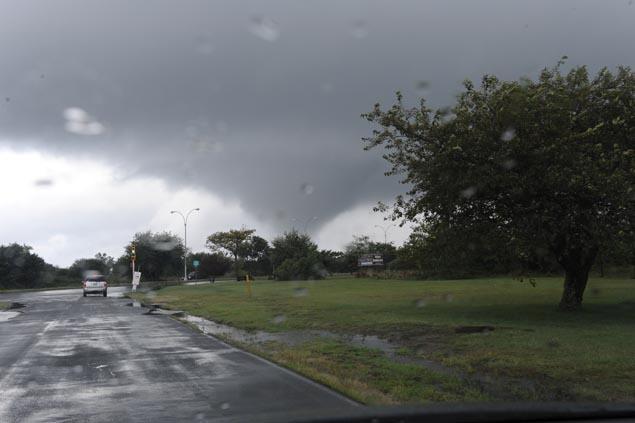
A terrifying tornado touched down briefly in Queens and Brooklyn Saturday  morning, destroying property, disrupting plans and terrifying residents all over  the city.

A black tunnel cloud accompanied by howling winds screamed into south  Brooklyn and Queens at around 11 a.m., with reports of the potent storm hitting  the ground on the Rockaway Peninsula and Carnarsie.

“I saw a big gray cloud coming and ran to my basement with my son,” said  Diane Tye, 36, an office manager from Breezy Point who scooped up her son Dylan,  2, and ran to her house when she saw the tunnel cloud approach.

“It was very Read more…

Remote-Control Cyborg Cockroaches

September 8, 2012 Comments off

A Madagascar hissing cockroach sports a wireless electronic microcontroller that allows it to be steered by joystick.

North Carolina State University

Building robots is hard. Making them tiny, maneuverable, durable, and smart enough to find their way around in an unmapped environment—for instance, to find survivors trapped in a building after an earthquake—is harder still. So a team of scientists at North Carolina State has turned to the obvious alternative: remote-controlled bionic cockroaches.

By outfitting Madagascar hissing cockroaches with wireless electronic backpacks and hooking electrodes to their antennae and cerci, the researchers found they could Read more…

Hantavirus, Plague & West Nile: Are Animal-Borne Diseases on the Rise?

September 8, 2012 Comments off

myhealthnewsdaily

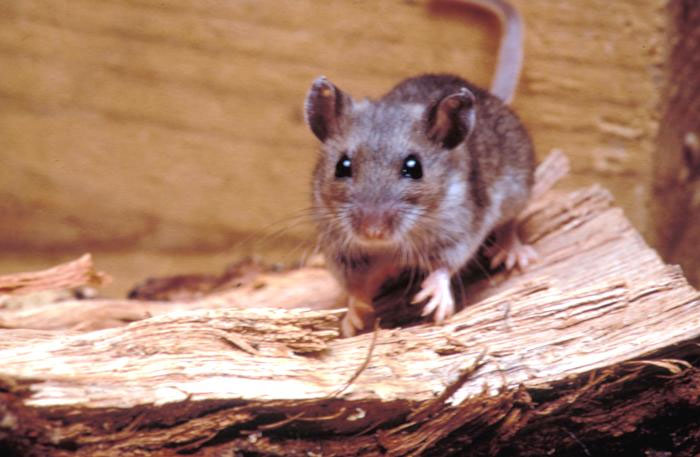
A string of recent reports of people falling ill and dying of diseases that spread to people from animals might have you wondering: Are animal-borne diseases on the rise?

This summer, three people died and eight were infected with hantavirus   — a disease carried by rodents — after visiting Yosemite National Park; a Colorado girl reportedly contracted the plague from flea bites she received while camping; researchers reported the cases of two Missouri men infected with a never-before-seen virus carried by ticks; and nearly 2,000 people across the United States fell ill with West Nile virus, which is carried by mosquitoes.

Experts say the number of new diseases crossing from animals to people   has indeed increased in recent years, from fewer than 20 in the 1940s to about 50 in the 1980s, according to a 2008 study published in the journal Nature. Between 1990 and 2000, more than half of newly identified infectious diseases originated in Read more…

FBI launches $1 billion nationwide facial recognition system

September 7, 2012 1 comment

extremetech

Facial recognition

The US Federal Bureau of Investigation has begun rolling out its new $1 billion biometric Next Generation Identification (NGI) system. In essence, NGI is a nationwide database of mugshots, iris scans, DNA records, voice samples, and other biometrics, that will help the FBI identify and catch criminals — but it is how this biometric data is captured, through a nationwide network of cameras and photo databases, that is raising the eyebrows of privacy advocates.

Until now, the FBI relied on IAFIS, a national fingerprint database that has long been due an overhaul. Over the last few months, the FBI has been pilot testing a facial recognition system — and soon, detectives will also be able to search the system for other biometrics such as DNA records and iris scans. In theory, this should result in much faster positive identifications of criminals and fewer unsolved cases.

According to New Scientist, facial recognition systems have reached the point where they can Read more…

Widespread human tracking chips inevitable?

September 7, 2012 Comments off

planetbiometrics

by Mark Lockie

It may seem like an improbable scenario – and probably is – but new research has revealed growing social unease over electronic tracking technology that monitors workers’ activity, and which may evolve into implants placed directly under human skin.

Professors Nada and Andrew Kakabadse have examined developments in tracking technology already linked to company vehicles and mobile communication devices, alongside employee attitudes towards the prospect of ‘social tagging’ through Radio Frequency Identification (RFID) chips.

Nada Kakabadse commented: “In 2004, the US Food and Drug Administration approved an RFID implant called VeriChip, about the size of a grain of rice, for medical purposes. Nightclubs in Rotterdam and Barcelona already offer implants to customers for entry and payment purposes. Some claim the ‘Obamacare Health Act’ makes under-the-skin (subdermal) RFID implants mandatory for all US citizens.”

Perhaps irrationally (at least in Planet Biometrics’ point of view) study participants thought the Read more…

Why is Putin stockpiling gold?

September 7, 2012 Comments off

Russia is bulking up its gold reserve

By Brett Arends
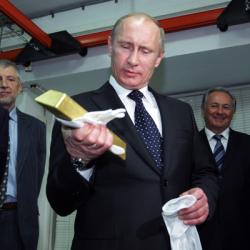
I can’t imagine it means anything cheerful that Vladimir Putin, the Russian czar, is stockpiling gold as fast as he can get his hands on it.

According to the World Gold Council, Russia has more than doubled its gold reserves in the past five years. Putin has taken advantage of the financial crisis to build the world’s fifth-biggest gold pile in a handful of years, and is buying about half a billion dollars’ worth every month.

It emerged last month that financial gurus George Soros and John Paulson had also increased their bullion exposure, but it’s Putin that’s really caught my eye.

No one else in the world plays global power politics as ruthlessly as Russia’s chilling strongman, the man who effectively stole a Super Bowl ring from Bob Kraft, the owner of the New England Patriots, when they met in Russia some years ago.

Putin’s moves may matter to your finances, because there are two ways to look at gold.

On the one hand, it’s an investment that by most modern standards seems to make no sense. It generates no cash flow and serves no practical purpose. Warren Buffett has pointed out that we Read more…
Series of earthquakes jolt mountainous SW China, killing at least 50 and damaging 20,000 homes

September 7, 2012 Comments off

Associated Press

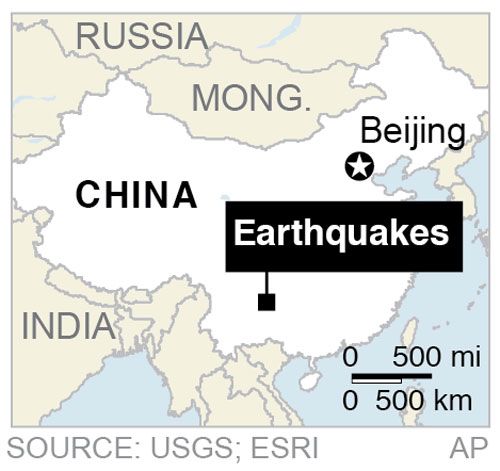
BEIJING — A series of earthquakes collapsed houses and triggered landslides in a remote mountainous part of southwestern China on Friday, killing at least 50 people with the toll expected to rise. Damage was preventing rescuers from reaching some outlying areas, and communications were disrupted.

The quakes started with a 5.6-magnitude shock before 11:30 a.m. along the borders of Guizhou and Yunnan provinces, and another equally big quake struck shortly after noon followed by more than 60 aftershocks, Chinese and U.S. government seismologists said. Though of moderate strength, the quakes were shallow, which often causes more damage.

Hardest hit was Yiliang County, where 49 of the 50 deaths occurred, said Yunnan province government agencies and state media. Another 150 people in the county were injured, said Zhang Junwei, a spokesman for the provincial seismology bureau.

China Central Television showed roads littered with rocks and boulders, and pillars of dust rising over hillcrests — signs of landslides. Footage showed a couple hundred people crowding into what looked like a school athletic field in Yiliang’s county seat, a sizeable city spread along a river in a valley bottom.

With some roads impassable, rescuers had yet to Read more…

Categories: China, Earthquake Tags: ,

Climate Change: How The Wet Will Get Wetter And The Dry Will Get Drier (Video)

September 7, 2012 Comments off

thinkprogress

How much extra energy are we putting in the atmosphere through emission of greenhouse gases? One Australian researcher put it into context: “The radiative forcing of the CO2 we have already put in the atmosphere in the last century is … the equivalent in energy terms to almost half a billion Hiroshima bombs each year.”

With more energy radiating down on the planet rather than back up into space, the planet continues to heat up. As the atmosphere warms, it is able to hold more water vapor — thus strengthening the global hydrological cycle.

With all that extra energy, more water is pulled out of the subtropic regions and moved toward higher-precipitation areas in the subpolar regions, resulting in stronger droughts and stronger storms. Or, as the video below explains, how the wet gets wetter and the dry gets drier.

Through five decades of observations and future climate modeling, the National Oceanic and Atmospheric Administration has put together this educational piece on how a warming planet will make weather more extreme: Read more…

Categories: Climate Change, world Tags:

Alabama to require biometric scans for prison visitors

September 6, 2012 Comments off

biometricupdate

fingerprint-scanning

The Alabama Department of Corrections has implemented a new policy that requires visitors to state prisons to have their fingerprint scanned before entering prison facilities. It is the first state to implement the requirement. Alabama has 29 correctional facilities with approximately 25,500 adult inmates.

Brian Corbett, the Department of Corrections spokesman said: “Our IT department came up with the idea of scanning fingerprints as part of an upgrade. We still require visitors to have a government-issued photo ID, and that requirement will remain in place. But there are times when someone else resembles the photo on an ID. Scanning the fingerprint of visitors verifies they are who they say they are.”

Corbett said scanning fingerprints makes the Read more…

Categories: Biometrics Tags: , ,

Arctic sea ice extent continues to melt below former record lows: data center

September 6, 2012 Comments off

nunatsiaqonline

Every year there's less of the multi-year, blue-tinged sea ice, like this ice seen in the Northwest Passage, in the Arctic. (PHOTO BY JANE GEORGE)
Every year there’s less of the multi-year, blue-tinged sea ice, like this ice seen in the Northwest Passage, in the Arctic. (PHOTO BY JANE GEORGE)
Arctic sea ice extent for August 2012 was 4.72 million sq. km.The magenta line shows the 1979 to 2000 median extent for that month. The black cross indicates the geographic North Pole. (IMAGE COURTESY OF THE NSIDC)

Following the new record low Arctic sea ice extent recorded Aug. 26, ice coverage has continued to drop and has now shrunk to less than four million square kilometres — smaller than the previous low extent of 2007.

Compared to September conditions in the 1980s and 1990s, the Arctic sea ice extent has dropped by 45 per cent, the Colorado-based National Snow and Ice Data Center said Sept. 5.

And that skimpy sea ice cover is likely to get lower yet, because Read more…