Archive

Posts Tagged ‘brazil’

Brazil may ban all gun sales

April 14, 2011 Comments off

bbc

A girl kneels in prayer at a makeshift memorial for victims of a school gun attack in Rio de Janeiro, Brazil, 9 April 2011 The attack at Tasso da Silverira school shocked the country

Brazilian lawmakers say they will propose a national vote on whether to ban the sale of guns, after a deadly shooting at a school last week.

The Senate leader said legislators would rush through a bill to allow a referendum to be held this autumn.

A similar proposal in 2005 was rejected by voters and kept gun sales legal.

Brazil observed three days of mourning after the attack on 7 April, in which a gunman shot dead 12 children in a school in Rio de Janeiro.

Brazil is no stranger to gun violence, with frequent shoot-outs in major cities, but the attack in Rio de Janeiro shocked the nation.

The shooting sparked a debate over gun sales that has left lawmakers unable to ignore the issue.

‘Critical condition’

The bill would have to be approved by both the Senate and the House before going on the ballot.

The leader of Brazil’s Senate, Jose Sarney, said any referendum would be held at the beginning of October – the earliest possible date for the bill to pass Read more…

China Sees New Emerging Markets Bloc Consensus

April 4, 2011 1 comment

abcnews

An upcoming meeting of the leaders of the world’s leading emerging economies should boost consensus and cooperation among them, although members of the group have yet to decide on whether to establish a permanent secretariat, a Chinese diplomat said Saturday.

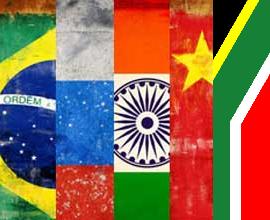
The April 14 meeting in the southern Chinese resort of Sanya will include the heads of Brazil, Russia, India, China and — for the first time — South Africa. The five make up the grouping known as the BRIC countries, whose members account for 40 percent of the world’s population and 15 percent of global trade.

Discussions in Sanya will cover trade and finance, as well as major political issues, with areas of agreement to be laid out in a final statement, Assistant Chinese Foreign Minister Wu Hailong told reporters at a briefing.

“We hope through the concerted efforts of all parties that this meeting will be an important Read more…

Census reveals that 17% of the world is Indian

April 1, 2011 1 comment

guardian

Uttar Pradesh, India
The Indian state of Uttar Pradesh has a population of 199,500,000, just under that of Britain, France and Germany combined. Photograph: David Sutherland


The first results from India‘s latest census – the second biggest in the world – were released on Thursday, revealing that the country has added 181 million new citizens in the last decade, making it home to 17% of the world’s population.

China remains the most populous country on the planet, with 1.34 billion, but India is closing the gap with 1.21 billion. The additional Indians found by the census are roughly equivalent to the population of Brazil, the fifth largest country in the world. One Indian state alone – Uttar Pradesh – now has a population of 199,500,000 people, just under that of Britain, France and Germany combined.

However C Chandramouli, the census commissioner, told reporters in Delhi that the new count showed Read more…

Warning of Recurring Food Crises

March 31, 2011 Comments off

voanews.com

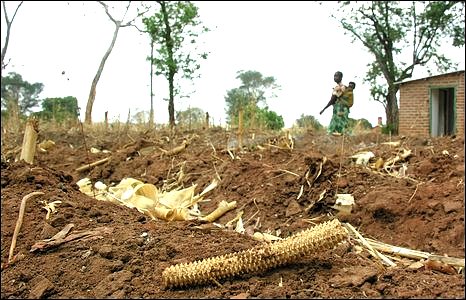
Soaring and volatile food prices have experts warning of recurring food crises, putting poor people – especially women and children – at risk.

Similar conditions existed during the 2007/2008 food crisis, when high prices and shortages ignited unrest in many countries around the world.

IFPRI, the International Food Policy Research Institute, is calling for urgent action to prevent a repeat of the crisis. Director-General Shenggen Fen says, “Many food items have become more expensive…since last May or June. Wheat prices have almost doubled. The maize price has also increased substantially. Many meat products, dairy products have also increased substantially.”

While the situation is not as serious as the food crisis three years ago, Fen says, “If we don’t take urgent actions, food prices will continue to rise and the poor people will suffer.”

What’s triggering the price hikes? Read more…

Deaths and thousands infected with dengue in Paraguay and Bolivia

March 30, 2011 Comments off

mercopress.com

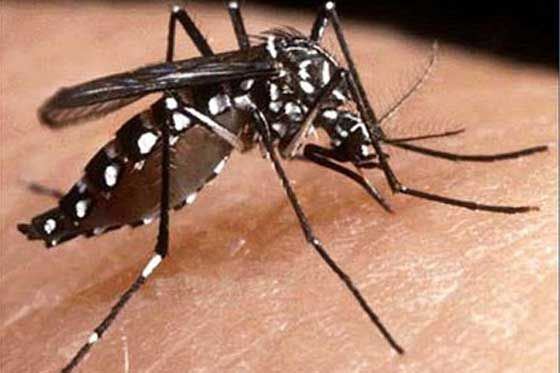
A new more aggressive mosquito from the Amazon has been reported in Bolivia

“We have 18 dengue deaths confirmed in Paraguay and 2.500 infected of which 1.300 are hospitalized” said Ivan Allende head of the Sanitary Vigilance Department in Asuncion. He also called on the population to immediately report to a clinic or hospital on suspicion of having contracted the disease, which again reappeared with extreme force in late December with the rainy season.

“In previous years we never had so many people hospitalized” added Allende who indicated that only zero temperatures can help eliminate the mosquito larvae. “Until then we must insist people must collaborate watching out for stagnant water in bottles, old tyres, and flower pots and obviously in toilets and sewage”.

In Bolivia the death toll has climbed to 20 and the number of infected totals 1,670. Read more…

Drought In Amazon Could Lead To Accelerated Global Warming

March 30, 2011 Comments off

ibtimes.com

A new study reveals a drought last year in the Amazon basin caused the forest to lose significant levels of vegetation, which in turn could accelerate the pace of global warming.

The study, conducted by an international team of scientists and funded by NASA, uses specific satellite imaging data provided by the agency to draw its conclusions. The Moderate Resolution Imaging Spectroradiometer (MODIS) and Tropical Rainfall Measuring Mission (TRMM) satellites provided more than a decade’s worth of data for scientists who studied the de-vegetation of the Amazon rainforest.
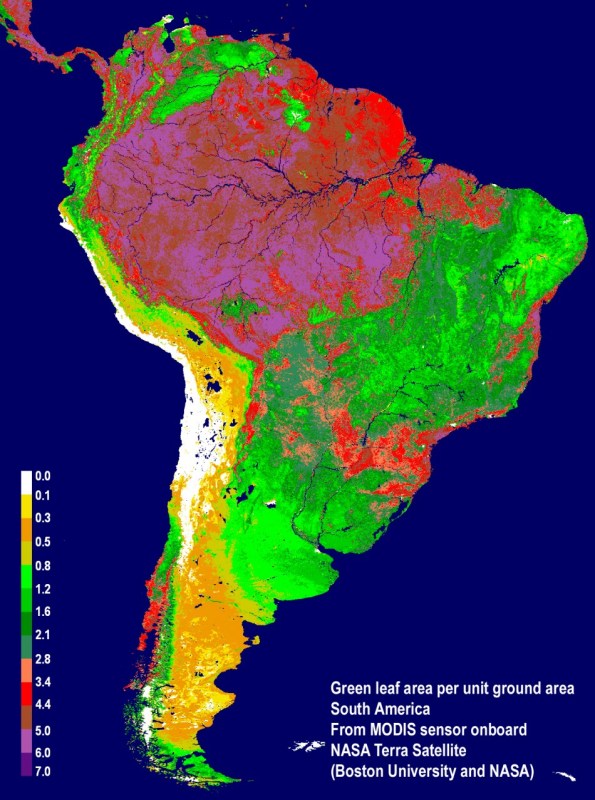
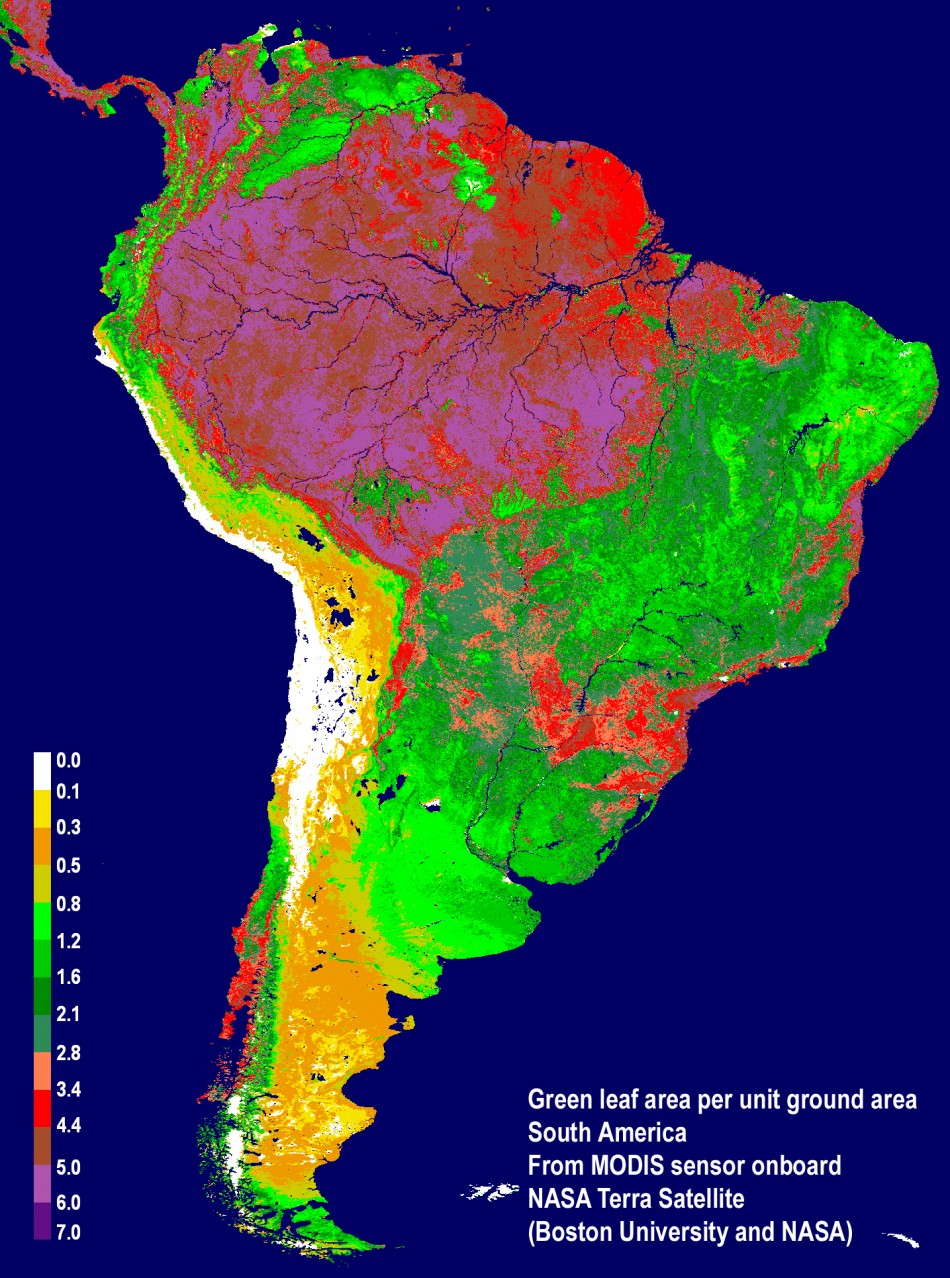
(Photo: NASA/BU) NASA satellite sensors, such as MODIS, showed an average pattern of greenness of vegetation on South America: Amazon forests which have very high leaf area are shown in red and purple colors, the adjacent cerrado (savannas) which have lower leaf area are shown in shades of green, and the coastal deserts are shown in yellow colors.


The scientists say changing climates with warmer temperatures and altered rainfall could lead to the rainforests turning into grasslands or woody savannas. This causes carbon stored in the rotting wood to be released into the atmosphere, which would add to the greenhouse gases present.

“The greenness levels of Amazonian vegetation — a measure of its health — decreased dramatically over an area more than three and one-half times the size of Texas and did not recover to normal levels, even after the drought ended in late October 2010,” Liang Xu, the study’s lead author from Boston University, said in a statement.

“The MODIS vegetation greenness data suggest a more widespread, severe and long-lasting impact to Amazonian vegetation than Read more…

Pimco Buying Emerging Market ‘Rising Stars’ as Inflation Looms

March 22, 2011 Comments off

www.businessweek.com

March 21 (Bloomberg) — Pacific Investment Management Co. says investors should buy company debt in Russia, Brazil and other emerging markets where rising wages and relatively low public and private debt will help borrowers weather accelerating inflation.

The manager of the world’s biggest bond fund is buying debt of “rising stars” linked to nations with expanding wealth because they will more easily be able to pass on higher materials costs, Mark Kiesel, Pimco’s global head of corporate bond portfolio management, wrote in a report today on the firm’s website. At the same time, he’s avoiding companies dependent on growth in Europe, the U.S. and Japan that will struggle amid stagnant wages and debt-laden governments and consumers.

“Companies which are tied most directly into the strong economic growth engine in the emerging markets should have the most pricing power and ability to either pass through rising costs or absorb them without a significant margin hit,” Kiesel wrote. Those more Read more…

Russia warns of “full-scale military action” following Security Council vote on Libya

March 18, 2011 Comments off

rt.com

AFP Photo / Adek Berry

AFP Photo / Adek Berry

Following a decision by the UN Security Council to take “all necessary measures” against Libyan leader Muammar Gaddafi, Russian politicians and experts are warning of further destabilization in the region.

­The UN Security Council voted on Thursday to impose a no-fly zone, which includes the possible use of military force, against pro-Gaddafi forces.

Presently, the Libyan strongman’s military is successfully beating back a large anti-government uprising, and is in the process of consolidating his forces around Benghazi, a city to the north where the “interim Libyan government” is penned in.

Diplomats said the resolution, which was written in the eleventh hour of the Libyan conflict, allows for a wide range of actions, including strikes on air-defense systems and missile attacks from ships.

Indeed, full-blown military activity could commence “within hours,” they said.

Russia and four other council members – China, Germany, Brazil and India – abstained from Read more…

Recent droughts and floods have contributed to increases in food prices

March 14, 2011 1 comment

7thspace.com

These are pushing millions more people into poverty and hunger, and are contributing to political instability and civil unrest. Climate change is predicted to increase these threats to food security and stability. Responding to this, the world’s largest agriculture research consortium today announced the creation of a new Commission on Sustainable Agriculture and Climate Change.

Chaired by the United Kingdom’s Chief Scientific Adviser, Professor Sir John Beddington, the Commission will in the next ten months seek to build international consensus on a clear set of policy actions to help global agriculture adapt to climate change, achieve food security and reduce poverty and greenhouse gas emissions.

There is a rich body of scientific evidence for sustainable agriculture approaches that can increase production of food, fiber and fuel, help decrease poverty and benefit the environment, but agreement is needed on how best to put these approaches into action at scale. Evidence also shows Read more…

China Takes Giant Step Towards Making the Yuan the World’s Reserve Currency

March 3, 2011 Comments off

globalresearch.ca

For years, I’ve been writing about the long-term decline of the Dollar, and the rise of the Chinese Yuan … and it’s potential to become the world’s next reserve currency.

As I pointed out in 2007, many countries have started moving out of the Dollar as the basis for international trade settlements, including:

  • Venezuela and 12 other Latin American countries as well as Cuba
  • Many other countries

In 2008, I wrote: Read more…